
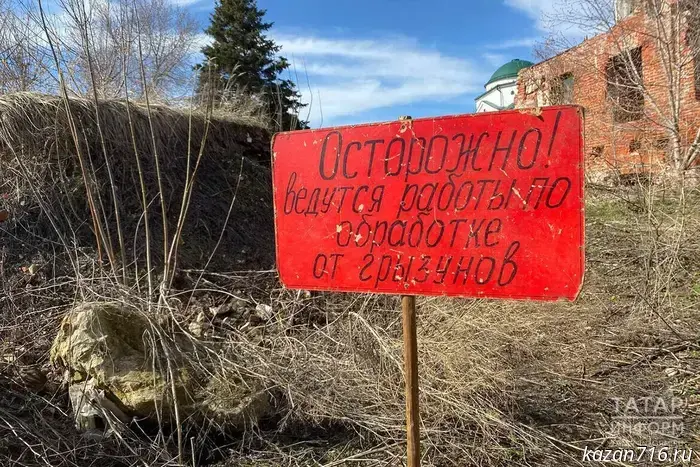
"35 dangerous infections and musophobia": Tatarstan residents complain about a rodent invasion
This year the “People’s Control” system received 407 complaints about rodents from residents of the Republic of Tatarstan.
Most complaints about rodents come from residents of Kazan, Naberezhnye Chelny and the Almetyevsk district.
Large rats that provoke disgust are found in residential courtyards, near garbage containers, in apartment building entrances, running across playgrounds and in grocery stores in Tatarstan. In November a court suspended the operation of the Pyaterochka store in central Kazan for 20 days after numerous sanitary violations were found. “An unscheduled on-site inspection was carried out at the Pyaterochka store operated by Agrotorg LLC (Kazan, 6 Said-Galeeva St.), coordinated with the Prosecutor’s Office of the Republic of Tatarstan. During the inspection […] signs of life of the brown rat were discovered, namely fresh rodent droppings and eaten fresh decomposing bait under the shelves of the storage room, a living burrow and eaten fresh bait at the container site, a living burrow under the foundation of the loading dock,” the press service of Rospotrebnadzor for the Republic of Tatarstan reported.
This year the GIS “People’s Control” received 407 complaints from residents of Tatarstan about rodents spotted in public places — at garbage collection points, in apartment building entrances. Last year 433 notifications were received concerning the spread of rodents.
“About 60% of all notifications received over the ten months of this year came from residents of Kazan, Naberezhnye Chelny and the Almetyevsk district,” the Office of the Ombudsperson for Human Rights in the Republic of Tatarstan told Tatar-inform.
“Rodent control in Kazan is carried out monthly”
The Kazan city administration told Tatar-inform what preventive work against rodents is being done in public places and residential buildings in Kazan.
“Rodent control in Kazan is carried out monthly on facilities and adjacent territories under contracts concluded with licensed disinfection companies. Contracts with them are concluded by the management companies of apartment buildings, social service enterprises and institutions, and commercial organizations,” the press service said.
On open territories — in forests, parks and squares — deratization work is carried out by the Kazan Disinfection Station under a municipal assignment from the Administrative and Technical Inspection Department of the city executive committee and by order of Rospotrebnadzor for the Republic of Tatarstan in spring and autumn.
“If you live in an apartment building and notice rodents, as well as gaps or holes in the basement, entrance, stairwells or stair landings, you need to contact your management company as soon as possible. You should file a request to eliminate them, and to organize and carry out unscheduled deratization or disinsection preventive works in the common areas of your apartment building,” the Kazan Disinfection Station noted.
According to the Kazan mayor’s office, preventive treatments of common areas against rodents are carried out monthly by the management companies servicing the building. Payment for deratization services is included in the utility bill and is charged monthly.
“The Kazan Disinfection Station does not work with apartment building management companies. On an off-budget basis, services are provided to 227 buildings served by homeowners’ associations, housing cooperatives and similar organizations, covering a total area of 122,000 square meters once a month for deratization and once for disinsection using products authorized for these purposes,” the Kazan Disinfection Station added.
The agency also provided price quotes for services. In 2024 the cost of deratization per square meter was 0.84 rubles, disinsection 3.02 rubles; in 2025 — 0.92 and 3.36 rubles respectively. In 2026 the rates will rise to 1.04 and 3.76 rubles respectively.
“Such services are paid for by the homeowners’ associations themselves,” the response to Tatar-inform’s inquiry said.
In Naberezhnye Chelny complaints about rats go to management companies and social media
The Naberezhnye Chelny mayor’s press service said that deratization in the city’s residential buildings is also handled by management companies, who “decide what and how” themselves.
“Appeals come through open sources, to the management companies, and via social networks,” the press service noted.
Deratization is also carried out in all budget-funded institutions. In response to Tatar-inform’s inquiry the Naberezhnye Chelny mayor’s press service also sent a memo entitled “What to do if you discover insects and rodents.”
The press service of the Almetyevsk district executive committee gave detailed answers to the news agency on this topic. Tatar-inform was told that deratization in the housing stock of Almetyevsk and the Almetyevsk district is carried out regularly, at least once a month. Additional unscheduled deratization measures are also carried out following residents’ requests.
“Deratization activities are carried out by specialized contracting organizations with which management companies enter into relevant contracts. The main areas treated are basements and attics of residential buildings. Highly effective products are used in the work, such as ‘Brome’ and ‘Bromus,’ as well as ‘Tsunami’ tablets,” the press service explained.
Residents of Almetyevsk urged not to feed pigeons near entrances
Preventive measures in the housing stock of the Almetyevsk district are funded by residents in accordance with approved tariffs. According to a resolution of the executive committee, the cost of deratization services is 0.35 rubles per square meter.
“No separate targeted budget financing for deratization of the housing stock was allocated last year or this year, since these services are included in the ‘maintenance of residential premises’ line item,” the press service clarified.
Deratization work is also regularly carried out in educational institutions — kindergartens and schools, sports schools, and in public places — parks and squares. Expenses for these purposes are covered by the local budget funds provided in the budgets of municipal institutions.
“The administration periodically receives requests for rodent treatment in the housing stock. All citizen appeals are processed promptly as they are received through management companies. Exact quantitative records of appeals are kept by the management companies,” the Almetyevsk district executive committee’s press service said.
However, effectively solving the problem of rodents requires a comprehensive approach and active participation from every resident.
“We draw attention to the importance of complying with sanitary norms and landscaping rules. Unfortunately, this problem exists not only in Almetyevsk. Well-meaning residents who want to help stray animals and birds share food near entrances, dump it on manhole covers, not realizing that this can lead to the breeding of rats and cockroaches. We remind everyone that feeding animals should be done in a way that does not create unsanitary conditions or endanger neighbors,” the press service stressed.
Deratization is carried out in three stages
The press service of the Rospotrebnadzor Department for the Republic of Tatarstan explained that deratization in the common areas of apartment buildings and dormitories must be carried out monthly based on inspections of premises to determine rodent infestation.
Deratization at facilities involves three mandatory stages:
- inspection of the facility to determine the species composition and number of rodents, the degree of infestation of buildings and territories, and their sanitary-hygienic condition;
- determination of the scope of extermination deratization measures and their implementation;
- assessment of the results of the measures carried out.
“Deratization is carried out following inspections by licensed disinfection organizations authorized to provide disinfection, disinsection and deratization services to ensure the sanitary and epidemiological wellbeing of the population. From March 1, 2025, carrying out disinfection activities without a license will not be permitted,” the Rospotrebnadzor Department for the Republic of Tatarstan warned.
In apartment buildings and dormitories, measures to combat rodents must be carried out in basements, attics, entrances, loading docks, garbage collection chambers, stairwells, and elevator shafts. The territory adjacent to the residential building, including the container site, must also be treated. Treatments are carried out using products that have the required permit documents.
“They are carriers of 35 dangerous infectious diseases”
Treatments of natural foci and territories adjacent to populated areas, and open public areas in cities and districts — places of mass recreation, parks, squares, cemeteries, territories of summer recreational camps — are carried out at the expense of the republic’s budget. On other facilities and adjacent territories, conducting deratization is the responsibility of the economic entity.
“Apartment owners pay utility charges for deratization treatments in the common areas of the residential building (entrances, basements, attic spaces). The management company is responsible for maintaining these areas. Treatments in apartments are carried out by the property owners themselves or under a contract with licensed disinfection organizations,” Rospotrebnadzor for the Republic of Tatarstan emphasized.
Mandatory measures to exterminate rodents must be carried out at enterprises and organizations. In addition, when operating production, public and residential premises, buildings and transport, measures should be observed that prevent rodent migration and create unfavorable conditions for their habitation, the press service added.
Last year the Rospotrebnadzor Department for the Republic of Tatarstan received 224 complaints about rats and mice from Tatarstan residents. In 2025 there were 186 appeals, of which 90% came from residents of the republic’s large cities. Rodents pose a serious danger.
“Rodents are carriers of 35 dangerous infectious diseases that can be transmitted to humans. The most common are hemorrhagic fever with renal syndrome (HFRS), leptospirosis, yersiniosis and pseudotuberculosis, tularemia, rabies, toxoplasmosis, and helminthiases,” the Rospotrebnadzor Department for the Republic of Tatarstan noted.
The agency added that rodent fur, urine, saliva and feces contain potent allergens capable of causing allergic reactions in some people, especially children: skin itching and rashes, asthma attacks, difficulty breathing, allergic rhinitis and conjunctivitis. Rodents can also trigger a psychological disorder — musophobia — which manifests as an obsessive fear of rats, mice and other small rodents.
Photo: © “Tatar-inform”
Другие Новости Казани (Казань716)
 Since the beginning of the year, 28 people have died in traffic accidents on Kazan's roads.
Since the beginning of the year, 1,099 traffic accidents have occurred in Kazan, in which 28 people died and another 1,312 were injured. November 26, 2025. Tatar-Inform News Agency. Republic of Tatarstan. Kazan.
Since the beginning of the year, 28 people have died in traffic accidents on Kazan's roads.
Since the beginning of the year, 1,099 traffic accidents have occurred in Kazan, in which 28 people died and another 1,312 were injured. November 26, 2025. Tatar-Inform News Agency. Republic of Tatarstan. Kazan.
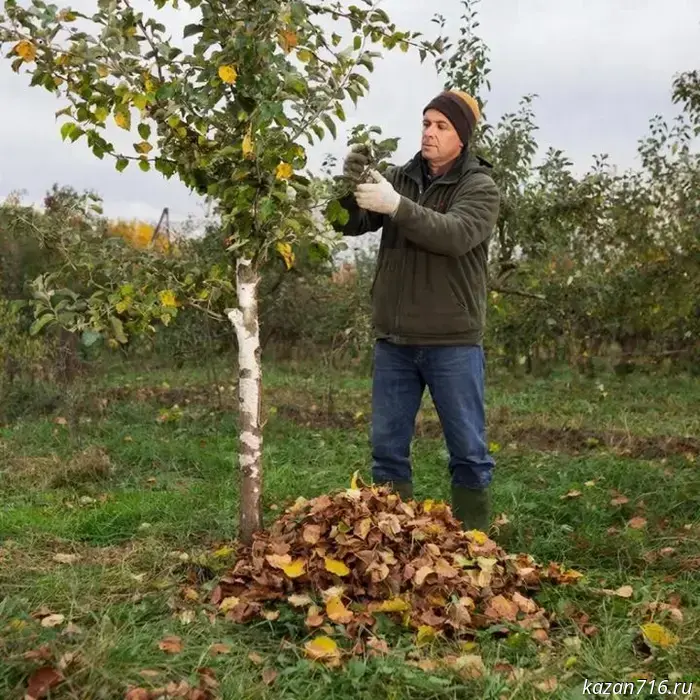 Garden work in November: a complete plan to protect against pests and frost
November is a critically important period for preparing the garden for winter
Properly carried out work will help eliminate insect pests in their dormant stage and protect trees from frost and rodents. 26.11.2025. Zainsk News. Republic of Tatarstan. Zainsk.
Garden work in November: a complete plan to protect against pests and frost
November is a critically important period for preparing the garden for winter
Properly carried out work will help eliminate insect pests in their dormant stage and protect trees from frost and rodents. 26.11.2025. Zainsk News. Republic of Tatarstan. Zainsk.
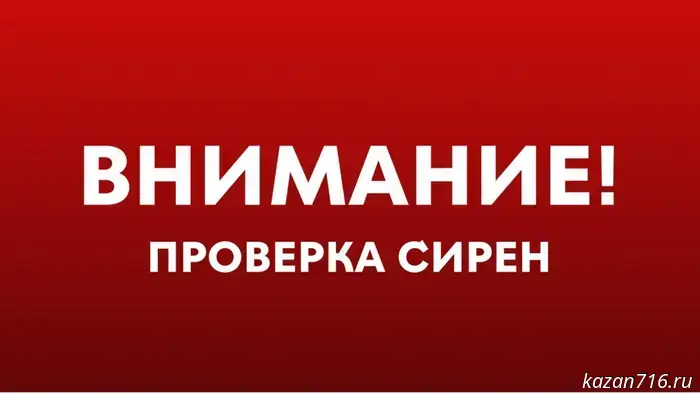 Dear residents of Almetyevsk!
Today, November 26, a scheduled test of the alert system — C-40 electric sirens — will be carried out in the city. 26.11.2025. Almetyevsky District. Republic of Tatarstan. Almetyevsk.
Starting in 2026, an extract will become the sole document for registration with the tax authority.
As of January 1, 2026, the tax registration certificate is abolished. November 26, 2025. Rybno-Slobodsky District. Republic of Tatarstan. Rybnaya Sloboda.
Dear residents of Almetyevsk!
Today, November 26, a scheduled test of the alert system — C-40 electric sirens — will be carried out in the city. 26.11.2025. Almetyevsky District. Republic of Tatarstan. Almetyevsk.
Starting in 2026, an extract will become the sole document for registration with the tax authority.
As of January 1, 2026, the tax registration certificate is abolished. November 26, 2025. Rybno-Slobodsky District. Republic of Tatarstan. Rybnaya Sloboda.
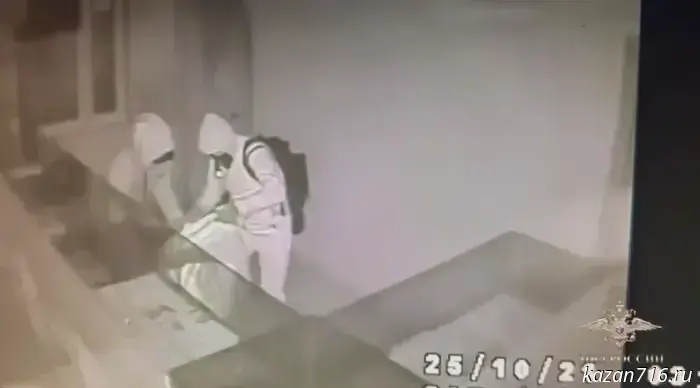 Police detained the robbers who had robbed an office and a jewelry workshop in Kazan.
Five citizens of near-abroad countries were detained by police for a series of nighttime thefts in Kazan and Ryazan from August to October. 26.11.2025. GTRK Tatarstan. Republic of Tatarstan. Kazan.
Police detained the robbers who had robbed an office and a jewelry workshop in Kazan.
Five citizens of near-abroad countries were detained by police for a series of nighttime thefts in Kazan and Ryazan from August to October. 26.11.2025. GTRK Tatarstan. Republic of Tatarstan. Kazan.
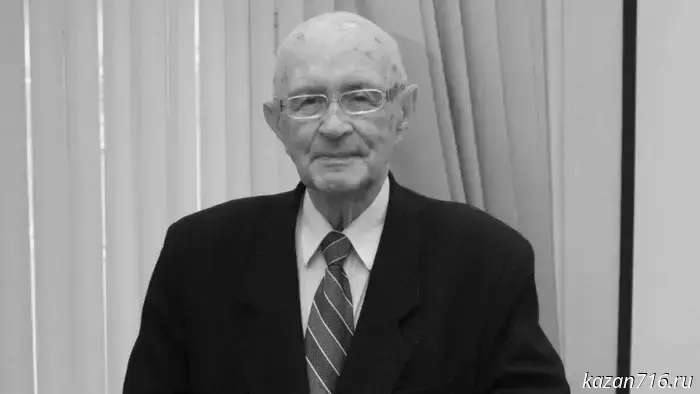 The Ministry of Justice of Tatarstan expresses its condolences on the passing of Boris Leonidovich Zheleznov.
The leadership and staff of the Ministry of Justice of the Republic of Tatarstan express their sincere condolences on the passing of an outstanding statesman on November 26, 2025. Ministry of Justice. Republic of Tatarstan. Kazan.
The Ministry of Justice of Tatarstan expresses its condolences on the passing of Boris Leonidovich Zheleznov.
The leadership and staff of the Ministry of Justice of the Republic of Tatarstan express their sincere condolences on the passing of an outstanding statesman on November 26, 2025. Ministry of Justice. Republic of Tatarstan. Kazan.
"35 dangerous infections and musophobia": Tatarstan residents complain about a rodent invasion
This year, People's Control received 407 complaints about rodents from residents of the Republic of Tatarstan Most complaints about rodents are filed by residents of Kazan, Naberezhnye Chelny and the Almetyevsky District Large rats provoking disgust, 26.11.2025. Tatar-Inform News Agency. Republic of Tatarstan. Kazan.