
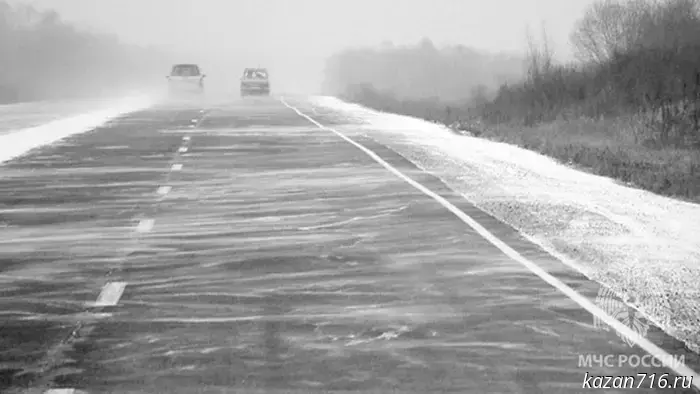
Dear citizens! The Federal State Budgetary Institution "Directorate for Hydrometeorology and Environmental Monitoring of the Republic of Tatarstan" has issued: Report-consultation on a significant deterioration of weather conditions in the territory of the Republic of Tatarstan on January 3–4, 2026
On January 3 and 4, 2026, weather across the Republic of Tatarstan will be shaped by active western cyclones and their atmospheric fronts; a significant deterioration of weather is expected.
Night of January 3 — no significant precipitation. Morning and daytime of January 3 — snow, blizzard with visibility reduced to 1–2 km, at times less than 1000 m; strong southerly winds with gusts of 15–20 m/s. Minimum air temperatures at night will be -13..-18°C, in the east during clearings down to -21°C; daytime -4..-9°C, in eastern areas down to -14°C.
On January 4 expected: snow, wet snow, locally heavy during the day; blizzard with visibility reduced to 500 m and less; strong southerly to southwesterly winds with gusts of 18–23 m/s; in some areas icy conditions (black ice). Night temperatures -4..-9°C, in eastern areas down to -14°C, daytime rising to -1..-6°C.
Roads: black ice, snowdrifts, slush.
The Main Directorate of the Russian Ministry of Emergency Situations for the Republic of Tatarstan recommends:
When winds strengthen:
1. We recommend limiting going outside buildings; stay indoors. It is important not to leave children unattended.
2. If strong wind catches you outdoors, seek shelter in underground passages or building entrances. Do not hide from strong wind near building walls, as roofing materials (such as corrugated sheets) may fall from roofs. The same applies to public transport stops and unfinished buildings.
3. On the street, stay away from advertising billboards, signs, and power lines.
4. Do not be near large trees, and do not park vehicles near them — branches torn off by the wind can be very dangerous.
5. It is deadly dangerous during strong winds to stand under power lines or approach downed power wires.
6. Broken window glass, falling from upper floors, as well as roofing elements and plaster decorations torn off by the wind, may be hazardous. This threat increases near buildings under construction or repair.
7. All windows of homes should be tightly closed; remove from balconies and loggias any items that could be blown outwards.
8. Stay as far as possible from windows in residential or work premises.
How to act during a severe blizzard:
Only in exceptional cases go outside. It is forbidden to go out alone. Inform family members or neighbors where you are going and when you will return. In a car, drive only on main roads and highways. When leaving the vehicle do not move out of its visible range. If stopping on the road, signal for help with intermittent horn blasts, raise the hood or hang a bright cloth on the antenna; wait for help inside the vehicle. You may keep the engine running, slightly open a window for ventilation to prevent carbon monoxide poisoning. If you lose orientation while walking outside populated areas, go into the first house you encounter, clarify your location, and, if possible, wait out the blizzard. If you feel exhausted, seek shelter and stay in it. Be attentive and cautious in contacts with strangers, since during natural disasters the number of thefts from cars, apartments, and offices sharply increases.
If, due to deep drifts, you are trapped in a building, calmly and without panic determine whether you can free yourself from drifts using available tools and improvised means. Report the nature of the drifts and whether you can clear them yourself to the civil defense and emergency management office or to the local administration. If you cannot clear the drift by yourself, try to establish contact with rescue units. Turn on a radio or television and follow local authority instructions. Take measures to preserve heat and conserve food supplies.
Drivers
Drivers, especially those planning long-distance trips, should pay special attention to the technical condition of their vehicle. Check the weather forecast for the next day or two, depending on travel time. Before a long winter trip, prepare the vehicle’s thermal insulation in advance. Before departure check the engine and battery, have enough fuel, and use a good-quality antifreeze. It is important not to refuel at unverified gas stations, as poor-quality fuel can cause serious problems. Prepare warm clothing and food in advance, and do not forget a charger for your mobile phone.
Check for a pump, tow rope, lug wrench and jack
Before departure check the presence of a pump, tow rope, lug wrench and jack. It is advisable to throw into the trunk a set of jumper cables. If funds permit — it is useful to have a compact lithium-based jump-starter/charger.
Emergency kit
The emergency kit should contain: a mobile phone charger and spare battery, warm clothing and blankets, a brush for removing snow and ice from the windshield, a small shovel to free the wheels from snow if necessary; a handheld flashlight and spare batteries, a first-aid kit, food and drink, an axe and a folding saw, a pack of solid fuel, a lighter, a mini-stove and a small pot.
Report your confirmed route and estimated arrival time
Before departure inform family members, neighbors, or friends of your planned route and estimated return time. If trouble occurs on the road, use modern means of communication — this will significantly speed up rescue response. When contacting rescuers, indicate your location, distinctive local landmarks, the number of people in the vehicle, ages, whether there are sick people or children, and be sure to provide contact phone numbers for yourself and relatives. Take measures to conserve battery charge.
If a breakdown occurs on a highway
Place warning signs in front of and behind the vehicle — this could be a felled tree or any noticeable objects. If the engine is running, slightly open a window for ventilation to prevent carbon monoxide poisoning. For a prolonged stop or overnight stay, position the car so that it faces into the wind so that exhaust gases do not enter the slightly opened cabin windows. For safety, periodically check wind direction. It is also important to ensure the exhaust pipe does not get blocked by ice or buried by snow. If the vehicle breaks down, do not panic; call the unified emergency number "101", report your problem and provide your coordinates. Take measures to preserve heat and conserve available food supplies. Try to stock up on firewood; if unavailable, combustible materials (usually plentiful) can be burned.
On icy roads
Prepare slip-resistant footwear. Walk carefully and slowly, step with the whole sole and take into account surface irregularities. Elderly people are recommended to use a cane with a rubber tip or a special stick with pointed spikes. If you slip, squat down to reduce the height of the fall.
Black ice presents a serious danger to all road users. Drivers should avoid sudden braking: if you need to stop, reduce speed smoothly. When braking, press the brake pedal several times to signal to drivers behind you. Pay attention to the technical condition of the vehicle, especially the braking system and tires. All lights must be in working order. Use a high-visibility vest when stopped.
If possible, avoid long-distance trips.
Pedestrians are advised to cross the street only at marked pedestrian crossings. Do not run across the road in front of moving vehicles, as braking distance increases considerably on slippery surfaces. Walk facing the traffic. Use a high-visibility vest or attach reflective elements to clothing.
Drivers:
1. In these conditions, avoid unnecessary lane changes, overtaking, and passing;
2. Pay attention to the technical condition of the vehicle, especially the braking system and tires;
3. Avoid sudden braking; if you need to stop, reduce speed smoothly;
4. Press the brake pedal several times to signal drivers behind you;
5. All lights must be in working order;
6. Drive at a speed that ensures safety in busy areas, near schools, at intersections and bridges, and on turns and descents.
Pedestrians are recommended to:
1. Be extremely careful when crossing streets and roads;
2. Cross only at marked pedestrian crossings, remembering that due to poor visibility and slippery roads drivers need more time to stop;
3. Where possible, use overpasses or underpasses to cross the roadway;
4. Do not run across roads in front of moving vehicles;
5. Walk facing oncoming traffic;
6. Use a high-visibility vest or attach reflective elements to clothing.
If possible, avoid trips and refrain from long walks in nature.
Photo from the archive.
In case of any emergency you can always call the unified emergency number — "112". Calls are accepted 24/7 and are free from landline and mobile phones.
Другие Новости Казани (Казань716)
 Rais's election, Putin's mission and Tatarstan's role in the Islamic world: the highlights of 2025
The main events of the year in Tatarstan — in the video podcast "Accents of the Week"
The first election of the Rais in Tatarstan
The main event of 2025 in Tatarstan was, without a doubt, the first election of the Rais of the Republic of Tatarstan, 03.01.2026. Tatar-inform news agency. Republic of Tatarstan. Kazan.
Rais's election, Putin's mission and Tatarstan's role in the Islamic world: the highlights of 2025
The main events of the year in Tatarstan — in the video podcast "Accents of the Week"
The first election of the Rais in Tatarstan
The main event of 2025 in Tatarstan was, without a doubt, the first election of the Rais of the Republic of Tatarstan, 03.01.2026. Tatar-inform news agency. Republic of Tatarstan. Kazan.
 Tatarstan topped the ranking of participants in the national project "Environmental Well-being".
The region's total investment in nature protection exceeded 16.8 billion rubles, of which more than 15 billion were invested by the republic's enterprises, and the remaining funds were provided directly from the federal budget. January 2, 2026. Tetyushskie Zori newspaper. Republic of Tatarstan. Tetyushi.
Tatarstan topped the ranking of participants in the national project "Environmental Well-being".
The region's total investment in nature protection exceeded 16.8 billion rubles, of which more than 15 billion were invested by the republic's enterprises, and the remaining funds were provided directly from the federal budget. January 2, 2026. Tetyushskie Zori newspaper. Republic of Tatarstan. Tetyushi.
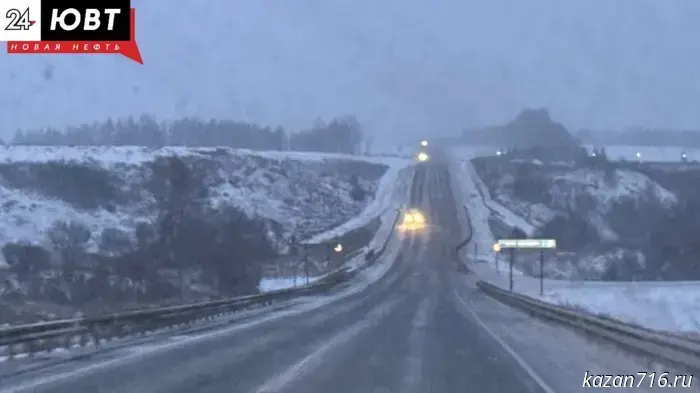 Residents of Tatarstan are being warned about worsening weather conditions.
Meteorologists forecast strong winds and icy conditions.
Residents and visitors of Tatarstan are warned about severe weather conditions expected on January 3 and 4. 03.01.2026. Almetyevsk RTV. Republic of Tatarstan. Almetyevsk.
Residents of Tatarstan are being warned about worsening weather conditions.
Meteorologists forecast strong winds and icy conditions.
Residents and visitors of Tatarstan are warned about severe weather conditions expected on January 3 and 4. 03.01.2026. Almetyevsk RTV. Republic of Tatarstan. Almetyevsk.
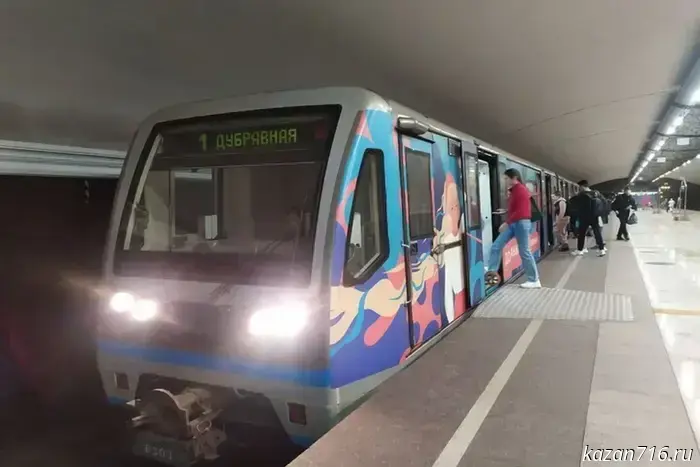 The Prospekt Pobedy and Dubravnaya metro stations in Kazan are closed.
The exact reasons for the closure and the timetable for resuming the stations' operations have not been specified
At present, train service is operating only on the section from Aviastroitelnaya station to Gorki station. 02.01.2026. Komsomolskaya Pravda Kazan. Republic of Tatarstan. Kazan.
The Prospekt Pobedy and Dubravnaya metro stations in Kazan are closed.
The exact reasons for the closure and the timetable for resuming the stations' operations have not been specified
At present, train service is operating only on the section from Aviastroitelnaya station to Gorki station. 02.01.2026. Komsomolskaya Pravda Kazan. Republic of Tatarstan. Kazan.
 Figure skater from Zainsky District Dina Khusnutdinova — victory at a Grand Prix event and the road to new heights
Young figure skater Dina Khusnutdinova from Zainsky District became one of the leading sports stars of 2025; she made a striking impression on the all-Russian sporting stage. January 3, 2026. Zainsky District. Republic of Tatarstan. Zainsk.
Figure skater from Zainsky District Dina Khusnutdinova — victory at a Grand Prix event and the road to new heights
Young figure skater Dina Khusnutdinova from Zainsky District became one of the leading sports stars of 2025; she made a striking impression on the all-Russian sporting stage. January 3, 2026. Zainsky District. Republic of Tatarstan. Zainsk.
Dear citizens! A message was received from the Federal State Budgetary Institution "Department for Hydrometeorology and Environmental Monitoring of the Republic of Tatarstan": January 2, 2026. Verkhneuslonsky District. Republic of Tatarstan. Verkhny Uslon.