
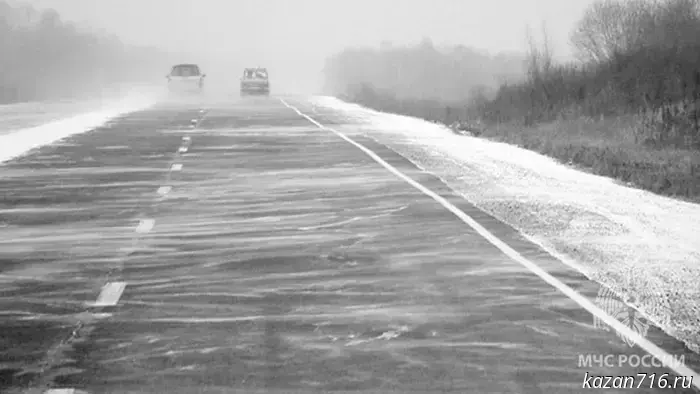
Emergency warning for January 4, 2026
Dear citizens! From the FSBI "Administration for Hydrometeorology and Environmental Monitoring of the Republic of Tatarstan" there is: Consultation — a warning about the intensity of meteorological phenomena from 18:00 on January 3 to 18:00 on January 4, 2026.
On January 4, 2026, in the territory of the Republic of Tatarstan and in the city of Kazan the following are expected:
- snow, wet snow, locally heavy;
- blizzard with visibility reduced to 500 meters and less;
- strong southerly wind with gusts of 15–20 m/s, locally up to 23 m/s (in Kazan 15–20 m/s);
- isolated ice glaze;
- icy roads and snow drifts.
The Main Directorate of the Russian Ministry of Emergency Situations for the Republic of Tatarstan recommends:
When the wind strengthens:
1. We recommend limiting leaving buildings; stay indoors. It is important not to leave children unattended.
2. If strong wind catches you outdoors, seek shelter in underground passages or building entrances. Do not hide from the wind near building walls, as roofing slate and other roofing materials may fall from roofs. The same applies to public transport stops and unfinished buildings.
3. Stay away from advertising billboards, signs, road signs, and power lines when outside.
4. Do not stay near large trees, and do not park vehicles near them — wind-torn branches can be very dangerous.
5. It is deadly dangerous to stand under power lines or approach broken power cables during strong winds.
6. Broken window glass falling from upper floors, as well as roofing elements and plaster decorations torn off by the wind, may be hazardous. This threat increases near buildings under construction or repair.
7. All house windows must be tightly closed; remove from balconies and loggias any items that could fall outside.
8. Stay as far away from windows as possible in residential or work premises.
How to act during a severe blizzard:
Only in exceptional cases leave buildings. Do not go out alone. Inform family members or neighbors where you are going and when you will return. In a car, drive only on major roads and highways. When exiting the vehicle do not move out of its sight. If you stop on the road, give a distress signal with intermittent horn blasts, raise the hood or hang a brightly colored cloth on the antenna; wait for help in the vehicle. You may keep the engine running, slightly open a window to provide ventilation and prevent carbon monoxide poisoning. If you lose your bearings while walking outside a settlement, enter the first house you find, clarify your location and, if possible, wait out the blizzard. If you are exhausted, seek shelter and stay there. Be cautious and careful when dealing with strangers, as thefts from vehicles, apartments, and workplaces increase sharply during natural disasters.
If heavy drifts trap you in a building, calmly and without panic check whether you can get out from under the drifts yourself (using available tools and improvised means). Report the nature of the drifts and whether they can be cleared independently to the civil defense and emergency affairs office or to the local administration. If you cannot clear the snowdrift yourself, try to establish contact with rescue units. Turn on a radio receiver (television) and follow the instructions of local authorities. Take measures to preserve heat and ration food supplies.
For drivers:
Drivers, especially those planning long trips, need to pay special attention to the technical condition of their vehicle. Check the weather forecast for the next day or two, depending on the time of travel. Before a long trip in cold weather, prepare the vehicle in advance for thermal insulation. Before departure check the engine and battery, stock up on fuel, and use a good antifreeze. It is important not to refuel at unverified gas stations, as poor-quality fuel can cause serious problems. Be sure to pack warm clothing and food, and do not forget a charger for your mobile phone.
Check for a pump, tow rope, wheel wrench and jack
Before setting out, check for a pump, tow rope, wheel wrench and jack. It is worth putting a set of jumper cables in the trunk. If possible, it is good to have a compact lithium-based jump-starter/charger.
Emergency kit
The emergency kit should contain: a mobile phone charger and spare battery, warm clothing and blankets, a brush for removing snow and ice from the windshield, a small shovel to free wheels from snow if necessary; a hand-held flashlight and spare batteries, a first aid kit, food and water, an axe and a folding saw, a pack of solid fuel, a lighter, a mini-stove and a pot.
Inform others of your precise route and estimated arrival time
Before departure inform family members, neighbors or friends of your precise route and estimated time of return. If you get into trouble on the road, use modern means of communication — this will significantly speed up the response time of rescue units. When contacting rescuers, indicate your location, notable features of the area, the number of people in the vehicle, ages, whether there are sick people or children, and be sure to provide contact phone numbers for yourself and relatives. Take measures to conserve battery charge.
If you have a breakdown on the highway
Place warning signs in front of and behind the vehicle; these can be a felled tree or any conspicuous items. If the engine is running, slightly open a window to provide ventilation and prevent carbon monoxide poisoning. For a prolonged stop or overnight stay, position the vehicle facing into the wind so exhaust gases do not enter the slightly opened windows of the cab and passenger compartment. For your own safety periodically check the wind direction. It is also important to ensure the exhaust pipe is not blocked by ice or buried by snow. If the vehicle breaks down, do not panic: dial the unified emergency services number "101", report your problem and give your coordinates. Take measures to preserve heat and ration available food supplies. Try to stockpile firewood; if unavailable, combustible materials can be burned — there are usually quite a few of them.
In case of icy conditions
Prepare footwear with good traction. Move carefully, without haste, stepping on the whole sole and taking surface irregularities into account. Elderly people are advised to use a cane with a rubber tip or a special pole with metal spikes. If you slip, squat down to reduce the height of the fall.
Ice on roads is a serious danger to all road users. Drivers should avoid sudden braking: if stopping is necessary, reduce speed smoothly. When braking, press the brake pedal several times to signal drivers behind you. Pay attention to the vehicle’s technical condition, especially the braking system and tire condition. All lighting must be functioning. Use a high-visibility vest at stops.
If possible, avoid long-distance trips.
Pedestrians are advised to cross streets only at marked crosswalks. Do not run across the road in front of moving traffic, as the slippery surface significantly increases vehicle braking distance. Walk facing oncoming traffic. Use a high-visibility vest or attach reflective elements to your clothing.
Drivers:
1. In these conditions, avoid unnecessary lane changes, overtaking, and aggressive maneuvers;
2. Pay attention to the vehicle's technical condition, especially the braking system and tires;
3. Avoid sudden braking; if stopping is necessary, reduce speed smoothly;
4. Press the brake pedal several times to signal drivers behind you;
5. Ensure all lighting is in working order;
6. Drive at a speed that ensures safety in busy areas, near schools, at intersections and bridges, and on turns and descents.
Pedestrians are advised:
1. Be extremely attentive when crossing streets and roads;
2. Cross the street only at marked crosswalks, remembering that due to limited visibility and slippery roads drivers need more time to stop;
3. Use, if possible, only overhead or underground pedestrian crossings for crossing roadways;
4. Do not run across the road in front of moving traffic;
5. Walk facing oncoming traffic;
6. Use a high-visibility vest or attach reflective elements to your clothing.
If possible, avoid trips; refrain from long walks in nature.
In case of any emergency you can always call the unified emergency number — "112". Calls are accepted around the clock and are free from landline and mobile phones.
Другие Новости Казани (Казань716)
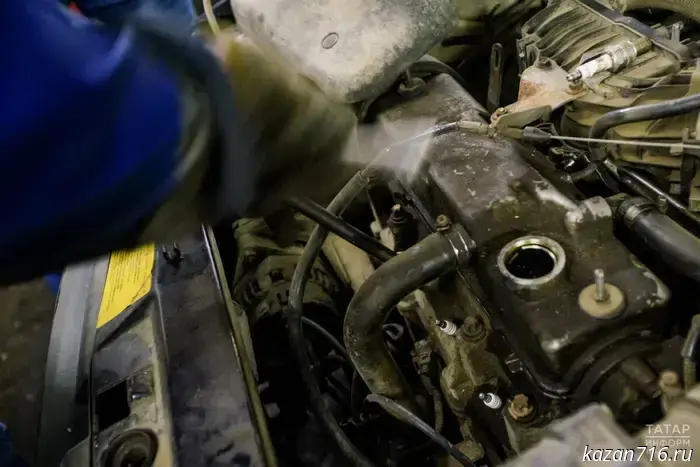 Car inspection: how often do residents of the RT need to undergo it
The technical inspection of a vehicle is a mandatory procedure that drivers encounter regularly. January 4, 2026. Tatar-Inform News Agency. Republic of Tatarstan. Kazan.
Car inspection: how often do residents of the RT need to undergo it
The technical inspection of a vehicle is a mandatory procedure that drivers encounter regularly. January 4, 2026. Tatar-Inform News Agency. Republic of Tatarstan. Kazan.
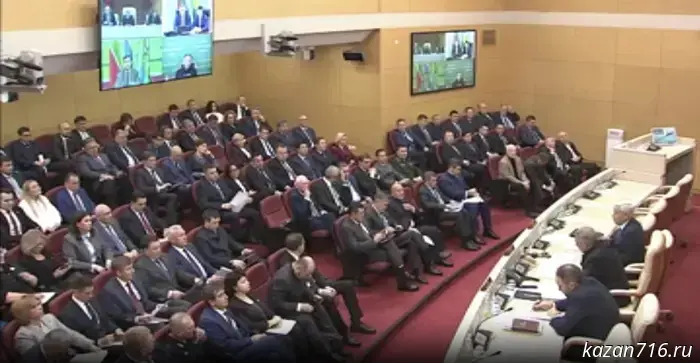 Republic-wide meeting at the Government House of the Republic of Tatarstan
03.01.2026
Chairwoman of the Federation of Trade Unions of the Republic of Tatarstan Elena Kuzbmycheva took part in today's republican meeting at the Government House of the Republic of Tatarstan, which was chaired by the Head of the Republic of Tatarstan Rustam Minnikhanov. 03.01.2026. Federation of Trade Unions of the Republic of Tatarstan. Republic of Tatarstan. Kazan.
Republic-wide meeting at the Government House of the Republic of Tatarstan
03.01.2026
Chairwoman of the Federation of Trade Unions of the Republic of Tatarstan Elena Kuzbmycheva took part in today's republican meeting at the Government House of the Republic of Tatarstan, which was chaired by the Head of the Republic of Tatarstan Rustam Minnikhanov. 03.01.2026. Federation of Trade Unions of the Republic of Tatarstan. Republic of Tatarstan. Kazan.
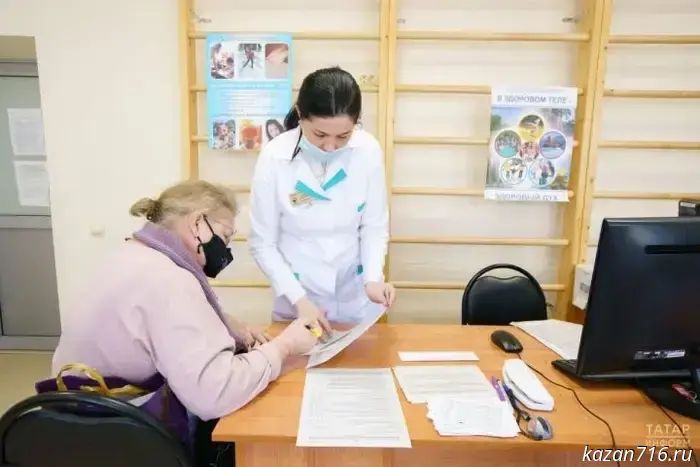 Tatarstan summarizes the results of preventive health examinations of the population for 2025
By the end of 2025, the Republic of Tatarstan demonstrated substantial results in the field of preventive medicine. 03.01.2026. Zainsk-Inform. Republic of Tatarstan. Zainsk.
The operation in Venezuela concerned Ukraine.
The Ukrainian military are concerned about a change in U.S. policy
The U.S. operation in Venezuela has raised concerns in Ukraine. January 4, 2026. Realnoe Vremya. Republic of Tatarstan. Kazan.
Order VO-RT-04.01.26 on movement restrictions
ORDER
04.01.2026 City of Kazan No. VO/RT-04.01.
04.01.2026. Tetyushsky District. Republic of Tatarstan. Tetyushi.
Zakharova denied reports of a visit by Venezuela's vice president.
Maria Zakharova denied reports of a visit by the Vice President of Venezuela and commented on the situation with Russian assets
The official spokesperson of the Russian Foreign Ministry, Maria Zakharova, made two statements. 03.01.2026. Real Time. Republic of Tatarstan. Kazan.
Tatarstan summarizes the results of preventive health examinations of the population for 2025
By the end of 2025, the Republic of Tatarstan demonstrated substantial results in the field of preventive medicine. 03.01.2026. Zainsk-Inform. Republic of Tatarstan. Zainsk.
The operation in Venezuela concerned Ukraine.
The Ukrainian military are concerned about a change in U.S. policy
The U.S. operation in Venezuela has raised concerns in Ukraine. January 4, 2026. Realnoe Vremya. Republic of Tatarstan. Kazan.
Order VO-RT-04.01.26 on movement restrictions
ORDER
04.01.2026 City of Kazan No. VO/RT-04.01.
04.01.2026. Tetyushsky District. Republic of Tatarstan. Tetyushi.
Zakharova denied reports of a visit by Venezuela's vice president.
Maria Zakharova denied reports of a visit by the Vice President of Venezuela and commented on the situation with Russian assets
The official spokesperson of the Russian Foreign Ministry, Maria Zakharova, made two statements. 03.01.2026. Real Time. Republic of Tatarstan. Kazan.
Emergency warning for January 4, 2026
Dear citizens! We have received the following from the Federal State Budgetary Institution "Administration for Hydrometeorology and Environmental Monitoring of the Republic of Tatarstan": Consultation – warning about the intensity of meteorological phenomena from 18:00 on 03 January 2026. Novosheshminsky District. Republic of Tatarstan. Novosheshminsk.