
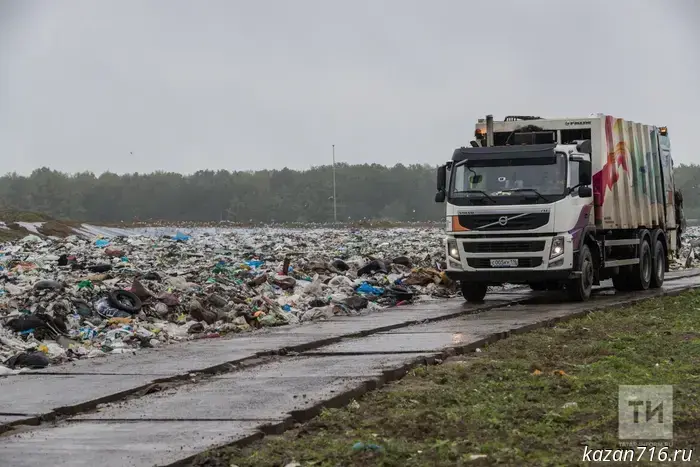
A Disposable World: The Environmental Consequences of Consumer Culture
Our world has become disposable. Plastic bags, bottles, cups, food containers, wet wipes, masks and tableware — these items accompany us daily, creating the illusion of convenience and hygiene.
However, behind that illusion lies a global environmental problem whose consequences are increasingly difficult to ignore. Analysis of the impact of disposable items on the environment shows a long-term, systemic threat to the health of the planet and future generations.
Direct environmental consequences: from production to landfill
The life cycle of a disposable item is extremely short, but its environmental footprint is huge. The process begins with the extraction of non-renewable resources, mainly oil and gas, to produce plastic. At this stage a huge amount of greenhouse gases is released into the atmosphere, exacerbating climate change. After use, which lasts minutes or hours, the item is sent to a landfill, where it can decompose for centuries, releasing toxic substances into the soil and groundwater. Or, even worse, it ends up in rivers and oceans. According to environmentalists' estimates, up to 8 million tonnes of plastic enter the world’s oceans each year, which breaks down into micro-particles. These microplastics (particles smaller than 5 mm) represent a particular hidden threat. They have already been found not only in the bodies of marine creatures, but also in drinking water, food products (for example, salt, honey, fish), and, as scientific studies confirm, in the human body — in the lungs, placenta, blood and intestines. The long-term health consequences of their accumulation are not yet fully understood, but scientists suspect links to inflammatory processes, endocrine disorders and other systemic risks. In addition, disposable items, especially plastic bags and packaging, cause the deaths of millions of animals, birds and fish each year.
A systemic crisis: overflowing landfills, pollution and loss of resources
The problem is not limited to pollution. A culture of disposable consumption places a colossal burden on waste collection and recycling systems. In many regions of the world, including a significant part of Russia, infrastructure for separate waste collection and recycling is poorly developed. As a result, landfills become overfilled, and hazardous waste is often burned at non-specialized plants, poisoning the air with dioxins and other toxic compounds. Moreover, the production of disposable items means the irreversible loss of valuable resources. Energy, water and materials are spent to create an item that is used once and thrown away. This linear “take-make-dispose” economy is irrational and leads to the depletion of natural resources.
The psychological aspect and a paradigm shift
The habit of disposable consumption shapes a specific worldview in which things have no value and their disposal is considered someone else’s problem. This creates a vicious circle in which demand generates supply, and the availability of disposable goods, in turn, stimulates demand. Breaking this circle is only possible through a paradigm shift toward a circular economy based on the principles of the “3Rs”: Reduce, Reuse, Recycle. Many countries already have bans on single-use plastic, deposit-return systems for packaging are being introduced, and producers are being required to take responsibility for packaging disposal.
Solutions at the individual and systemic level
Solving the problem requires joint efforts. At the individual level this means consciously giving up disposable items in favor of reusable alternatives: reusable shopping bags, thermoses, food containers and metal bottles. It is also important to support separate waste collection and choose products with minimal packaging. At the systemic level, government policy is needed that encourages waste reduction at the source, develops infrastructure for composting and recycling, and promotes environmental education. Businesses must move to models that involve reuse of packaging and the use of biodegradable materials that do not harm nature.
Disposable culture is a dead-end branch of human development. Awareness of its environmental consequences, including the threat of microplastics to our own health, is the first step toward transitioning to a more sustainable and responsible way of life, where respect for the planet’s resources becomes the norm rather than the exception. The future depends on the choices we make every day at the checkout, in a café, or simply when taking out the trash.
Alexander Isakov
More news about the event:
Disposable world: the environmental consequences of a culture of consumption
Our world has become disposable. Plastic bags, bottles, cups, food containers, wet wipes, masks and tableware — these items accompany us daily, creating the illusion of convenience and hygiene. 17:04 10.01.2026 Zainsk News - Zainsk
Disposable world: the environmental consequences of a culture of consumption
Our world has become disposable. Plastic bags, bottles, cups, food containers, wet wipes, masks and tableware — these items accompany us daily, creating the illusion of convenience and hygiene. 16:50 10.01.2026 Zainsk-Inform - Zainsk
News from neighboring regions on the topic:
The Center for Environmental Safety explains where to dispose of New Year trees
Holiday trees are considered bulky waste according to the federal law “On Production and Consumption Waste”. 17:27 08.01.2026 Administration of the Belgorod District - Belgorod
Другие Новости Казани (Казань716)
 In Kazan, traffic on Chetaeva Street is disrupted due to water overflow.
A burst pipe on Chetaeva Street impeded vehicle movement, the Kazan State Traffic Inspectorate reports. 10.01.2026. GTRK Tatarstan. Republic of Tatarstan. Kazan.
Can Yaman, the star of the Turkish series "Early Bird," was detained with illegal substances in Istanbul.
In Istanbul, the lead actor in the series "El Turco", Can Yaman, was detained. 10.01.2026. Business Online. Republic of Tatarstan. Kazan.
In Kazan, traffic on Chetaeva Street is disrupted due to water overflow.
A burst pipe on Chetaeva Street impeded vehicle movement, the Kazan State Traffic Inspectorate reports. 10.01.2026. GTRK Tatarstan. Republic of Tatarstan. Kazan.
Can Yaman, the star of the Turkish series "Early Bird," was detained with illegal substances in Istanbul.
In Istanbul, the lead actor in the series "El Turco", Can Yaman, was detained. 10.01.2026. Business Online. Republic of Tatarstan. Kazan.
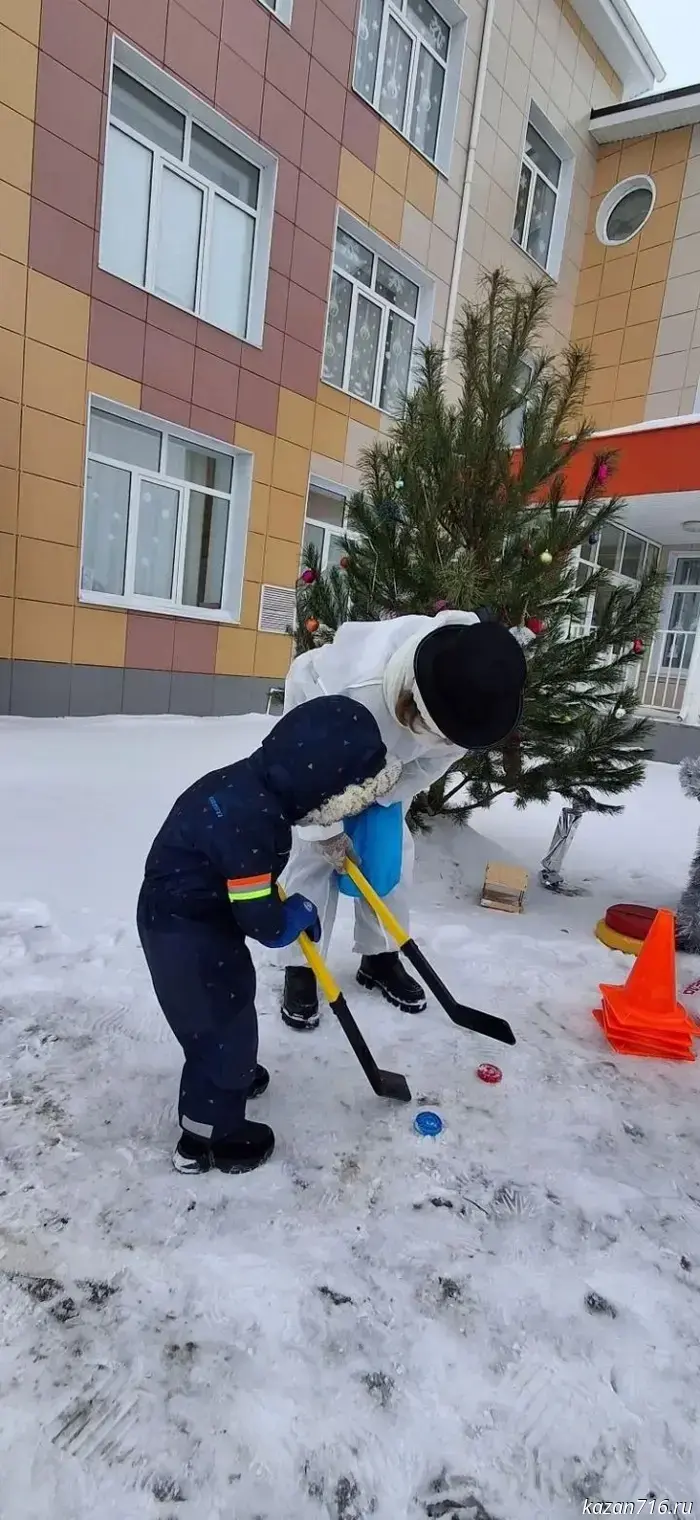 A fairy-tale New Year's quest took place at the Buratino kindergarten in Nurlat.
An atmosphere of a genuine winter adventure prevailed here. As part of the republican project "Winter in Tatarstan", an exciting family quest by Ded Moroz himself took place. January 10, 2026. Nurlat-Inform. Republic of Tatarstan. Nurlat.
A woman was hit by a train near the Sviyazhsk railway station in Tatarstan.
A woman was struck and killed by a train near the Sviyazhsk railway station in Zelenodolsky District, Tatarstan. 10.01.2026. Tatar-Inform News Agency. Republic of Tatarstan. Kazan.
Public oversight: fewer complaints, higher quality. How residents' behavior and the system's operation have changed
The "People's Control" appeals system in Tatarstan remains one of the most widely used tools for addressing everyday and social problems. January 10, 2026. Ministry of IT and Communications. Republic of Tatarstan. Kazan.
A fairy-tale New Year's quest took place at the Buratino kindergarten in Nurlat.
An atmosphere of a genuine winter adventure prevailed here. As part of the republican project "Winter in Tatarstan", an exciting family quest by Ded Moroz himself took place. January 10, 2026. Nurlat-Inform. Republic of Tatarstan. Nurlat.
A woman was hit by a train near the Sviyazhsk railway station in Tatarstan.
A woman was struck and killed by a train near the Sviyazhsk railway station in Zelenodolsky District, Tatarstan. 10.01.2026. Tatar-Inform News Agency. Republic of Tatarstan. Kazan.
Public oversight: fewer complaints, higher quality. How residents' behavior and the system's operation have changed
The "People's Control" appeals system in Tatarstan remains one of the most widely used tools for addressing everyday and social problems. January 10, 2026. Ministry of IT and Communications. Republic of Tatarstan. Kazan.
 Tatarstan topped the list of regions where wages increased the most over the past five years.
Across Russia, average wages have risen by 100%
Photo: Realnoe Vremya
Tatarstan, Kurgan Oblast and Udmurtia were among the top regions where average wages grew the most over the past five years. January 10, 2026. Realnoe Vremya. Republic of Tatarstan. Kazan.
Tatarstan topped the list of regions where wages increased the most over the past five years.
Across Russia, average wages have risen by 100%
Photo: Realnoe Vremya
Tatarstan, Kurgan Oblast and Udmurtia were among the top regions where average wages grew the most over the past five years. January 10, 2026. Realnoe Vremya. Republic of Tatarstan. Kazan.
A Disposable World: The Environmental Consequences of Consumer Culture
Our world has become disposable. Plastic bags, bottles, cups, food containers, wet wipes, masks, and tableware — these items accompany us daily, creating an illusion of convenience and hygiene. January 10, 2026. Zainsk-Inform. Republic of Tatarstan. Zainsk.