
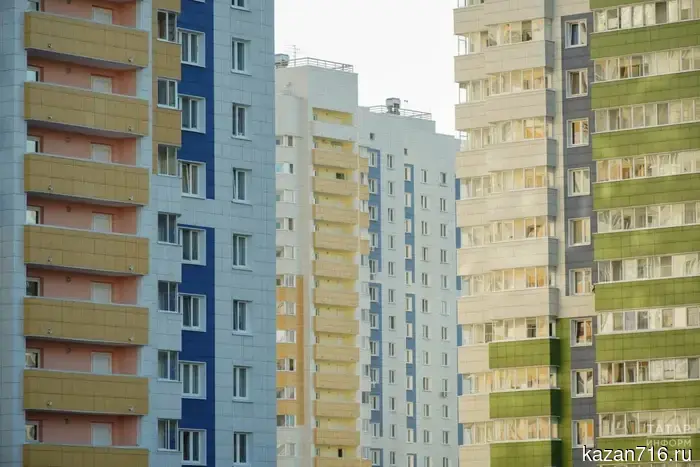
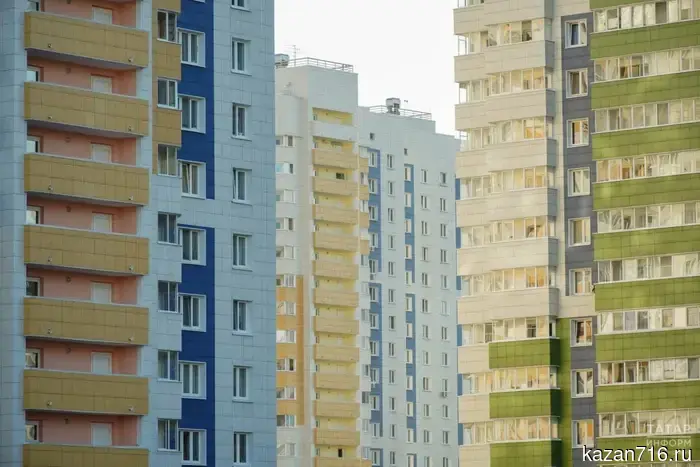
More than 3 million square meters of housing are planned to be commissioned in Tatarstan in 2026.
In 2026, it is planned to introduce 3.175 million square meters of housing. Of this, 1.98 million square meters will be for individual housing construction, 1.045 million square meters for multi-apartment buildings in the investment segment, and 150 thousand square meters under the social mortgage program, which includes 107 houses in 29 districts of the republic. This was reported by the First Deputy Minister of Construction, Architecture, and Housing and Communal Services of the Republic of Tatarstan, Damir Shaidullin, at a meeting in the Government House of Tatarstan. The meeting was chaired by the President of Tatarstan, Rustam Minnikhanov, who connected via video conference with all municipal districts of the republic. As in the previous year, four programs will continue to operate to provide housing for certain categories of citizens. This year, apartments and houses will be provided to 641 orphaned children, 21 large families with five or more children, 61 young families, and three families among forced migrants, migrants from the Far North, and Chernobyl victims. Municipalities must provide updated documents for large families by February 1. For orphaned children, the purchase of 641 residential units in 52 multi-apartment buildings is planned. Support for housing construction will be provided through the republican program for providing infrastructure to land plots allocated to large families, with a budget of 1 billion rubles for roads and engineering networks. In the field of education, 10 facilities will be built in 2026: four new schools in the Kukmor and Bugulma districts, in Kazan, as well as three schools carried over from last year in Agryz, Buinsk, and Menzelinsk. The funding limit is 5.33 billion rubles, with state contracts planned for February. In the preschool sector, a new kindergarten will open in Yelabuga, and two facilities will continue to be built in the Pestrechinsky and Zelenodolsky districts. The work on the ongoing kindergartens has reached 49%, with a budget of 1.38 billion rubles for all facilities. In healthcare, the construction of a reception and diagnostic department in Kazan will continue with a funding limit of about 173 million rubles, with a state contract scheduled for January 30. In sports, 14 facilities are planned to be built: four covered football arenas, six universal sports grounds, three ice arenas, and a Football Development Center in Kazan, which is currently 56% complete. Ice arenas are being built in the Aksubaevsky and Tukayevsky districts. In culture, the construction of one new facility in the Menzelinsk district is planned, along with the continuation of two ongoing projects under the "Comprehensive Development of Rural Territories" program with a budget of 610 million rubles. In ecology, the reclamation of sludge fields in Kazan continues, with the project's readiness at 93%. In youth policy, seven facilities will be built with funding of 843 million rubles: six children's health camps and a universal sports ground in the Zelenodolsky district. Work has reached 8% on five camps. This year, 27 social infrastructure projects will also be implemented: 21 executive committees and six points of comprehensive service for the population, totaling 297 million rubles. The improvement of public spaces within the framework of the national project "Infrastructure for Life," the All-Russian competition for the best projects, and the republican program will cover 51 territories. 2.445 billion rubles have been allocated for these purposes, with state contracts planned by the end of March. Eight republican and federal programs are planned for the modernization of engineering networks. Contracts for six republican programs will be concluded by the end of February for wastewater treatment facilities; by the end of March for street lighting restoration and drinking water supply; by the end of April for boiler replacement in heating plants; and by the end of May for the reconstruction and major repairs of gas consumption networks. Federal programs include nine engineering infrastructure projects worth 955 million rubles and 17 projects for the modernization of communal infrastructure. Shaidullin noted that construction remains one of the most hazardous industries, so labor safety control and injury prevention remain a priority. Since the beginning of the year, the State Construction Supervision has conducted nine inspections and issued 14 resolutions, while specialists from the Main Investment and Construction Management have carried out 58 supervisory activities.
The Minister emphasized that an annual republican competition for "Best Organization for Labor Protection in the Construction Industry" is held, where winners are determined in eight nominations. Letters have been sent to municipal heads for the nomination of candidates. President of Tatarstan Rustam Minnikhanov noted that labor protection at construction sites is a matter of paramount importance, and violations of standards pose a direct threat to the life and health of workers. He emphasized that this issue must be kept under close control at every site.
Photo: © Vladimir Vasilyev / "Tatar-inform"
Другие Новости Казани (Казань716)
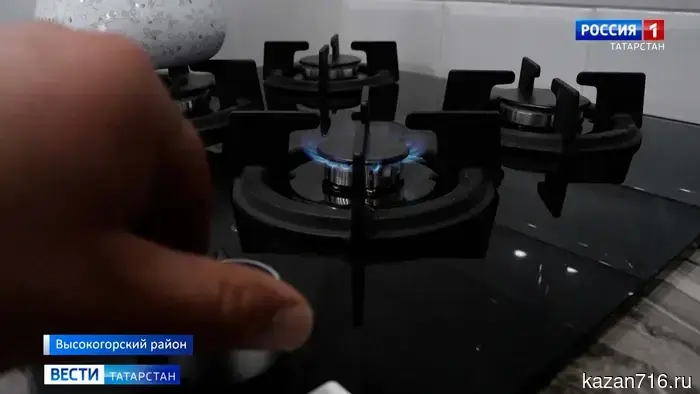 In Tatarstan, the record for daily gas supply has been updated.
In Tatarstan, a new historical record for daily natural gas supply has been set. 24.01.2026. GTRK Tatarstan. Republic of Tatarstan. Kazan.
In Tatarstan, the record for daily gas supply has been updated.
In Tatarstan, a new historical record for daily natural gas supply has been set. 24.01.2026. GTRK Tatarstan. Republic of Tatarstan. Kazan.
More than 3 million square meters of housing are planned to be commissioned in Tatarstan in 2026.
In 2026, it is planned to introduce 3.175 million square meters of housing. Of this, 1.98 million square meters will be for individual housing construction, 1.045 million square meters for multi-apartment buildings in the investment segment, and 150 thousand. 01.24.2026. IA Tatar-inform. Republic of Tatarstan. Kazan.