
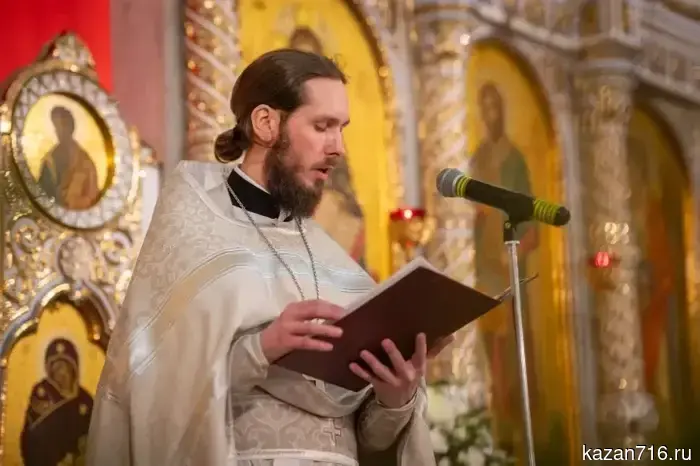
Everything about Palm Sunday: a conversation with the priest of Zainsk
Acting Dean of the Zainsk District, priest Rodion Sadykov, rector of the Holy Trinity Church — on the meaning of Palm Sunday, faith and repentance, and folk traditions
— Father Rodion, please explain for our readers: what is the essence of the Feast of the Lord's Entry into Jerusalem? Why is it so important for Christians and what does it signify?
— The Feast of the Lord's Entry into Jerusalem is one of the key events in the life of Jesus Christ, celebrated on the last Sunday before Easter. On this day, Christ enters Jerusalem on a young donkey, fulfilling the Old Testament prophecy: the King of Israel will come to His people "humble, sitting on a donkey and a colt." This image symbolizes the peaceful nature of His Kingdom — not as a conqueror on a war horse, but as the King of peace and mercy. When people learned of Jesus' approach, they went out to meet Him with palm branches, laying their clothes on the ground. They shouted: "Hosanna! Blessed is He who comes in the name of the Lord!" (Matt. 21:9). This was an expression of joy and recognition of Him as the long-awaited Messiah. However, this triumphant entry also foreshadowed the coming sufferings of Christ. Just a few days later, He would be betrayed, condemned, and crucified. The Entry into Jerusalem opens Holy Week, which culminates in Easter — the Resurrection of Christ. This feast calls us to reflect on how we meet Christ in our lives: with sincere faith and love or with indifference and betrayal, like those who, just a few days later, shouted: "Crucify Him!"
— Why was the willow chosen for this feast in Russia, rather than, say, birch or pine? What do these fluffy branches symbolize that we bring to the church?
— In Russia, palm branches are not found in early spring. If we recall which plant awakens first after winter, it is, of course, the willow. The blessing of the willow in the church symbolizes the cleansing of the soul and readiness to meet Christ. The willow also reminds us of the need for spiritual renewal and repentance.
— How should an ordinary person properly observe the day of the Lord's Entry into Jerusalem — in the church, at home, with family? What can be done, and what is better to refrain from?
— Try your best to attend the service on this day. The church day begins in the evening, so if you work on Sunday, you can and should come on Saturday evening, pray, and meet Christ with willow branches, together with the Church, proclaiming: "Hosanna! Blessed is He who comes in the name of the Lord!" If possible, it is better to come with the whole family on Sunday. Such feasts are very memorable for children. It is no coincidence that in the Gospel we hear that it was the children who joyfully welcomed the Lord. Let their souls be nourished by Divine love; take your children to the service. Do not deprive them of this joy and memories that will last a lifetime. At home, you can read the Gospel or a children's Bible, watch a video about this feast. The feast is not only in the church: our entire life should be filled with this light. There should be no division — this is in the church, and this is at home. Everything should be whole and the same everywhere. What else can be done? You can do good deeds, remember whom and what we promised, and fulfill those promises. But to sin, overindulge, gather in noisy companies where everything crosses the bounds of decency is not worth it anywhere and never.
— It is said that Palm Sunday is the "entry" into the strictest week of the year — Holy Week. How can we mentally prepare ourselves to pass this week before Easter with dignity?
— Yes, the Lord's Entry into Jerusalem is the last day before Holy Week, the strictest and most focused week of the year. It is said: how you meet Easter is how you will spend the whole year. But to meet Easter meaningfully, not just as a holiday of cakes and eggs, one must first be with Christ in those moments when He Himself tells us: "Stay here and watch with Me." To not miss anything in this rich week, plan your time. Try to attend as many services as possible to be with Christ. There is a tradition to reread all four Gospels during this week — try to read at least one. Write down in advance what each day of the week is dedicated to. Instead of music and radio, you can play spiritual hymns. Bring your small sacrifice to God: for on Great Friday, the greatest sacrifice will be made for us — the Son of God on the Cross, taking upon Himself our sins.
— Many believe that blessed willow heals diseases and protects the home from misfortunes. Is this true or superstition? And what should be done with last year's branches?
— Blessed willow does not heal diseases — the Lord heals. We must understand that only God helps us according to our faith. Neither the willow, nor eggs, nor cakes. All of this is just tradition; it should not be given too much importance. Last year's blessed willow branches should be burned or taken to the church: there they will be burned in a special place, where later the sanctity will not be desecrated by people or animals. I wish everyone God's help. There is very little time left until Easter; let us spend this time with God!
Roza Ilaltdinova
Другие Новости Казани (Казань716)
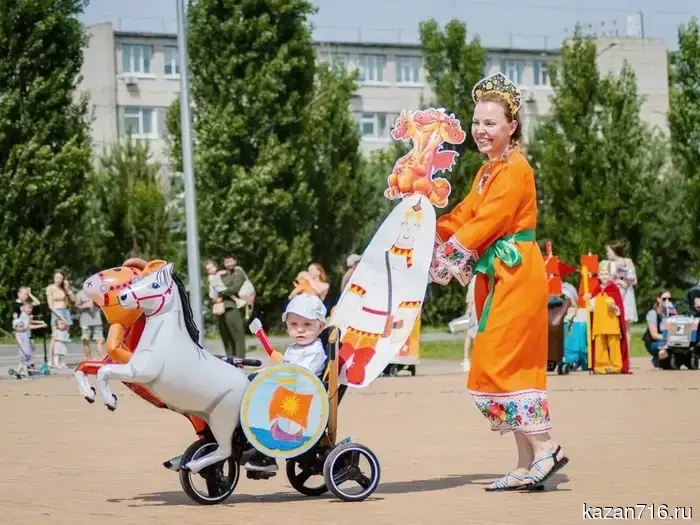 "Baby Fest": a stroller festival will take place in Kazan
To participate, registration is required.
Photo: provided by the Railway Workers' House of Culture
On May 2 in Kazan, the stroller festival "Bälaqäç-fest" will take place at the children's park "Yelmay." 03.04.2026. Administration of Kazan. Republic of Tatarstan. Kazan.
"Baby Fest": a stroller festival will take place in Kazan
To participate, registration is required.
Photo: provided by the Railway Workers' House of Culture
On May 2 in Kazan, the stroller festival "Bälaqäç-fest" will take place at the children's park "Yelmay." 03.04.2026. Administration of Kazan. Republic of Tatarstan. Kazan.
 I. Metshin: "Young guys are becoming engineers - this is the future of aircraft manufacturing."
The mayor of the city, Ilsur Metshin, visited the production site that develops and manufactures FPV drones and other unmanned systems.
Today, the mayor of Kazan, Ilsur Metshin, visited the production site "AIM," 03.04.2026. Administration of Kazan. Republic of Tatarstan. Kazan.
I. Metshin: "Young guys are becoming engineers - this is the future of aircraft manufacturing."
The mayor of the city, Ilsur Metshin, visited the production site that develops and manufactures FPV drones and other unmanned systems.
Today, the mayor of Kazan, Ilsur Metshin, visited the production site "AIM," 03.04.2026. Administration of Kazan. Republic of Tatarstan. Kazan.
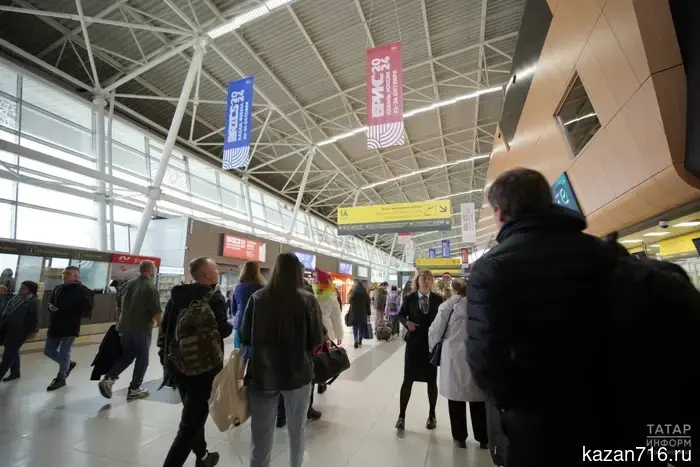 The international passenger traffic at Kazan Airport increased by 31%.
In the first quarter of the current year, 2026, the international passenger traffic at the airport of the capital of Tatarstan increased by 31% year-on-year, rising from 295,413 air passengers to 387,090. 03.04.2026. IA Tatar-inform. Republic of Tatarstan. Kazan.
The police of Tatarstan revealed the fact of displaying prohibited symbols.
The offender has been brought to administrative responsibility.
It has been established that in Nizhnekamsk on March 27, 2026, at 16:10, in a "Lada Kalina" car parked at house 32 on Yunist Street, on April 3, 2026. Department of Internal Affairs of the Nizhnekamsk District. Republic of Tatarstan. Nizhnekamsk.
The international passenger traffic at Kazan Airport increased by 31%.
In the first quarter of the current year, 2026, the international passenger traffic at the airport of the capital of Tatarstan increased by 31% year-on-year, rising from 295,413 air passengers to 387,090. 03.04.2026. IA Tatar-inform. Republic of Tatarstan. Kazan.
The police of Tatarstan revealed the fact of displaying prohibited symbols.
The offender has been brought to administrative responsibility.
It has been established that in Nizhnekamsk on March 27, 2026, at 16:10, in a "Lada Kalina" car parked at house 32 on Yunist Street, on April 3, 2026. Department of Internal Affairs of the Nizhnekamsk District. Republic of Tatarstan. Nizhnekamsk.
 Tatarstan sent an emergency humanitarian cargo to the residents of Iran who have been affected by Israeli and American aggression.
Today, the Nefis Charitable Foundation, together with the Spiritual Administration of Muslims of the Republic of Tatarstan and the Consulate General of the Islamic Republic of Iran, sent an emergency humanitarian cargo to Iran, 03.04.2026. Spiritual Administration of Muslims. Republic of Tatarstan. Kazan.
Tatarstan sent an emergency humanitarian cargo to the residents of Iran who have been affected by Israeli and American aggression.
Today, the Nefis Charitable Foundation, together with the Spiritual Administration of Muslims of the Republic of Tatarstan and the Consulate General of the Islamic Republic of Iran, sent an emergency humanitarian cargo to Iran, 03.04.2026. Spiritual Administration of Muslims. Republic of Tatarstan. Kazan.
Everything about Palm Sunday: a conversation with the priest of Zainsk
Acting Dean of the Zainsk District, Priest Rodion Sadykov, the rector of the Holy Trinity Church — on the meaning of Palm Sunday, faith and repentance, and folk traditions — Father Rodion, please explain for our readers: 03.04.2026. News of Zainsk. Republic of Tatarstan. Zainsk.