
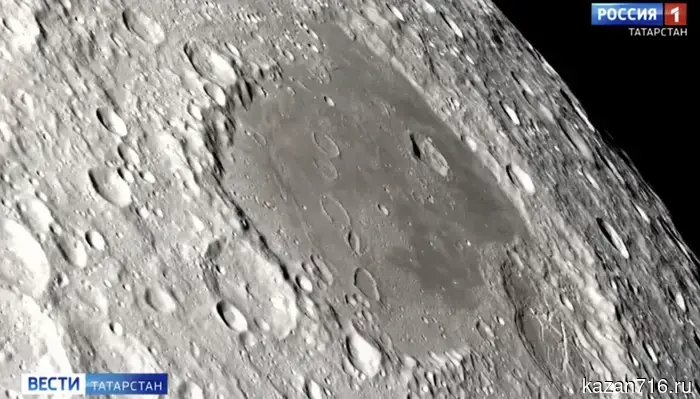
Astronomers from KFU in Kazan are developing precise methods for landing on the Moon.
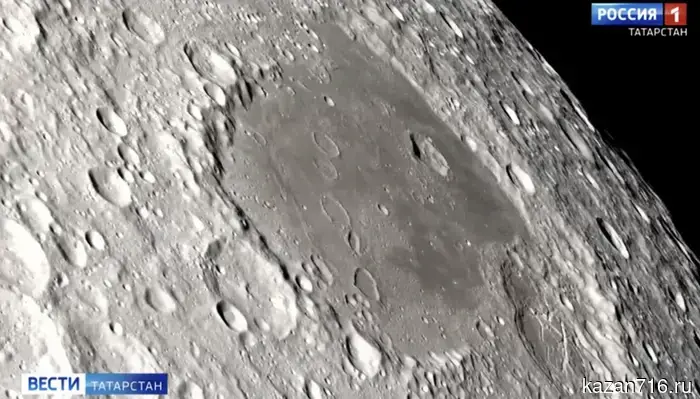
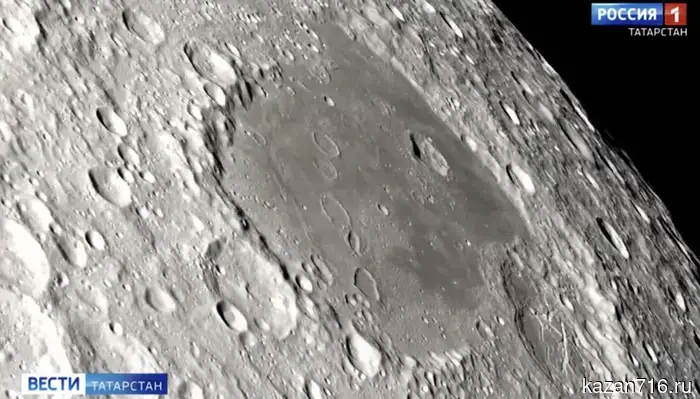
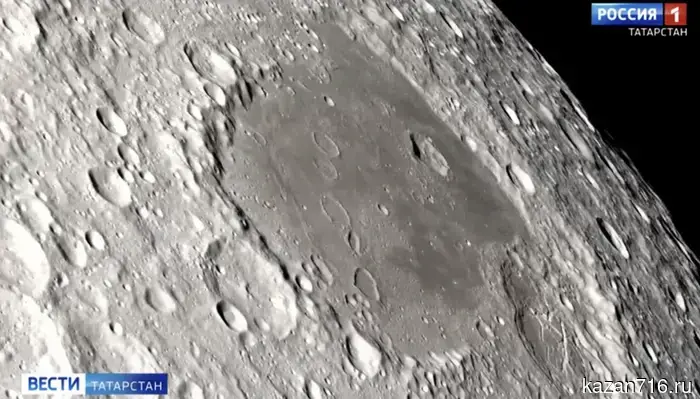
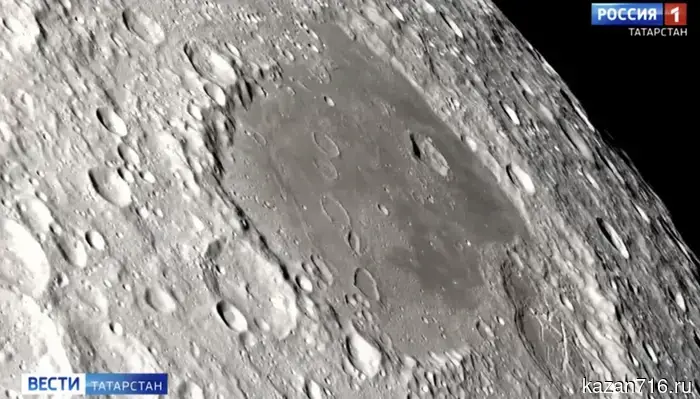
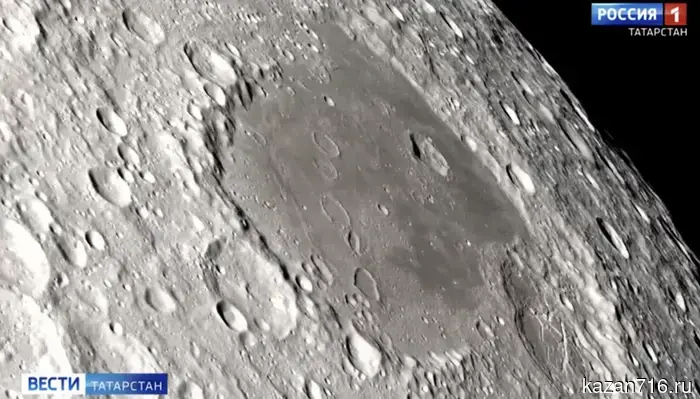
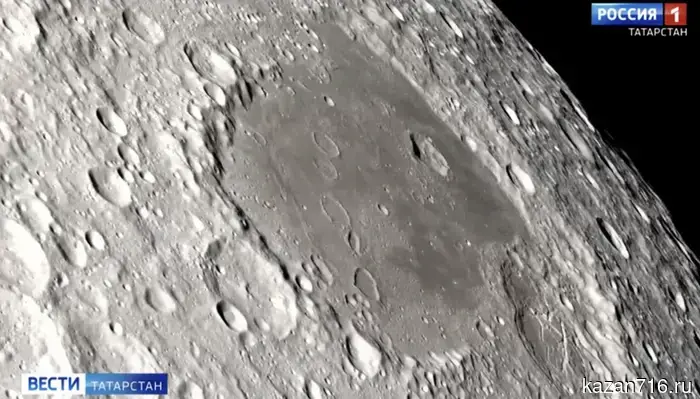
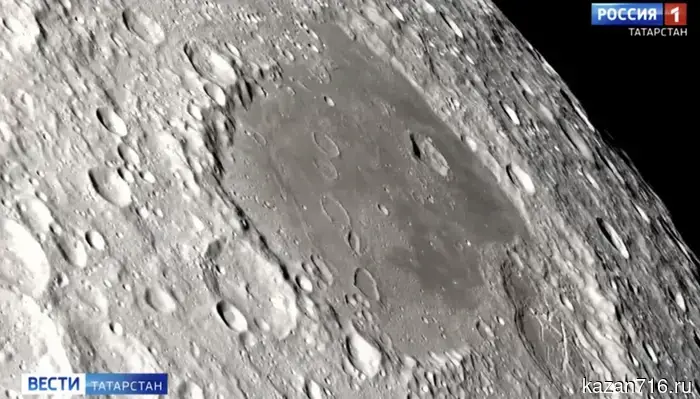
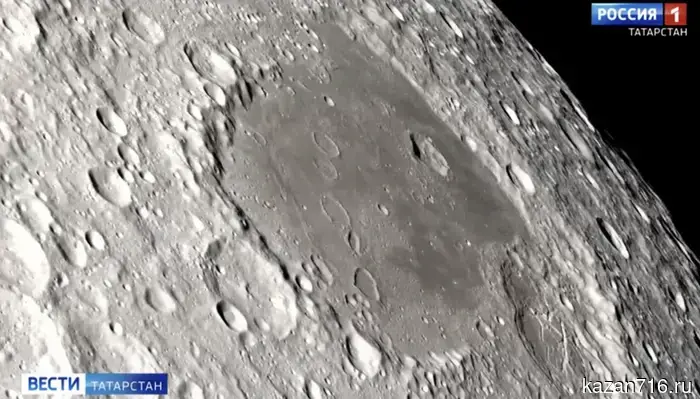
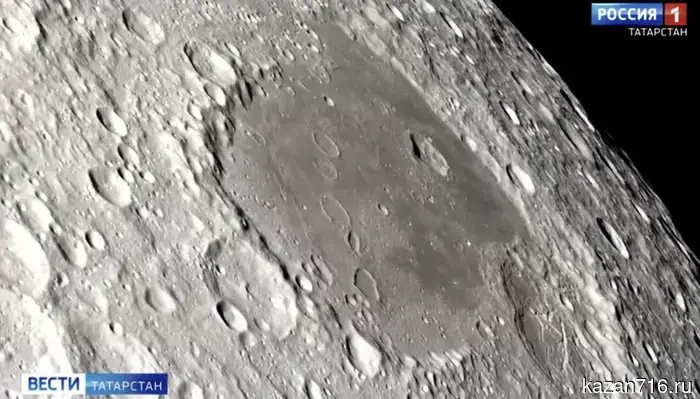
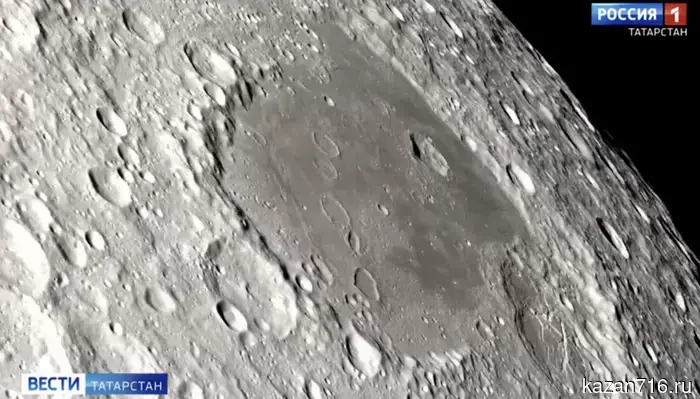
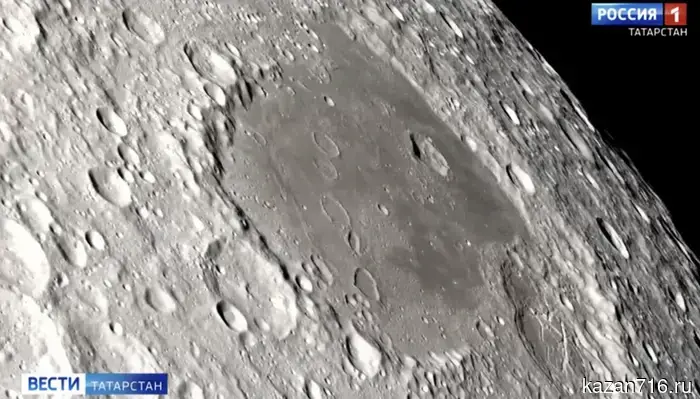
The marathon was organized by the regional GTRK. Our television and radio company presented two major pieces. The first is about the research of the Engelhardt Observatory. Kazan astronomers are studying Earth's natural satellite. The achievable goal is to make Russia the first country to successfully exploit useful resources on the Moon. Report by Elvira Faizulina. Being the first in the exploration of lunar resources is the goal set by scientists. Large-scale lunar research is being conducted in Tatarstan. Kazan astronomers have always been renowned for their fundamental approach to studying Earth's natural satellite. A report from the astronomical observatories of Kazan Federal University, which, by the way, are included in the UNESCO World Heritage list. The symbol of celestial mysteries—the natural satellite of Earth—has always attracted people, inspiring myths, art, and of course, scientific research. Mountain ranges, seas of solidified lava, and thousands of depressions: scientists are gradually uncovering the secrets of the vast expanses of the Moon. Kazan astronomers have been studying the satellite for over a hundred years. Ten lunar craters are named after them. "My father, Anatoly Nefediev. A large crater at the Moon's south pole is named after him because he created the first maps of the Moon's libration zone," said Yuri Nefediev, the scientific director of the Engelhardt Astronomical Observatory, an interdepartmental educational and scientific center for space research and technology. Today, he and his colleagues are also conducting lunar research, but at a new level and with updated goals. "A battle is underway—the battle for the Moon... Theoretical modeling is being done to determine where the most resource-rich areas on the Moon might be located," the scientist explained. To claim their place on the Moon—this is what the research teams at the Engelhardt Astronomical Observatory are working on. Scientific projects implemented in collaboration with colleagues from other cities aim to ensure that landing on the Moon is as successful as possible for Russians. "If we land on a mountain, like Luna-15, we will simply crash. We are currently addressing the problem of how to achieve this goal with an accuracy of at least 100 meters. Theoretical modeling is underway to identify the most resource-rich areas on the Moon. We are studying this using various methods, including building neural networks based on morphological features, which a graduate student is working on. The second task is coordinate-time support, to bring the GLONASS system to the Moon's orbit," shared Yuri Nefediev. And this is the heart of the Engelhardt Observatory—the 14-inch astronomical mirror telescope, equipped to world standards. The operation of the robotic telescope is regulated by an operator. The device is controlled through a special program. "You can set up installations to aim at a specific object, which can be selected manually or configured through the program, and data is entered. The telescope will automatically adjust at the right moment to the necessary point in the celestial sphere and take the required measurements," said Farit Ayupov, an engineer at the V.P. Engelhardt Astronomical Observatory of KFU, pointing to a photo of the Andromeda Nebula taken with this telescope. Meanwhile, in the halls of the KFU city observatory, university scientists, together with the Academy of Sciences of Tatarstan, are studying the results of observations obtained with the one-and-a-half-meter telescope installed in Turkey. This is a joint astronomical project between the two countries. The main task is ground-based optical support for the orbital observatory "Spectrum-X-Ray-Gamma." Together, they allow the study of quasars, galaxy clusters, and binary star systems. And here, within the walls of the observatory, following a tradition established in the last century, new personnel—astronomers and geodesists—are being trained. "In this building, studies of stars and the Earth were conducted—this was in the 19th century, in the 20th century, and it continues to this day: when stars help in the study of the Earth, and the Earth is our main focus. Using remote sensing data from space, we obtain various data from space vehicles. In this classroom, you see a space image; the possibilities of space imaging are astonishing," shared Vladimir Bezmenov, head of the Department of Astronomy and Space Geodesy at the Institute of Physics of KFU.
Using the capabilities of modern technologies and the rich experience of generations of Kazan astronomers, scientists and students are gradually paving new paths to the stars, so as not to lose the title of "first" in space.
More news about the event:
Kazan scientists are working on the exploration of lunar resources
Large-scale lunar research is being conducted in Tatarstan, reports "Vesti Tatarstan." 18:57 12.04.2026 IA Tatar-inform - Kazan
KFU astronomers in Kazan are developing precise landing methods for the Moon
The marathon was organized by the regional GTRK. Our television and radio company presented two major pieces. 17:36 12.04.2026 GTRK Tatarstan - Kazan
News from neighboring regions on the topic:
The crew of the "Orion" spacecraft has successfully returned to Earth
The "Artemis 2" mission has returned to Earth after orbiting the Moon
Astronauts, who visited the vicinity of the Moon for the first time in 50 years, have successfully returned to Earth. 14:36 11.04.2026 KamchatkaMedia.Ru - Petropavlovsk-Kamchatsky
The crew of the "Orion" spacecraft has successfully returned to Earth
The "Artemis 2" mission has returned to Earth after orbiting the Moon
Astronauts, who visited the vicinity of the Moon for the first time in 50 years, have successfully returned to Earth. 09:18 11.04.2026 KrasnoyarskMedia - Krasnoyarsk
The crew of the "Orion" spacecraft has successfully returned to Earth
The "Artemis 2" mission has returned to Earth after orbiting the Moon
Astronauts, who visited the vicinity of the Moon for the first time in 50 years, have successfully returned to Earth. 05:18 11.04.2026 KrasnodarMedia - Krasnodar
The crew of the "Orion" spacecraft has successfully returned to Earth
The "Artemis 2" mission has returned to Earth after orbiting the Moon
Astronauts, who visited the vicinity of the Moon for the first time in 50 years, have successfully returned to Earth. 12:17 11.04.2026 AmurMedia.Ru - Khabarovsk
The crew of the "Orion" spacecraft has successfully returned to Earth
The "Artemis 2" mission has returned to Earth after orbiting the Moon
Astronauts, who visited the vicinity of the Moon for the first time in 50 years, have successfully returned to Earth. 11:17 11.04.2026 IrkutskMedia.Ru - Irkutsk
The crew of the "Orion" spacecraft has successfully returned to Earth
The "Artemis 2" mission has returned to Earth after orbiting the Moon
Astronauts, who visited the vicinity of the Moon for the first time in 50 years, have successfully returned to Earth. 12:15 11.04.2026 ChitaMedia - Chita
The crew of the "Orion" spacecraft has successfully returned to Earth
The "Artemis 2" mission has returned to Earth after orbiting the Moon
Astronauts, who visited the vicinity of the Moon for the first time in 50 years, have successfully returned to Earth. 14:14 11.04.2026 MagadanMedia.Ru - Magadan
The crew of the "Orion" spacecraft has successfully returned to Earth
The "Artemis 2" mission has returned to Earth after orbiting the Moon
Astronauts, who visited the vicinity of the Moon for the first time in 50 years, have successfully returned to Earth. 05:14 11.04.2026 SevastopolMedia - Sevastopol
The crew of the "Orion" spacecraft has successfully returned to Earth
The "Artemis 2" mission has returned to Earth after orbiting the Moon
Astronauts, who visited the vicinity of the Moon for the first time in 50 years, have successfully returned to Earth. 13:05 11.04.2026 IA Eaomedia.Ru - Birobidzhan
Schoolchildren from the Lgovsky district got acquainted with the space developments of Yuzhny Federal University
When did Yuzhny Federal University start engaging in space research? What is a satellite and how is it created? 21:48 10.04.2026 Yuzhny Federal University - Kursk
Eternal companion of the Earth
On the eve of the Cosmonautics Day holiday, a discussion dedicated to Earth's natural satellite—the Moon—was held at the children's library. 01:52 11.04.2026 Okhinskaya Central Library - Okha
Другие Новости Казани (Казань716)
 123456 and "password": the top weak passwords of Russians in 2026
Analysis of data leaks for 2025-2026 showed: every third adult user in the Russian Federation uses a password that a hacker can crack in less than a second.
The most popular passwords among Russians: 12.04.2026. Zainsk-Inform. Republic of Tatarstan. Zainsk.
123456 and "password": the top weak passwords of Russians in 2026
Analysis of data leaks for 2025-2026 showed: every third adult user in the Russian Federation uses a password that a hacker can crack in less than a second.
The most popular passwords among Russians: 12.04.2026. Zainsk-Inform. Republic of Tatarstan. Zainsk.
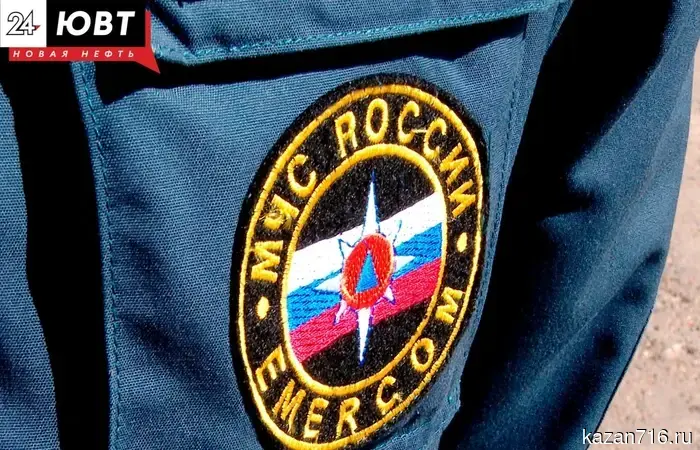 In the Laishevsky district, two fisherman brothers stranded on the Kama were rescued.
They were brought ashore by rescuers on a hovercraft.
In the Laishevsky district, two fishermen stranded on a hovercraft in the middle of the Kama River were rescued. 12.04.2026. Almetyevsk RTV. Republic of Tatarstan. Almetyevsk.
April 12 - Cosmonautics Day
Dear residents and guests of our Tetyushi district! Please accept sincere congratulations on Cosmonautics Day! 12.04.2026. Tetyushi district. Republic of Tatarstan. Tetyushi.
April 12 - Cosmonautics Day
Dear residents and guests of our Tetyushi district! Please accept sincere congratulations on Cosmonautics Day! 12.04.2026. Tetyushi district. Republic of Tatarstan. Tetyushi.
In the Laishevsky district, two fisherman brothers stranded on the Kama were rescued.
They were brought ashore by rescuers on a hovercraft.
In the Laishevsky district, two fishermen stranded on a hovercraft in the middle of the Kama River were rescued. 12.04.2026. Almetyevsk RTV. Republic of Tatarstan. Almetyevsk.
April 12 - Cosmonautics Day
Dear residents and guests of our Tetyushi district! Please accept sincere congratulations on Cosmonautics Day! 12.04.2026. Tetyushi district. Republic of Tatarstan. Tetyushi.
April 12 - Cosmonautics Day
Dear residents and guests of our Tetyushi district! Please accept sincere congratulations on Cosmonautics Day! 12.04.2026. Tetyushi district. Republic of Tatarstan. Tetyushi.
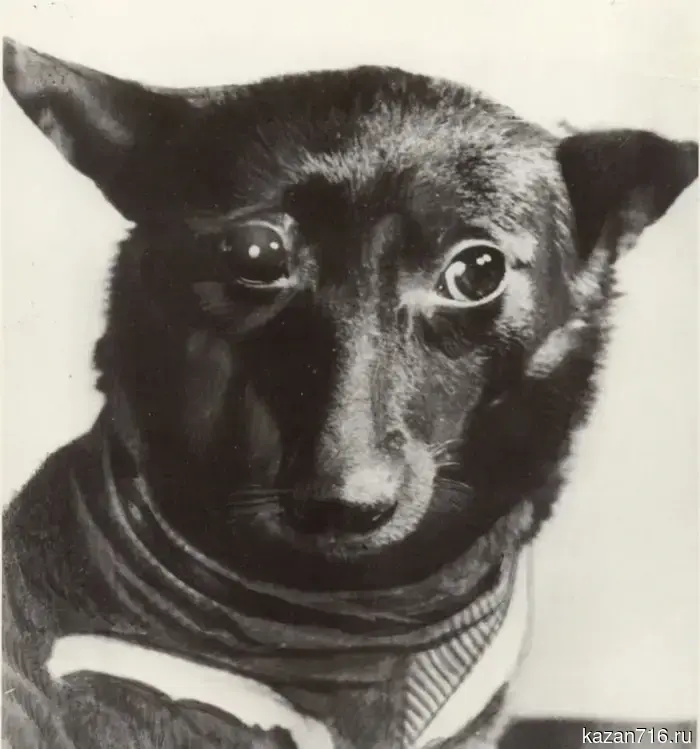 Zainsk cosmic: 65 years ago, the dog Chernushka landed on our land.
On April 12, Russia and the whole world celebrate the 65th anniversary of space exploration.
65 years ago, humanity first conquered space. 12.04.2026. Zainsk-Inform. Republic of Tatarstan. Zainsk.
Zainsk cosmic: 65 years ago, the dog Chernushka landed on our land.
On April 12, Russia and the whole world celebrate the 65th anniversary of space exploration.
65 years ago, humanity first conquered space. 12.04.2026. Zainsk-Inform. Republic of Tatarstan. Zainsk.
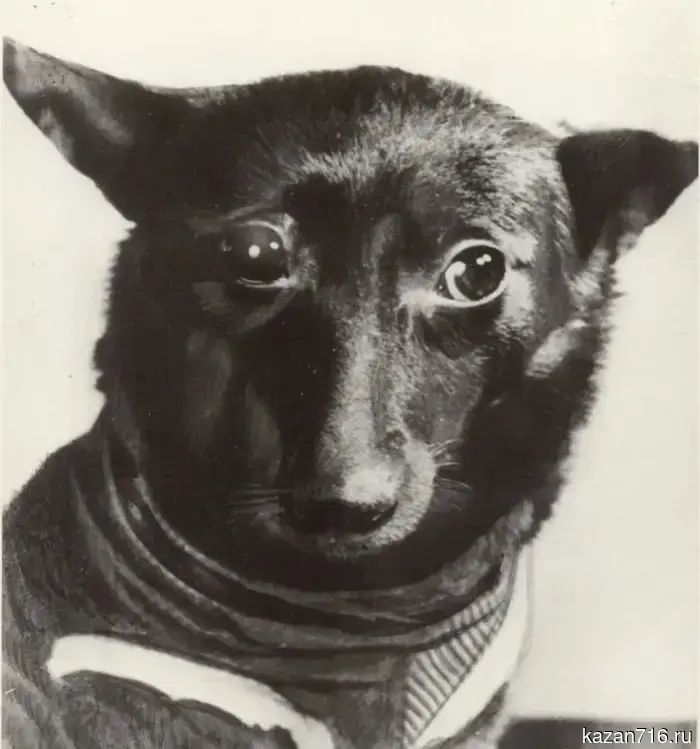 Zainsk cosmic: 65 years ago, the dog Chernushka landed on our land.
On April 12, Russia and the whole world celebrate the 65th anniversary of space exploration.
65 years ago, humanity first conquered space. 12.04.2026. Zainsk-Inform. Republic of Tatarstan. Zainsk.
Zainsk cosmic: 65 years ago, the dog Chernushka landed on our land.
On April 12, Russia and the whole world celebrate the 65th anniversary of space exploration.
65 years ago, humanity first conquered space. 12.04.2026. Zainsk-Inform. Republic of Tatarstan. Zainsk.
Astronomers from KFU in Kazan are developing precise methods for landing on the Moon.
The marathon was organized by the regional GTRK. Our television and radio company presented two major pieces. 12.04.2026. GTRK Tatarstan. Republic of Tatarstan. Kazan.