
Researchers from KFU explained how electronic light causes photothermal heating of transparent nanomaterials.
It opens new possibilities for targeted therapy of oncological diseases. Scientists from Kazan Federal University have also revealed the mechanism by which electronic light leads to photothermal heating in optically transparent nanomaterials. This mechanism opens new opportunities for diagnostics and therapy of oncological diseases. The study, published in the journal Laser & Photonics Reviews, explains how optically transparent heterogeneous systems can capture light through scattering rather than absorption. "The term 'electronic light' describes photons that experience inelastic scattering on electronic states," explains Sergey Kharintsev, head of the Department of Optics and Nanophotonics at the Institute of Physics. "This effect manifests in the Raman spectra of spatially confined heterogeneous media, such as amorphous and porous materials, high-entropy crystals, foams, gels, polymers, cells, etc., as a featureless broadband background known as electronic light scattering (ELS). Narrow molecular lines that define the chemical composition of the substance are superimposed on this background." According to the professor, the physical nature of this background remained unclear for many years, leading researchers to simply subtract it from the spectra to improve the signal-to-noise ratio for molecular lines. However, in earlier works, Professor Kharintsev's group found that the interaction of light with spatially confined media provides a change in the momentum of electrons similar to how phonons transfer momentum to electrons in bulk crystals. "A key factor is the emergence of additional electronic states associated with the violation of the spatial symmetry of the material," notes S. Kharintsev. This can lead to a significant increase in the strength of the oscillator for indirect electronic transitions. The scientists showed that the broadband ELS signal contains information about the energy band structure of materials. This distinguishes electronic light scattering from vibrational combination light scattering, which is responsible for the chemical nature of the substance. "The intrigue of our research is that the optically transparent medium begins to heat up as soon as it becomes heterogeneous. This reveals a previously unknown mechanism of optical heating of media that do not absorb light. Our discovery prompts a reconsideration of established therapeutic methods – photothermal and photodynamic therapy. Traditionally, they use light-absorbing agents: photosensitizers, organic dyes, metallic nanocapsules, which are targeted to tumor tissues to convert light into heat or chemical energy to destroy cancer cells. Our approach allows for the direct use of light in living systems for therapeutic purposes without the introduction of external agents," continued the head of the department. The "agent-free" strategy transforms photothermal therapy into a powerful and non-invasive tool: tumors can be treated in a targeted manner while leaving healthy tissues untouched. The first attempts to use light for treating tumor diseases relied on the resonant absorption of ultra-powerful laser radiation (> TW/cm²), which damaged both diseased and healthy tissues. Therefore, the method did not gain widespread use. Additionally, standard approaches to photothermal therapy do not allow for the diagnosis of cancer cells. "To demonstrate the physical principle, we deliberately chose a simple chemical system – a microemulsion of decane/water stabilized by a surfactant," says the first author of the article, Elina Battalova. This microemulsion is optically transparent but begins to heat up under the influence of light at the percolation point when its electrical conductivity sharply increases. Conceptually, such a medium can model a malignant tumor that can be selectively destroyed under non-resonant excitation using inelastic light scattering rather than absorption. "This means that the incident radiation of a given wavelength 'does not notice' healthy cells across a wide spectral range but selectively destroys cancer cells due to ELS," explains Battalova. "We showed that the optically transparent microemulsion can heat up by several tens of degrees at light intensities of about kW/cm². We explained this unusual behavior by the bending of energy bands, where electronic light scattering dominates over absorption. Thus, by selecting the excitation wavelength and pump power, one can target the tumor by directing non-resonant light directly onto malignant tissue."
Although the main results of the study were obtained on a model chemical system, they may be applied to living organisms in the future, expanding the horizons for the application of thermo-optical technologies. The strategy based on photothermal heating of transparent heterogeneous media through scattering rather than absorption of light opens the way for non-invasive high-precision ablation of structurally complex tumors while fully preserving surrounding healthy tissues. When partially or fully reproducing the material, as well as citing it, reference must be made to the press service of KFU. Join the KFU channel on MAX. Author: Department of Information Policy of KFU, photo: Sergey Kharintsev
Source: KFU
15.04.2026 15:55
More news about the event:
"Electronic light" against cancer: KFU scientists have devised a way to kill tumors without a scalpel or chemicals. Kazan Federal University scientists have made a breakthrough in oncotherapy. 16:27 15.04.2026 TRK Tatarstan-New Era - Kazan
KFU researchers explained how electronic light causes photothermal heating of transparent nanomaterials. It opens new possibilities for targeted therapy of oncological diseases. 15:55 15.04.2026 KFU - Kazan
News from neighboring regions on the topic:
Russian scientists have laid the foundation for a new method of fighting cancer with light. Kazan Federal University (KFU) scientists have made a breakthrough that could change approaches to the diagnosis and therapy of oncological diseases. 13:37 13.04.2026 InfoOrel.Ru - Orel
Другие Новости Казани (Казань716)
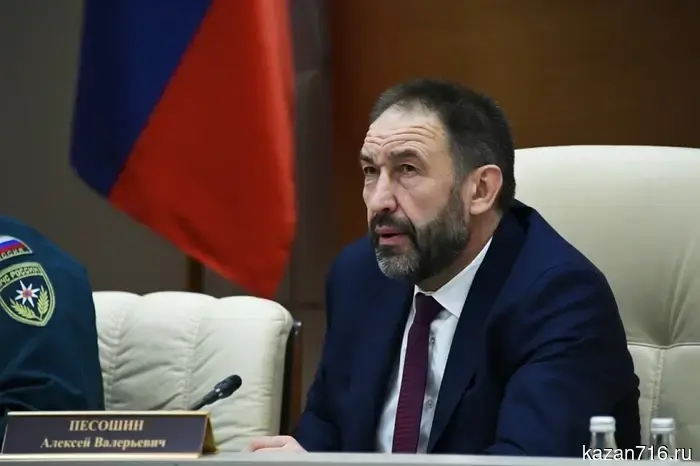 Pesoshin revealed which lands will be prioritized for transfer to large families.
The Prime Minister of Tatarstan, Alexey Pesoshin, announced the priority principles for allocating land plots to large families in the republic. 15.04.2026. Chelny-Biz.Ru. Republic of Tatarstan. Naberezhnye Chelny.
Pesoshin revealed which lands will be prioritized for transfer to large families.
The Prime Minister of Tatarstan, Alexey Pesoshin, announced the priority principles for allocating land plots to large families in the republic. 15.04.2026. Chelny-Biz.Ru. Republic of Tatarstan. Naberezhnye Chelny.
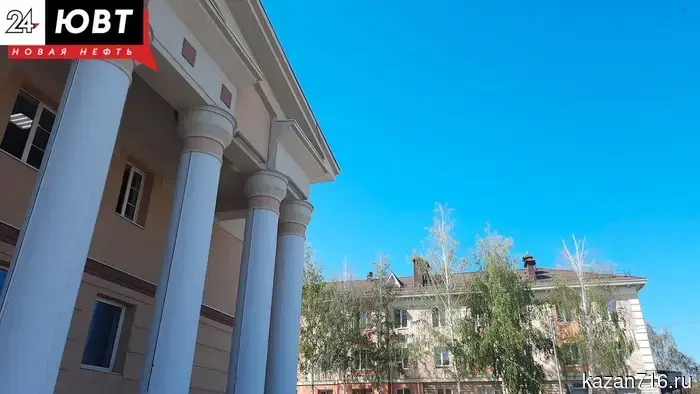 The event "10,000 Steps to Life" will take place in Almetyevsk.
Everyone is welcome to participate.
Almetyevsk will join the campaign "10,000 steps to life." 04/15/2026. Almetyevsk RTV. Republic of Tatarstan. Almetyevsk.
The event "10,000 Steps to Life" will take place in Almetyevsk.
Everyone is welcome to participate.
Almetyevsk will join the campaign "10,000 steps to life." 04/15/2026. Almetyevsk RTV. Republic of Tatarstan. Almetyevsk.
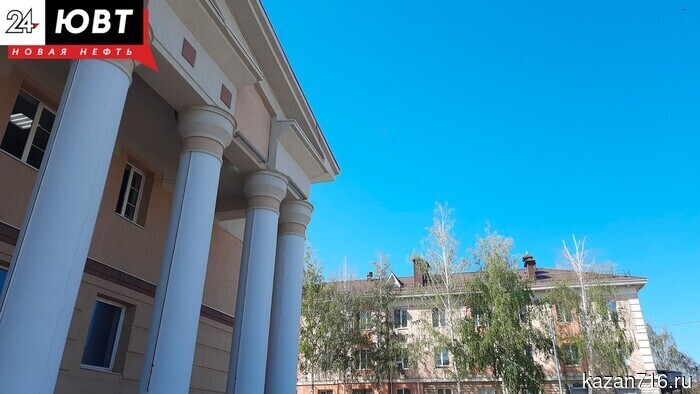 The event "10,000 Steps to Life" will take place in Almetyevsk.
Everyone is welcome to participate.
Almetyevsk will join the "10,000 Steps to Life" campaign. 04/15/2026. Almetyevsk RTV. Republic of Tatarstan. Almetyevsk.
The event "10,000 Steps to Life" will take place in Almetyevsk.
Everyone is welcome to participate.
Almetyevsk will join the "10,000 Steps to Life" campaign. 04/15/2026. Almetyevsk RTV. Republic of Tatarstan. Almetyevsk.
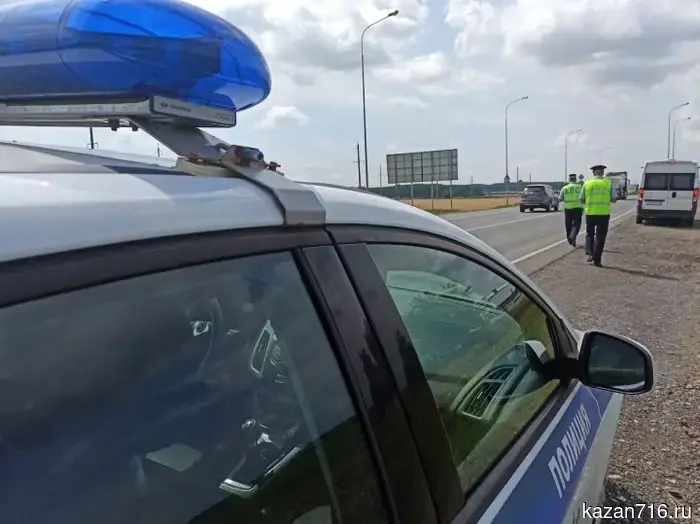 In the Chistopol district, the operation "Counter Lane" has started.
The main goal is to reduce the number of serious traffic accidents.
From April 15 to April 28, an operational and preventive event called "Oncoming Lane" is taking place on the roads of the Chistopol district. 04.15.2026. Chistopol-inform. Republic of Tatarstan. Chistopol.
In the Chistopol district, the operation "Counter Lane" has started.
The main goal is to reduce the number of serious traffic accidents.
From April 15 to April 28, an operational and preventive event called "Oncoming Lane" is taking place on the roads of the Chistopol district. 04.15.2026. Chistopol-inform. Republic of Tatarstan. Chistopol.
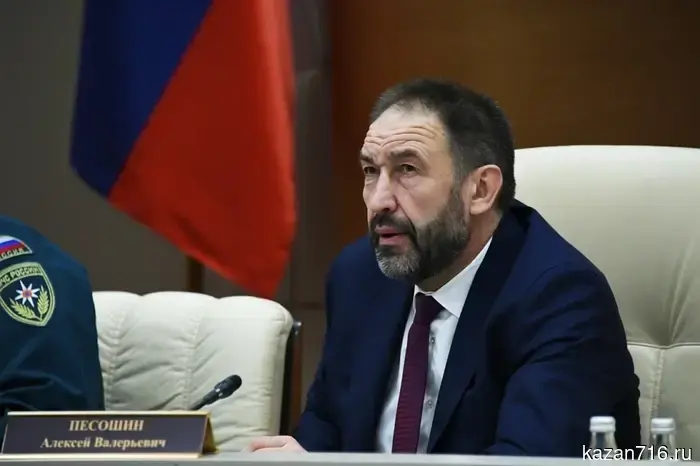 Pesoshin revealed which lands will be prioritized for transfer to large families.
The Prime Minister of Tatarstan, Alexey Pesoshin, announced the priority principles for allocating land plots to large families in the republic. 15.04.2026. Chelny-Biz.Ru. Republic of Tatarstan. Naberezhnye Chelny.
Pesoshin revealed which lands will be prioritized for transfer to large families.
The Prime Minister of Tatarstan, Alexey Pesoshin, announced the priority principles for allocating land plots to large families in the republic. 15.04.2026. Chelny-Biz.Ru. Republic of Tatarstan. Naberezhnye Chelny.
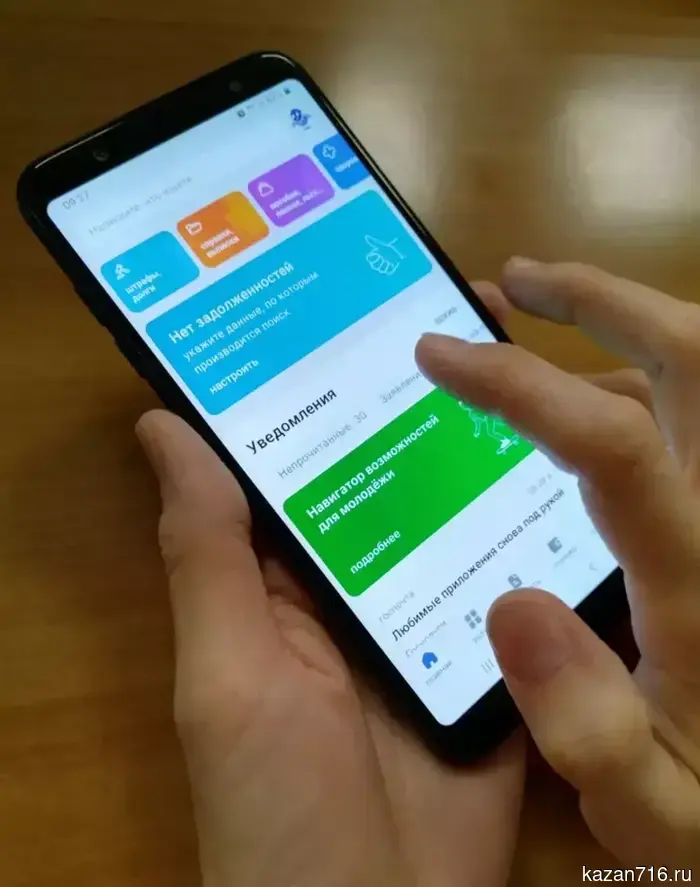 Residents of Leninogorsk were explained how to register in the house chat.
To address household issues and interact with the management organization, residents of apartment buildings in Leninogorsk can join the official house chat in the MAX messenger. 15.04.2026. Leninogorsk News. Republic of Tatarstan. Leninogorsk.
Residents of Leninogorsk were explained how to register in the house chat.
To address household issues and interact with the management organization, residents of apartment buildings in Leninogorsk can join the official house chat in the MAX messenger. 15.04.2026. Leninogorsk News. Republic of Tatarstan. Leninogorsk.
Researchers from KFU explained how electronic light causes photothermal heating of transparent nanomaterials.
It opens new opportunities for targeted therapy of oncological diseases. 15.04.2026. KFU. Republic of Tatarstan. Kazan.