
June 14 - World Blood Donor Day
Every year on June 14, World Blood Donor Day is celebrated. The date was chosen not by chance: it is on this day, June 14, that the Austrian physician and immunologist Karl Landsteiner (1868-1943) was born, who received the Nobel Prize in 1930 for discovering blood groups in humans. "Every second, someone somewhere needs a blood transfusion. Help others" is the motto of World Blood Donor Day 2025. The goals of World Blood Donor Day are: 1. To raise public awareness about the critical need for donor blood and plasma and the role their availability plays in the lives of patients. 2. To motivate both new and regular donors to donate blood regularly to maintain a stable and sufficient supply of donor blood. 3. To emphasize the contribution of blood donors to improving health and well-being indicators of the population and to promote the values of solidarity, compassion, and mutual assistance through the practice of blood donation. Voluntary blood donation is helping other people and saving their lives! Donor blood and its components are used for transfusions needed: 1. for victims of burns and injuries; 2. during complex surgeries and in cases of severe bleeding; 3. during difficult childbirth; 4. for patients with hemophilia or anemia; 5. for cancer patients undergoing chemotherapy. To protect the health of the donor and the recipient, a mandatory medical examination is conducted for potential donors before blood donation, which includes: • taking a medical history, including assessing risk factors for contraindications (including established habits and behavior patterns); • examining the donor (including measuring body weight, body temperature, blood pressure, examining skin, visible mucous membranes, sclera, palpating lymph nodes). Before donation, each donor's blood type and Rh factor are determined, hemoglobin levels are tested, and markers for diseases transmitted through blood are checked: hepatitis B and C, syphilis, and HIV. Additionally, before blood donation, the donor fills out a questionnaire that clarifies whether the donor has had any risk of infection with diseases that pose a danger to recipients in recent months. Risk factors include contact with sick individuals, recent surgeries, getting tattoos, etc. Remember that the donor is responsible for providing knowingly false information in this questionnaire, and therefore it is necessary to approach its completion with utmost care and to be as honest as possible! The most common reasons for temporary medical deferral from donation and their durations are: • after suffering from influenza or ARVI, a donor can donate blood 30 calendar days after recovery, • after surgical interventions, medical and cosmetic procedures that violate the skin (piercing, tattoos, acupuncture, etc.) — after 120 days; • allergic diseases in the acute stage — after 60 calendar days following the resolution of the acute period; • vaccination with inactivated vaccines, anatoxins (including against tetanus, diphtheria, whooping cough, influenza) — 10 calendar days after vaccination; • vaccination with live vaccines (including against tularemia, tuberculosis, rubella, poliomyelitis (revaccination), measles), administration of anti-tetanus serum — 30 calendar days after vaccination; • vaccination with recombinant vaccines (including against viral hepatitis B, coronavirus infection) — 30 calendar days after vaccination; • administration of immunoglobulin against tick-borne encephalitis — 120 calendar days after vaccination; • vaccination against rabies — 1 year after vaccination. The Zelenodolsk branch of the Center for Hygiene and Epidemiology in the Republic of Tatarstan.
Другие Новости Казани (Казань716)
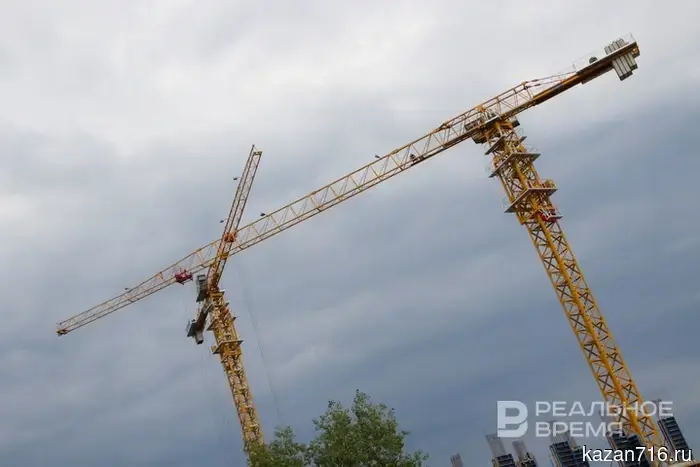 In Kazan, a construction crane collapsed on Spartakovskaya Street.
At the time of the incident, there were no people inside the crane — the equipment was operated remotely.
Photo: Artem Dergunov
In Kazan, at the construction site of a residential building on Spartakovskaya Street, a construction crane fell. 04.06.2026. Real time. Republic of Tatarstan. Kazan.
In Kazan, a construction crane collapsed on Spartakovskaya Street.
At the time of the incident, there were no people inside the crane — the equipment was operated remotely.
Photo: Artem Dergunov
In Kazan, at the construction site of a residential building on Spartakovskaya Street, a construction crane fell. 04.06.2026. Real time. Republic of Tatarstan. Kazan.
 Putin called the discussions about the 2030 elections premature.
Russian President Vladimir Putin stated that it is premature to discuss his possible participation in the 2030 presidential elections, despite the fact that the current Constitution of the Russian Federation allows for such a possibility. 04.06.2026. IA Tatar-inform. Republic of Tatarstan. Kazan.
Putin called the discussions about the 2030 elections premature.
Russian President Vladimir Putin stated that it is premature to discuss his possible participation in the 2030 presidential elections, despite the fact that the current Constitution of the Russian Federation allows for such a possibility. 04.06.2026. IA Tatar-inform. Republic of Tatarstan. Kazan.
 In the Zainsk district, 6 couples will get married on the beautiful date 06.06.2026.
Six couples will register their marriage in the Zainsk district on June 6, 2026. On the next mirror date, 26.06. 04.06.2026. News of Zainsk. Republic of Tatarstan. Zainsk.
A crane fell at the construction site of a residential complex in the center of Kazan.
The incident occurred in the center of Kazan. As reported by "Tatar-inform," a crane fell at the construction site of the residential complex "Barkli Dan," located between Spartakovskaya and Ostrovskogo streets. 04.06.2026. IA Tatar-inform. Republic of Tatarstan. Kazan.
In the Zainsk district, 6 couples will get married on the beautiful date 06.06.2026.
Six couples will register their marriage in the Zainsk district on June 6, 2026. On the next mirror date, 26.06. 04.06.2026. News of Zainsk. Republic of Tatarstan. Zainsk.
A crane fell at the construction site of a residential complex in the center of Kazan.
The incident occurred in the center of Kazan. As reported by "Tatar-inform," a crane fell at the construction site of the residential complex "Barkli Dan," located between Spartakovskaya and Ostrovskogo streets. 04.06.2026. IA Tatar-inform. Republic of Tatarstan. Kazan.
 Tatarstan and "NOVATEK" agreed on scientific and technical cooperation based at Innopolis University.
At the XXIX St. Petersburg International Economic Forum, an agreement on partnership in education, 04.06.2026. Innopolis University. Republic of Tatarstan. Innopolis.
Tatarstan and "NOVATEK" agreed on scientific and technical cooperation based at Innopolis University.
At the XXIX St. Petersburg International Economic Forum, an agreement on partnership in education, 04.06.2026. Innopolis University. Republic of Tatarstan. Innopolis.
 Yakutia will purchase eight domestic aircraft, including three Kazan Tu-214s.
Yakutia plans to acquire three Tu-214 aircraft, which are produced in Kazan, and five SJ-100 aircraft. 04.06.2026. TRK Tatarstan-New Century. Republic of Tatarstan. Kazan.
Yakutia will purchase eight domestic aircraft, including three Kazan Tu-214s.
Yakutia plans to acquire three Tu-214 aircraft, which are produced in Kazan, and five SJ-100 aircraft. 04.06.2026. TRK Tatarstan-New Century. Republic of Tatarstan. Kazan.
June 14 - World Blood Donor Day
Every year on June 14, World Blood Donor Day is celebrated. The date was chosen for a reason: it is on this day, June 14, that the Austrian physician and immunologist Karl Landsteiner (1868-1943) was born. 04.06.2026. Kaibitsky Zori. Republic of Tatarstan. Bolshie Kaibitsy.