
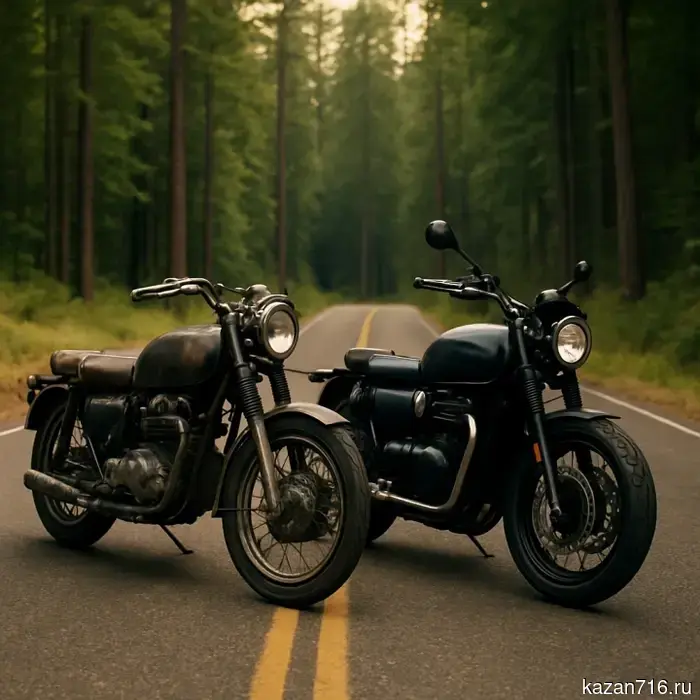
Iron horses of a great country: why there were more motorcycles than cars in the USSR, and how their holiday came to be
Today, motorcyclists around the world celebrate their unofficial but very heartfelt holiday. However, few know that the cult of two-wheeled machines in our country was so strong that in certain years, motorcycles literally ruled the ball. In the USSR, there was indeed a period when the number of motorcycles significantly exceeded the number of passenger cars. This was especially evident in the post-war years and from the 1960s to the early 1980s. Let's dive into history, recall legendary models, and learn how the World Motorcycle Day was born.
USSR – A Motorcycle Powerhouse For the modern person, accustomed to dense streams of cars, the fact sounds incredible: in 1961, the Soviet Union produced 588,300 motorcycles and motor scooters with engine volumes over 50 cubic centimeters. By this indicator, the country ranked first in the world at that time! For comparison, significantly fewer passenger cars were assembled in the same year — about 555,000, and if we take only passenger models, then only about 149,000. This means that for every passenger car produced, there were almost four motorcycles. By 1970, the situation had only slightly smoothed out: factories provided the country with 835,000 motorcycles and 916,118 cars, of which 344,248 were passenger vehicles. By 1990, the production of two-wheeled machines (already including mopeds) reached 1,400,000 units — the USSR was second only to Japan. These figures clearly show that the motorcycle was truly a people's transport.
Why did everyone ride motorcycles? Three main reasons. The first and most obvious is affordability. In the mid-1970s, the most expensive motorcycle, the "Ural" with a sidecar, cost about 1,800 rubles. Meanwhile, the VAZ-2101 "Zhiguli" cost around 5,620 rubles. The difference was three times, given that the average salary in the country barely reached 150 rubles. One could save up for a motorcycle in a year and a half, while the queue for a car stretched for several years.
The second reason is the legendary Soviet cross-country capability. The quality of roads in rural areas often left much to be desired. A motorcycle, especially of the light or medium class, could traverse mud, sand, forest paths, and fords where even a powerful tractor sometimes got stuck. It is no wonder that in villages, a motorcycle with a sidecar was an indispensable helper: it could transport hay, make quick trips to the district center for groceries, and wait for a doctor during the muddy season.
The third reason is the shortage of cars. Cars were distributed strictly by organizations, and one could wait in line for years. Motorcycles, although not always, appeared in open sales, including in sporting goods stores and through the "Beryozka" system. Moreover, managing a motorcycle did not require such serious investments in a garage and maintenance.
Legends of Soviet Motorcycle Production Who doesn't remember the names that echoed throughout the country? The Izhevsk motorcycle plant gifted us with "Izh Planet-3," "Izh Planet-5," and "Izh Jupiter" with inline two-cylinder engines. The Kovrov plant produced the famous "Voshod" and "Kovrovets" — durable, repairable, and very resilient. The Minsk motorcycle plant fed hundreds of thousands of Soviet citizens with small, economical "Minsk" motorcycles — true workhorses. And the heavy artillery: "Ural" and "Dnepr" with sidecars and drive to the sidecar wheel, which could travel off-road where others gave up. These motorcycles were produced, among other things, for the army and then fell into the hands of the people. A motorcycle in the USSR was not just transport. It was freedom, wind in the face, the opportunity to go fishing or on vacation to Crimea. It was hundreds of thousands of kilometers traveled on dusty backroads and asphalt.
The History of the Holiday: From an American Idea to Global Recognition Now let's move to 1992. In the USA, the owner of a motorcycle gear company, Andy Goldfine, along with journalists, proposed a simple but effective idea: one day a year, drivers leave their cars at home and go to work on motorcycles. Thus, the Ride to Work Day was born. The goal was noble — to show society that motorcycles are a full-fledged, economical, and even environmentally friendly mode of transport capable of combating traffic jams. The first event took place on July 22, 1992, and gathered only a few dozen enthusiasts. But the idea ignited the hearts of bikers around the world. By 2000, motorcyclists from dozens of countries supported the event. And in 2008, the date was moved to the third Monday of June to ensure warmer and safer weather.
However, enthusiasts continued to argue: summer days varied greatly in different countries. As a result, starting in 2024, the International Motorcycle Day "moved" to the second Tuesday of the first summer month — that is, to the Tuesday in the first full week of June. However, many still celebrate it on the traditional third Monday or simply ride all weekend. The main thing is the spirit of brotherhood that unites bikers regardless of the brand and year of manufacture of their iron steed.
Today's Day: Records and Freedom Despite the departure of some global brands, the love for motorcycles in Russia has not faded. According to data for 2025, sales of new motorcycles in the country increased by 19%, reaching almost 51,000 units. And the total number of motorcycles exceeds 2.1 million. Old Soviet "Urals" and "Izh" continue to roam the roads, while new Chinese and domestic brands take their place. On Motorcycle Day, columns, charity rides, and club meetings take place all over the world. It is a day when one can forget about the hustle and bustle, put on a helmet, start the engine — and feel what Soviet guys felt in the 70s, skillfully riding on a "Java" or "Cezeta." Freedom. Wind. And one soul shared between a person and their motorcycle.
Другие Новости Казани (Казань716)
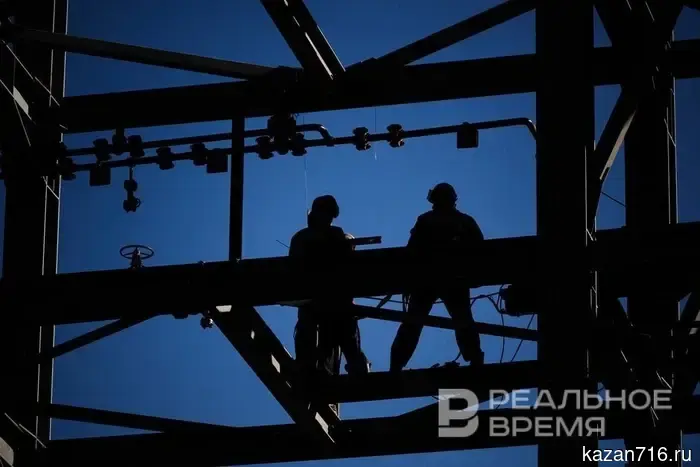 Anton Kotyakov: The Ministry of Labor will bring 1.3 million workers out of the shadows in 2026.
He also reported that the targets for legalizing employment are set individually for each region based on data from various agencies.
Photo: 09.06.2026. Real time. Republic of Tatarstan. Kazan.
National projects in Russia: achievements and prospects
National projects are actively being implemented in Russia, covering various areas of public life. 09.06.2026. Kamskaya Nov' (Kama News). Republic of Tatarstan. Laishevo.
Anton Kotyakov: The Ministry of Labor will bring 1.3 million workers out of the shadows in 2026.
He also reported that the targets for legalizing employment are set individually for each region based on data from various agencies.
Photo: 09.06.2026. Real time. Republic of Tatarstan. Kazan.
National projects in Russia: achievements and prospects
National projects are actively being implemented in Russia, covering various areas of public life. 09.06.2026. Kamskaya Nov' (Kama News). Republic of Tatarstan. Laishevo.
 Anton Kotyakov: The Ministry of Labor will bring 1.3 million workers out of the shadows in 2026.
He also reported that the targets for legalizing employment are set individually for each region based on data from various agencies.
Photo: 06/09/2026. Real time. Republic of Tatarstan. Kazan.
The relay race for the prizes of the newspaper "Republic of Tatarstan" will take place for the first time in 80 years.
After almost an 80-year break, an athletics relay for the prizes of the newspaper "Republic of Tatarstan" will be held in Kazan for the first time. 09.06.2026. IA Tatar-inform. Republic of Tatarstan. Kazan.
The relay race for the prizes of the newspaper "Republic of Tatarstan" will take place for the first time in 80 years.
After almost an 80-year break, an athletics relay for the prizes of the newspaper "Republic of Tatarstan" will be held in Kazan for the first time. 09.06.2026. IA Tatar-inform. Republic of Tatarstan. Kazan.
Anton Kotyakov: The Ministry of Labor will bring 1.3 million workers out of the shadows in 2026.
He also reported that the targets for legalizing employment are set individually for each region based on data from various agencies.
Photo: 06/09/2026. Real time. Republic of Tatarstan. Kazan.
The relay race for the prizes of the newspaper "Republic of Tatarstan" will take place for the first time in 80 years.
After almost an 80-year break, an athletics relay for the prizes of the newspaper "Republic of Tatarstan" will be held in Kazan for the first time. 09.06.2026. IA Tatar-inform. Republic of Tatarstan. Kazan.
The relay race for the prizes of the newspaper "Republic of Tatarstan" will take place for the first time in 80 years.
After almost an 80-year break, an athletics relay for the prizes of the newspaper "Republic of Tatarstan" will be held in Kazan for the first time. 09.06.2026. IA Tatar-inform. Republic of Tatarstan. Kazan.
Iron horses of a great country: why there were more motorcycles than cars in the USSR, and how their holiday came to be
Today, motorcyclists around the world celebrate their unofficial but very heartfelt holiday. However, few know that the cult of two-wheeled machines in our country was so strong, 09.06.2026. News of Zainsk. Republic of Tatarstan. Zainsk.