
In Tatarstan, the fourth stage of the revival of the saker falcon population will be launched.
In the run-up to Russia Day, the fourth stage of the project to revive the Volga-Kama population of the saker falcon begins in Tatarstan. In the current year, 2026, 20 young saker falcons will be released into the wild almost simultaneously – twice as many as in previous years, reports the press service of the Ministry of Ecology of the Republic of Tatarstan. In the Kamsko-Ustyinsky district of Tatarstan, ten chicks will be transferred to a specially equipped hack (artificial nest). Another ten chicks were transferred to the hack the day before at the Saralin site of the Volga-Kama State Natural Biosphere Reserve. "The saker falcon is a living symbol of the greatness and strength of nature. The return of this species to the territory of Tatarstan is the result of systematic work by scientists, volunteers, businesses, and authorities. On Russia Day, we are launching the fourth stage of the project, and this is our common success. I would especially note that the scaling of the project to two sites became possible thanks to the instruction of the President of Tatarstan, Rustam Nurgalievich Minnikhanov. We are returning not just birds to the sky – we are returning hope for the preservation of this red-listed falcon population for all of Russia," emphasized the Minister of Ecology of Tatarstan, Azat Ziganshin. The project is being implemented with the support of the company "SIBUR," the Regional Public Fund named after Anatoly Ivanovich Shchepovskikh, the Ministry of Ecology and Natural Resources of Tatarstan, and the Kazan Zoo with scientific support from ornithologists. The initiative contributes to solving the task of preserving biodiversity, as provided for in the national project "Ecological Well-Being." "For SIBUR, supporting biodiversity conservation projects is an important part of systematic work in the field of sustainable development. The project to revive the Volga-Kama population of the saker falcon unites the scientific community, environmental organizations, government authorities, and businesses around a common goal – restoring this rare red-listed species in its historical range," emphasized the general director of the Kazan enterprise of SIBUR, Ayrat Safin. "It is especially important that over three years of project implementation, we have not only successfully released 24 chicks into the wild but also created a foundation for a long-term program to return the saker falcon to the ecosystems of Tatarstan. We are confident that such initiatives make a significant contribution to preserving the natural heritage of the region and fostering a responsible attitude towards the environment for future generations," he added. The project to restore the population of the saker falcon (Falco cherrug) – a species that has not nested in the territory of the republic for more than half a century (the last nesting was recorded in 1974 at the Saralin site) – started in 2023. In the first stage, in 2023, the first hacks were established in the Kamsko-Ustyinsky district, ten chicks were released, and volunteer groups were formed for protection and feeding. In the second stage, in 2024, six chicks were released, a video monitoring system was implemented in the hacks, and four adult birds were placed in the Kazan Zoo to form breeding pairs. In the third stage, in 2025, the first offspring in Tatarstan was obtained – two chicks born in the zoo. A total of eight birds (two local and six from the Moscow region) were released, and a GPS tracker was installed on one of the falcons. Residents of the republic chose the names Alga and Timer for the birds born in Tatarstan. In total, 24 individuals have been released into the wild over three years. Observations in September 2025 confirmed that falcons with pronounced morphological differences in plumage coloration were recorded in the region – the first sign of population recovery. In 2026, the project reached a fundamentally new level. By the instruction of the President of the Republic of Tatarstan, Rustam Minnikhanov, the work on the reintroduction of the saker falcon was simultaneously launched at two key sites: both in the historical nesting site – the Saralin site of the reserve, and in the traditional location – in the Kamsko-Ustyinsky district. The saker falcon is a key predator, regulating the population of rodents, including in agricultural lands. Its disappearance in the mid-20th century was caused by the plowing of virgin lands, the use of chlorinated organic pesticides, and poaching. Without active reintroduction measures, the species faced complete extinction in the region.
Другие Новости Казани (Казань716)
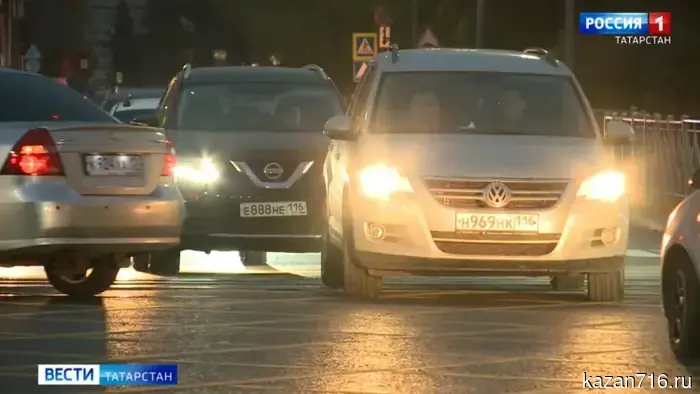 In Kazan, since the beginning of the year, 92 cars have been removed from registration for noisy exhausts.
In the capital of Tatarstan, as of the beginning of 2026, the registration of 92 vehicles has been revoked due to exceeding the permissible noise level. 11.06.2026. GTRK Tatarstan. Republic of Tatarstan. Kazan.
In Kazan, since the beginning of the year, 92 cars have been removed from registration for noisy exhausts.
In the capital of Tatarstan, as of the beginning of 2026, the registration of 92 vehicles has been revoked due to exceeding the permissible noise level. 11.06.2026. GTRK Tatarstan. Republic of Tatarstan. Kazan.
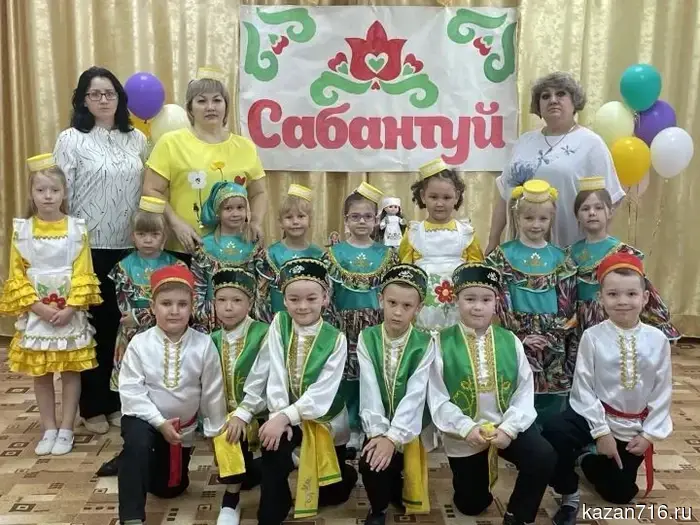 The summer Sabantuy in the kindergartens of the Spassky district gathered young lovers of folk traditions.
The holiday took place as part of the national project "Youth and Children."
A colorful summer celebration "Sabantuy" was held in preschool institutions of the Spassky district. 11.06.2026. Newspaper New Life. Republic of Tatarstan. Bolgar.
The summer Sabantuy in the kindergartens of the Spassky district gathered young lovers of folk traditions.
The holiday took place as part of the national project "Youth and Children."
A colorful summer celebration "Sabantuy" was held in preschool institutions of the Spassky district. 11.06.2026. Newspaper New Life. Republic of Tatarstan. Bolgar.
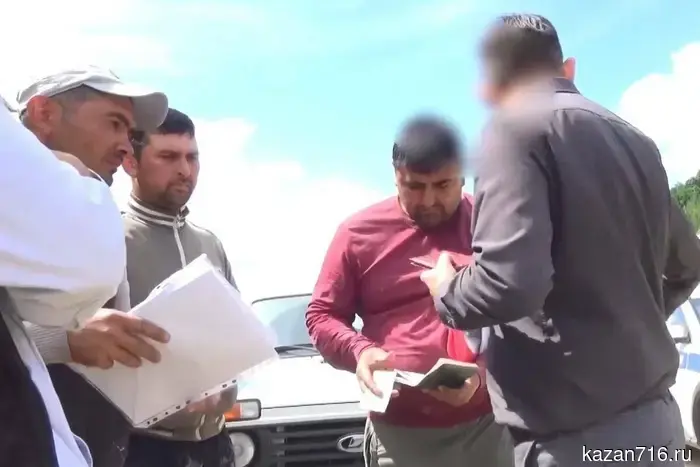 Police detained 25 illegal immigrants at a construction site in Tatarstan.
25 illegal migrants were detained by police during a raid at a construction site in Almetyevsk. 11.06.2026. Tatar-inform News Agency. Republic of Tatarstan. Kazan.
Police detained 25 illegal immigrants at a construction site in Tatarstan.
25 illegal migrants were detained by police during a raid at a construction site in Almetyevsk. 11.06.2026. Tatar-inform News Agency. Republic of Tatarstan. Kazan.
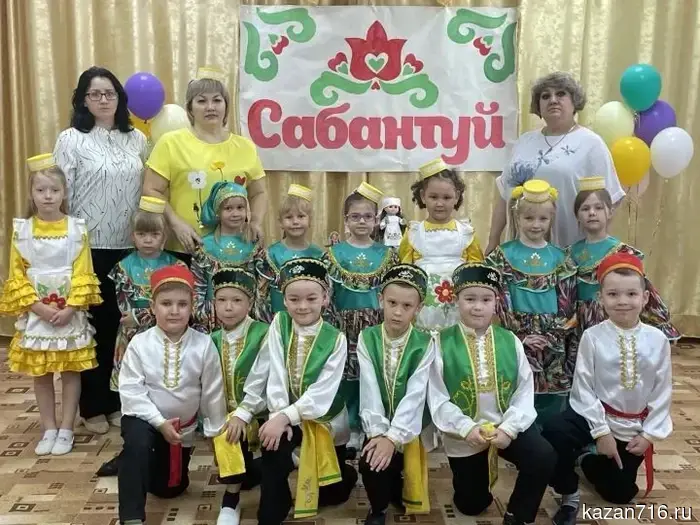 The summer Sabantuy in the kindergartens of the Spassky district gathered young lovers of folk traditions.
The holiday took place as part of the national project "Youth and Children."
A colorful summer celebration "Sabantuy" was held in preschool institutions of the Spassky district. 11.06.2026. Newspaper New Life. Republic of Tatarstan. Bolgar.
The summer Sabantuy in the kindergartens of the Spassky district gathered young lovers of folk traditions.
The holiday took place as part of the national project "Youth and Children."
A colorful summer celebration "Sabantuy" was held in preschool institutions of the Spassky district. 11.06.2026. Newspaper New Life. Republic of Tatarstan. Bolgar.
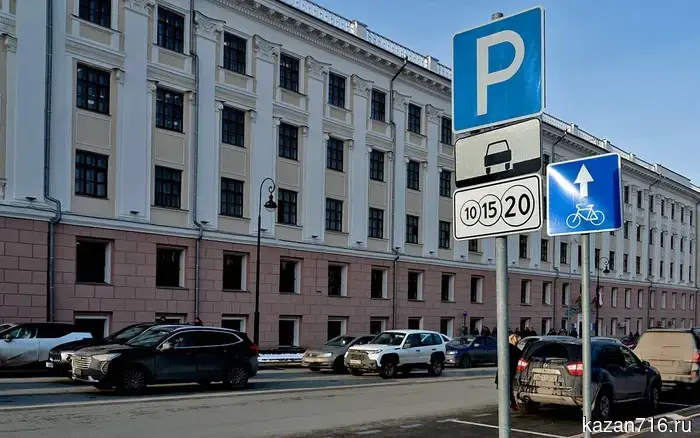 Municipal parking in Kazan will be free on Russia Day.
Tomorrow, on Russia Day, in the capital of Tatarstan, it will be possible to park cars for free in municipal parking lots. 11.06.2026. IA Tatar-inform. Republic of Tatarstan. Kazan.
Municipal parking in Kazan will be free on Russia Day.
Tomorrow, on Russia Day, in the capital of Tatarstan, it will be possible to park cars for free in municipal parking lots. 11.06.2026. IA Tatar-inform. Republic of Tatarstan. Kazan.
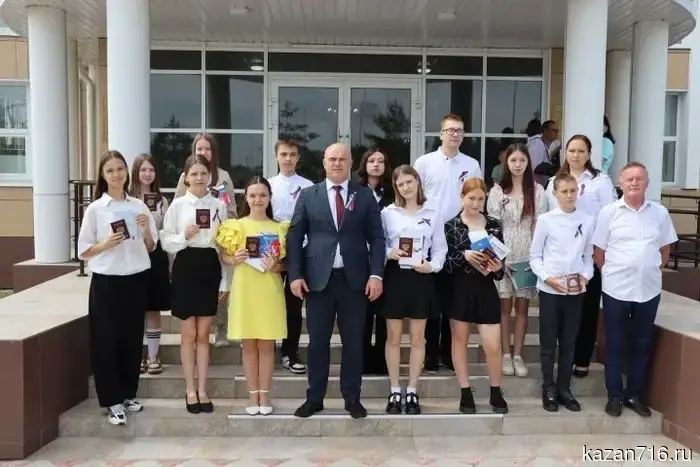 Laishyev teenagers received their first passports and wrote letters to their descendants.
In anticipation of Russia Day, a solemn ceremony for the issuance of passports to teenagers who turned 14 years old took place in the Registry Office of the Laishevsky District. 11.06.2026. Kama Novy. Republic of Tatarstan. Laishevo.
Laishyev teenagers received their first passports and wrote letters to their descendants.
In anticipation of Russia Day, a solemn ceremony for the issuance of passports to teenagers who turned 14 years old took place in the Registry Office of the Laishevsky District. 11.06.2026. Kama Novy. Republic of Tatarstan. Laishevo.
In Tatarstan, the fourth stage of the revival of the saker falcon population will be launched.
In the run-up to Russia Day, the fourth stage of the project to revive the Volga-Kama population of the saker falcon is starting in Tatarstan. 11.06.2026. IA Tatar-inform. Republic of Tatarstan. Kazan.