

Divorce with a mortgage: why courts now divide debts differently
In 2026, Russian courts are radically revising their approach to the division of mortgage obligations upon divorce. The previous practice, where the main criterion was merely the date of loan issuance, is becoming a thing of the past. Today, judges require detailed evidence of the financial participation of each spouse, meticulously analyzing the origin of funds, the time of actual cessation of joint household management, and even the effectiveness of investments.
A deeper look: financial analysis instead of formal signs.
Modern judicial practice demonstrates a departure from the formal approach, where property was automatically recognized as joint solely based on the fact of acquisition during marriage. The Supreme Court of the Russian Federation has repeatedly emphasized the need to establish the actual source of financing for the purchase. A vivid example cited by lawyers involves a case where a wife was able to prove that 1.75 million rubles out of the total cost of the apartment, which was 1.995 million, were received as a gift from her mother. The court indicated that the part of the property acquired with personal funds is not subject to the regime of joint ownership. This fundamentally changes the approach: now every ruble spent on real estate must have proven origins. Special attention is also paid to the moment of actual family dissolution. Courts now thoroughly investigate when exactly the spouses separated and ceased to manage a joint household. Any property acquired after this date, even before the official divorce, may be recognized as the personal property of the spouse who purchased it. This requires the parties to provide convincing evidence of separate living and household management.
Inequality of contributions: when 50/50 stops working.
The basic principle of equality of shares of spouses in jointly acquired property, enshrined in the Family Code, has recently become more frequently subject to adjustment. Courts are more willing to take into account unequal financial contributions and compensations, departing from the strict rule of "half." Significant deviations from equality are allowed if one of the spouses did not work without a valid reason or spent joint property to the detriment of the family's interests. At the same time, the court may increase the share of the spouse with whom minor children remain, but this is not an automatic right and requires justification of how such a decision serves the interests of the children.
Marriage contract: the illusion of protection and new risks.
The marriage contract, long considered a reliable tool for regulating property relations, is no longer a panacea under modern conditions. Contrary to popular belief, its existence does not guarantee a conflict-free division of property, and in some cases, it itself becomes the subject of litigation. Courts assess the specific circumstances of each case, including possible imbalances in the rights of the parties or signs of abuse of rights. For example, as practice shows, courts may recognize a marriage contract as invalid if it was concluded on the eve of one spouse's bankruptcy with the aim of removing property from the bankruptcy estate. Additionally, a marriage contract may not apply to certain types of property if its terms are formulated unclearly, for instance, only concerning real estate, while movable property continues to be divided according to general rules.
Mortgage before marriage: payments can be divided.
A recent decision by the Supreme Court of the Russian Federation regarding a mortgage taken out before marriage is indicative. The highest instance indicated that payments on such a loan made during the marriage from the family's joint income can be divided between the spouses upon divorce. This means that even if the apartment is registered in the name of one spouse and was purchased before the marriage, the other spouse has the right to compensation for half of the funds paid to the bank from the family budget during the marriage. The court emphasized that knowledge of the existence of a mortgage by the future spouse does not deprive the right to such compensation, as family funds were spent on fulfilling obligations that remain the property of only one of the spouses after the divorce. Furthermore, courts have become more attentive to the division of cash bonuses received by one of the spouses. If the bonus was accrued for the period of work during the marriage, it is subject to division, even if it was actually received after the cessation of joint living. Thus, modern practice of dividing mortgage debts upon divorce requires the parties to provide maximum evidence. Not only the date of the contract is important, but also the origin of every ruble, as well as the actual circumstances of family life. Concluding a marriage contract requires an extremely careful approach so that its terms are not subsequently challenged in court.

Другие Новости Казани (Казань716)
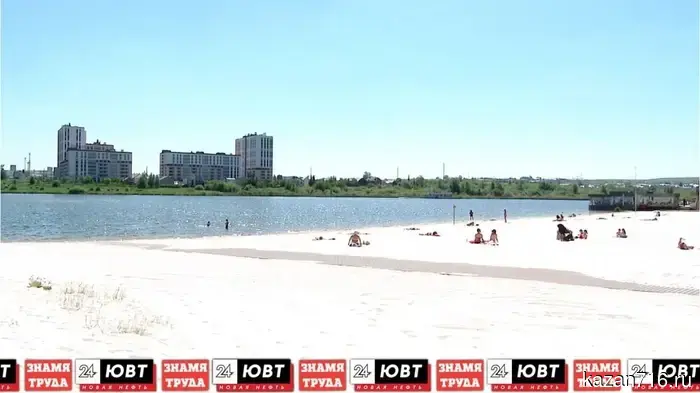 In the Almetyevsk district, security measures have been strengthened in recreational areas near water bodies.
This is related to the established hot weather.
In the Almetyevsk district, by the order of Guzel Khabutdinova, the patrolling of recreational areas near water bodies has been intensified. 05.07.2026. Almetyevsk RTV. Republic of Tatarstan. Almetyevsk.
In the Almetyevsk district, security measures have been strengthened in recreational areas near water bodies.
This is related to the established hot weather.
In the Almetyevsk district, by the order of Guzel Khabutdinova, the patrolling of recreational areas near water bodies has been intensified. 05.07.2026. Almetyevsk RTV. Republic of Tatarstan. Almetyevsk.
 Oven rack — 4 genius life hacks that housewives keep quiet about
It turns out that a regular grill can replace a toaster, a barbecue, and even a baking dish. 04.07.2026. Zainsk-Inform. Republic of Tatarstan. Zainsk.
Yuri Kamaltynov: "The strength of Russia lies in its national and cultural diversity."
The festive Sabantuy square at the Kolomenskoye museum-reserve in Moscow welcomed numerous guests from all corners of Russia today, traditionally gathering representatives of different ages in one place, 04.07.2026. State Council. Republic of Tatarstan. Kazan.
Yuri Kamaltynov: "The strength of Russia lies in its national and cultural diversity."
The festive Sabantuy square at the Kolomenskoye Museum-Reserve in Moscow welcomed numerous guests from all corners of Russia today, traditionally gathering representatives of different ages in one place, 04.07.2026. State Council. Republic of Tatarstan. Kazan.
Oven rack — 4 genius life hacks that housewives keep quiet about
It turns out that a regular grill can replace a toaster, a barbecue, and even a baking dish. 04.07.2026. Zainsk-Inform. Republic of Tatarstan. Zainsk.
Yuri Kamaltynov: "The strength of Russia lies in its national and cultural diversity."
The festive Sabantuy square at the Kolomenskoye museum-reserve in Moscow welcomed numerous guests from all corners of Russia today, traditionally gathering representatives of different ages in one place, 04.07.2026. State Council. Republic of Tatarstan. Kazan.
Yuri Kamaltynov: "The strength of Russia lies in its national and cultural diversity."
The festive Sabantuy square at the Kolomenskoye Museum-Reserve in Moscow welcomed numerous guests from all corners of Russia today, traditionally gathering representatives of different ages in one place, 04.07.2026. State Council. Republic of Tatarstan. Kazan.
 In Tatarstan, salaries have increased and sirens were heard.
Anna Salnikova News Feed Editor
AI Illustration created with the help of AI
The average salary in Tatarstan for the first four months of 2026 reached 95,400 rubles, which is 16.3% higher than last year's figures. 04.07.2026. ProKazan.Ru. Republic of Tatarstan. Kazan.
In Tatarstan, salaries have increased and sirens were heard.
Anna Salnikova News Feed Editor
AI Illustration created with the help of AI
The average salary in Tatarstan for the first four months of 2026 reached 95,400 rubles, which is 16.3% higher than last year's figures. 04.07.2026. ProKazan.Ru. Republic of Tatarstan. Kazan.
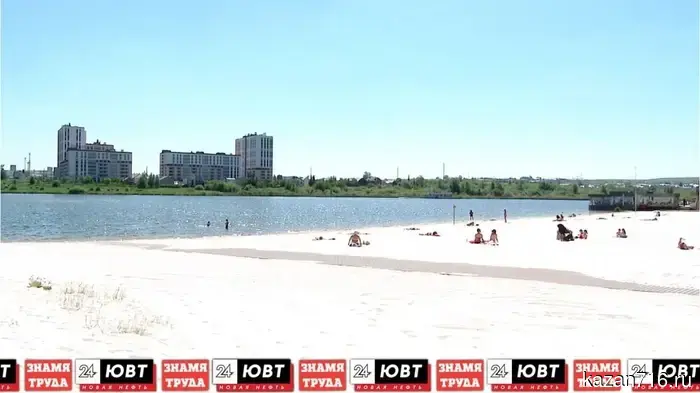 In the Almetyevsk district, security measures have been strengthened in recreational areas near water bodies.
This is related to the established hot weather.
In the Almetyevsk district, by the order of Guzel Khabutdinova, patrols of recreation areas near water bodies have been intensified. 05.07.2026. Almetyevsk RTV. Republic of Tatarstan. Almetyevsk.
In the Almetyevsk district, security measures have been strengthened in recreational areas near water bodies.
This is related to the established hot weather.
In the Almetyevsk district, by the order of Guzel Khabutdinova, patrols of recreation areas near water bodies have been intensified. 05.07.2026. Almetyevsk RTV. Republic of Tatarstan. Almetyevsk.
Divorce with a mortgage: why courts now divide debts differently
In 2026, Russian courts are fundamentally revising their approach to the division of mortgage obligations upon divorce. The previous practice, where the main criterion was only the date of the loan agreement, is becoming a thing of the past. 04.07.2026. Zainsk-Inform. Republic of Tatarstan. Zainsk.