
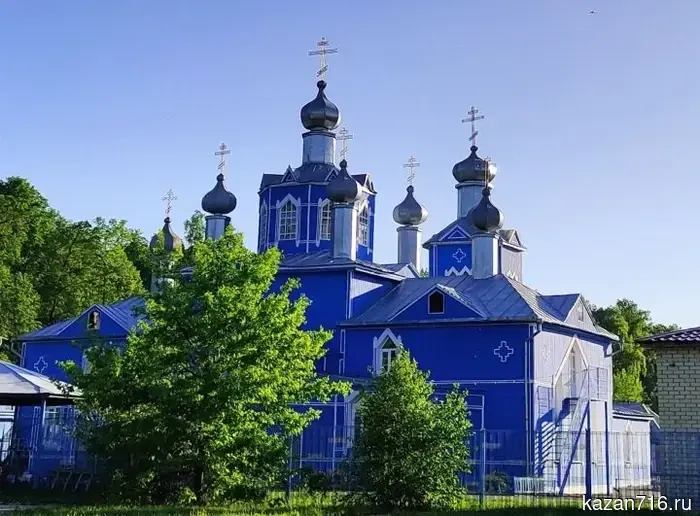
July 12 - Peter's Day: why you shouldn't work, argue, or borrow money
The weather on Peter's Day predicts what autumn and winter will be like.
On July 12, the church calendar marks the day of the holy apostles Peter and Paul. This day is popularly known as Peter's Day or simply Peter's. It concludes the Peter's fast and is considered the peak of summer - a time when nature reaches its bloom, and the days begin to gradually shorten. The holiday is dedicated to the two most famous disciples of Christ. The church calls them the chief apostles for their preaching work. Before meeting Christ, Apostle Peter was a simple fisherman named Simon. He was the first to call Jesus Christ, that is, the Messiah, for which the Lord nicknamed him the Rock (this is the translation of the name Peter) and promised to build His Church on his faith. After Peter denied Christ three times during the trial, he bitterly repented and preached Christianity until his death. In 67 AD in Rome, he was sentenced to crucifixion, but he asked to be executed upside down because he considered himself unworthy to die in the same way as his Teacher. Apostle Paul, on the other hand, was initially a fierce persecutor of Christians. On the way to Damascus, he was blinded by a bright light and heard the voice of Christ. Paul became blind, was baptized in Damascus, and miraculously regained his sight. Since then, he became one of the most zealous preachers of Christianity. As a Roman citizen, he was executed by beheading rather than crucifixion. According to church traditions, both apostles suffered martyrdom on the same day - July 12, one year apart. The holiday was established in memory of the transfer of their relics to Rome, which took place on July 12, 258.
Why Peter's Day is considered the peak of summer
In Russia, Peter's Day was considered the middle of summer. It was believed that after July 12, the hottest heat would come, although the daylight hours were already beginning to decrease: "Peter and Paul have shortened the hour."
From Peter's Day, preparations for autumn began: mowing started, hay was harvested, and preparations for winter sowing were made. Our ancestors noticed that after Peter's Day, many birds stopped singing: "The nightingale sings until Peter's Day," "The cuckoo coos until Peter's Day."
Traditions and customs of Peter's Day
On the night before Peter's Day, young people gathered by bonfires on the hills and waited for dawn. It was believed that the sun "plays" on this day - shimmering in different colors. According to signs, whoever sees this sunrise will be lucky all year.
Water on Peter's Day was considered healing. People bathed in rivers and washed their faces with water from three springs, believing that it brings health and purification.
Since Peter's Day concluded the fast, many fish dishes were placed on the table - fish soup, pies with fish. There was a tradition to treat poor neighbors and travelers, and mothers-in-law brought cheese to their sons-in-law, while godparents brought wheat pies to their godchildren.
On the night before Peter's Day, people searched for a small plant from the horsetail family, which was called the secret keeper or king herb. Unlike the search for the blooming fern on Ivan Kupala, here they sought not wealth but spiritual strength.
What not to do on July 12
Several strict prohibitions were associated with Peter's Day, which our ancestors observed:
One should not engage in heavy labor, cleaning, or household chores. This day should be dedicated to prayer, rest, and communication with family.
One should not quarrel, hold grudges, or yell at children. Any conflict on this day was considered unfavorable.
One should not borrow or lend money, food, or things - according to signs, this could lead to financial losses.
One should not remain alone. It was believed that this holiday should be spent in the company of family or friends.
One should not consume new summer food without blessing, especially the first fruits and berries.
One should not get married or hold a wedding ceremony.
Weather signs on Peter's Day
Our ancestors closely monitored the weather on July 12. It was used to judge what autumn and winter would be like.
Rain on July 12 means the hay will rot. Two rains on this day promised a good harvest, while three rains promised a rich harvest of grains.
Hot and dry weather on Peter's Day means it will be very cold at Christmas.
If the cuckoo is still calling - autumn will be cold or winter frosty.
If frogs croak loudly - it will be hot until the end of summer.
Interesting facts
Apostle Peter is considered the patron saint of fishermen. He was a fisherman himself before meeting Christ, so on Peter's Day, fishermen prayed to him for a good catch.
In folk tradition, it is believed that it is Apostle Peter who guards the gates of heaven, and he is depicted with keys in hand in almost all church frescoes.
There is a belief that the cuckoo stops calling after Peter's Day because it "choked on a barley ear."
In Russia, on Peter's Day, eggs were dyed yellow and beer was brewed, and the celebrations lasted 2-3 days.
Bathing brooms were prepared for winter before Peter's Day. It was believed that after July 12, the leaves on the branches do not hold as firmly, so brooms prepared later would be of poorer quality.
Gulchechek Izmailova
Другие Новости Казани (Казань716)
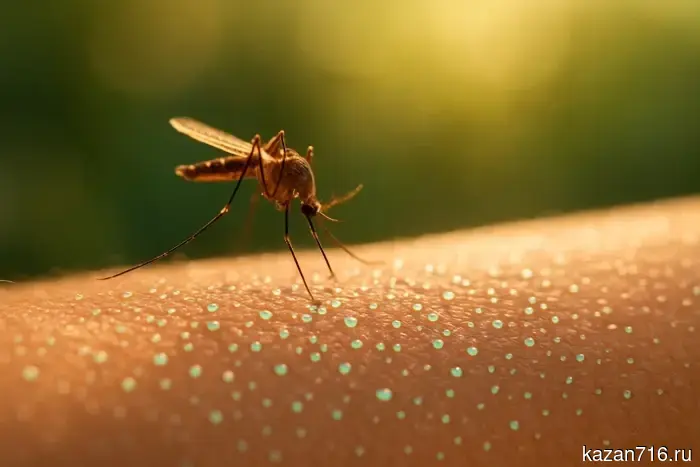 Probiotics against mosquitoes: myth or real protection from bites
Imagine: you take probiotics not only for gut health but also to become invisible to mosquitoes. 12.07.2026. News of Zainsk. Republic of Tatarstan. Zainsk.
Horoscope for July 12, 2026
The middle of summer is a time of bright emotions and unexpected turns.
Aries (March 21 – April 19)
Energy is running high, but the stars advise channeling it into peaceful pursuits. July 12, 2026. Zainsk-Inform. Republic of Tatarstan. Zainsk.
Daily operational forecast
On July 12, 2026
from 6 PM on July 11 to 6 PM on July 12, 2026
In the Volga and Western Pre-Volga regions
(Kaybitsky municipal district):
Cloudy with clearings. 07.11.2026. Kaybitsky district. Republic of Tatarstan. Bolshie Kaybitsy.
Probiotics against mosquitoes: myth or real protection from bites
Imagine: you take probiotics not only for gut health but also to become invisible to mosquitoes. 12.07.2026. News of Zainsk. Republic of Tatarstan. Zainsk.
Horoscope for July 12, 2026
The middle of summer is a time of bright emotions and unexpected turns.
Aries (March 21 – April 19)
Energy is running high, but the stars advise channeling it into peaceful pursuits. July 12, 2026. Zainsk-Inform. Republic of Tatarstan. Zainsk.
Daily operational forecast
On July 12, 2026
from 6 PM on July 11 to 6 PM on July 12, 2026
In the Volga and Western Pre-Volga regions
(Kaybitsky municipal district):
Cloudy with clearings. 07.11.2026. Kaybitsky district. Republic of Tatarstan. Bolshie Kaybitsy.
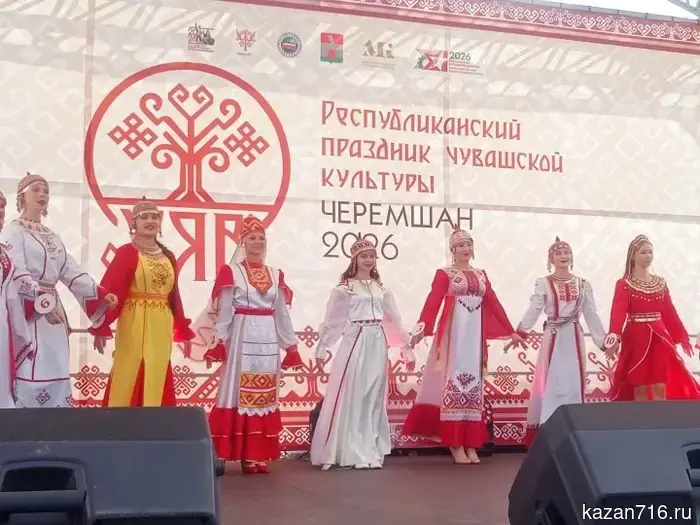 Bronze "Ujav Piki": the triumph of the Nurlat beauty in Cheremshan
Yesterday, the picturesque village of Cheremshan became the center of attraction for national culture and identity for one day. 12.07.2026. Nurlat-inform. Republic of Tatarstan. Nurlat.
Bronze "Ujav Piki": the triumph of the Nurlat beauty in Cheremshan
Yesterday, the picturesque village of Cheremshan became the center of attraction for national culture and identity for one day. 12.07.2026. Nurlat-inform. Republic of Tatarstan. Nurlat.
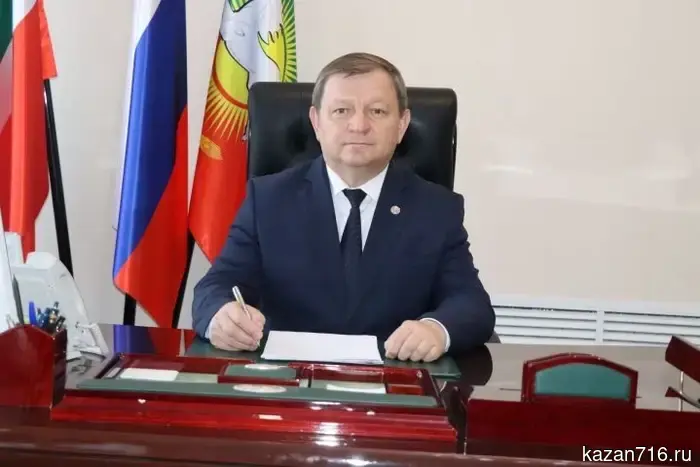 Connection of generations and hearts: a greeting from the head of the district on Russian Post Day
The head of the Nurlat municipal district and the city of Nurlat, Damir Ishkineev, congratulated the workers and veterans of postal communication on their professional holiday. 12.07.2026. Nurlat-inform. Republic of Tatarstan. Nurlat.
Connection of generations and hearts: a greeting from the head of the district on Russian Post Day
The head of the Nurlat municipal district and the city of Nurlat, Damir Ishkineev, congratulated the workers and veterans of postal communication on their professional holiday. 12.07.2026. Nurlat-inform. Republic of Tatarstan. Nurlat.
 McGregor suffered defeat in his first UFC fight in five years.
Irish fighter Conor McGregor suffered defeat to American Max Holloway in his first fight in five years at the Ultimate Fighting Championship (UFC). 12.07.2026. IA Tatar-inform. Republic of Tatarstan. Kazan.
McGregor suffered defeat in his first UFC fight in five years.
Irish fighter Conor McGregor suffered defeat to American Max Holloway in his first fight in five years at the Ultimate Fighting Championship (UFC). 12.07.2026. IA Tatar-inform. Republic of Tatarstan. Kazan.
July 12 - Peter's Day: why you shouldn't work, argue, or borrow money
The weather on Peter's Day predicts what autumn and winter will be like. On July 12, the church calendar marks the day of the holy apostles Peter and Paul. 11.07.2026. Newspaper New Life. Republic of Tatarstan. Bolgar.