
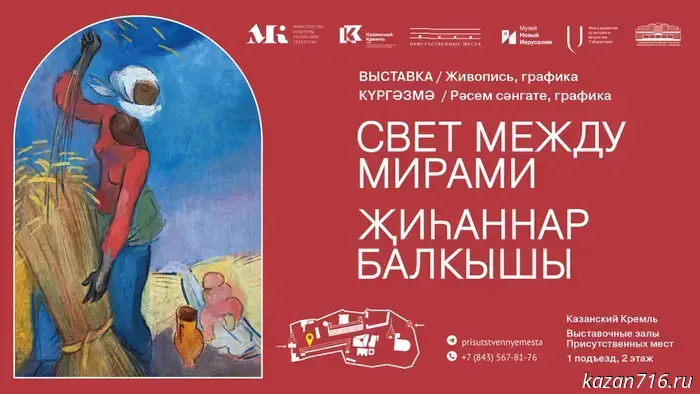
An exhibition devoted to a little-studied body of Soviet, Uzbek, and Russian modernism will open at the Kazan Kremlin State Museum-Reserve.
A unique exhibition of modernism of the 1920s–1930s from the I. V. Savitsky Karakalpak State Art Museum and the State Historical and Art Museum “New Jerusalem.”
The exhibition “Light Between Worlds,” dedicated to a little-studied strand of Soviet, Uzbek and Russian modernism of the 1920s–1930s, will open in the Exhibition Halls of the Prisutstvennye Mesta of the Museum-Reserve “Kazan Kremlin.”
The international project brought together two unique collections that were formed in defiance of all the rules of Soviet museum acquisition. The exhibition includes more than 130 paintings and graphic works by artists including Alexander Volkov, Robert Falk, Alexander Osmerkin, Kliment Redko and others, drawn from the collections of the State Historical and Art Museum “New Jerusalem” and the I. V. Savitsky Karakalpak State Art Museum (Nukus, Uzbekistan).
Gayane Umerova, Chair of the Uzbekistan Culture and Arts Development Foundation (ACDF):
“Works from the I. V. Savitsky Museum’s collection, in dialogue with the holdings of ‘New Jerusalem,’ allow us to see a multi-layered picture of the artistic life of the 1920s–1930s — a time of intense searching and rethinking of the role of art. It is important for us that alongside the acknowledged masters of modernism there are works by artists who have only recently begun to return to the field of attention, revealing new layers of the cultural atmosphere of the era. I am confident that the exhibition will make it possible to look at the heritage of the avant-garde and post-avant-garde in a new way and to feel the intellectual energy that shaped the art of those years.”
The Museum “New Jerusalem” proposed the joint exhibition as early as 2019; an agreement to hold it was reached several years later. With the support of the Government of the Moscow Region, the project ran from May to November 2025 at the Museum “New Jerusalem.”
The exhibition “Light Between Worlds” in the Exhibition Halls of the Prisutstvennye Mesta at the Kazan Kremlin will offer a new perspective on the artistic process of the 1920s–1930s, in all its complexity and diversity.
The exhibition is organized as a sequence of thematic sections reflecting the searches of artists in the 1920s–1930s.
The section “Masters of the New East” presents works that shape the image of the East and national modernism (Alexander Volkov, Nikolai Karakhan and others).
“Faces of the Era” is devoted to the portrait as a chronicle of the epoch and to the exploration of the types of the new society.
“Metaphysics of the 1920s–1930s” turns to the philosophical searches of Kliment Redko and Solomon Nikritin, who sought to depict on canvas the rapid displacements of humans in time and space, the struggle between industry and nature, the tension of cosmic and earthly forces, and the oscillations of radio waves.
The section “Discovery of a New World. The Union ‘Workshop of Painters’” is dedicated to artists — Alexander Shevchenko, Rostislav Barto, Nikolai Viting and others — who defended the importance of easel painting as a bearer of spiritual experience and genuine historical meaning against the fascination with industrial production and design.
Each section emphasizes the polyphony and experimental spirit of the era while preserving the uniqueness of the artists’ voices.
“Russia in all its national diversity and the Republic of Uzbekistan are two distinctive regions with the richest history, culture and spiritual life. Building a cultural dialogue between them is not only a tribute to the past but also a strategic necessity for the future. Cultural exchange enriches both sides, promotes better mutual understanding and creates favorable ground for development in all spheres. The opening of the exhibition ‘Light Between Worlds,’ which has brought together treasures from the collections of the Savitsky Museum (Nukus) and the ‘New Jerusalem’ Museum, is a vivid example of a fruitful cultural bridge between the two countries,” said Ilnur Rakhimov, Director of the Museum-Reserve “Kazan Kremlin.”
Both collections — the Museum “New Jerusalem” and the I. V. Savitsky Karakalpak State Art Museum — were formed at a time when many works of art remained outside the official cultural field. However, visitors will now have the opportunity to encounter an exceptional phenomenon in the history of world culture that embodies a unique experience in the emergence of human self-consciousness.
Address: Kazan, Museum-Reserve “Kazan Kremlin,” Exhibition Halls of the Prisutstvennye Mesta, Entrance 1, 2nd floor.
The exhibition will be open to visitors from 3 December 2025 to 5 April 2026.
For reference:
The Uzbekistan Culture and Arts Development Foundation (ACDF) is engaged in the preservation, promotion and development of Uzbekistan’s heritage, art and culture. At the forefront of Uzbekistan’s cultural development, ACDF seeks to foster the country’s cultural ecosystem, stimulate the creative economy and provide opportunities for practitioners at local, regional and global levels. ACDF believes that culture and heritage play a vital role in shaping society, uniting communities, building links between generations and promoting intercultural dialogue. ACDF successfully held the Fourth World Conference on the Creative Economy (WCCE) (2–4 October 2024) in Tashkent and the first Aral Cultural Summit (4–6 April 2025) in Nukus, Karakalpakstan. The Foundation is currently leading Uzbekistan’s participation in Expo 2025 in Osaka, Kansai, Japan (April–October 2025), the revival of the Center for Contemporary Art in Tashkent, the construction of the new National Museum of Uzbekistan designed by Tadao Ando, as well as the restoration and partial reconstruction of the Palace of the Grand Duke Romanov. ACDF also launched “Tashkent Modernism XX/XXI,” an ongoing research project to document and protect the city’s modernist architecture, under which two major publications were released in collaboration with Rizzoli New York (published November 2024) and Lars Müller Publishers (published May 2025). In Bukhara, ACDF launched the first Bukhara Biennale in September 2025. In Samarkand, ACDF will host the upcoming 43rd session of the UNESCO General Conference (30 October–13 November 2025).
To date, ACDF has attracted more than 3.5 million visitors through landmark exhibitions in 17 countries: from the Louvre and the Institut du Monde Arabe in Paris to the Uffizi Gallery in Florence, the British Museum in London and the Palace Museum in Beijing. Through projects presented in Europe, Asia and the Gulf, and through cooperation with more than 40 international museums and cultural institutions, the Foundation amplifies the voices and stories of Uzbekistan on the world’s most influential cultural stages.
About Gayane Umerova
Head of the Department of Creative Economy and Tourism of the Administration of the President of the Republic of Uzbekistan and Chair of the Uzbekistan Culture and Arts Development Foundation (ACDF), she leads efforts to create Uzbekistan’s cultural infrastructure. Her work draws global attention to the country’s art, artists and cultural heritage. She currently oversees the restoration and development of the Center for Contemporary Art in Tashkent, which will become a new cultural hub for the region, and serves as commissioner of the Bukhara Biennale (5 September–20 November 2025). She led the first Aral Cultural Summit (4–6 April 2025), oversees the construction of the new National Museum of Uzbekistan designed by Tadao Ando, and will lead the upcoming 43rd session of the UNESCO General Conference to be held in Samarkand from 30 October to 13 November 2025. Since 2021 she has been the commissioner of Uzbekistan’s pavilion at the Venice Biennale of Art and Architecture and is overseeing Uzbekistan’s participation in Expo 2025 in Osaka among other major projects.
Aiming to raise Uzbekistan’s profile on the international cultural stage, Umerova chairs the National Commission of Uzbekistan for UNESCO under the Cabinet of Ministers, and in April 2025 she was awarded the French Order of Arts and Letters. Her commitment to public service is reflected in her efforts to create opportunities for young people in Uzbekistan’s cultural sector and to develop a cultural economy that unites communities and generations.
I. V. Savitsky Karakalpak State Art Museum (Nukus)
I. V. Savitsky first began collecting Karakalpak decorative and applied arts and the art of ancient Khorezm for the Karakalpak branch of the Academy of Sciences of Uzbekistan. After the museum was established, the holdings began to expand into other areas — sculpture, graphics, painting of the 1910s–1940s, and later contemporary easel and monumental art.
The initial core of the collection was built around artists with Russian roots who worked in Central Asia — Ilya Mazel, Mikhail Kurzin, Alexander Nikolaev (Usto Mumin), Alexander Volkov, Viktor Ufimtsev, Elena Korovai, Nikolai Karakhan, Ural Tansykbayev, Nadezhda Kashina, Robert Falk, Pavel Benkov, Vasily Rozhdestvensky and others.
The painting collection grew to 90,000 cataloged items, encompassing many little-known artists who have never before been exhibited.
Museum “New Jerusalem”
The formation of the 20th-century art collection at the Museum “New Jerusalem” began in the mid-1980s, when the museum was still located on the monastery grounds and was called the Moscow Regional Museum of Local History.
The acquisition of the collections started “from a blank slate” with the support of director Vasily Nizhegorodov and the initiative of museum staff, who continue this work to this day. When the museum began to assemble its collection, the study of the avant-garde was only just beginning, but it was already clear that 20th-century art was growing on its foundation.
Другие Новости Казани (Казань716)
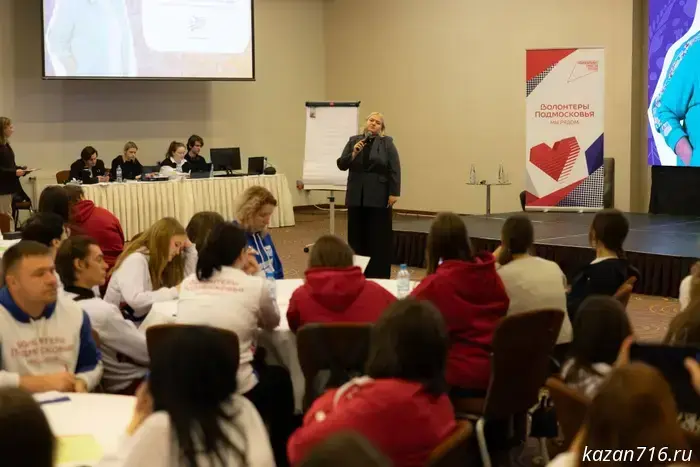 Tatarstan shared its experience in supporting volunteerism at the Moscow Region Volunteers Forum.
Successful practices of the Autonomous Nonprofit Organization "Information and Resource Center for Volunteering of the Republic of Tatarstan" were presented at the final volunteer forum "Volunteers of the Moscow Region". 01.12.2025. Tatar-Inform News Agency. Republic of Tatarstan. Kazan.
Tatarstan shared its experience in supporting volunteerism at the Moscow Region Volunteers Forum.
Successful practices of the Autonomous Nonprofit Organization "Information and Resource Center for Volunteering of the Republic of Tatarstan" were presented at the final volunteer forum "Volunteers of the Moscow Region". 01.12.2025. Tatar-Inform News Agency. Republic of Tatarstan. Kazan.
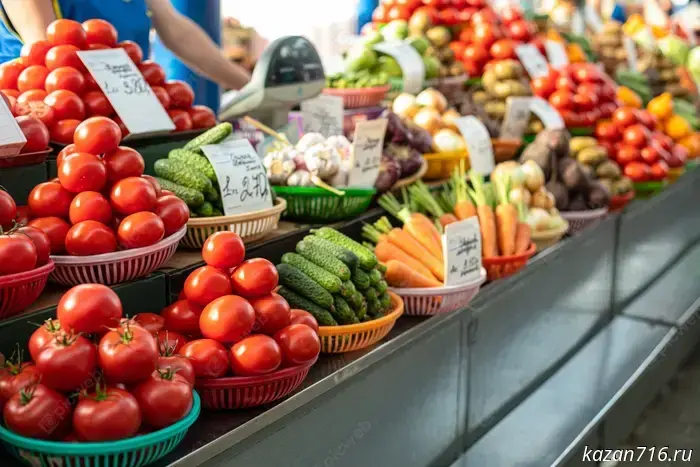 Over 12 fair days, residents of Tatarstan purchased agricultural products worth 1.1 billion rubles.
Over 12 days of fairs in Tatarstan, residents of the region purchased farm products totaling more than 1.1 billion rubles. 01.12.2025. GTRK Tatarstan. Republic of Tatarstan. Kazan.
Over 12 fair days, residents of Tatarstan purchased agricultural products worth 1.1 billion rubles.
Over 12 days of fairs in Tatarstan, residents of the region purchased farm products totaling more than 1.1 billion rubles. 01.12.2025. GTRK Tatarstan. Republic of Tatarstan. Kazan.
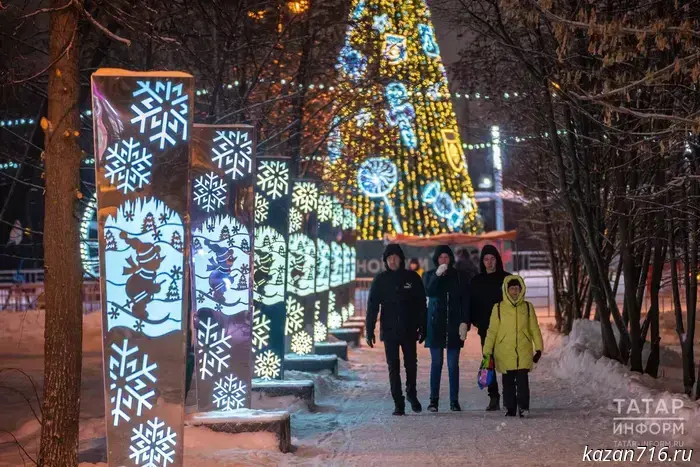 A winter project featuring more than 1,500 events has been launched in Tatarstan.
"Winter in Tatarstan" will bring together traditional celebrations and new formats. 01.12.2025. Almetyevsk RTV. Republic of Tatarstan. Almetyevsk.
A winter project featuring more than 1,500 events has been launched in Tatarstan.
"Winter in Tatarstan" will bring together traditional celebrations and new formats. 01.12.2025. Almetyevsk RTV. Republic of Tatarstan. Almetyevsk.
 A reboot for the "spiders": how Zainsk volunteers fight burnout and keep weaving their networks
Volunteers of the "Macramé" club celebrated the sending of the thousandth camouflage net with a joint trip to the thermal baths
The "Macramé" club at the Zainsk-2 Youth Center marks an important milestone — 1,014 woven camouflage nets. 01.12.2025. Zainsk News. Republic of Tatarstan. Zainsk.
A reboot for the "spiders": how Zainsk volunteers fight burnout and keep weaving their networks
Volunteers of the "Macramé" club celebrated the sending of the thousandth camouflage net with a joint trip to the thermal baths
The "Macramé" club at the Zainsk-2 Youth Center marks an important milestone — 1,014 woven camouflage nets. 01.12.2025. Zainsk News. Republic of Tatarstan. Zainsk.
An exhibition devoted to a little-studied body of Soviet, Uzbek, and Russian modernism will open at the Kazan Kremlin State Museum-Reserve.
A unique exhibition of 1920s–1930s modernism from the Karakalpak State Museum of Art named after I. V. Savitsky and the State Historical and Art Museum "New Jerusalem". 01.12.2025. Ministry of Culture. Republic of Tatarstan. Kazan.