RBC: Kozak proposed radical reforms and amnesty before his resignation.
Before leaving his post as deputy head of the presidential administration in September 2025, Dmitry Kozak developed a large-scale reform plan that included proposals on the economy, the judicial system, law enforcement agencies and a possible amnesty for those convicted of non-violent crimes. This was reported by RBC citing its sources.
Earlier The New York Times reported that, at the suggestion of Russian President Vladimir Putin, Kozak was preparing reform drafts aimed at improving the investment climate, but the details of the initiatives were not disclosed. Kozak himself did not respond to RBC’s request, and the president’s press secretary Dmitry Peskov said he had no information about such proposals.
According to the media, the draft was presented for discussion in the Kremlin; it touched on key mechanisms for regulating the investment climate and law enforcement practice. The document states that Russia faces a number of internal and external challenges — from the risk of technological backwardness and the threat of trade embargoes to demographic problems, infrastructure degradation and a decline in living standards. In Kozak’s view, the response to these challenges should be an updated democratic development model with modernized state and societal institutions.
The economic section of the plan envisaged large-scale decriminalization of economic and other non-violent crimes by moving some of them into the category of private and mixed private-public prosecution. At the same time, it proposed tightening liability for evasion of the court, failure to comply with court decisions, concealment of assets, fabrication of evidence and false testimony, and banning the use of evidence obtained through plea bargains as preclusive evidence. Civil claims for damages should be given priority.
The plan separately mentioned the possibility of reviewing decisions to transfer assets from private to state ownership made in 2022–2025, except in cases of treason. It also proposed restoring statutes of limitations and the doctrine of the bona fide purchaser, and for business — increasing regulatory predictability, including deferring the introduction of new mandatory requirements and possible material state liability for breaches of those rules.
Kozak called increasing the independence of the courts a key element of judicial reform. Interference in judges’ activities was proposed to be equated with serious crimes, and judges themselves — to face stronger liability for violating the principle of independence while simultaneously receiving a significant increase in remuneration and an expansion of control mechanisms.
Reform of law enforcement agencies and security services was planned to follow the judicial reform. The document proposed dropping cases against personnel for earlier offenses, except for serious violent crimes, while simultaneously raising salaries and strengthening liability for future violations. It also proposed depoliticizing the work of the security forces, toughening liability for interference in their activities, and changing the procedure for appointing their leaders.
A separate section was devoted to amnesty. The plan allowed for exempting from punishment those convicted of non-violent crimes, negligent offenses and exceeding the bounds of necessary self-defense, including the termination of ongoing criminal cases. For those who have not compensated victims, it proposes applying restrictive measures instead of full release.
In the foreign policy part of the document, Kozak proposed moving toward the formation of a Eurasian Commonwealth while preserving the sovereignty of participating countries, adopting common policy standards and creating a financial equalization fund modeled on integration unions.
Recall that Kozak is one of Putin’s long-time associates. In the 1990s they worked together in the St. Petersburg administration, after which Kozak held a number of key posts — he was the president’s plenipotentiary envoy to the Southern Federal District, minister of regional development, deputy prime minister and oversaw the integration of Crimea and Sevastopol after 2014. From 2020 he served as deputy head of the presidential administration and was responsible for policy in the post-Soviet space, including Ukraine. In September 2025 the Russian president accepted Kozak’s resignation, after which, according to RBC, he was considering offers to move into business.
Read BUSINESS Online on Telegram
More news about the event:
- Kozak prepared proposals for reforms of Russia’s investment climate
RBC reviewed the document on proposals for the economic, judicial and law enforcement systems
Dmitry Kozak, before leaving the Presidential Administration in September 2025, worked on reform projects, 10:04 24.12.2025 Realnoe Vremya — Kazan
- RBC: Kozak proposed radical reforms and an amnesty before his resignation
Before leaving his post as deputy head of the presidential administration in September 2025, Dmitry Kozak developed a large-scale reform plan that included proposals for the economy and the judicial system, 10:03 24.12.2025 Business Online — Kazan
Regional news on the topic:
- Initiatives by Dmitry Kozak to reform Russia during his tenure in the Presidential Administration presented
The content of the reforms Kozak worked on before his resignation as deputy head of the presidential administration in September 2025, proposed at Vladimir Putin’s initiative, is reported. 10:25 24.12.2025 Rakurs 32 — Bryansk
- RBC: Dmitry Kozak proposed reforms and an amnesty in Russia
The former deputy head of the presidential administration of Russia Dmitry Kozak developed a comprehensive plan of economic, judicial and security reforms, and also proposed considering the possibility of a broad amnesty in Russia, RBC reports. 08:24 24.12.2025 Public Service News Agency — Moscow
Другие Новости Казани (Казань716)
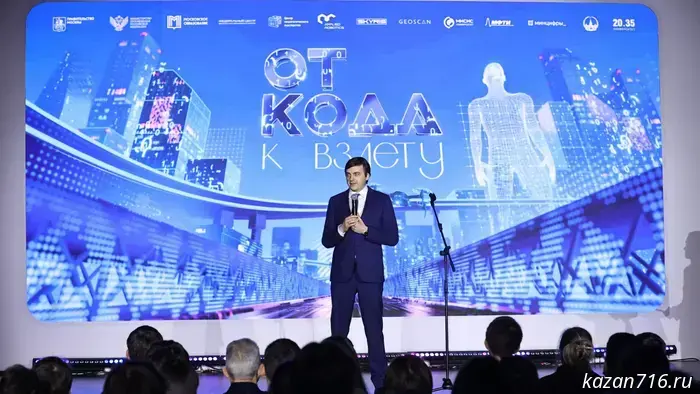 Students of Innopolis Lyceum won prizes at the All-Russian Robotics Olympiad "From Code to Takeoff."
In Moscow, at the Federal Center for Unmanned Aerial Systems in the Rudnevo industrial park, from December 16 to 22 the final stage of the first Open All‑Russian Technological Olympiad in Robotics "Ot 24.12.2025. Ministry of Education. Republic of Tatarstan. Kazan.
The seventeenth session of the State Council has opened.
Today at 10:00 a.m., the seventeenth session of the State Council of the seventh convocation opened. December 24, 2025. State Council. Republic of Tatarstan. Kazan.
Students of Innopolis Lyceum won prizes at the All-Russian Robotics Olympiad "From Code to Takeoff."
In Moscow, at the Federal Center for Unmanned Aerial Systems in the Rudnevo industrial park, from December 16 to 22 the final stage of the first Open All‑Russian Technological Olympiad in Robotics "Ot 24.12.2025. Ministry of Education. Republic of Tatarstan. Kazan.
The seventeenth session of the State Council has opened.
Today at 10:00 a.m., the seventeenth session of the State Council of the seventh convocation opened. December 24, 2025. State Council. Republic of Tatarstan. Kazan.
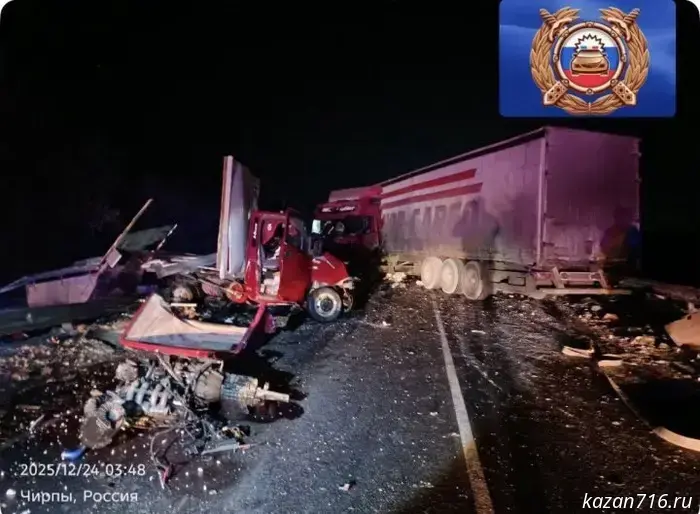 Fatal crash in Laishevsky District: the driver of a Volvo drove into the oncoming lane…
Today, at 02:50, a serious road traffic accident with a fatal outcome occurred at the 54th kilometer of the Kazan–Orenburg–Akbulak highway. 24.12.2025. Kamskaya Nov. Republic of Tatarstan. Laishevo.
Fatal crash in Laishevsky District: the driver of a Volvo drove into the oncoming lane…
Today, at 02:50, a serious road traffic accident with a fatal outcome occurred at the 54th kilometer of the Kazan–Orenburg–Akbulak highway. 24.12.2025. Kamskaya Nov. Republic of Tatarstan. Laishevo.
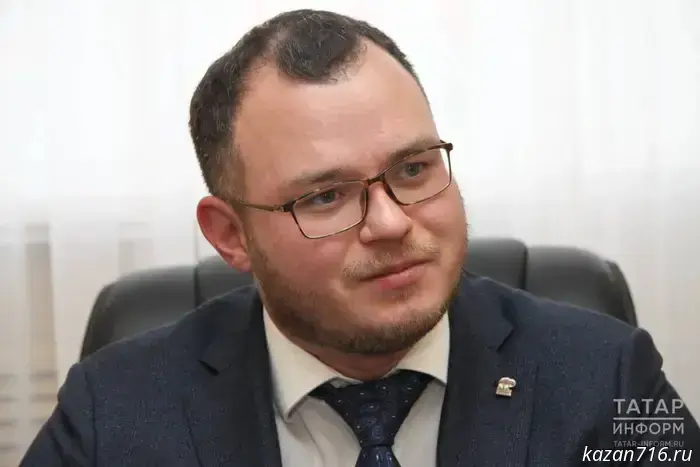 "They attack children": Tatarstan residents demand stricter control over stray dogs
Residents of Tatarstan are asking to revise the system for handling stray dogs
"We can't wait," 23.12.2025. Tatar-Inform News Agency. Republic of Tatarstan. Kazan.
172 UAVs were shot down over regions of Russia.
Most were destroyed in the airspace over Bryansk Oblast
During the past night, Russia's air defense forces shot down 172 Ukrainian unmanned aerial vehicles (UAVs). 24.12.2025. Chistopol-Inform. Republic of Tatarstan. Chistopol.
"They attack children": Tatarstan residents demand stricter control over stray dogs
Residents of Tatarstan are asking to revise the system for handling stray dogs
"We can't wait," 23.12.2025. Tatar-Inform News Agency. Republic of Tatarstan. Kazan.
172 UAVs were shot down over regions of Russia.
Most were destroyed in the airspace over Bryansk Oblast
During the past night, Russia's air defense forces shot down 172 Ukrainian unmanned aerial vehicles (UAVs). 24.12.2025. Chistopol-Inform. Republic of Tatarstan. Chistopol.
RBC: Kozak proposed radical reforms and amnesty before his resignation.
Before leaving his post as deputy head of the presidential administration in September 2025, Dmitry Kozak developed a large-scale reform plan that included proposals on the economy and the judicial system, 24.12.2025. Business Online. Republic of Tatarstan. Kazan.