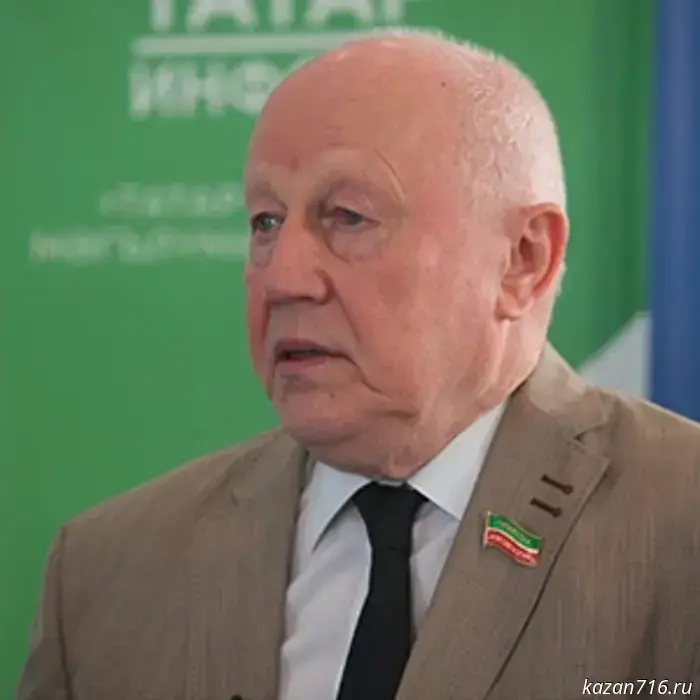
Marat Galeev: "I wasn't close to the top officials, but I consider myself a member of the republic's team."
The anniversary is being celebrated by the oldest deputy of the State Council of the Republic of Tatarstan, Marat Galeev
"Since fourth grade I read literature on economics and politics, more often at the level of journalistic articles"
– Marat Gadyeyevich, you were born in Muslyumovo. Who were your parents and how did they end up in that village?
– I lived in Muslyumovo for only a few months after I was born. My father was the head of the executive committee there. In 1941 he was mobilized to the front, but it turned out there was no one left at home. So some people were recalled to be appointed to positions. That's how my father ended up in Muslyumovo.
Then, when industrial development of oil began, he was sent to Bavlinsky District as secretary of the district committee. Today that position is equivalent to the head of the district. After the successful development of oil in Bavly they told him, "You have experience, now go to Zainsk District." That's how we kept moving. Although neither Muslyumovo, nor Bavly, nor Zainsk were my parents' homeland.
My father became a full orphan in 1921. His father died during World War I, and later he buried my mother as well. My mother was mostly raised by her uncles in Kazan. She learned the whole Tatar cuisine from them. She was part of Karim Tinchurin's amateur theater. In that theater there is even a photograph in which, among six people with Tinchurin, you can see my mother — she's at the bottom left.
My mother was a homemaker and gave birth to five children. I had two brothers and two sisters, and I am the youngest. One brother worked in research on rocket engine systems and simultaneously taught at the Moscow Aviation Institute. The other brother was a mathematician working on subsurface hydromechanics, which is related to oil production. Both have passed away. One lived to almost 90, and the other, unfortunately, died from the new coronavirus infection at 83.
One sister graduated from the astronomy department of the physics faculty at Kazan University. The other sister is an engineer-geologist by education; she is now 90 years old. So we all have completely different, incomparable specialties. I am an economist.
– Did you move to Kazan because your father was transferred there for work?
– Yes, my father was constantly transferred. And sometime around 1954 he was transferred to Kazan. I studied here in two schools — Gymnasium No. 5 and School No. 39. They still exist. I am a graduate of School No. 39. Both schools were strong. I consider myself very lucky with my teachers. Most of my teachers were veterans of the Great Patriotic War.
– Did someone advise you to enter the Kazan Institute of Finance and Economics or did you decide that yourself?
– Things were not smooth on my path; when life forced me to make independent decisions, I had to rely on my inclinations. I always had a genuine interest in economics and politics. My mother worked in a library for a while; she read a lot. We subscribed to various literature, not only fiction. Since fourth grade I was already reading literature on economics and politics, more often at the level of journalistic articles.
I read a lot. I followed, as much as possible, what was happening in the world. At that time there were weekly translated publications. For example, the newspaper "Za rubezhom" ("Abroad") was published every week.
Since the 1960s I began reading the US president's messages to Congress — what was published in our country — to assess world trends.
I graduated from the institute in 1968. By the way, then there was discussion about merging it with Kazan University. But it didn't happen. Many years later it did, though.
"I liked that Shaimiev clearly understood the need for reforms"
– You began your working life at the Kazan Engine-Building Plant at 17. So you worked and studied at the same time?
– I worked at the plant for only one year. The education system then was such that you worked in the evenings. At the engine-building plant I had a very interesting job, because for the first time in the history of aircraft construction they began testing various materials for fatigue strength.
I was lucky — I made friends there with whom I remained close for many, many years. They were also relatively young then. But unfortunately none of them are alive now.
After the institute I worked for about three years at the Ministry of Finance of the TASSR. I got there through the institute's placement.
– How did it happen that you became a lecturer at the Kazan Pedagogical Institute? And you taught there for a long time — from 1970 to 1989.
– At that time it was very prestigious to work at a university. While working at the Ministry of Finance, I maintained an interest in science, primarily economic science. Becoming a lecturer, I entered postgraduate school. I studied in postgraduate school for three years and defended a dissertation in economics at the Moscow Institute of Economics and Statistics. At that time it was considered a strong institution. In postgraduate study one could do research and teach.
As an economist, I taught political economy at the university, and I liked it very much. I always had good relations with students. Sometimes I meet my former students and they say, "Hello, Marat Gadyeyevich, we are already retired." I say, "And I'm still working." It's nice, of course, that I'm still recognized.
I taught at all faculties of the pedagogical institute — from the physical education faculty to higher mathematics. I tried to find the specifics of each faculty. At the music faculty I found a common language with students through the laws of harmony that exist in any science, including economics. Students grasped it quickly. They even wrote papers for competitions, for example on functional music — how it affects labor productivity. Some even won prizes. Some music faculty graduates became very successful in business.
– How did you end up in the Tatar Republican Committee of the CPSU as secretary for ideology?
– Scientific interest helped me a lot. I wrote a dissertation on stimulating economic development — essentially the development of ideas of the "Kosygin reform" of the 1960s. So when perestroika began, I had something to say.
When Mikhail Gorbachev declared that pluralism of opinions was possible, everyone woke up. People began to say what they really thought. Opinions were so diverse; some were radical.
In Kazan at that time there were so-called discussion clubs where many pressing problems were discussed. Everyone understood that the old ways of governing no longer worked; some reforms had to be carried out.
People listened to and watched broadcasts from the Congresses of People's Deputies of the USSR at night — there were all kinds of statements there.
At the inter-university level, party committee secretaries organized a discussion club where they discussed the possible reforms our country needed, perhaps for a long time. People were already demanding perestroika at demonstrations. We had quite a few proposals and heated discussions. But overall they were perhaps the most measured, without extreme radicalism.
So by fate I was elected secretary for ideology of the Tatar Republican Committee of the CPSU. Originally it went like this: the Central Committee of the CPSU gave an instruction, the regional committee executed it through its party organizations, district committees, party committees, and so on. And suddenly a completely different vertical began, when the "bottom" stopped obeying certain direct directives.
We often went to the Central Committee of the CPSU, and there discussions often became the form of deliberation. At their meetings they were astonished, because they were used to giving directive orders. And this period of discussion lasted several years.
But people began to get tired of discussions because the Central Committee proved unready to carry out reforms. And in August 1991 there was a coup, the State Committee on the State of Emergency (GKChP) was created. The conservative wing wanted to forcibly preserve the past, while another part longed for reforms, though everyone saw them differently. These political processes led to the country's collapse. But our republic's party organization was for preserving the country.
– Who are your main teachers and mentors in life?
– There are many. Including the first President of Tatarstan, Mintimer Shaimiev, and the Rais of the republic, Rustam Minnikhanov. I was never that close to the top leaders, but I have always considered myself a member of the republic's team and still do.
I liked that Shaimiev clearly understood the need for reforms. But he favored gradual reforms, without radicalism, without abrupt changes. Because when changes are abrupt, they inevitably cause conflict. Reforms need to be carried out gradually until society understands them. How difficult that was only he and his close associates know.
This position coincided with my approach. I also believed that reforms were necessary, but not abrupt, radical ones — gradual. There are objective reasons for that. Although I worked at a university, I never lost touch with industrial enterprises. When I wrote scientific articles and my dissertation, I gathered material at enterprises.
We had many large machine-building enterprises, including defense ones. And the situation with them could not change instantly. They all depended on state orders. A state order for them is everything.
No one sells a plane or helicopter on the free market. That's a state order. And suddenly in 1992 the state order ended. We even tried to raise the issue in Moscow, saying you can't just abandon them. The government replied, "Do what you want." They engaged in privatization of profitable sectors.
And now, when these enterprises are in demand, Tatarstan has become a pillar of the country because we preserved everything. Except for one or two enterprises, but those were already morally outdated and simply transformed into a new format. Many enterprises in the country closed. The republican budget supported enterprises, although the difficulties were very serious.
"Many of our laws in the economic sphere were ahead of their time"
– Why did you decide to run for deputy?
– After working at the Ministry of Economy, I decided to try to run for deputy. I had plans for lawmaking, since most laws were still Soviet.
– You headed the State Council of the Republic of Tatarstan's commission on economic reforms. What innovative laws were adopted for the republic's economic development?
– We were the first in the country to adopt a Land Code, which in itself was almost a revolution. During a session veterans would come up to me and say, "Are you really going to adopt this? This is a revolution." I replied, "Yes, it is a revolution." They had once been involved in collectivization, which is the expropriation of property; accordingly, they were participants in the process of socializing land.
And the opposition in the State Duma at the federal level was categorically against private ownership of land. Quotes of that time include: "The land is a mother, and a mother is not for sale." The opposition used such slogans.
But a market economy cannot live without private property, because it implies not direct financing but credits. A bank must give a loan secured by some collateral. Land serves as collateral. It's a market instrument tested for centuries.
At the federal level, such a law could not be adopted — the opposition blocked it. But we adopted the Land Code earlier than the federal legislators.
The law on the Alabuga special economic zone was also a child of our time. At the federal level everyone was against it. Then the Minister of Economic Development and Trade of Russia was German Gref. He was against it because the country lacked money, and here someone needed to be exempted from taxes. But if you think about the future, about advanced technologies, it's better to sacrifice something today so there will be something later, because the economy cannot stand still.
There were views like, "Everything is fine as it is, all the money should go to the budget, because the budget is in deficit, these are hard times, there's no need to think about the future." We said, "No. Special zones must be created."
Gref was also against it because at that time several special economic zones with eased taxation were created in Russia, but they quickly became criminalized. But we wrote our law so that one could enter this platform only with specific business projects that had defined implementation deadlines. Only then did they receive tax benefits. After we successfully operated for several years, our law was studied. In some respects our law became the framework for the federal one.
The law on oil and gas helped a lot. At that time world oil prices fell to $10 per barrel. At such prices many of our fields would not have paid off and would have become unprofitable and had to be closed. So we adopted a law that exempted low-profit fields and wells from taxes. This law was unique in Russia. Our oil workers began to receive wages, and unemployment fell.
Many of our laws in the economic sphere were ahead of their time. Later we harmonized them with federal legislation. But harmonizing was not easy; it was the work of an entire convocation, where we made decisions through discussions. Because some laws, as we thought, were better than the federal ones.
I chaired the commission on economic reforms for one convocation, and it was during that period that we created the framework of republican legislation and adopted the main laws. I really enjoyed that work.
"It turned out that our economy is capable of working in any conditions"
– You were at the origins of modern parliamentarianism in Tatarstan. You have been a deputy of the State Council of the republic for six convocations and are serving in the seventh. What is the hardest part of being a deputy for you?
– Each convocation was different because different tasks were being solved. In the first convocations basic laws were adopted. In other convocations many laws were refined. One convocation was entirely occupied with bringing our laws into line with federal legislation.
Each convocation was difficult in its own way, but they were connected with serious creative work. In the sense that it was movement into the unknown, with some risks.
But deputy work is not only about laws but also about citizens' appeals. There was one very difficult case with a citizen — I worked on his issue for one and a half convocations. Two courts took place, but his interests were upheld.
A Soviet citizen went to Tajikistan. Then the country collapsed, and he ended up behind bars. His passport was not renewed while he was in prison. He was released. They wouldn't let him back there, and here they wouldn't accept him. Nevertheless, his issue was resolved and then he received a passport.
We can only help within the framework of the law, so if the law doesn't allow it, there's nothing you can do.
– How do you assess the current state of the Russian economy?
– Sanctions have become an instrument of global politics. Established cooperation ties with unfriendly states have been severed. Logistics has changed diametrically. But new cooperative ties are emerging.
Those who started all this thought Russia could be defeated on the battlefield. But almost four years have shown that we are capable not only of adapting to harsh conditions, essentially to a blockade, but also of achieving victories. It turned out that we can change radically in a way adequate to the situation.
The economy quickly restructured. Moreover, the whole society restructured. Now grandmothers and teenagers are working for victory. Everyone is participating. The roots of victory mostly lie in the rear.
So the state of the Russian economy should be assessed through this prism, since it turned out that its capabilities are very serious. Our economy can operate in any conditions.
Russia never sought isolation. Isolationism is always a minus for the economy. Moreover, it's a catastrophe. So sooner or later cooperation will return. We have something to say to this world. But I think we will no longer return to the previous state, but will find our own worthy place.
We went to an extreme — we became completely dependent on foreign supplies across a very broad nomenclature of goods, which is unacceptable for a country like Russia. There are some basic things we must be able to do ourselves. All this is now being caught up. I think this lesson has been useful for us.
– What is your secret to active longevity?
– I don't consider it longevity. At my age there's only one zero, not two (laughs).
In my family I can say that we all worked for a long time. My father worked for a very long time for those times. My brothers left work when they were over eighty. They were at work until the last day. And I really don't notice the years yet. The desire to create always nurtures you. So you have to work, do what you love…
…and jazz affects me a lot. When I first heard jazz in third grade, I immediately fell in love with it. For me it's more than music.
Galeev Marat Gadyeyevich
Deputy of the State Council of the Republic of Tatarstan, VII convocation
Born January 1, 1946.
Graduated in 1968 from the Kazan Institute of Finance and Economics with a degree in economics; in 1993 — the German Academy of Management, Lower Saxony; in 2011 — the Russian Academy of National Economy and Public Administration under the President of the Russian Federation with a professional retraining program "Master of State and Public Administration."
Began his labor activity as a worker in 1963 at the Kazan Engine-Building Plant. From 1968 to 1970 he was an economist at the Ministry of Finance of the TASSR. From 1970–1989 he taught at the Kazan Pedagogical Institute. From 1990 to 1991 he worked as secretary for ideology of the Tatar Republican Committee of the CPSU. For four years he held the position of Deputy Chairman of the State Committee for the Economy of the Republic of Tatarstan.
Since 1995 he has been a deputy of the State Council of the Republic of Tatarstan for all seven convocations.
Candidate of Economic Sciences, Associate Professor. Honored Economist of the Republic of Tatarstan. He has a number of awards and commendations.
Photo: © Tatar-inform
Другие Новости Казани (Казань716)
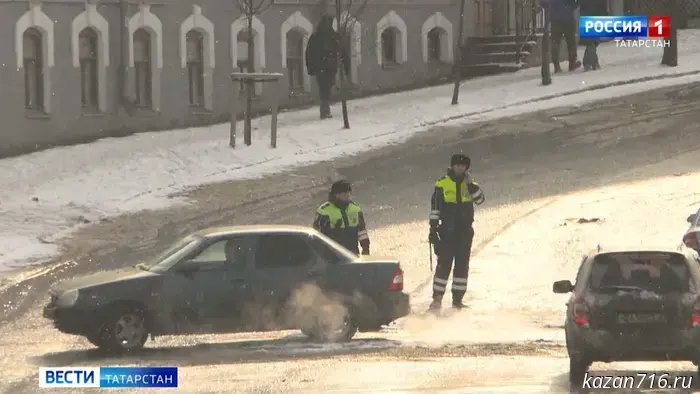 Four traffic accidents occurred in Kazan within 24 hours.
Over the past 24 hours, four traffic accidents occurred in Kazan. Five people were injured in the crashes; there were no fatalities, the capital’s State Traffic Inspectorate of Tatarstan reported. 01.01.2026. GTRK Tatarstan. Republic of Tatarstan. Kazan.
Outages in submarine cables disrupted communications in the Gulf of Finland.
Finnish police are investigating damage to telecommunications cables in the Gulf of Finland
Several submarine cables providing communications between Estonia, the island of Hiiumaa, Sweden and Finland have failed in the Gulf of Finland. 01.01.2026. Real time. Republic of Tatarstan. Kazan.
Four traffic accidents occurred in Kazan within 24 hours.
Over the past 24 hours, four traffic accidents occurred in Kazan. Five people were injured in the crashes; there were no fatalities, the capital’s State Traffic Inspectorate of Tatarstan reported. 01.01.2026. GTRK Tatarstan. Republic of Tatarstan. Kazan.
Outages in submarine cables disrupted communications in the Gulf of Finland.
Finnish police are investigating damage to telecommunications cables in the Gulf of Finland
Several submarine cables providing communications between Estonia, the island of Hiiumaa, Sweden and Finland have failed in the Gulf of Finland. 01.01.2026. Real time. Republic of Tatarstan. Kazan.
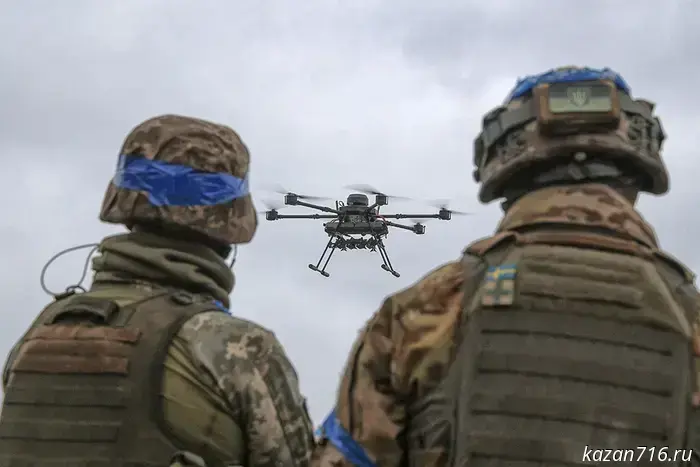 The Ukrainian Armed Forces attacked a cafe and a hotel on the Black Sea coast in Khorly on New Year's Eve: 24 people were killed, 50 were injured.
24 people were killed as a result of a drone attack in the Kherson region
Photo: REUTERS. 01.01.2026. Komsomolskaya Pravda Kazan. Republic of Tatarstan. Kazan.
The Ukrainian Armed Forces attacked a cafe and a hotel on the Black Sea coast in Khorly on New Year's Eve: 24 people were killed, 50 were injured.
24 people were killed as a result of a drone attack in the Kherson region
Photo: REUTERS. 01.01.2026. Komsomolskaya Pravda Kazan. Republic of Tatarstan. Kazan.
 Air defense forces shot down 168 Ukrainian drones over Russian regions overnight.
On the night of January 1, 2026, air defense systems shot down 168 drones of the Ukrainian Armed Forces over six regions of the country and the waters of the Sea of Azov
Air defense forces shot down 168 Ukrainian drones overnight over regions of the Russian Federation. 01.01.2026. Komsomolskaya Pravda Kazan. Republic of Tatarstan. Kazan.
Air defense forces shot down 168 Ukrainian drones over Russian regions overnight.
On the night of January 1, 2026, air defense systems shot down 168 drones of the Ukrainian Armed Forces over six regions of the country and the waters of the Sea of Azov
Air defense forces shot down 168 Ukrainian drones overnight over regions of the Russian Federation. 01.01.2026. Komsomolskaya Pravda Kazan. Republic of Tatarstan. Kazan.
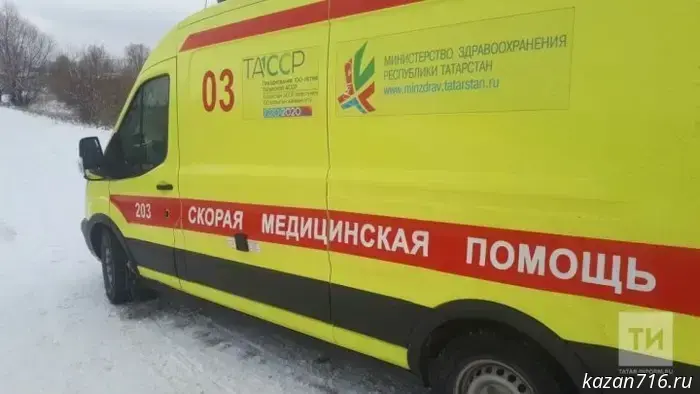 New Year's Night on Duty: How the Ambulance Service at Zainsk Central District Hospital Worked
While the city's residents celebrated the New Year with family and friends, the emergency medical staff of the Zainsk Central District Hospital were on duty, remaining true to their professional obligations. 01.01.2026. Zainsk News. Republic of Tatarstan. Zainsk.
The conditions for businesses under the simplified tax system have changed in Russia.
From today, the conditions for businesses operating under the simplified (USN) and patent (PSN) taxation systems in Russia are changing. 01.01.2026. Tatar-inform News Agency. Republic of Tatarstan. Kazan.
New Year's Night on Duty: How the Ambulance Service at Zainsk Central District Hospital Worked
While the city's residents celebrated the New Year with family and friends, the emergency medical staff of the Zainsk Central District Hospital were on duty, remaining true to their professional obligations. 01.01.2026. Zainsk News. Republic of Tatarstan. Zainsk.
The conditions for businesses under the simplified tax system have changed in Russia.
From today, the conditions for businesses operating under the simplified (USN) and patent (PSN) taxation systems in Russia are changing. 01.01.2026. Tatar-inform News Agency. Republic of Tatarstan. Kazan.
Marat Galeev: "I wasn't close to the top officials, but I consider myself a member of the republic's team."
The senior deputy of the State Council of the Republic of Tatarstan, Marat Galeev, celebrates his jubilee "Since fourth grade I read literature on economics and politics, more often at the level of journalistic articles" – Marat Gadeyevich, you were born in Muslyumovo. 01.01.2026. Tatar-inform News Agency. Republic of Tatarstan. Kazan.