
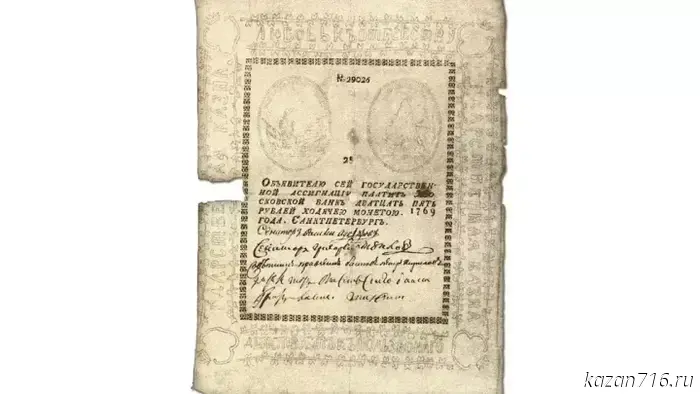
The birthday of the Russian ruble in paper form: January 9, 1769.
257 years ago the Russian financial system underwent a revolution.
The epochal manifesto and its prerequisites Exactly 256 years ago the Russian financial system underwent a genuine revolution. On January 9 (December 29 by the old style) 1769, Empress Catherine II signed the historic Manifesto that introduced the first state paper monetary notes — assignats — into circulation. This bold step was dictated by practical necessity. The main means of payment at the time were copper coins, whose transport had become a logistical nightmare. Transporting a large sum required entire carts: for example, 500 rubles in copper weighed more than 30 poods (about 500 kg). The decision proved fateful, laying the foundation for the modern monetary and credit policy of the state. The first banknotes in denominations of 25, 50, 75 and 100 rubles featured an austere design. Printed on stamped paper with watermarks and hand-signed by officials, they resembled government promissory notes more than modern bills. Curiously, the 75-ruble note, introduced to simplify change, proved most vulnerable to counterfeiters and was later withdrawn from circulation. Despite subsequent periods of inflation and fluctuating confidence, the principle of paper money became firmly established. Development vectors: from imperial banknotes to modern bills The further evolution of Russian money reflected the economic and political twists in the country’s history. Finance Minister Yegor Kankrin’s reform of 1839–1843 first tied the assignats to the silver ruble, stabilizing the exchange rate. The gold standard introduced by Sergei Witte raised the international prestige of the Russian ruble. Each era left a unique mark on design: Imperial period: banknotes bearing portraits of monarchs and intricate engravings. Soviet era: from temporary “kerenki” and RSFSR settlement notes to ideologically curated chervonets depicting peasants, workers and leaders. Modern Russia: the “Cities and Monuments” series, and later the more technologically advanced “Outstanding Russians” series, where each note became a mini-encyclopedia of national heritage. Psychologically, cash long remained synonymous with real, tangible wealth. The clink of coins and the rustle of notes created a special trust rooted in the collective consciousness of generations. Transformation in the digital age: the end of paper’s hegemony? Today we are witnessing the twilight of physical money as a universal payment instrument. According to studies, the share of cash in Russian retail trade is steadily declining, yielding to card, mobile and QR payments. The pandemic became a powerful catalyst, turning contactless transactions from a convenient option into a hygienic and social norm. The banknote increasingly stays in the wallet as a reserve, playing the role of an “emergency” asset. Fintech experts predict several development scenarios: It will remain a niche instrument. Cash will continue to serve the shadow sector, private transactions and remain an important element of financial accessibility for vulnerable population groups. A museum artifact and investment object. Collectible and commemorative banknotes will increase in value as historical artifacts. A prototype for digital currency. The experience of handling state-regulated fiat money became a prototype for central bank digital currency (CBDC) developments, such as the digital ruble. Epilogue: a symbol of an era in an age of symbols The anniversary of the paper ruble is an occasion for philosophical reflection on the nature of value. Money has evolved from a commodity form (fur, grain) to metal ingots, then to minted coin, and from that to a paper obligation. Today we are moving to a digital code in a bank register or blockchain. Catherine II’s assignats were a technological breakthrough of their time, solving the problem of the physical transportability of capital. Modern payment systems solve the problem of instant cross-border transmission of value.
History teaches that the form of money always adapts to the technological and social demands of society. The paper ruble, having celebrated its 256th anniversary, fulfilled its great historical mission. It is not simply receding into the past, but becoming a link between the material economy of yesterday and the digital financial ecosystem of tomorrow.
Alexander Isakov
More news about the event:
The birthday of the Russian ruble in paper form: January 9, 1769
257 years ago the Russian financial system underwent a revolution.
The epochal manifesto and its prerequisites
Exactly 256 years ago the Russian financial system underwent a genuine revolution.13:52 09.01.2026 Zainsk News - Zainsk
The birthday of the Russian ruble in paper form: January 9, 1769
257 years ago the Russian financial system underwent a revolution.
The epochal manifesto and its prerequisites
Exactly 256 years ago the Russian financial system underwent a genuine revolution.13:42 09.01.2026 Zainsk-Inform - Zainsk
News from neighboring regions on the topic:
A 1,000-ruble note depicting the Saratov–Engels bridge was put into circulation
The Central Bank put a 1,000-ruble note bearing a symbol of Saratov into circulation
Photo:10:36 09.01.2026 Komsomolskaya Pravda - Saratov
Today is celebrated the Day of the appearance of paper money in Russia
On this day Empress Catherine II signed a manifesto introducing assignats in Russia.08:12 09.01.2026 Saratov24.TV - Saratov
January 9 is observed as the Day of the appearance of paper money in Russia
On January 9, 1769, the first paper money appeared in Russia. Assignats were government-issued IOUs stating that the state was borrowing coins from the population.07:57 09.01.2026 Altai Pravda - Barnaul
Другие Новости Казани (Казань716)
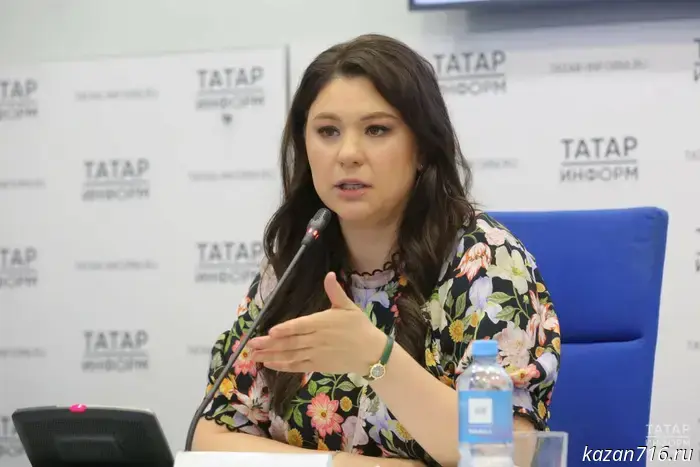 Taliya Minullina said that Turkey remains the leading investor in Tatarstan.
Turkey leads in the volume of foreign investment in the Republic of Tatarstan. This was reported by the head of the Tatarstan Investment Development Agency, Taliya Minullina; her words were quoted by TASS. 09.01.2026. IA Tatar-Inform. Republic of Tatarstan. Kazan.
Taliya Minullina said that Turkey remains the leading investor in Tatarstan.
Turkey leads in the volume of foreign investment in the Republic of Tatarstan. This was reported by the head of the Tatarstan Investment Development Agency, Taliya Minullina; her words were quoted by TASS. 09.01.2026. IA Tatar-Inform. Republic of Tatarstan. Kazan.
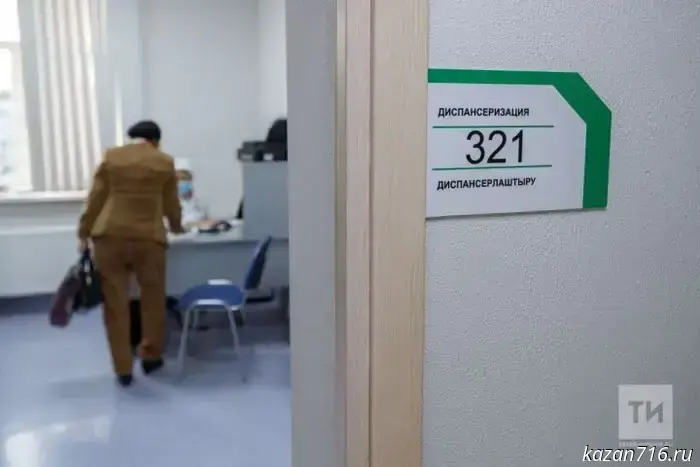 Starting in 2026, Russia's preventive health checkup program will be expanded: screenings for HPV and hepatitis C will be added.
Beginning in 2026, Russia’s preventive medicine system will take a significant step forward. January 9, 2026. Zainsk-Inform. Republic of Tatarstan. Zainsk.
AgiBot led the global android market in 2025 with a 39% share.
Analysts predict significant growth in the humanoid robot market in the coming years
In 2025, the company AgiBot took first place in the global humanoid robot market. 09.01.2026. Real time. Republic of Tatarstan. Kazan.
Tomorrow's weather forecast for Nurlat residents.
Daily operational forecast of the occurrence of emergencies in the territory of the Nurlat Municipal District for January 10, 2026, from 18:00 on January 9, 2026 to 18:00 on January 10, 2026. 09.01.2026. Nurlat-Inform. Republic of Tatarstan. Nurlat.
Starting in 2026, Russia's preventive health checkup program will be expanded: screenings for HPV and hepatitis C will be added.
Beginning in 2026, Russia’s preventive medicine system will take a significant step forward. January 9, 2026. Zainsk-Inform. Republic of Tatarstan. Zainsk.
AgiBot led the global android market in 2025 with a 39% share.
Analysts predict significant growth in the humanoid robot market in the coming years
In 2025, the company AgiBot took first place in the global humanoid robot market. 09.01.2026. Real time. Republic of Tatarstan. Kazan.
Tomorrow's weather forecast for Nurlat residents.
Daily operational forecast of the occurrence of emergencies in the territory of the Nurlat Municipal District for January 10, 2026, from 18:00 on January 9, 2026 to 18:00 on January 10, 2026. 09.01.2026. Nurlat-Inform. Republic of Tatarstan. Nurlat.
 Russians will work only three weeks in January.
In January Russians will work for only three weeks. This was stated by RANEPA expert Tatyana Podolskaya; her words were quoted by RIA Novosti. 09.01.2026. Tatar‑inform News Agency. Republic of Tatarstan. Kazan.
Russians will work only three weeks in January.
In January Russians will work for only three weeks. This was stated by RANEPA expert Tatyana Podolskaya; her words were quoted by RIA Novosti. 09.01.2026. Tatar‑inform News Agency. Republic of Tatarstan. Kazan.
 Ak Bars convincingly defeated Barys on its home ice.
Ak Bars convincingly defeated Astana's Barys in another match of the KHL regular-season home series. 08.01.2026. Tatar-Inform News Agency. Republic of Tatarstan. Kazan.
Ak Bars convincingly defeated Barys on its home ice.
Ak Bars convincingly defeated Astana's Barys in another match of the KHL regular-season home series. 08.01.2026. Tatar-Inform News Agency. Republic of Tatarstan. Kazan.
The birthday of the Russian ruble in paper form: January 9, 1769.
257 years ago the Russian financial system underwent a revolution. An epochal manifesto and its background Exactly 256 years ago the Russian financial system experienced a genuine revolution. 09.01.2026. Zainsk-Inform. Republic of Tatarstan. Zainsk.