
The Ministry of Sports of the Republic of Tatarstan continues its work to improve anti-corruption literacy.
To enhance legal literacy, an "Anti-Corruption Dictionary" has been prepared, which includes key concepts, historical facts, and legal tools. Abacha Sani (1943—1998) - president and military dictator of Nigeria, one of the most corrupt politicians of the 20th century, embezzled about 5 billion dollars during his rule. He died of a heart attack. "Bus" - one of the illegal forms (political technologies) of bribing voters during early voting in elections of various levels or during a referendum. Its essence is simple: voters are brought in an organized manner (usually by bus) to the polling station to vote early for the "right" candidate. Immediately before voting or right after, such voters are given "humanitarian aid," and sometimes a small cash allowance. "Active corruption" - active bribery of a national or foreign official, a member of an international organization, leaders of commercial, public, and other organizations by interested individuals or groups, or extortion of illegal remuneration by these individuals in connection with their professional activities. Alexander I (1777—1825) - Russian emperor. He issued a decree "On the Eradication of Usurers," stating that "the harmful usury or bribes not only exist but even spread among those who should despise and suppress them." Alexander III (1845—1894) - Russian emperor. In 1884, he approved rules prohibiting the combination of public service with participation in trade and industrial enterprises. From Konstantinov's book "Corrupt Russia." 2006. Anti-corruption agitation - dissemination of anti-corruption ideas and views to influence the consciousness, mood, and behavior of the population using both oral speeches and mass communication means. Anti-corruption security - the state of protection of vital interests of the individual, society, and the state from corrupt activities. Anti-corruption activities - activities of the state, its bodies, officials, civil society institutions, entrepreneurs, and private individuals aimed at reducing the level of corruption, eliminating (localizing, neutralizing, liquidating, etc.) corruptogenic factors, and countering corrupt behavior. Anti-corruption protection - available means, the use of which ensures anti-corruption security in society, the state, and their institutions. Anti-corruption ideology - a system of views, beliefs, ideas, principles, and concepts reflecting the attitude of individuals, social groups, ruling elites, and society as a whole towards anti-corruption policy and anti-corruption activities. Anti-corruption idea - a profound substantive "goal, representation, proposal, or intention aimed at understanding, describing, explaining, or restraining (preventing) corruption in society. Global anti-corruption policy - anti-corruption policy developed by the international community or authorized international organizations (institutions) aimed at reducing corrupt activity in society, in specific areas of life most affected by corruption. Anti-corruption program - a comprehensive legal document ensuring the coordinated application of legal, economic, organizational, managerial, educational, and other measures aimed at combating corruption at various levels of power. Anti-corruption programs can be classified on various grounds into the following independent types: international, national (federal), regional (federal district, republican, regional, territorial), municipal, and departmental. Anti-corruption prevention - activities of state bodies and public organizations aimed at eliminating (neutralizing) the causes and conditions that generate corruption. Anti-corruption expertise of legal acts - activities of specialists (experts) to identify and describe corruptogenic factors related to legal acts and their drafts; to develop recommendations aimed at eliminating or limiting the impact of such factors. Anti-corruption education - targeted activities aimed at forming and developing anti-corruption legal consciousness of individuals, orienting them towards socially useful anti-corruption behavior and preparing them for anti-corruption activities. Anti-corruption legislation - a set of legislative (federal and regional) acts specifically aimed at countering corrupt behavior or its neutralization in the state (region) and society. Anti-corruption worldview - a stable system of anti-corruption views, ideas, principles, value orientations, determining the corresponding behavior of people. Anti-corruption education - a targeted process of teaching anti-corruption behavior and anti-corruption activities, implemented by competent educational institutions. Anti-corruption behavior - the behavior of individuals (officials, citizens) that hinders the formation of corruptogenic factors and corrupt activities. Anti-corruption legal consciousness - a set of legal and socio-social ideas, views, representations, beliefs, feelings, emotions, and moods ideologically and psychologically determining corrupt behavior and measures to respond to it. Anti-corruption law-making - a specific form of implementing anti-corruption policy by its subjects, manifested in the consolidation in normative legal acts of the main ideas and principles of anti-corruption policy. Anti-corruption forecasting - anticipating probabilistic changes, trends, and patterns (qualitative and quantitative indicators) in the development of corruption, anti-corruption policy, and its results over a certain period. Anti-corruption propaganda materials - printed, audiovisual, and other materials containing signs of anti-corruption agitation and propaganda, intended for mass distribution, publication, and use. Anti-corruption legal acts - normative legal acts aimed at combating corruption and forming anti-corruption policy and anti-corruption behavior in society. Anti-corruption audit - a system for monitoring compliance with anti-corruption restrictions and the implementation of anti-corruption measures in a specific institution, organization, government body, or local government body.
Anti-corruption state body - a specially authorized state body whose activities are aimed at counteracting corrupt manifestations. Anti-corruption coordination council - in accordance with the Anti-Corruption Toolkit, a recommended public body consisting of representatives of power structures, businessmen, representatives of public organizations known for their integrity, determining the main directions of anti-corruption policy. Anti-corruption monitoring - observation, analysis, assessment, and forecasting of corrupt offenses, corruptogenic factors, as well as general and special measures for implementing anti-corruption policy. Anti-corruption monitoring is conducted by the authorized anti-corruption body or another specialized institution or organization. Anthropology of corruption - the study of individuals, participants in corrupt relations. Aristotle (384—322 BC) - ancient Greek philosopher. He is attributed with anti-corruption statements: "Those who buy power for money get used to profiting from it." "The most important thing in any state structure is to arrange matters so that officials cannot profit." "Arthashastra" - the first known treatise condemning corruption. It was published in India in the 4th century BC. It contains the assertion that "the property of the king cannot be, even in smallness, not appropriated by those who know this property."
Другие Новости Казани (Казань716)
 Cultural News
On March 26, creative groups and soloists from the Tetyushi municipal district participated in the zonal stage of the IX Republican festival of amateur performers among veterans of the Republic of Tatarstan, 26.03.2026. Tetyushi district. Republic of Tatarstan. Tetyushi.
Cultural News
On March 26, creative groups and soloists from the Tetyushi municipal district participated in the zonal stage of the IX Republican festival of amateur performers among veterans of the Republic of Tatarstan, 26.03.2026. Tetyushi district. Republic of Tatarstan. Tetyushi.
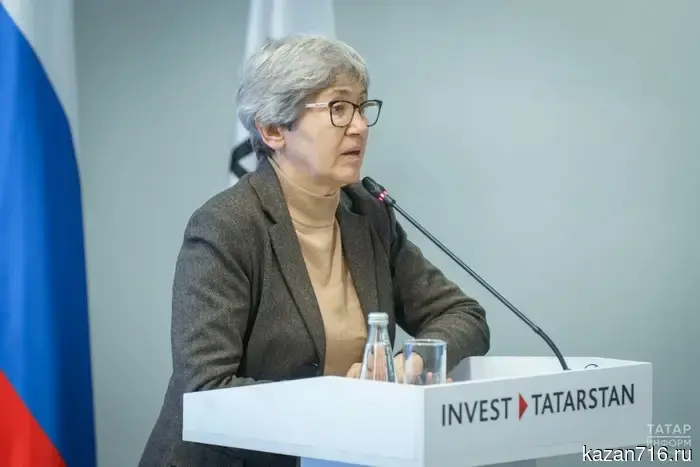
 Economic geographer Zubarevich named five factors contributing to the economic success of Tatarstan.
Professor of the Department of Economic and Social Geography at Moscow State University, Doctor of Geographical Sciences, 26.03.2026. IA Tatar-inform. Republic of Tatarstan. Kazan.
Economic geographer Zubarevich named five factors contributing to the economic success of Tatarstan.
Professor of the Department of Economic and Social Geography at Moscow State University, Doctor of Geographical Sciences, 26.03.2026. IA Tatar-inform. Republic of Tatarstan. Kazan.
 Xavier Manford is a newcomer to UNICS!
The basketball club UNICS has signed a contract with guard Xavier MANFORD (193 cm, 78 kg), who has experience playing in the NBA, EuroLeague, and EuroCup. 26.03.2026. BC Unics Kazan. Republic of Tatarstan. Kazan.
Xavier Manford is a newcomer to UNICS!
The basketball club UNICS has signed a contract with guard Xavier MANFORD (193 cm, 78 kg), who has experience playing in the NBA, EuroLeague, and EuroCup. 26.03.2026. BC Unics Kazan. Republic of Tatarstan. Kazan.
 In Chelny, 2.6 billion rubles will be allocated for road repairs.
In Tatarstan, 2.6 billion rubles will be allocated for road repairs in Naberezhnye Chelny. 26.03.2026. GTRK Tatarstan. Republic of Tatarstan. Kazan.
In Chelny, 2.6 billion rubles will be allocated for road repairs.
In Tatarstan, 2.6 billion rubles will be allocated for road repairs in Naberezhnye Chelny. 26.03.2026. GTRK Tatarstan. Republic of Tatarstan. Kazan.
 A nationwide freestyle wrestling tournament "M-7 OPEN14" will be held in Nizhnekamsk.
An open all-Russian tournament in freestyle wrestling "M-7 OPEN14" will be held in Nizhnekamsk from March 27 to March 29. 26.03.2026. GTRK Tatarstan. Republic of Tatarstan. Kazan.
A nationwide freestyle wrestling tournament "M-7 OPEN14" will be held in Nizhnekamsk.
An open all-Russian tournament in freestyle wrestling "M-7 OPEN14" will be held in Nizhnekamsk from March 27 to March 29. 26.03.2026. GTRK Tatarstan. Republic of Tatarstan. Kazan.
 The assembly of Tu-214 aircraft at the Kazan aircraft plant has become faster.
At the branch of JSC "Tupolev" - Kazan Aviation Plant named after S.P. Gorbunov - a suppliers' conference was held dedicated to the implementation of the production plan for the release of aviation equipment for 2026-2027, on March 26, 2026. GTRK Tatarstan. Republic of Tatarstan. Kazan.
The assembly of Tu-214 aircraft at the Kazan aircraft plant has become faster.
At the branch of JSC "Tupolev" - Kazan Aviation Plant named after S.P. Gorbunov - a suppliers' conference was held dedicated to the implementation of the production plan for the release of aviation equipment for 2026-2027, on March 26, 2026. GTRK Tatarstan. Republic of Tatarstan. Kazan.
The Ministry of Sports of the Republic of Tatarstan continues its work to improve anti-corruption literacy.
To enhance legal literacy, an "Anti-Corruption Dictionary" has been prepared, including key concepts, historical facts, and legal tools. 26.03.2026. Ministry of Sports. Republic of Tatarstan. Kazan.