
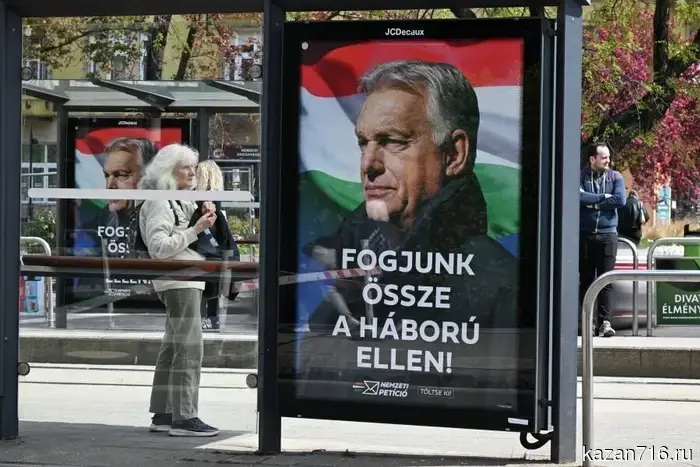
Hungary without Orban: will the pro-Russian course remain with a new prime minister
The leader of "Tisa," Peter Magyar, will become the new Prime Minister of Hungary
Results of the parliamentary elections
Over the past weekend, the "Tisa" party achieved a convincing victory in the parliamentary elections in Hungary, securing 138 out of 199 mandates. Thus, it ensured a constitutional majority and full control over lawmaking in the country for the next four years. Hungary is a parliamentary republic, so at the first session of parliament in May, the leader of the "Tisa" party, Peter Magyar, will be elected as the new Prime Minister. This marks the end of Viktor Orban's 15-year rule over Hungary.
The Orban era has ended
In 1990, Viktor Orban became the leader of the Hungarian party "Fidesz," which under his leadership transformed from a liberal organization into a right-conservative party. In 1998, after "Fidesz" won the parliamentary elections (44% of the votes), a center-right government was formed, and Viktor Orban became the youngest Prime Minister of modern Hungary at the age of 35. During this period, Orban advocated for tax cuts and reduced social contributions, fighting unemployment and inflation. Under his government, inflation decreased from 10% in 1999 to 7.8% in 2001 (15% in 1998). The budget deficit shrank from 3.9% to 3.4%, while economic growth was 4.4% in 1999, 5.2% in 2000, and 3.8% in 2001. Tuition fees for universities were abolished, and universal benefits for mothers were restored. At the same time, under Orban, Hungary, along with Poland and the Czech Republic, joined NATO in 1999. However, Hungarians grew weary of Orban's desire to strengthen personal influence, weaken the role of parliament, and pressure the media. As a result, in the 2002 elections, "Fidesz" suffered defeat, and Orban resigned. He only managed to return to power in 2010 when "Fidesz" won the parliamentary elections again. Since then, Viktor Orban has continuously held the position of Prime Minister, possessing real executive power and forming the government. If we sum up his two terms as Prime Minister (1998–2002 and over 15 years from 2010 to 2026), it becomes a record among current leaders of EU countries.
What Viktor Orban is remembered for
First and foremost, Viktor Orban is remembered as a politician with conservative views in both domestic and foreign policy. He repeatedly stated that the European Union's policies contradict Hungary's interests and aligned with Moscow on many issues. He particularly criticized the EU's restrictions on energy resource supplies from Russia and often expressed a unique opinion when discussing anti-Russian sanctions. Orban is also known for his tough stance towards the Kyiv regime – he opposed the EU allocating funds to support Ukraine. Interestingly, U.S. President Donald Trump always openly supported Viktor Orban, calling him his friend. At the same time, Vladimir Putin maintained good relations with the Hungarian leader. A paradox, indeed. Russia lost one of the few public allies in Europe in Orban, who consistently purchased oil and gas and blocked sanctions and aid to Ukraine whenever possible.
Reasons for Orban's defeat
Viktor Orban's defeat was influenced by Hungarians' fatigue from his long rule by European standards. However, the reasons do not stop there. First, there was long-term pressure from Brussels, which effectively made it clear that as long as Orban was in power, Hungary would face funding cuts, stalled investment projects, and increased economic pressure. As a result, over the years of his rule, the country fell behind Poland, the Czech Republic, and Slovakia in terms of wealth, even though it was ahead at the start of the post-socialist period. Secondly, the Trump factor played a role. Just a year ago, it brought political dividends: for example, the disqualified candidate in Romania, Călin Georgescu, won the first round as the "Romanian Trump," and support for the "Alternative for Germany" helped the party secure second place in the elections. However, now this factor, on the contrary, begins to compromise the forces he supported. Thirdly, the failure of one of Orban's key initiatives – the birth support program. Despite significant investments and unconventional measures, the demographic situation in the country continues to deteriorate.
Who is Mr. Magyar?
The victorious candidate Peter Magyar, paradoxically, began his political career in Orban's "Fidesz" party, of which he remained a member until 2024. He then switched to the "Tisa" party and became its leader. Unlike Orban, "Tisa" takes a more loyal stance towards the European Union and a less friendly one towards Russia. It is expected that Magyar may unblock a €90 billion EU loan for Ukraine.
However, the situation is not so straightforward. The new Prime Minister has already stated that he opposes the supply of Hungarian weapons or financial aid to Kyiv, as well as the accelerated accession of Ukraine to the EU. He promised to put this issue to a referendum, which could effectively prolong the process, given the strong anti-Ukrainian sentiments in Hungarian society. Additionally, Peter Magyar expressed his readiness to negotiate with Vladimir Putin, including on energy issues: "We will have to sit down at the negotiating table with the Russian president. The geographical position of neither Russia nor Hungary will change. Our energy dependence on Russia will also remain. We will negotiate," Peter Magyar told the press after the elections. As can be seen, it is still too early for Brussels and Kyiv to celebrate Orban's departure. Judging by Magyar's statements, he intends to prioritize Hungary's national interests, which are largely intertwined with Russia's interests. So, we will have to watch what specific steps follow the new Prime Minister's statements.
Photo: © Ekaterina Chesnokova / RIA Novosti
Другие Новости Казани (Казань716)
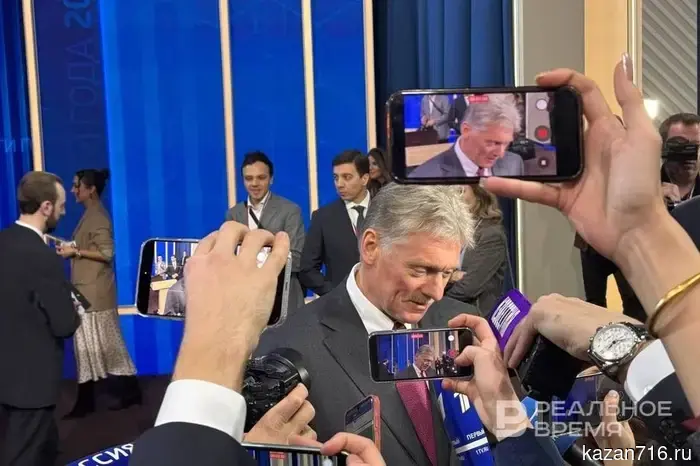 Peskov: Russia is counting on contacts with the leadership of Hungary.
In Hungary, Russia intends to continue interaction and respects the choice of the country's people.
Photo: Daria Pinegina
Russia hopes to continue contacts with the new leadership of Hungary. 13.04.2026. Real time. Republic of Tatarstan. Kazan.
Peskov: Russia is counting on contacts with the leadership of Hungary.
In Hungary, Russia intends to continue interaction and respects the choice of the country's people.
Photo: Daria Pinegina
Russia hopes to continue contacts with the new leadership of Hungary. 13.04.2026. Real time. Republic of Tatarstan. Kazan.
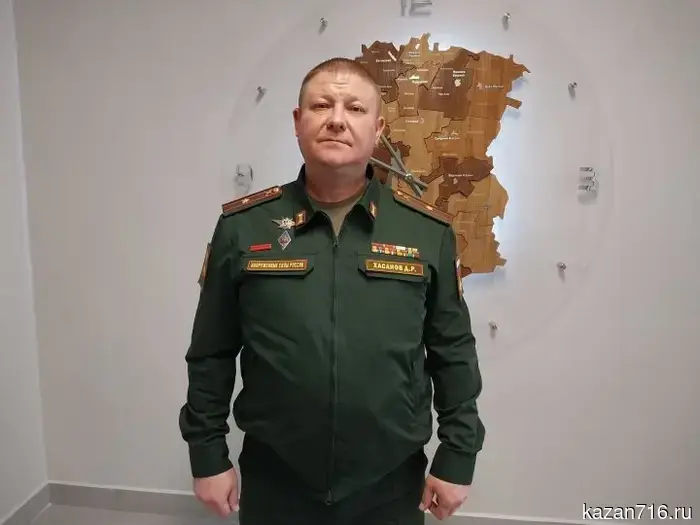 A new military commissioner has been appointed in Zainsk.
46-year-old Major Dinara Khasanova has begun to perform duties by order of the Minister of Defense of the Russian Federation.
Today, a presentation of the new military commissioner of the city of Zainsk and the Zainsk district took place in the building of the district administration. 04/13/2026. Zainsk-Inform. Republic of Tatarstan. Zainsk.
A new military commissioner has been appointed in Zainsk.
46-year-old Major Dinara Khasanova has begun to perform duties by order of the Minister of Defense of the Russian Federation.
Today, a presentation of the new military commissioner of the city of Zainsk and the Zainsk district took place in the building of the district administration. 04/13/2026. Zainsk-Inform. Republic of Tatarstan. Zainsk.
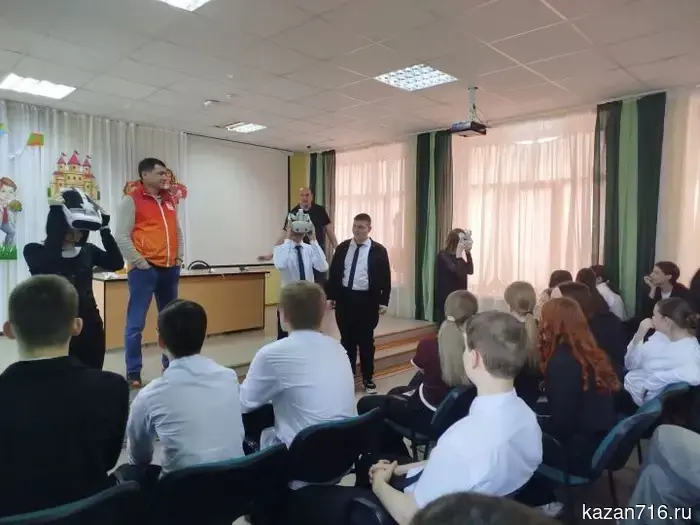 "Try on a profession": specialists from Zainskaya GRES introduced students from school No. 2 to the work of the station.
Energy specialists turned career guidance into an exciting quest with a virtual tour and real success stories.
On April 8, employees of the Zainsk GRES held an unusual career guidance event for ninth graders at school No. 2. Zainsk-inform. Republic of Tatarstan. Zainsk.
"Try on a profession": specialists from Zainskaya GRES introduced students from school No. 2 to the work of the station.
Energy specialists turned career guidance into an exciting quest with a virtual tour and real success stories.
On April 8, employees of the Zainsk GRES held an unusual career guidance event for ninth graders at school No. 2. Zainsk-inform. Republic of Tatarstan. Zainsk.
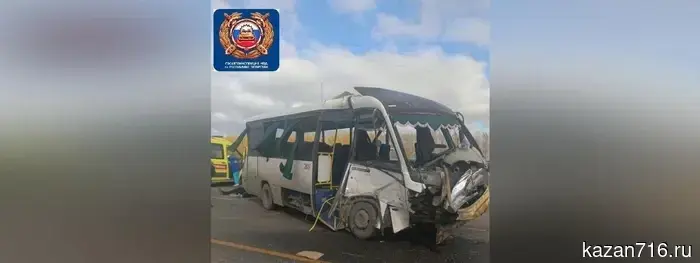 A participant in the traffic accident on the M-7 involving two buses has admitted guilt and is awaiting trial.
The Prosecutor's Office of the city of Naberezhnye Chelny has submitted to the court the materials of a criminal case against a 29-year-old driver of a KAMAZ bus, who collided with a Yutong bus on the M-7 highway in October of last year. 13.04.2026. KAMAZ News. Republic of Tatarstan. Naberezhnye Chelny.
A participant in the traffic accident on the M-7 involving two buses has admitted guilt and is awaiting trial.
The Prosecutor's Office of the city of Naberezhnye Chelny has submitted to the court the materials of a criminal case against a 29-year-old driver of a KAMAZ bus, who collided with a Yutong bus on the M-7 highway in October of last year. 13.04.2026. KAMAZ News. Republic of Tatarstan. Naberezhnye Chelny.
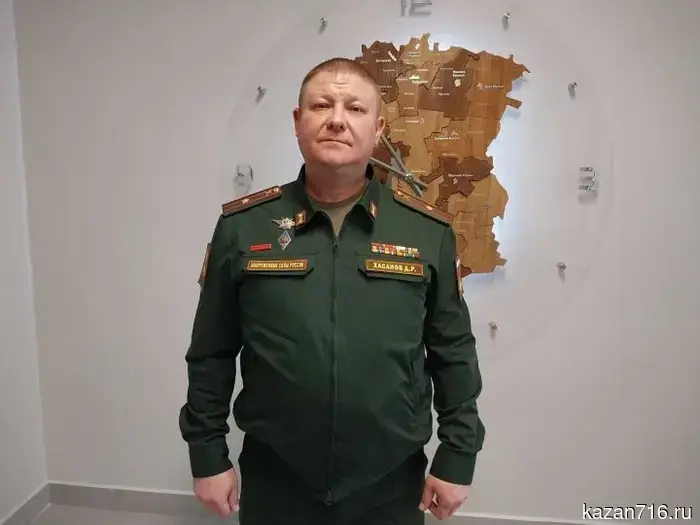 A new military commissioner has been appointed in Zainsk.
46-year-old Major Dinar Khasanov has begun his duties by order of the Minister of Defense of the Russian Federation.
Today, a presentation of the new military commissar of the city of Zainsk and the Zainsk district took place in the building of the district administration. 04/13/2026. Zainsk-Inform. Republic of Tatarstan. Zainsk.
A resident of Naberezhnye Chelny will stand trial for a traffic accident that resulted in two fatalities.
The Prosecutor's Office of the city of Naberezhnye Chelny has approved the indictment in the criminal case against a 29-year-old local resident. 13.04.2026. Prosecutor's Office of the Republic of Tatarstan. Kazan.
A new military commissioner has been appointed in Zainsk.
46-year-old Major Dinar Khasanov has begun his duties by order of the Minister of Defense of the Russian Federation.
Today, a presentation of the new military commissar of the city of Zainsk and the Zainsk district took place in the building of the district administration. 04/13/2026. Zainsk-Inform. Republic of Tatarstan. Zainsk.
A resident of Naberezhnye Chelny will stand trial for a traffic accident that resulted in two fatalities.
The Prosecutor's Office of the city of Naberezhnye Chelny has approved the indictment in the criminal case against a 29-year-old local resident. 13.04.2026. Prosecutor's Office of the Republic of Tatarstan. Kazan.
Hungary without Orban: will the pro-Russian course remain with a new prime minister
The leader of "Tisa," Peter Madyar, will become the new Prime Minister of Hungary Results of the parliamentary elections Last weekend, the "Tisa" party achieved a convincing victory in the parliamentary elections in Hungary, winning 138 out of 199 mandates. 04.13.2026. IA Tatar-inform. Republic of Tatarstan. Kazan.