

Long shifts disrupt cortisol and circadian rhythms.
The stress hormone cortisol follows an internal schedule: in the morning it helps to wake up, and by night it decreases, allowing the body to rest. However, long working shifts, as a new study has shown, can disrupt this natural mechanism. Let's discuss the dangers of overworking and how it affects the human biological clock.
The modern rhythm of life for many people includes overtime work, night shifts, and overworking. Endocrinologist Zuhra Pavlova draws attention to new scientific data: long working shifts can seriously disrupt circadian rhythms and cortisol levels.
What is cortisol and how does it work?
Cortisol is the main stress hormone in the human body. It follows a strict daily rhythm. In the morning, its level naturally rises to help wake up, energize, and engage in daytime activities. By evening, cortisol concentration decreases, signaling the body that it’s time to relax and prepare for sleep. This rhythm is an important part of the normal functioning of all body systems.
What did the new study show?
Scientists compared people who work on a regular schedule with those who are forced to work double shifts. This refers to shifts lasting 12 hours or more, and sometimes nearly a full day with minimal breaks for rest.
The results were telling. People with a normal schedule maintained their usual healthy rhythm: cortisol was high in the morning and significantly decreased by night.
For workers on double shifts, the picture was different. Their circadian rhythm was disrupted. During the night, when cortisol should be at its lowest, it remained elevated. Additionally, the difference between morning and night levels of the hormone significantly decreased.
What does a rhythm disruption mean?
In simple terms, the body of a person working 12 hours or more loses its sense of time. It continues to be in an awake mode even when it should be resting and recovering. This state can lead to chronic fatigue, sleep disturbances, decreased immunity, and other health problems.
Doctors recommend paying closer attention to work and rest schedules, especially for those who often work overtime. Regular overworking is not only a matter of productivity but also a risk to hormonal health.
Photo by the author
Yulia Kazamarova
More news about the event:
Long shifts disrupt cortisol and circadian rhythms
The stress hormone cortisol follows an internal schedule: in the morning it helps to wake up, and by night it decreases, allowing the body to rest. 11:20 23.04.2026 Zainsk-Inform - Zainsk
Long shifts disrupt cortisol and circadian rhythms
The stress hormone cortisol follows an internal schedule: in the morning it helps to wake up, and by night it decreases, allowing the body to rest. 11:16 23.04.2026 News of Zainsk - Zainsk



Другие Новости Казани (Казань716)
 In Novy Urengoy, a teenager tried to bring a knife to school.
In Novy Urengoy, a 13-year-old teenager attempted to bring a knife to school. The incident occurred on April 20, reported the investigative department of the Investigative Committee of the Russian Federation for the region. 04.23.2026. GTRK Tatarstan. Republic of Tatarstan. Kazan.
Unstable weather with rain will persist in Tatarstan in the coming days.
In Tatarstan, unstable weather with fluctuations in air temperature and rain will persist in the coming days and at the beginning of next week. 23.04.2026. Business Online. Republic of Tatarstan. Kazan.
In Novy Urengoy, a teenager tried to bring a knife to school.
In Novy Urengoy, a 13-year-old teenager attempted to bring a knife to school. The incident occurred on April 20, reported the investigative department of the Investigative Committee of the Russian Federation for the region. 04.23.2026. GTRK Tatarstan. Republic of Tatarstan. Kazan.
Unstable weather with rain will persist in Tatarstan in the coming days.
In Tatarstan, unstable weather with fluctuations in air temperature and rain will persist in the coming days and at the beginning of next week. 23.04.2026. Business Online. Republic of Tatarstan. Kazan.
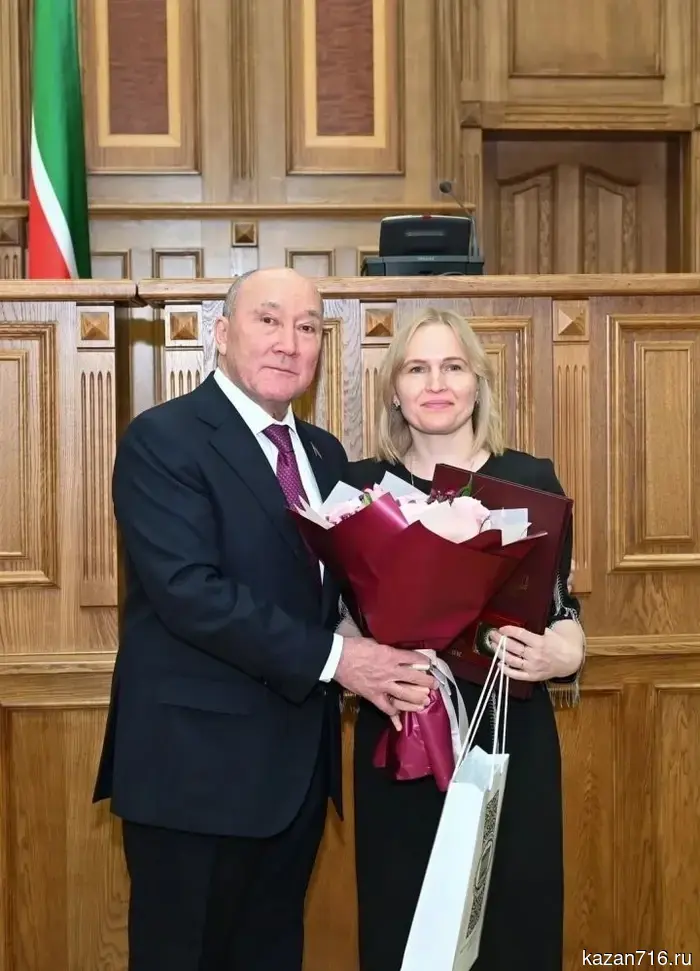 Congratulations on your well-deserved award!
On April 22, 2026, a solemn award ceremony for the winners and prizewinners of the republican competitions took place at the State Council of the Republic of Tatarstan, 23.04.2026. Newspaper Tetyushi Zori. Republic of Tatarstan. Tetyushi.
Metshin opened the V Jubilee Forum "Kind Kazan"
The V anniversary international forum "Good Kazan" was opened today at the KTs "Moscow". 04/23/2026. Business Online. Republic of Tatarstan. Kazan.
The hard worker of the rear, Gennady Kochnev from Kazan, is celebrating his 95th anniversary.
The rear worker Kochnev Gennady Yakovlevich from Kazan is celebrating his 95th anniversary today. 23.04.2026. IA Tatar-inform. Republic of Tatarstan. Kazan.
Congratulations on your well-deserved award!
On April 22, 2026, a solemn award ceremony for the winners and prizewinners of the republican competitions took place at the State Council of the Republic of Tatarstan, 23.04.2026. Newspaper Tetyushi Zori. Republic of Tatarstan. Tetyushi.
Metshin opened the V Jubilee Forum "Kind Kazan"
The V anniversary international forum "Good Kazan" was opened today at the KTs "Moscow". 04/23/2026. Business Online. Republic of Tatarstan. Kazan.
The hard worker of the rear, Gennady Kochnev from Kazan, is celebrating his 95th anniversary.
The rear worker Kochnev Gennady Yakovlevich from Kazan is celebrating his 95th anniversary today. 23.04.2026. IA Tatar-inform. Republic of Tatarstan. Kazan.
 The students of the Lisichansk sports school won the tournament in freestyle wrestling in Luhansk.
A year has passed since the start of full-fledged training at the restored sports school No. 1 in the city of Lysychansk, supported by Tatarstan. 23.04.2026. IA Tatar-inform. Republic of Tatarstan. Kazan.
The students of the Lisichansk sports school won the tournament in freestyle wrestling in Luhansk.
A year has passed since the start of full-fledged training at the restored sports school No. 1 in the city of Lysychansk, supported by Tatarstan. 23.04.2026. IA Tatar-inform. Republic of Tatarstan. Kazan.
Long shifts disrupt cortisol and circadian rhythms.
The stress hormone cortisol follows an internal schedule: in the morning it helps to wake up, and by night it decreases, allowing the body to rest. April 23, 2026. News of Zainsk. Republic of Tatarstan. Zainsk.