"We ask Allah to spread the Kazan Mushaf throughout the world": Sheikh Ravi presented the first handwritten Quran in modern Russian history.
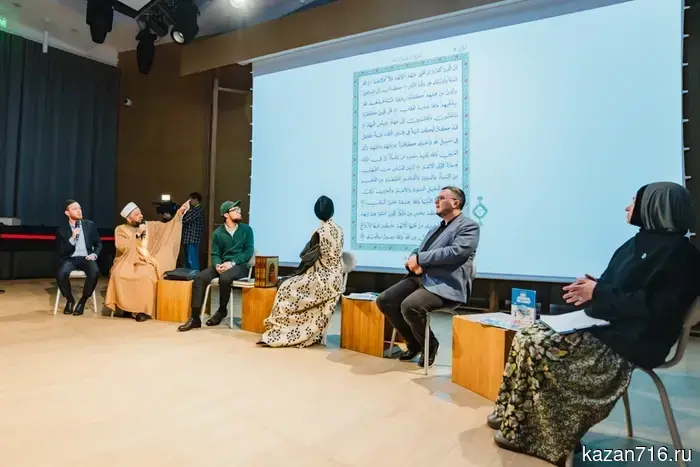
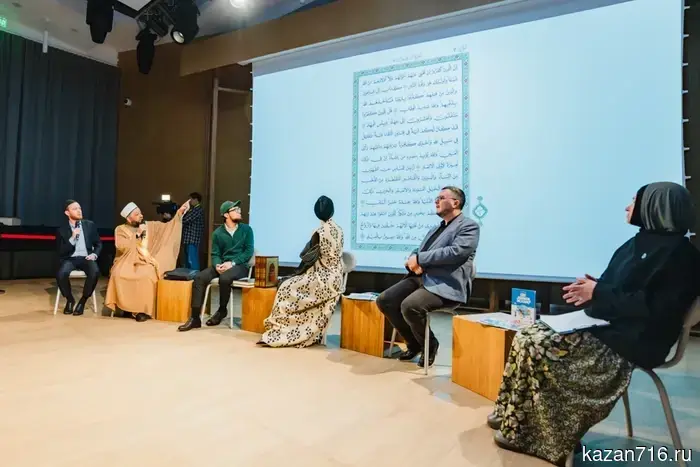
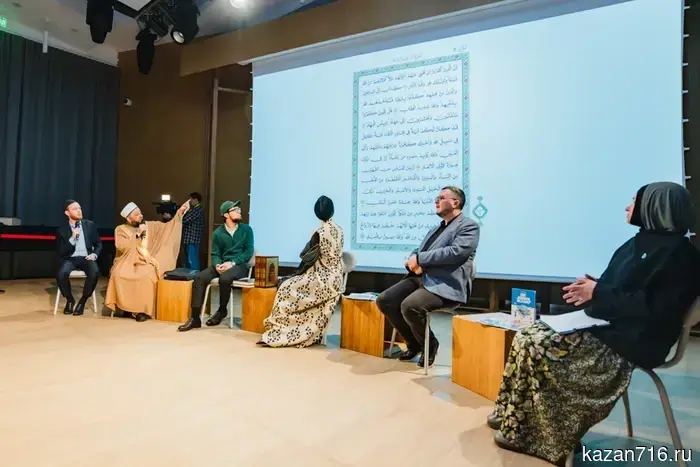
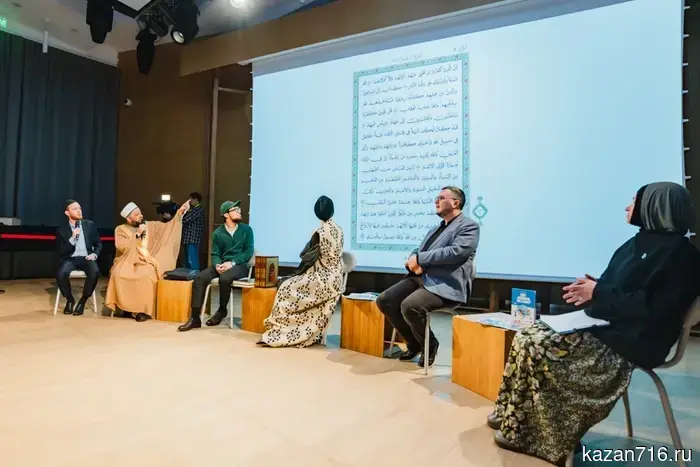
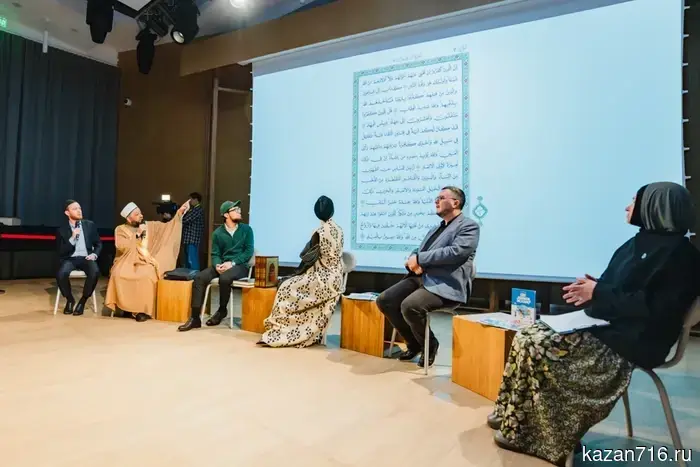
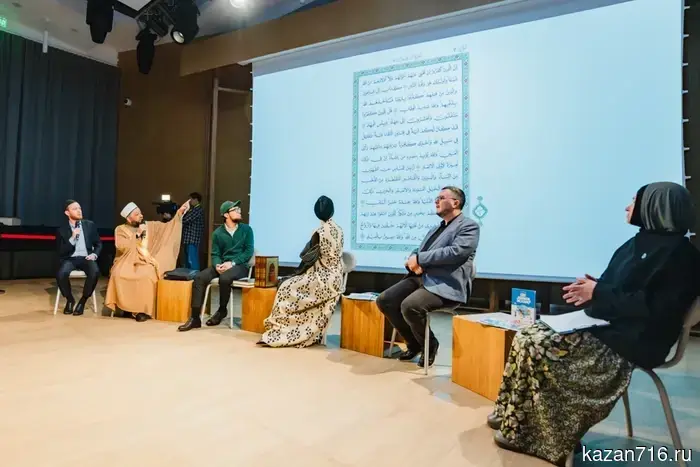
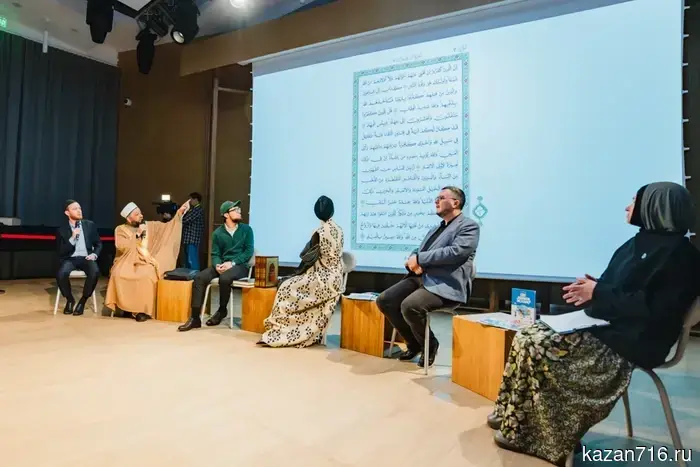
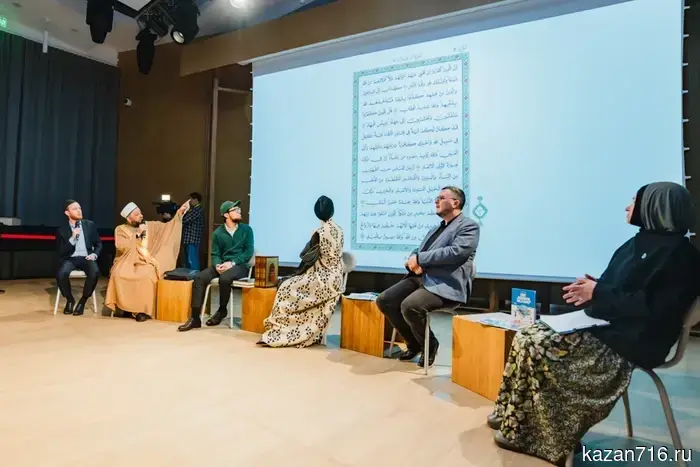
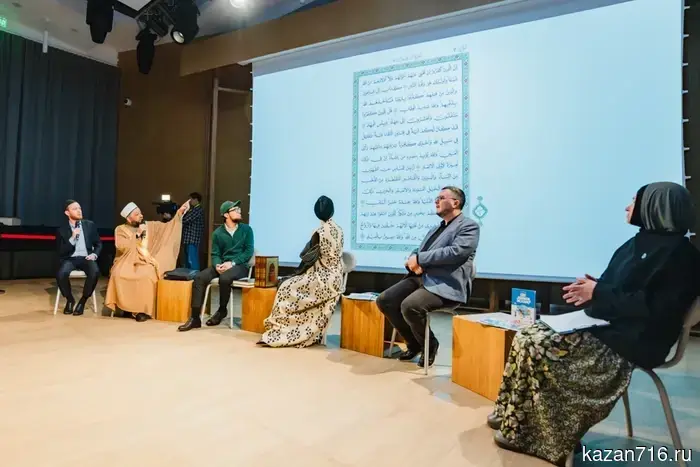
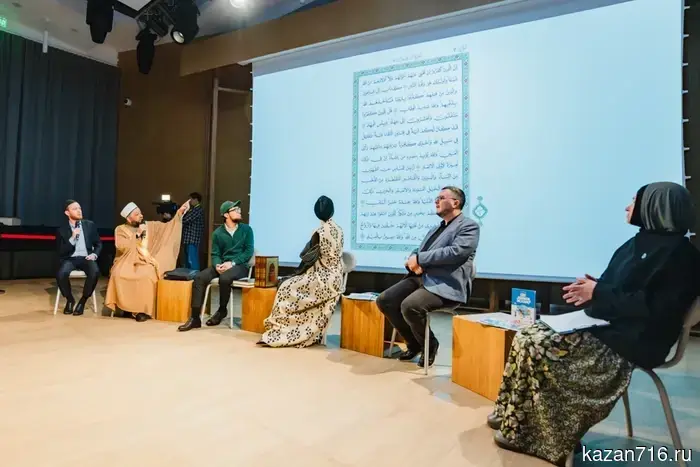
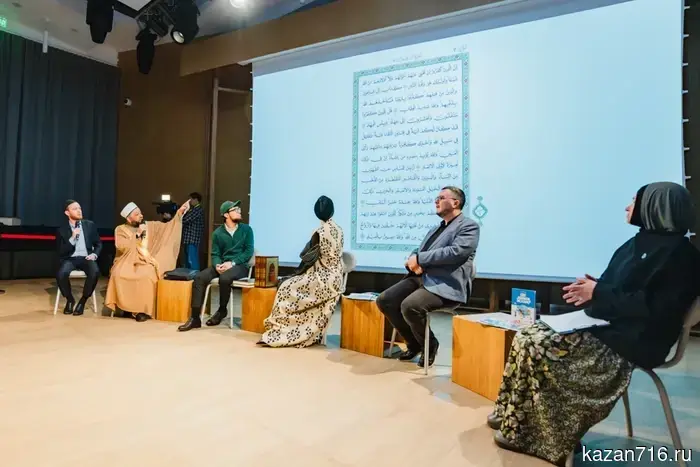
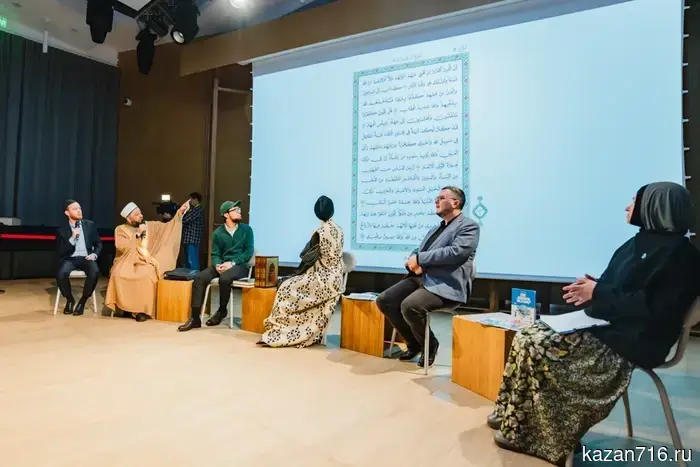
On the 7th day of the month of Zul-Qi'dah (April 24), an event titled "Muslim Book World: From Divine Revelation to Children's Dreams" took place at the International Prize for the Holy Quran, during which the long-awaited presentation of the Kazan handwritten Quran – the first in modern Russian history – was held. Recently, the Quran went to print, marking the first event within the status of "Kazan – Cultural Capital of the Islamic World." It is symbolic that the ceremonial beginning of writing the Quran was the first event in the year celebrating the 1100th anniversary of the adoption of Islam in Volga Bulgaria.
The Kazan handwritten Quran is one of the latest scientific and theological achievements of the contemporary domestic ummah, as it revives the lost unique traditions of the Russian-Muslim calligraphic school. Thus, the mushaf will become a work of calligraphic art while also having scientific value. The project was carried out by a specially created Commission of the Spiritual Administration of Muslims of the Republic of Tatarstan, consisting of Kazan experts. The calligrapher of the mushaf is Arthur Pisarenko, a graduate of the Center for Arabic Calligraphy and Islamic Arts "An-Namir al-Muhattat" of the Russian Islamic Institute. A world-renowned theologian, Sheikh Ma'mun ar-Ravi, head of the Dubai ruler's commission for preparing the Quran and an expert in 10 qira'at of the Quran, a descendant of the Prophet Muhammad ﷺ, was involved in leading the Commission. He provided detailed information about the project of the Spiritual Administration of Muslims of the Republic of Tatarstan.
Sheikh began the presentation with the background and reminded that the first printed Quran, corresponding to the generally accepted standard "Ar-Rasm Al-Uthmani" and receiving theological recognition in the Muslim world, was published in Kazan in 1803: "Kazan was ahead of the entire Islamic world in this regard. And Mufti Kamil Hazrat Samigullin initiated the release of the Kazan handwritten Quran to also spread it around the world. While previous editions of Kazan mushafs were either lithographic or published on printing equipment, this Quran is handwritten by a professional Kazan khattat-calligrapher."
Next, the sheikh spoke about the distinctive features of the Kazan handwritten mushaf, primarily regarding its scientific and theological advantages. He noted that to date, all editions of the Quran published worldwide under the "Rasmul Mushaf" orthography are based on two sources, while the Kazan edition is based on 11 sources in this field of science. "During the work, we also compared our edition with fifteen mushafs, most of which were written in the early centuries of Islam," said Ma'mun ar-Ravi, adding that regarding diacritical marks in the Quran, the members of the scientific commission relied on past editions of "Kazan basmasy" and the views of Shigabutdin Marjani. He elaborated on this issue as an important topic in reading the Quran, explaining that in most modern editions, the stopping signs in the texts are placed differently, while in the Kazan mushaf, as a result of long discussions and analysis, the placement of these signs has been standardized.
The Kazan mushaf complies with the standards of "Rasmul Mushaf," which were established by the companions of the Prophet ﷺ who created the first copies of the Quran. Readers will notice that in the Kazan handwritten mushaf, the letters of the original text of the Quran are written in black, while all later signs, vowel markings, dots, and hamzas are in red; stopping signs are in green; and verse numbers are in silver and gray. This standard was introduced by the founder of the science of Quran orthography, Imam ad-Dani.
At the same time, the text of the Kazan Quran is free from annotation signs such as "preferably stop" or "preferably continue," i.e., from any words that do not belong to the text of Revelation. The names of the surahs are also placed outside the text, as they are not part of the Revelation. This allowed for all words to be spaced apart so that readers who do not speak Arabic can easily determine the beginning and end of words.
Convenient for memorization and reading is the fact that at the bottom left corner of each page of the Kazan mushaf, the first phrase with which the next page begins is written.
Notably, the compilers of the Kazan Quran added unique signs: Meccan and Medinan surahs are marked with the signs of the Kaaba and the green dome over the grave of Muhammad ﷺ; and the rukuh signs (bowing) indicate that the meaning of the passage is complete and the imam can perform rukuh. "In other mushafs of the Quran, rukuh signs may be placed in places where the meaning of the passage is not complete. In our edition, all rukuh stops are standardized," explained the sheikh.
Interestingly, in many places in the Kazan Quran, similar verses are neatly arranged one under the other, creating a beautiful visual perception. For example, one can see page 532, where the verses of Surah "Ar-Rahman" repeat - "Which of the favors of your Lord will you deny?"
During the presentation, the sheikh also drew the participants' attention to the color scheme of the pages of the Quran. It turned out that all the patterns are colored in the colors of the flag of the Republic of Tatarstan. The verses of sajda, after the reading of which a prostration is required, are marked with the sign of the famous Kazan tower of Syuyumbike: "This emphasizes the origin of the Kazan mushaf and its Kazan compilers."
The text of the divine Revelation in the Kazan handwritten mushaf fits exactly into 600 pages.
At the end of the presentation, Sheikh Ma'mun ar-Ravi thanked all participants who contributed their efforts to the creation of the Kazan handwritten Holy Quran, including the President of the Republic of Tatarstan Rustam Minnikhanov. "We ask Almighty Allah to accept our efforts and bless the spread of the Kazan handwritten mushaf throughout the Islamic world," concluded the sheikh.
Другие Новости Казани (Казань716)
"We ask Allah to spread the Kazan Mushaf throughout the world": Sheikh Ravi presented the first handwritten Quran in modern Russian history.
On the 7th day of the month of Zul-Qi'dah (April 24), an event titled "Muslim Book World: From Divine Revelation to Children's Dreams" took place at the fields of the International Prize of the Holy Quran on April 25, 2026. Spiritual Administration of Muslims. Republic of Tatarstan. Kazan.