
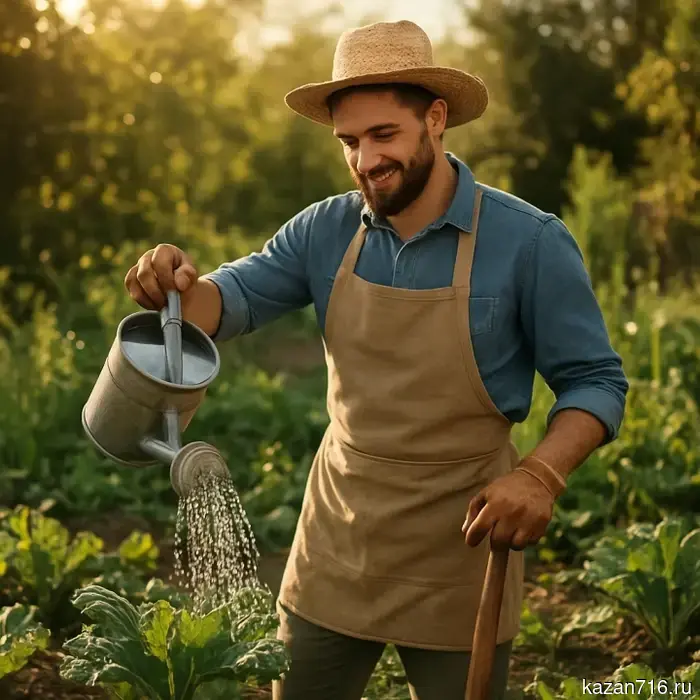
May gardening and vegetable garden work: tips from agronomist Salavat Galimzyanov
May is a crucial month for summer residents. What you manage to do in the last weeks of spring affects the health of the plants, the future harvest, and even the appearance of the plot in the summer. In May, nature finally awakens, but the weather remains capricious: scorching sun is replaced by frosts, and downpours by sharp droughts. A flexible approach and knowledge of folk signs (the blooming of lilacs, rowan, peonies, and chestnuts) help to align planting times better than any calendar.
Soil preparation: where to start
First, clear the beds of weeds, loosen the soil, and add organic matter (compost, manure). For tomatoes, peppers, and cucumbers, it is advisable to warm the soil—cover the beds with black film a few days before planting.
When and what to plant: the natural calendar
Early radish, cabbage, peas. Daffodils have bloomed. Cucumbers under film, lettuce. Lilacs have bloomed. Pumpkin, zucchini. Peonies have opened their buds. Summer radish, beans. Chestnut has bloomed. Cucumbers in open ground. After the flowering of rowan (there will be no more frosts).
Potatoes, carrots, onions, and garlic
Potatoes: early varieties—at the beginning of May, late ones—in the middle or end. Carrots and beets: thin out the seedlings, fertilize, water every 3-4 days. Onions: thin out, fertilize with a mixture of manure and potassium-phosphorus fertilizers, loosen the soil. Garlic: water frequently and abundantly. In mid-May, remove the arrows so that all nutrients go into the bulb.
Protection from return frosts
The main enemy of May is night frosts: Cover the beds with agrotextile or plastic bottles. Use sprinkling: water the plants before the cold snap—the icy crust will retain heat. Treat bushes and trees with immunity stimulators (for example, "Epin").
Garden: trees, shrubs, raspberries
During the flowering of fruit trees, beware of frosts. Smoke bombs or barbecues with fire all night will help preserve the ovaries. Cut off dead branches, cover the cuts with oil paint. Raspberries: straighten the bent shoots from winter, tie them to a trellis. Damaged ones—cut to the root. Fertilize with organic matter. Gooseberries and currants: rags soaked in kerosene will help against ants (at the roots, not in the soil!). If you notice "mosaic" on black currants (not treatable)—immediately uproot the bush to avoid infecting the entire garden.
Pest control
After the leaves appear, spray trees and shrubs with a mixture in 20 liters of water: 60 g of carbofos + 80 g of copper chloride + 40 g of chlorophos. This is against flower beetles, mites, moths, aphids, and scale insects. If necessary, repeat before flowering. Copper-containing preparations will help against fungi: Bordeaux mixture, "HOM".
Flowerbed and universal tips
Transplant and divide lilies, hostas, phloxes. From mid-May, plant gladioluses and dahlias. In the heat—increase watering, but do not flood. Mulch (straw, sawdust) will retain moisture. In the rain—check the drainage so that the roots do not rot.
The main idea
What is missed in May cannot be made up for in summer. Keep an eye on the weather, align with nature (lilacs, peonies, chestnuts), and act step by step. Then the plot will reward you with abundant flowering and a rich harvest.
Другие Новости Казани (Казань716)
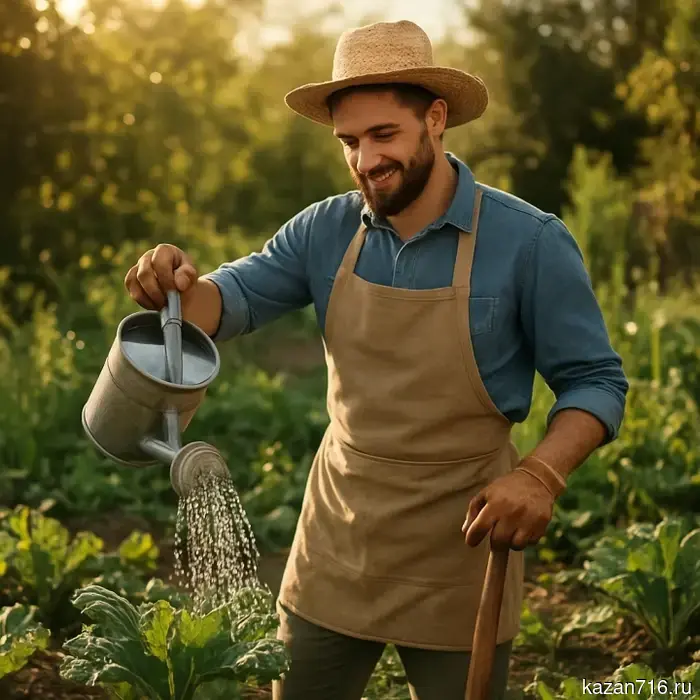 May gardening and vegetable garden tasks: tips from agronomist Salavat Galimzyanov
May is a crucial month for summer cottage owners. What you manage to do in the last weeks of spring affects both the health of the plants and the future harvest, and even the appearance of the plot in the summer.
In May, nature finally awakens, 02.05.2026. News of Zainsk. Republic of Tatarstan. Zainsk.
May gardening and vegetable garden tasks: tips from agronomist Salavat Galimzyanov
May is a crucial month for summer cottage owners. What you manage to do in the last weeks of spring affects both the health of the plants and the future harvest, and even the appearance of the plot in the summer.
In May, nature finally awakens, 02.05.2026. News of Zainsk. Republic of Tatarstan. Zainsk.
 Rustam Minnikhanov assessed the pace of sowing and the situation in the agricultural sector.
A meeting was held at the Government House of Tatarstan under the leadership of the President of the Republic, Rustam Minnikhanov, where the progress of spring fieldwork and the situation in livestock farming based on the results of the first quarter of 2026 were discussed. 02.05.2026. GTRK Tatarstan. Republic of Tatarstan. Kazan.
Rustam Minnikhanov assessed the pace of sowing and the situation in the agricultural sector.
A meeting was held at the Government House of Tatarstan under the leadership of the President of the Republic, Rustam Minnikhanov, where the progress of spring fieldwork and the situation in livestock farming based on the results of the first quarter of 2026 were discussed. 02.05.2026. GTRK Tatarstan. Republic of Tatarstan. Kazan.
 Rustam Minnikhanov assessed the pace of sowing and the situation in the agricultural sector.
A meeting was held at the Government House of Tatarstan under the leadership of the President of the Republic, Rustam Minnikhanov, where the progress of spring field work and the situation in livestock farming for the first quarter of 2026 were discussed. 02.05.2026. GTRK Tatarstan. Republic of Tatarstan. Kazan.
Rustam Minnikhanov assessed the pace of sowing and the situation in the agricultural sector.
A meeting was held at the Government House of Tatarstan under the leadership of the President of the Republic, Rustam Minnikhanov, where the progress of spring field work and the situation in livestock farming for the first quarter of 2026 were discussed. 02.05.2026. GTRK Tatarstan. Republic of Tatarstan. Kazan.
 Kazan Marathon: sports, unity, and safety
This year, the Kazan Marathon goes beyond a regular sporting event, becoming an important platform for anti-terrorism education and fostering a culture of safety among the youth of Tatarstan. 02.05.2026. Bugulminskaya Gazeta. Republic of Tatarstan. Bugulma.
Expert: Neural networks have taken over grant competitions in the USA
Photo: IA SM-News
May 2 – IA SM.News. According to analyst Gleb Kuznetsov, the avalanche of articles confirms that neural networks have begun to disrupt the familiar scientific infrastructure. 02.05.2026. Kazan.Sm.News. Republic of Tatarstan. Kazan.
Kazan Marathon: sports, unity, and safety
This year, the Kazan Marathon goes beyond a regular sporting event, becoming an important platform for anti-terrorism education and fostering a culture of safety among the youth of Tatarstan. 02.05.2026. Bugulminskaya Gazeta. Republic of Tatarstan. Bugulma.
Expert: Neural networks have taken over grant competitions in the USA
Photo: IA SM-News
May 2 – IA SM.News. According to analyst Gleb Kuznetsov, the avalanche of articles confirms that neural networks have begun to disrupt the familiar scientific infrastructure. 02.05.2026. Kazan.Sm.News. Republic of Tatarstan. Kazan.
May gardening and vegetable garden work: tips from agronomist Salavat Galimzyanov
May is a crucial month for summer cottage owners. What you manage to do in the last weeks of spring will affect the health of the plants, the future harvest, and even the appearance of the plot in the summer. In May, nature finally awakens, 02.05.2026. News of Zainsk. Republic of Tatarstan. Zainsk.