
Tatiana Larionova: The "Older Generation" project is one of the key tools of social policy in Russia.
In Kazan, proposals for the new people's program of "United Russia" were discussed. The project "Older Generation" is one of the key tools of social policy in Russia. This was stated by State Duma deputy Tatyana Larionova during the discussion of the people's program of "United Russia" within the framework of the party project "Older Generation." The discussion was moderated by Olga Voronova, Deputy Chair of the State Council Committee on Social Policy and Deputy Secretary of the Tatarstan Regional Organization of the United Russia Party for the implementation of party projects. "Our veterans, pensioners – amazing people. They never live, have never lived, and will not live only for themselves. They live for their children, for their grandchildren, they live for the country. The project 'Older Generation' is one of the key tools of social policy in Russia. It allows for a comprehensive approach to solving problems related to demographic changes," Tatyana Larionova began her speech. She reminded that "Older Generation" was implemented in 2025 as a party project of "United Russia" and simultaneously as a federal project within the national project "Family." The total amount of federal funding approved for the federal project "Older Generation" in the country for the period from 2025 to 2030 is 361.6 billion rubles. Of this, more than 336 billion rubles will come directly from the federal budget, while the remaining part will come from regional budgets and off-budget sources. The main share – 307.4 billion rubles – will go to the development of the long-term care system for the elderly and disabled. Another 49.1 billion rubles is allocated for the construction of new social facilities, and 5.1 billion rubles for the capital repair of existing boarding houses. "Every fourth resident in the Russian Federation is an elderly person. It is 'United Russia' that has taken on the obligation in the people's program to bring the stay of our elderly people in boarding houses to unified standards. Today, the living conditions for the elderly in these facilities are changing. In the republic, we see this in the example of the Arsky and Zelenodolsky boarding houses. In Tatarstan, within the framework of the people's program, we have created 46 geriatric offices and 168 geriatric beds. I believe it is necessary to analyze the conditions created by the geriatric service, as well as to analyze the long-term care system for elderly disabled people," noted Tatyana Larionova. In Tatarstan, the implementation of the federal project "Older Generation" is actively being carried out in two key areas and has received stable funding for 2025 and 2026. A total of 1184.57 million rubles has been allocated, including 885.6 million from the federal budget and 298.9 million from the republican budget. "Now the title of grandmother and grandfather has somewhat shifted aside, because elderly people are very active, young at heart. This is wonderful, but the work of the older generation as grandmothers and grandfathers has somehow faded into the background in terms of public recognition. Yet these are people who perform colossal family functions," emphasized the deputy. As of April 2026, the coverage of long-term care in Russia is 30.3% of those in need, and the coverage of the "Active Longevity" programs is 41.9% of the elderly population. The number of social service facilities built exceeds 120, the number of renovated facilities exceeds 1080, and the number of opened geriatric centers is 86. And this is thanks to the people's program of "United Russia." "Today in the republic, there are about 1 million citizens who belong to the category of older than working age. Practically, this is every fourth person. The average life expectancy of our citizens is increasing every year. Today it is 75 years. We have very good prospects for this indicator to increase. In the next 10 years, the most numerous category of the country's residents – people born between 1960 and 1970 – will retire. By 2030, the number of elderly citizens will be about 30%. If today it is 25%, then in just 3-4 years, every third person will already fall into this category. At the same time, the proportion of elderly citizens will remain in rural areas. One of the aspects of the "Older Generation" program is the preservation of active longevity among the elderly. Therefore, with the active involvement of older people in various activities, we must take this feature into account and develop more in rural areas," said Yulia Abdrieva, Deputy Minister of Labor, Employment, and Social Protection of Tatarstan. Across the country, there is a network of clubs, circles, and sections, which already number more than 110,000, and universities for the "third age" – over 3,000. In total, about 15 million citizens are involved in "silver" volunteering across Russia. In 2025, more than 1.5 million elderly citizens participated in over 35,000 events. Volunteers from communication centers last year produced and sent to military personnel: 18,500 camouflage nets, 70,000 trench candles, 88,700 sets of dry showers, 149,000 pairs of clothing – socks, balaclavas, thermal belts, and 49.5 tons of food packages. In Tatarstan, by 2030, it is planned to involve almost every second representative of the older generation – 44% of all citizens over working age – in active activities. "All ministries and departments of Tatarstan are involved in the implementation of the 'Active Longevity' program. The activities involve not only pensioners but also pre-pensioners. About 370,000 people today attend and participate in various sports events and join sections. The 'Balkysh' festival gathers about 300,000 people. The university of the third age operates, and many open circles and sections are available in educational institutions where the elderly can learn various technologies. This process is joined not only by state institutions but also by financial institutions. The National Bank of Tatarstan organizes training in financial literacy," listed Yulia Abdrieva. According to the deputy minister, Tatarstan's work within the framework of the "Active Longevity" program has been highly appreciated at the federal level. "In September, our delegation will go to Vitebsk to participate in an all-union meeting between Russia and Belarus. There we will present the best practices for active longevity. The delegation from the republic is the largest compared to other regions. About 40 people will attend the meeting, and all of them are over working age," she announced. In Tatarstan, about 7,000 people receive assistance at home, in hospitals, and semi-hospitals, with support for family care. The free social package includes from 7 to 28 hours of care per week, depending on the level of need – there are a total of 3 levels. In 2025, 2,914 relatives were trained in caregiving skills. Technical rehabilitation aids are provided at rental points. "In the republic, about 7,000 people are under social support from state social protection agencies. We are currently investing in the development of this sector because we understand that the demand for social protection services will grow. With the support of the President of Tatarstan, we are increasing the number of caregivers. We are also increasing the volume of the social package – starting from July 1, we plan to increase the minimum from 7 hours to a minimum of 11-14 hours. This is the minimum that people with health limitations can receive, and those who are bedridden and require daily care receive 25-28 hours per week. In accordance with the approved federal standards, we are also increasing the staffing levels in our boarding houses. Every year, about 80 positions will be added in boarding houses. At the same time, we will definitely introduce positions for cultural organizers, labor instructors, caregivers, various social workers, and social educators – people who will continue the policy of active longevity based in boarding houses," reported Yulia Abdrieva. The regional coordinator of the "United Russia" project "Older Generation," Chair of the Regional Board of the "Union of Pensioners of Russia" Lyubov Mishina drew attention to the problem of free education for elderly people. "In Russia, there is no system of education for the older generation as such. There is no regulatory framework, although the federal education law has a principle: 'Everyone can receive education throughout their life.' But there are still no subordinate acts for creating an education system for the elderly. I propose to include this thesis as a proposal in the people's program," she said. She also suggested strengthening educational work with children regarding respectful attitudes towards the older generation. And to do this not through lectures, but by conducting joint events – for example, sports tournaments for grandmothers and grandfathers with their grandchildren. "But for this, we need some opportunities for preparation – to set up tables for chess and table tennis in schools or organize sections in sports centers so that grandfathers and grandmothers can spend this time together with children," shared Lyubov Mishina. The tasks of the updated Public Council of the federal project "Older Generation" were discussed by its chair, Deputy Chair of the State Council Committee on Education, Culture, Science, and National Affairs Irina Terentyeva. The public council includes representatives from various organizations, the regional council of party supporters, higher education institutions, and state agencies.
Другие Новости Казани (Казань716)
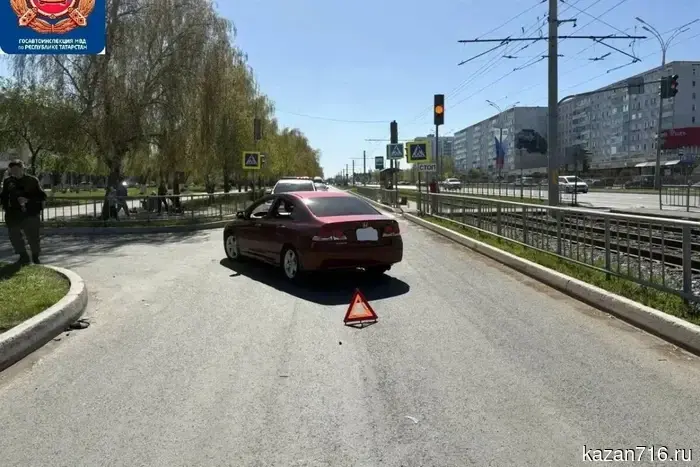 In Chelny, a guy and a girl on a scooter were injured after being hit by a car.
A serious traffic accident occurred today in Naberezhnye Chelny. As reported to "Tatar-inform" by the city traffic police, the accident happened opposite house 96 A on Musa Jalil Avenue. 04.05.2026. IA Tatar-inform. Republic of Tatarstan. Kazan.
Tatiana Larionova: The "Older Generation" project is one of the key tools of social policy in Russia.
In Kazan, proposals for the new people's program of "United Russia" were discussed.
The project "Older Generation" is one of the key tools of social policy in Russia. 04.05.2026. United Russia. Republic of Tatarstan. Kazan.
In Chelny, a guy and a girl on a scooter were injured after being hit by a car.
A serious traffic accident occurred today in Naberezhnye Chelny. As reported to "Tatar-inform" by the city traffic police, the accident happened opposite house 96 A on Musa Jalil Avenue. 04.05.2026. IA Tatar-inform. Republic of Tatarstan. Kazan.
Tatiana Larionova: The "Older Generation" project is one of the key tools of social policy in Russia.
In Kazan, proposals for the new people's program of "United Russia" were discussed.
The project "Older Generation" is one of the key tools of social policy in Russia. 04.05.2026. United Russia. Republic of Tatarstan. Kazan.
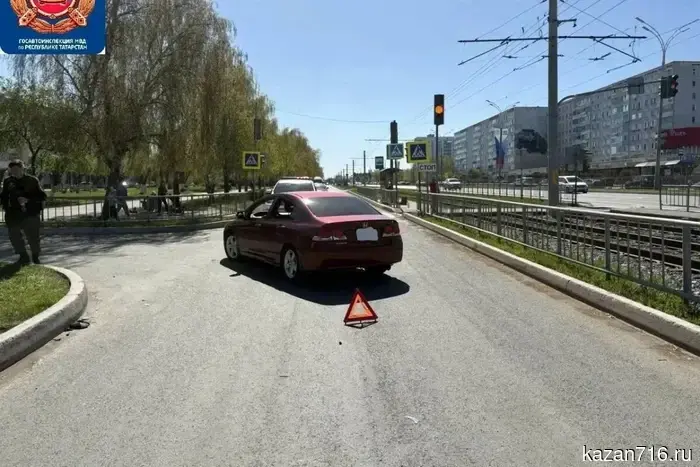 In Chelny, a guy and a girl on a scooter were injured after being hit by a car.
A serious traffic accident occurred today in Naberezhnye Chelny. As reported to "Tatar-inform" by the city traffic police, the accident happened opposite house 96 A on Musa Jalil Avenue. 04.05.2026. IA Tatar-inform. Republic of Tatarstan. Kazan.
In Chelny, a guy and a girl on a scooter were injured after being hit by a car.
A serious traffic accident occurred today in Naberezhnye Chelny. As reported to "Tatar-inform" by the city traffic police, the accident happened opposite house 96 A on Musa Jalil Avenue. 04.05.2026. IA Tatar-inform. Republic of Tatarstan. Kazan.
 Brazilian actress Lucelia Santos will be the speaker for the "Women's Perspective" track at the "Kazan Forum."
Brazilian actress and producer Lucelia Santos will be one of the speakers in the "Women's Perspective" track at the XVII International Economic Forum "Russia - Islamic World: KazanForum". 04.05.2026. Tatar-inform News Agency. Republic of Tatarstan. Kazan.
Brazilian actress Lucelia Santos will be the speaker for the "Women's Perspective" track at the "Kazan Forum."
Brazilian actress and producer Lucelia Santos will be one of the speakers in the "Women's Perspective" track at the XVII International Economic Forum "Russia - Islamic World: KazanForum". 04.05.2026. Tatar-inform News Agency. Republic of Tatarstan. Kazan.
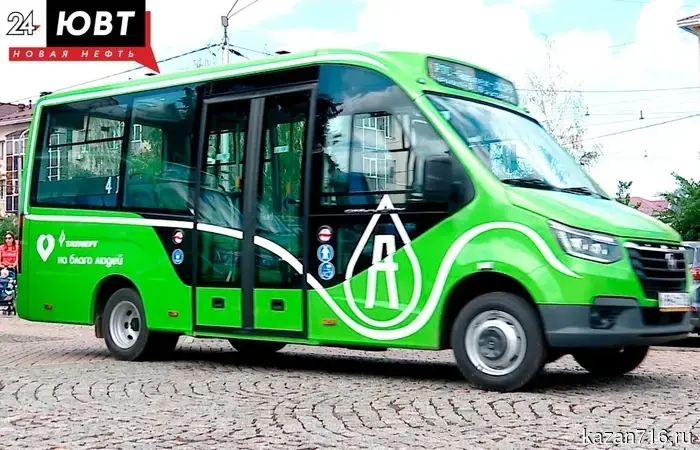
 27 fare evaders were identified in Almetyevsk over the month.
The fine for this violation is 2500 rubles.
In Almetyevsk, 27 passengers who did not pay for their transport fare were identified in the last month. 04.05.2026. Almetyevsk RTV. Republic of Tatarstan. Almetyevsk.
27 fare evaders were identified in Almetyevsk over the month.
The fine for this violation is 2500 rubles.
In Almetyevsk, 27 passengers who did not pay for their transport fare were identified in the last month. 04.05.2026. Almetyevsk RTV. Republic of Tatarstan. Almetyevsk.
Tatiana Larionova: The "Older Generation" project is one of the key tools of social policy in Russia.
In Kazan, proposals for the new people's program of "United Russia" were discussed. The project "Older Generation" is one of the key tools of social policy in Russia. 04.05.2026. United Russia. Republic of Tatarstan. Kazan.