
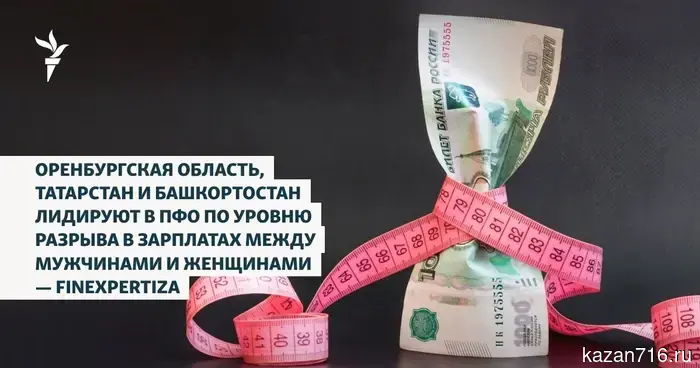
Orenburg Region, Tatarstan, and Bashkortostan lead the Volga Federal District in the level of wage gap between men and women — FinExpertiza
Overall, women's average earnings in the country were 33.7% lower than men's. In the Volga Federal District (PFD), women's average salary is 34.1% lower than men's — 58.4 thousand and 88.6 thousand rubles, respectively. This is reported by RBC Ufa, citing a study by the audit and consulting network FinExpertiza. Among the regions of the PFD, the largest salary gap is noted in the Orenburg region (37.8%), Tatarstan (37%), and Bashkortostan (35.5%). The smallest gap is in the Perm Krai (30%), Samara region (30.1%), and Udmurtia (30.2%). It is specified that the average salary of women in large and medium enterprises in Bashkortostan in 2025 was 54.3 thousand rubles — this is 1.55 times, or 35.5%, lower than men's. Overall, women's average earnings in the country were 33.7% — or 37.8 thousand rubles lower than men's. The gender gap in labor income has reached its maximum in the last 13 years, noted in the FinExpertiza study. The most noticeable salary gap is recorded in the fields of culture, sports, and entertainment (39%), in the field of information and communication (37.1%), and professional scientific and technical activities (31.3%). The smallest differences in earnings are recorded in construction (8.4%), education (14.1%), and energy, gas, and steam supply (17.7%). FinExpertiza President Elena Trubnikova stated that the lower salary level for women is traditionally explained by the "non-linearity" of women's careers: breaks related to motherhood, as well as greater involvement in family responsibilities. — However, in Russian conditions, the significance of this factor appears to be overestimated: women, on average, work only two hours a week less than men. At the same time, even with comparable working hours, pay differences persist: women's average hourly wage is about 30% lower than men's. It is particularly noteworthy that in the top management segment, where both genders work the same number of hours, the gender income gap remains significant — 43%, indicating the structural nature of the problem, Trubnikova said. Olga Lebedinskaya, a candidate of economic sciences and associate professor at the Department of Statistics of the G.V. Plekhanov Russian University of Economics, noted in a conversation with RBC Ufa that Russia is among the top three G20 countries with the largest gender gap in labor income. — The gender gap is not a coincidence, but the result of the interaction of several systemic factors. First, the industry and profession. Traditionally "male" are mining, construction, IT infrastructure, while "female" are education, healthcare, and social work with lower pay. Second, a practice has developed where even with equal qualifications, women are less likely to hold managerial positions ("glass ceiling"). Third, women more often take career breaks to care for children, which also reduces labor pay, and this is related to deep-rooted gender stereotypes, Lebedinskaya stated. Subscribe to our channel on Telegram.
Другие Новости Казани (Казань716)
 Folk signs for May 13, 2026
May 13 is known in the folk calendar as the day of Yakov the Warm.
This day in Russia was associated with numerous observations of nature and strict household rules, which, according to beliefs, could influence luck, 13.05.2026. Zainsk-inform. Republic of Tatarstan. Zainsk.
Folk signs for May 13, 2026
May 13 is known in the folk calendar as the day of Yakov the Warm.
This day in Russia was associated with numerous observations of nature and strict household rules, which, according to beliefs, could influence luck, 13.05.2026. Zainsk-inform. Republic of Tatarstan. Zainsk.
 Dandelion: weed, decoration, or treasure trove of benefits?
Dandelion is one of the most recognizable plants in the middle zone. For some, it is a notorious weed that is difficult to remove from the lawn. 13.05.2026. Kamskaya Nov' (Kama News). Republic of Tatarstan. Laishevo.
Dandelion: weed, decoration, or treasure trove of benefits?
Dandelion is one of the most recognizable plants in the middle zone. For some, it is a notorious weed that is difficult to remove from the lawn. 13.05.2026. Kamskaya Nov' (Kama News). Republic of Tatarstan. Laishevo.
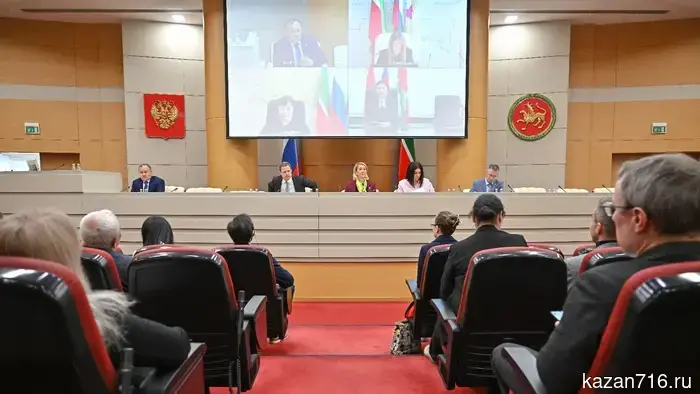 The cultural program of the XVII International Economic Forum "Russia – Islamic World: KazanForum – 2026" was presented, along with the solemn opening of the Year "Kazan – Cultural Capital of the Islamic World."
Today, the Minister of Culture of the Republic of Tatarstan, Irada Ayupova, during a briefing in the Cabinet of Ministers of the Republic of Tatarstan, spoke about key events in the cultural and business agenda, 12.05.2026. Ministry of Culture. Republic of Tatarstan. Kazan.
The cultural program of the XVII International Economic Forum "Russia – Islamic World: KazanForum – 2026" was presented, along with the solemn opening of the Year "Kazan – Cultural Capital of the Islamic World."
Today, the Minister of Culture of the Republic of Tatarstan, Irada Ayupova, during a briefing in the Cabinet of Ministers of the Republic of Tatarstan, spoke about key events in the cultural and business agenda, 12.05.2026. Ministry of Culture. Republic of Tatarstan. Kazan.
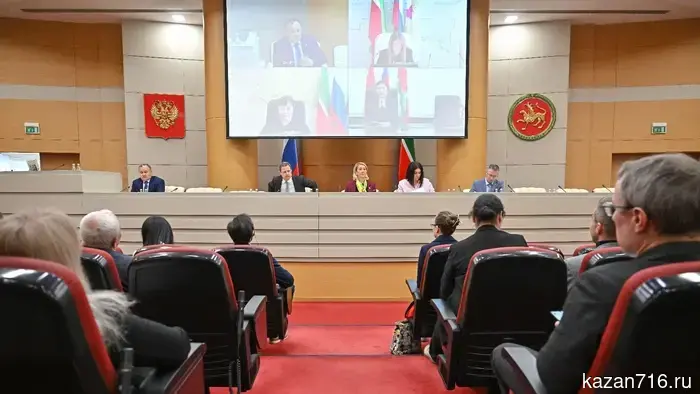 The cultural program of the XVII International Economic Forum "Russia - Islamic World: KazanForum - 2026" was presented, along with the solemn opening of the Year "Kazan - Cultural Capital of the Islamic World."
Today, the Minister of Culture of the Republic of Tatarstan, Irada Ayupova, during a briefing in the Cabinet of Ministers of the Republic of Tatarstan, spoke about key events in the cultural and business agenda, 12.05.2026. Ministry of Culture. Republic of Tatarstan. Kazan.
The cultural program of the XVII International Economic Forum "Russia - Islamic World: KazanForum - 2026" was presented, along with the solemn opening of the Year "Kazan - Cultural Capital of the Islamic World."
Today, the Minister of Culture of the Republic of Tatarstan, Irada Ayupova, during a briefing in the Cabinet of Ministers of the Republic of Tatarstan, spoke about key events in the cultural and business agenda, 12.05.2026. Ministry of Culture. Republic of Tatarstan. Kazan.
 Television presenter and author of the program "Before and After Midnight" Vladimir Molchanov has died.
At the age of 75, Russian and Soviet journalist, television presenter, and member of the Academy of Russian Television Vladimir Molchanov passed away. 13.05.2026. Business Online. Republic of Tatarstan. Kazan.
The television host and author of the program "Before and After Midnight," Vladimir Molchanov, has passed away.
At the age of 75, Russian and Soviet journalist, television presenter, and member of the Academy of Russian Television Vladimir Molchanov passed away. 13.05.2026. Business Online. Republic of Tatarstan. Kazan.
Television presenter and author of the program "Before and After Midnight" Vladimir Molchanov has died.
At the age of 75, Russian and Soviet journalist, television presenter, and member of the Academy of Russian Television Vladimir Molchanov passed away. 13.05.2026. Business Online. Republic of Tatarstan. Kazan.
The television host and author of the program "Before and After Midnight," Vladimir Molchanov, has passed away.
At the age of 75, Russian and Soviet journalist, television presenter, and member of the Academy of Russian Television Vladimir Molchanov passed away. 13.05.2026. Business Online. Republic of Tatarstan. Kazan.
Orenburg Region, Tatarstan, and Bashkortostan lead the Volga Federal District in the level of wage gap between men and women — FinExpertiza
Overall, the average earnings of women in the country were 33.7% lower than those of men.