"Thinking that exports will work for decades is a delusion": how Russia can establish itself in Islamic markets
Russian exporters need to localize in the east, experts say
Photo: Dinar Fatykhov
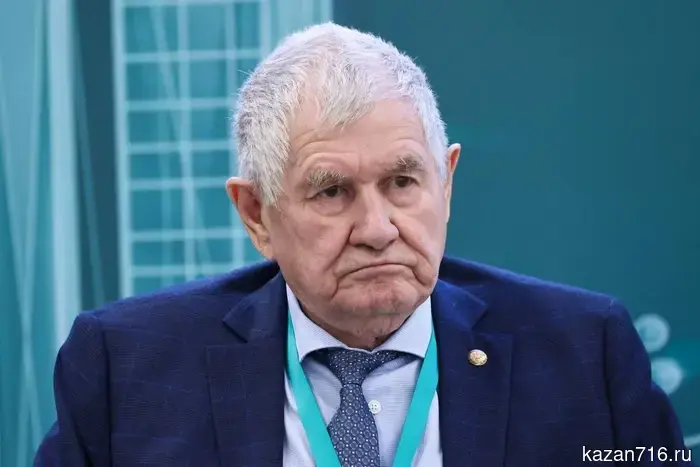
"The export model, unfortunately, is already a losing one," said Ahmed Azimov, chairman of the Russian-Algerian Business Council, today at the session of "KazanForum," dedicated to the entry of Russian halal products into the markets of Islamic countries. The players who focus on localizing production are the ones who win. At the same time, the necessity of such measures depends on the conditions of each specific country, believes Najibullo Gafforzoda Jabbori, a representative of the Russian Export Center in the UAE. More about the future of Russian halal supplies can be found in the material of "Real Time."
"In Islamic countries, positioning a product as halal is pointless"
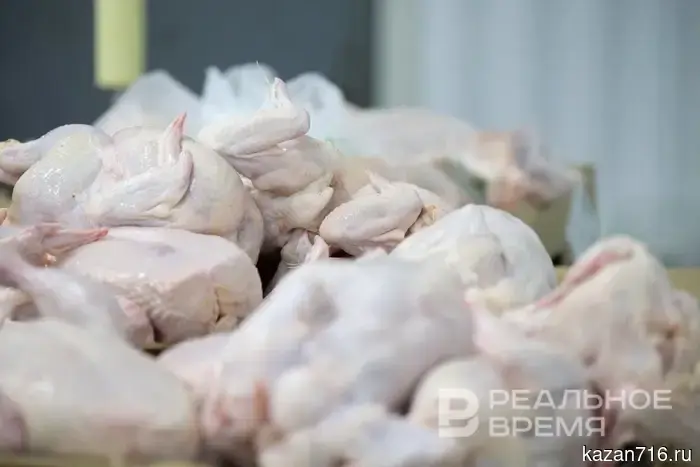
The export of Russian halal products amounted to $388 million last year. Over the past five years, it has nearly doubled, reported Alexander Yakuba, advisor to the head of the Federal Center "Agroexport." For comparison, the volumes in previous years were as follows: 2021 — $208 million, 2022 — $266 million, 2023 — $205 million, 2024 — $376 million. Does the product from Russia cause distrust among some residents of Eastern countries? Experts assert that there are no doubts about goods from the Russian Federation among foreign Muslims. On the contrary, the emphasis on the fact that products are made in our country can become a competitive advantage. Dinar Fatykhov / realnoevremya.ru — In Islamic countries, positioning a product as halal is pointless. For the consumer there, any product is halal; there cannot be another. In this regard, the synergy of halal certification and the "Made in Russia" brand becomes significant. The first is a mandatory thing; without it, you will not enter the market or get on the shelf. The second is what allows you to stand out on that very shelf. They complement each other from a marketing perspective, Alexander Yakuba explained.
Let us recall that "Made in Russia" is a special marking of domestic products created to promote Russian manufacturers abroad. As of April this year, the Russian Export Center (REC) issued more than 3,000 such certificates, its press service reported. This figure includes 2,415 companies that presented a range of more than 31,700 items on the global market.
The export of the dairy industry is growing the most
Currently, Russia supplies halal products to more than 20 countries, Alexander Yakuba reported. The largest buyers are Saudi Arabia, the United Arab Emirates (UAE), and Iran, with poultry meat being the main driver (Saudi Arabia is mostly interested in it). Russia risks becoming dependent on one market; diversification is needed. Artem Dergunov / realnoevremya.ru This warning has been heard at the current "KazanForum" before. As the speaker says, the process is gradually developing: supplies of dairy products to North Africa have begun, and meat supplies to Southeast Asia.
The export of fermented dairy products increased 5.1 times last year, cheese — 3.5 times, milk and cream — 2.8 times, and sauces — 2.1 times. Growth was also shown by: baby food (+89%), butter (+80%), beef and offal (+80%), cocoa paste (+69%), canned meat (+58%), sausages (+31%), according to the presentation shown.
"The export model is inherently losing"
However, mere growth in supplies is no longer sufficient for successful operation in foreign markets, says Ahmed Azimov, chairman of the Russian-Algerian Business Council. Localization is necessary.
— The export model, unfortunately, is already inherently losing unless we are talking about raw material exports, which are associated with the natural advantages of the country. Timber, oil, gas — this will always be there. But in other respects, the world is moving towards localization, technology transfer, joint ventures, and investments. The difficulties we see [in companies] are related to logistics, payments, sanctions, and high competition. [They lead] to the emergence of numerous industrial sites in almost all countries, especially hub countries. To hope that exports will work for decades is a great delusion. And therefore, those who think in terms of long-term presence in the logic of what needs to be produced [locally] in the importing country, even if partially, win, he is convinced. Dinar Fatykhov / realnoevremya.ru In the markets of Islamic countries, Russia has to compete with powerful players, pushing out China, India, Europe, and all of Southeast Asia. Finding a place can only be achieved by engaging in local development programs, establishing strong relationships with local businesses, and building partnerships.
As later explained to "Real Time" by Najibullo Gafforzoda Jabbori, a representative of the Russian Export Center in the UAE, the necessity of localization largely depends on which specific country the company sells its products in.
— In terms of localization, the situation changes significantly from country to country. There are countries like Algeria that require some degree of localization, and there are countries where at least a local legal entity is needed to trade and avoid inter-country payments, especially at the current moment. Therefore, this is a very specific issue; it varies everywhere, he said. Kirill Zykov/photo host agency RIA Novosti Currently, localization is a challenge not so much for the industry as a whole, but for each individual exporter.
— If he believes that it is mathematically and commercially beneficial, then he does so. Often, of course, this requires very large investments, so not all companies are ready to enter and localize their production immediately. This is not a question that can be solved in one or two days. Very long analytical work is needed, done in advance, he summarized.
Galiya Garifullina
Другие Новости Казани (Казань716)
 Greater Eurasia at KazanForum 2026: what brings Tatarstan closer to the growing economies of the CIS countries
At the plenary session of the International Economic Forum "Russia - Islamic World," the prospects for cooperation were discussed.
Photo: Press service of the President of Tatarstan
Deep localization in machine engineering, 05.16.2026. Real time. Republic of Tatarstan. Kazan.
Greater Eurasia at KazanForum 2026: what brings Tatarstan closer to the growing economies of the CIS countries
At the plenary session of the International Economic Forum "Russia - Islamic World," the prospects for cooperation were discussed.
Photo: Press service of the President of Tatarstan
Deep localization in machine engineering, 05.16.2026. Real time. Republic of Tatarstan. Kazan.
 Khusnullin at the "Kazan Forum": "Since 2022, the country's priorities have changed - now we are more focused on the East and Asia."
Minnihanov announced the growth of the Islamic fintech market to $340 billion by 2029
The global market for Islamic fintech companies is estimated at $200 billion
At the plenary session of the 17th International Economic Forum "Russia - 15.05.2026. IA Tatar-inform. Republic of Tatarstan. Kazan.
Khusnullin at the "Kazan Forum": "Since 2022, the country's priorities have changed - now we are more focused on the East and Asia."
Minnihanov announced the growth of the Islamic fintech market to $340 billion by 2029
The global market for Islamic fintech companies is estimated at $200 billion
At the plenary session of the 17th International Economic Forum "Russia - 15.05.2026. IA Tatar-inform. Republic of Tatarstan. Kazan.
 Head of "Tatneft": "We have to run a little faster than the others to survive in business"
"Tatneft" will invest 300 billion rubles in the PETF production project in Nizhnekamsk
Tatarstan projects in Uzbekistan and Azerbaijan
Guests from Islamic countries at the "KazanForum" are actively interested in Tatarstan products 15.05.2026. IA Tatar-inform. Republic of Tatarstan. Kazan.
Head of "Tatneft": "We have to run a little faster than the others to survive in business"
"Tatneft" will invest 300 billion rubles in the PETF production project in Nizhnekamsk
Tatarstan projects in Uzbekistan and Azerbaijan
Guests from Islamic countries at the "KazanForum" are actively interested in Tatarstan products 15.05.2026. IA Tatar-inform. Republic of Tatarstan. Kazan.
"Thinking that exports will work for decades is a delusion": how Russia can establish itself in Islamic markets
Russian exporters need to localize in the east, experts say Photo: Dinara Fatykhova "The export model is unfortunately already a losing one," May 16, 2026. Real Time. Republic of Tatarstan. Kazan.