
At Kazan University, the chemical composition of soap bubbles was analyzed.
Arthur Khannanov explained why store-bought bubbles do not pop, unlike homemade ones.
Anyone who blew soap bubbles as a child probably thought it was just soap and water. Associate Professor of Inorganic Chemistry at the A.M. Butlerov Chemical Institute of Kazan Federal University, Arthur Khannanov analyzed the composition of standard and "touchable" solutions and explained the physics of the rainbow reflections on bubbles. Many mistakenly believe that store-bought solutions are the same mixture that can be easily made at home. "Basically, the solution consists of just two main components. The first and most important is water: the purer it is, the more stable the bubbles will be. The fact is that any foreign impurities and salts destroy the structure of the soap film. The second component, acting as a kind of building material, is surfactants. Essentially, this is soap, but most often, ionic surfactants like SLS (sodium lauryl sulfate), which is usually found in shampoos, play this role," the chemist said. If you decide to make bubbles at home, you can use regular liquid soap or dishwashing detergent as a source of surfactants. It should be noted that the bubbles produced this way will be unstable and will pop almost immediately. "Commercial solutions add a thickener. The most popular and proven component is glycerin. It gives the solution the necessary viscosity and keeps water inside the already formed bubble, preventing it from evaporating quickly. At home, regular sugar or sugar syrups can be used for the same purpose. As for professional solutions used by artists during shows, their recipes contain specific high-tech polymers," Arthur Khannanov explained. Currently, solutions that allow bubbles to be handled with hands are popular in the market. They do not pop upon contact with skin or any other surface. "It is with the use of specific polymers that so-called 'touchable' (non-popping) soap bubbles are made, which can be held in hands. Most often, manufacturers add cellulose derivatives, polyethylene glycol, or polyvinyl alcohol to such solutions. These components change the properties and strengthen the structure of the polymer film," the associate professor explained. The specialist emphasized that the rainbow reflections of a soap bubble are a result of interference in thin films. "When a light beam hits a bubble, a double reflection effect occurs. The light 'gets tangled' and interferes, causing some colors of the spectrum to cancel each other out while others are amplified. Those moving rainbow streaks that we see are related to the non-uniformity of the thickness of the water layer. If a soap bubble had perfect geometry and uniform wall thickness across its entire area, it would either be completely colorless or glow with one even color. In the real world, perfect thickness is unattainable. Due to the effect of gravity, which pulls the water down, making the dome thinner and the base thicker, temperature fluctuations, and evaporation of liquid inside the wall are in constant motion," the expert clarified. It is important to remember that if a child accidentally drinks the solution, immediate medical assistance should be sought. "From a chemical point of view, this is essentially the same as drinking liquid soap or concentrated laundry gel. The main negative impact when swallowed is caused by surfactants. When entering the body, surfactants create a soap film on the mucous membranes of the esophagus and stomach and actively dissolve the natural protective fatty layer of tissues. This destruction of the lipid barrier causes severe chemical irritation of the mucous membranes. As first aid, one should induce vomiting and seek medical help," concluded A. Khannanov.
When partially or fully reprinting the material, as well as quoting, it is necessary to refer to the press service of KFU. Join the KFU channel on MAX.
Author: Amina Murat, Department of Information Policy of KFU, photo: Alexey Malgavko, RIA Novosti
Source: KFU
04.06.2026 11:24
More news about the event:
KFU chemist explained what soap bubbles are made of and why some can be handled
Associate Professor of Inorganic Chemistry at KFU's Chemical Institute, Arthur Khannanov explained what soap bubbles are really made of and why some pop immediately while others can be handled. 11:28 04.06.2026 TRK Tatarstan-New Century - Kazan
Kazan University analyzed the chemical composition of soap bubbles
Arthur Khannanov explained why store-bought bubbles do not pop, unlike homemade ones. 11:24 04.06.2026 KFU - Kazan
Другие Новости Казани (Казань716)
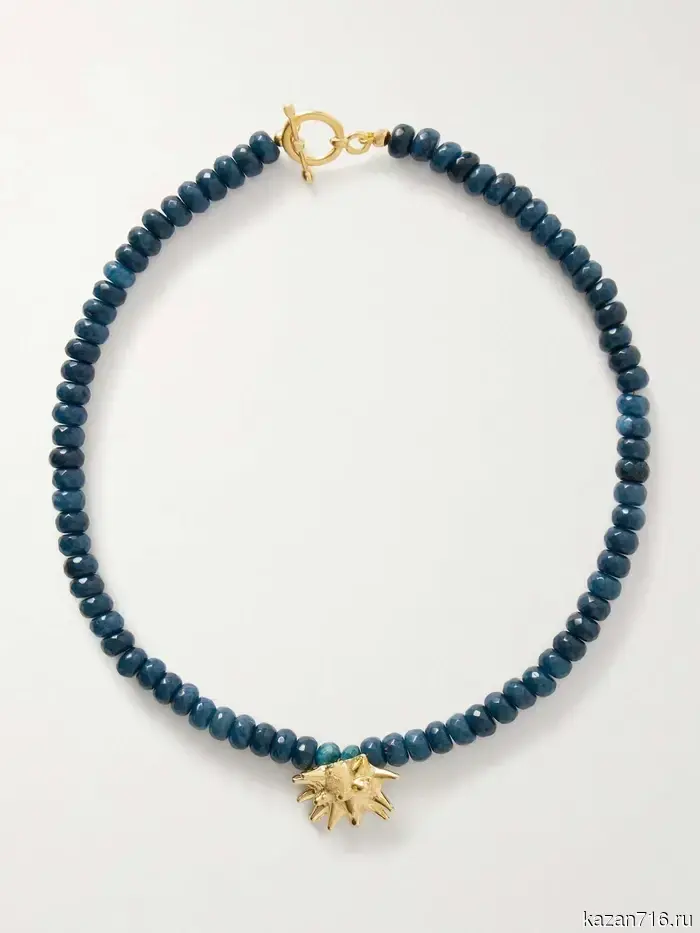 "Friendship" opens doors for teenagers in difficult life situations.
The Comprehensive Center for Social Services "Istok-Bashlangych" of the Leninogorsk District, in collaboration with the Youth Affairs Department, 04.06.2026. Ministry of Labor. Republic of Tatarstan. Kazan.
Police in Bugulma detained a suspect in the theft from a private house.
The investigative department of the Ministry of Internal Affairs of Russia for the Bugulma district has initiated a criminal case on the grounds of a crime provided for in paragraph "a" of part 3 of article 04.06.2026. Ministry of Internal Affairs of the Republic of Tatarstan. Republic of Tatarstan. Kazan.
"Friendship" opens doors for teenagers in difficult life situations.
The Comprehensive Center for Social Services "Istok-Bashlangych" of the Leninogorsk District, in collaboration with the Youth Affairs Department, 04.06.2026. Ministry of Labor. Republic of Tatarstan. Kazan.
Police in Bugulma detained a suspect in the theft from a private house.
The investigative department of the Ministry of Internal Affairs of Russia for the Bugulma district has initiated a criminal case on the grounds of a crime provided for in paragraph "a" of part 3 of article 04.06.2026. Ministry of Internal Affairs of the Republic of Tatarstan. Republic of Tatarstan. Kazan.
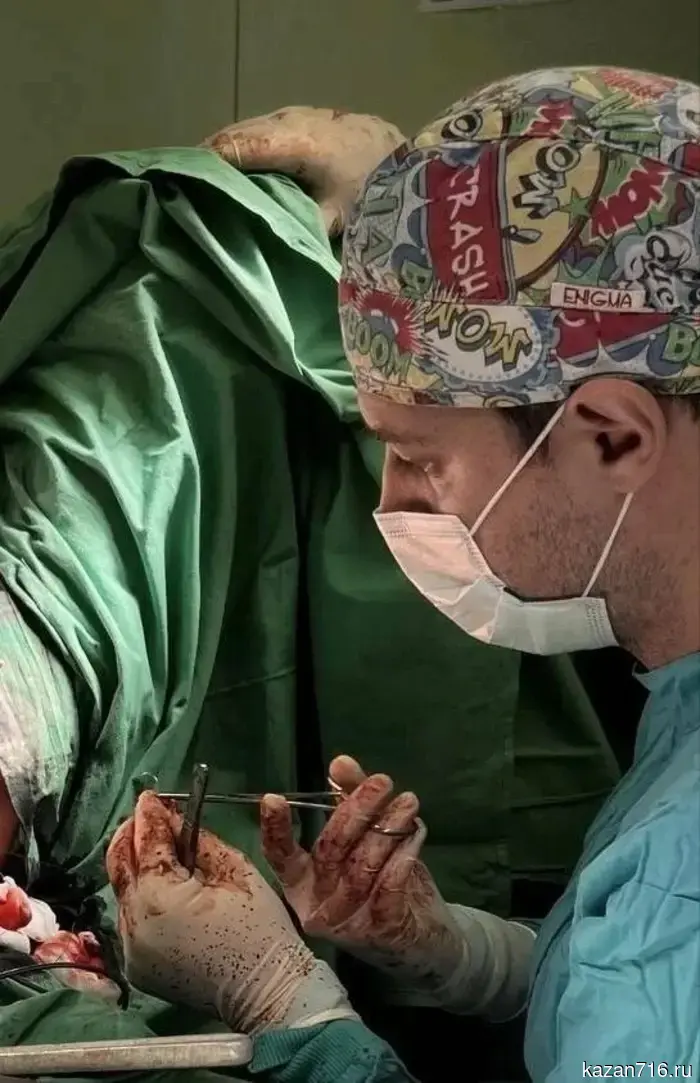 Doctors of RKB spent 4 years restoring the hand of a resident of Tatarstan, which was nearly severed by profiled sheet metal.
 04.06.2026. IA Tatar-inform. Republic of Tatarstan. Kazan.
In Naberezhnye Chelny, doctor of the BSME Marcel Hakimov, who treated fighters in the zone of the special military operation, has died.
The doctor was awarded and thanked by the mayor of the city, Nail Magdeev. The farewell to Marcel Ilgirovich will take place on June 5, 2026. Komsomolskaya Pravda Kazan. Republic of Tatarstan. Kazan.
Doctors of RKB spent 4 years restoring the hand of a resident of Tatarstan, which was nearly severed by profiled sheet metal.
Doctors of RKB spent 4 years restoring the hand of a resident of Tatarstan, which was nearly severed by profiled sheet metal. 04.06.2026. IA Tatar-inform. Republic of Tatarstan. Kazan.
In Naberezhnye Chelny, doctor of the BSME Marcel Hakimov, who treated fighters in the zone of the special military operation, has died.
The doctor was awarded and thanked by the mayor of the city, Nail Magdeev. The farewell to Marcel Ilgirovich will take place on June 5, 2026. Komsomolskaya Pravda Kazan. Republic of Tatarstan. Kazan.
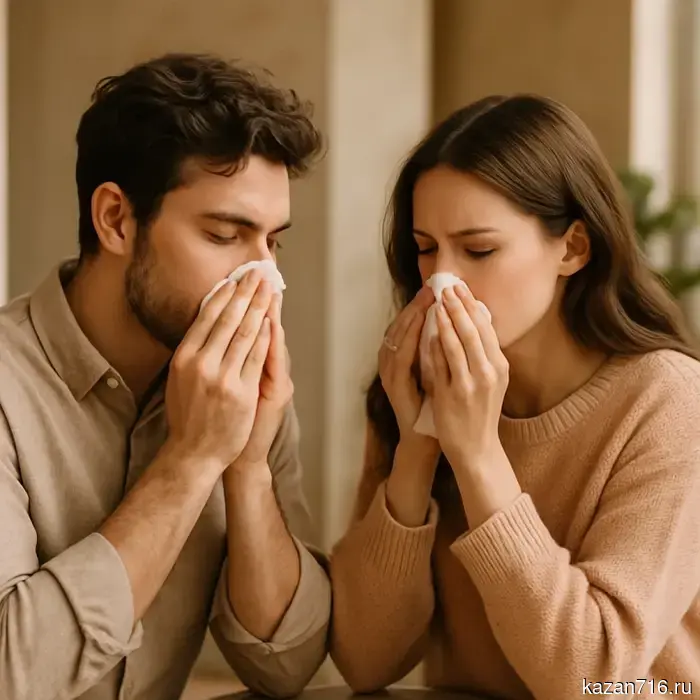 A cold is caused not by drafts, but by viruses: debunking the myth
The culprit of the illness is not the cold air, but the viruses that are transmitted from person to person.
Mom sternly says, "Close the window!", grandma threatens with her finger: "You'll catch a cold!". 04.06.2026. News of Zainsk. Republic of Tatarstan. Zainsk.
A cold is caused not by drafts, but by viruses: debunking the myth
The culprit of the illness is not the cold air, but the viruses that are transmitted from person to person.
Mom sternly says, "Close the window!", grandma threatens with her finger: "You'll catch a cold!". 04.06.2026. News of Zainsk. Republic of Tatarstan. Zainsk.
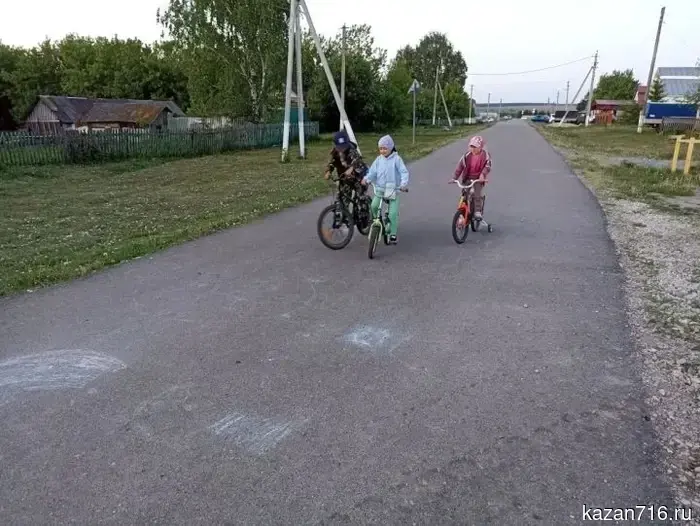 The "Young Cyclist" event gathered kids from the village of Berlibash.
In the summer, cultural workers from the village of Berlibash held the event "Young Cyclist," dedicated to World Bicycle Day. 04.06.2026. Kaibitsky Zori. Republic of Tatarstan. Bolshie Kaibitsy.
The "Young Cyclist" event gathered kids from the village of Berlibash.
In the summer, cultural workers from the village of Berlibash held the event "Young Cyclist," dedicated to World Bicycle Day. 04.06.2026. Kaibitsky Zori. Republic of Tatarstan. Bolshie Kaibitsy.
At Kazan University, the chemical composition of soap bubbles was analyzed.
Arthur Khannanov explained why store-bought ones don't burst, unlike homemade ones. 04.06.2026. KFU. Republic of Tatarstan. Kazan.