
Fire safety: what's wrong with your entrance
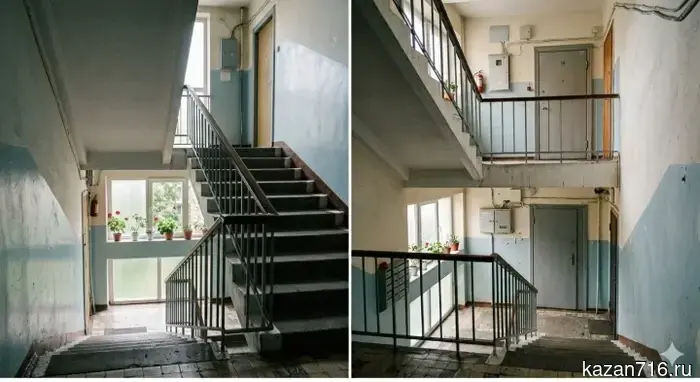
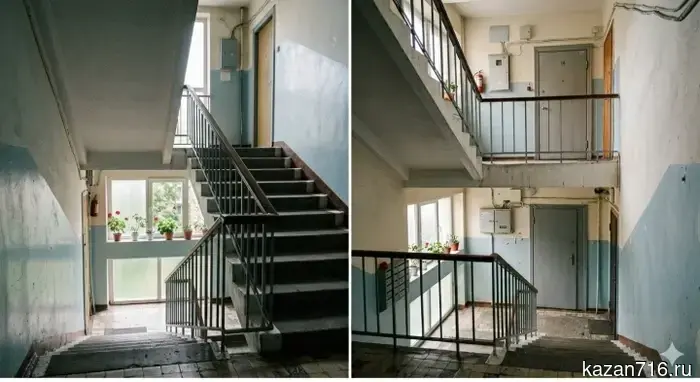
Familiar stairways, which are considered safe on a daily basis, turn into deadly traps during a fire due to combustible materials, narrow landings, and random boxes on the steps. Fire safety experts are sounding the alarm: even a fully functional staircase in a building can become the main factor in the death of people during a fire. This paradoxical conclusion, drawn from the analysis of recent incidents, breaks the stereotype that evacuation routes automatically save lives. As experts explain, the main problem lies in the design of old buildings. The lack of fire-resistant insulation and the presence of combustible elements—wooden steps or railings—instantly turn a landing into a "smoke chimney." "Smoke during a fire is more dangerous than open flames; it spreads at a speed of up to 8 meters per second. At this moment, the staircase becomes an ideal vertical channel, and anyone passing through it is doomed to be poisoned by combustion products before they even see the fire," comments fire safety engineer Alexander Vorontsov on the situation.
The second most significant risk is clutter. A survey of residents in apartment buildings conducted last week showed that 65% of respondents store bicycles, boxes, and old furniture in common stairwells. "Even a perfectly functional staircase, cluttered with foreign objects, ceases to be an evacuation route. In conditions of panic and zero visibility due to smoke, a person will trip and fall, creating a blockage. This is no longer a staircase; it is a trap," warns the Ministry of Emergency Situations.
Another point is the coverings and width of the landings. Modern standards (SP 1.13130.2020) require a width of at least 1.35 meters for buildings over 10 stories, to allow two streams of people and a firefighter with equipment to pass. However, in buildings constructed in the 1960s to 1980s, landings often do not exceed 90 cm. During evacuation, this leads to the formation of "bottlenecks," crushes, and injuries from falls from height.
Experts also point to the effect of beautiful floors. Glossy tiles or ceramics, which were laid for aesthetics, become slippery when wet or under stress. Budget anti-slip mats melt under intense heat, turning into an oily film. "30% of injuries during evacuation are falls on stairs related to the wrong choice of flooring. Railings designed for 70 kilograms may not withstand the weight of two falling people, leading to collapse," add the associations "Fire Safety."
Conclusion of the expertise:
As emphasized in the final report of the agency, the everyday concept of "functionality" (absence of broken steps) has nothing to do with real fire safety. Three factors make a staircase safe: fire-resistant materials, landings free of clutter, and width that allows streams to pass each other. Only a comprehensive review of the content of these evacuation routes can guarantee that a staircase will save lives rather than take them in an extreme situation.
Instructor of Fire Safety OP 73 PC Abramova N.
More news about the event:
Fire safety: what's wrong with your entrance
Familiar stairways, which are considered safe on a daily basis, turn into deadly traps during a fire due to combustible materials, narrow landings, and random boxes on the steps. 14:16 04.06.2026 Nurlatsky District - Nurlat
Fire safety: what's wrong with your entrance
Familiar stairways, which are considered safe on a daily basis, turn into deadly traps during a fire due to combustible materials, narrow landings, and random boxes on the steps. 13:09 04.06.2026 Nurlat-Inform - Nurlat
Другие Новости Казани (Казань716)
 VTB Expert: What the Stock Market Needs for Healthy Growth
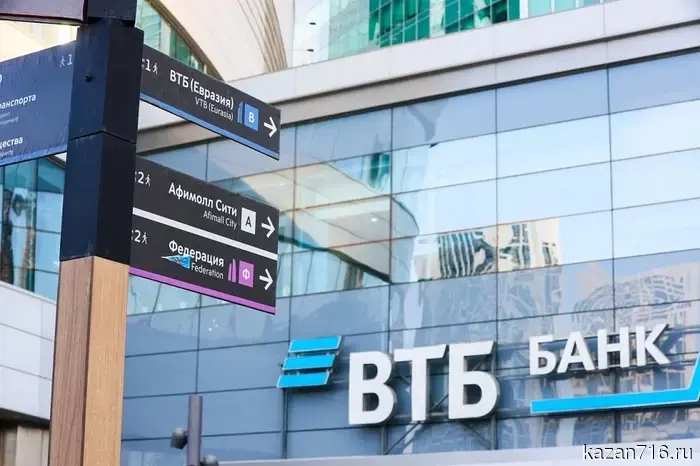
At the St. Petersburg International Economic Forum (SPIEF-2026), Dmitry Sredin, head of the client relations department for market sectors at VTB, explained what the Russian stock market needs for healthy growth. 04.06.2026. Chelny-Biz.Ru. Republic of Tatarstan. Naberezhnye Chelny.
VTB Expert: What the Stock Market Needs for Healthy Growth
At the St. Petersburg International Economic Forum (SPIEF-2026), Dmitry Sredin, head of the client relations department for market sectors at VTB, explained what the Russian stock market needs for healthy growth. 04.06.2026. Chelny-Biz.Ru. Republic of Tatarstan. Naberezhnye Chelny.
 The central library informs
In honor of the birthday of the great Russian poet Alexander Sergeyevich Pushkin, the staff of the Central Library organized a large literary boulevard for readers called "He is our poet, he is our glory!". 04.06.2026. Tetyushsky District. Republic of Tatarstan. Tetyushi.
The central library informs
In honor of the birthday of the great Russian poet Alexander Sergeyevich Pushkin, the staff of the Central Library organized a large literary boulevard for readers called "He is our poet, he is our glory!". 04.06.2026. Tetyushsky District. Republic of Tatarstan. Tetyushi.
 The central library informs
In honor of the birthday of the great Russian poet Alexander Sergeyevich Pushkin, the staff of the Central Library organized a large literary boulevard for readers titled "He is our poet, he is our glory!". 04.06.2026. Tetyushsky District. Republic of Tatarstan. Tetyushi.
A pensioner from Chistopol gave a courier over a million rubles, believing a false call from the "prosecutor's office."
A man lost more than a million rubles after following the instructions of unknown individuals who introduced themselves as prosecutors and lawyers.
The victim of phone scammers was a 76-year-old resident of Chistopol. 04.06.2026. Chistopol-Inform. Republic of Tatarstan. Chistopol.
In Tatarstan, they plan to create an AI assistant for doctors.
In Tatarstan, they plan to create an assistant for doctors based on artificial intelligence. 04.06.2026. IA Tatar-inform. Republic of Tatarstan. Kazan.
The central library informs
In honor of the birthday of the great Russian poet Alexander Sergeyevich Pushkin, the staff of the Central Library organized a large literary boulevard for readers titled "He is our poet, he is our glory!". 04.06.2026. Tetyushsky District. Republic of Tatarstan. Tetyushi.
A pensioner from Chistopol gave a courier over a million rubles, believing a false call from the "prosecutor's office."
A man lost more than a million rubles after following the instructions of unknown individuals who introduced themselves as prosecutors and lawyers.
The victim of phone scammers was a 76-year-old resident of Chistopol. 04.06.2026. Chistopol-Inform. Republic of Tatarstan. Chistopol.
In Tatarstan, they plan to create an AI assistant for doctors.
In Tatarstan, they plan to create an assistant for doctors based on artificial intelligence. 04.06.2026. IA Tatar-inform. Republic of Tatarstan. Kazan.
 A resident of Bugulma will be prosecuted for possession of homemade drugs.
A resident of Tatarstan was detained with a drug of his own manufacture, reported the Volga Transport Prosecutor's Office. 04.06.2026. GTRK Tatarstan. Republic of Tatarstan. Kazan.
A resident of Bugulma will be prosecuted for possession of homemade drugs.
A resident of Tatarstan was detained with a drug of his own manufacture, reported the Volga Transport Prosecutor's Office. 04.06.2026. GTRK Tatarstan. Republic of Tatarstan. Kazan.
Fire safety: what's wrong with your entrance
Familiar corridors that are considered safe on a daily basis turn into deadly traps in the event of a fire due to combustible materials, narrow passages, and random boxes on the steps. 04.06.2026. Nurlat-inform. Republic of Tatarstan. Nurlat.