
June 5 - World Environment Day
World Environment Day, established by the UN and celebrated annually on June 5, is one of the main ways for all ecologists and environmental organizations to draw the world's attention to environmental issues, as well as to stimulate political interest and corresponding actions aimed at environmental protection. The fight for ecology is a complex process. Many global and national organizations, thousands of activists and volunteers are working on this. Environmental issues in Russia are under close scrutiny from the state and scientists. The ecological situation in Russia is threatened by the same factors faced by all countries, related to the expansion of civilized spaces, human use of the planet's resources, industrial development, and pollution problems. The most pressing environmental issues can be divided into the following groups: air, soil, and water pollution of industrial nature; changes in the natural landscape, deforestation; the complex negative impact on the environment exerted by large cities; large volumes of burned and landfilled waste; the consequences of technological disasters. Constant monitoring and supervision are conducted regarding all listed factors, and measures are developed to minimize harm to the ecology. However, the measures taken are not always sufficient to completely solve the problem. In Russia, the right to a favorable environment is guaranteed by the fundamental law - the Constitution of the Russian Federation. The leading law is the Federal Law of March 30, 1999 No. 52-FZ "On the Sanitary and Epidemiological Well-Being of the Population." Environmental factors that can negatively affect human health include biological (viral, bacterial, etc.), chemical, physical (noise, vibration, ultrasound, infrasound, thermal, ionizing, non-ionizing, and other radiation), social (nutrition, water supply, living, working, and leisure conditions), and other factors. Harmful effects are considered not only the ability to acutely affect the health of a specific person or the population as a whole but also to contribute to the spread of chronic diseases and negatively impact future generations. All of this is included in the concept of sanitary and epidemiological well-being. Sanitary and epidemiological well-being of the population is the state of health of the population and the human habitat, in which there is no harmful impact of environmental factors on humans and favorable conditions for their life activities are ensured. The sanitary and epidemiological well-being of the population is ensured through: disease prevention in accordance with the sanitary and epidemiological situation and its forecast; implementation of sanitary and anti-epidemic (preventive) measures and mandatory compliance by citizens, individual entrepreneurs, and legal entities with sanitary rules; scientific research, state sanitary and epidemiological standardization, supervision and control, conducting socio-hygienic monitoring; mandatory confirmation of compliance of products (food, drinks, cosmetics, medicines, materials, clothing, toys, etc.) with the requirements of regulatory documents; licensing of activities that pose potential danger to humans (for example, the use of X-ray machines, etc.), as well as state registration of potentially hazardous chemical and biological substances, certain types of products, radioactive substances, production and consumption waste, as well as certain types of products being imported for the first time into the territory of the Russian Federation; measures for hygienic education and training of the population and promoting a healthy lifestyle, informing citizens about the state of the environment; measures to hold accountable for violations of the legislation of the Russian Federation in the field of ensuring sanitary and epidemiological well-being of the population. The Federal Service for Surveillance on Consumer Rights Protection and Human Well-Being organizes and implements within its competence, as part of socio-hygienic monitoring and federal state sanitary and epidemiological supervision, the quality control of atmospheric air, soil, and water bodies in populated areas regarding compliance with established hygienic standards - maximum permissible concentrations (MPC) of pollutants. Socio-hygienic monitoring is a state system for observing, analyzing, assessing, and forecasting the health status of the population and the human habitat, as well as determining causal relationships between the health status of the population and the impact of environmental factors on it to take measures to eliminate harmful impacts on the population from environmental factors. In addition to state control, improving the situation requires a conscious attitude towards natural resources from all citizens. Rational use of natural and energy resources, proper waste disposal, and land clearing can help avoid worsening the state of the environment. Each of us should strive to find ways to meet our needs that do not harm the environment but rather contribute to maintaining ecological balance and support its sustainable development. Simple recommendations, if followed, can help each person assist the environment and contribute to solving this global issue. Each of us can do this:
Save resources. Save water and electricity. Saving electricity is crucial for reducing air and water pollution. Make it a habit to save electricity by turning off lights and appliances when you are not using them. Reducing water consumption saves energy and helps the ecosystem.
Separate waste. Waste separation helps recycle what is no longer needed into new items and useful materials. For example, unnecessary paper can be turned into new notebooks and office paper, and old plastic bottles can be transformed into colorful children's slides.
Recycle. Waste separation leads to the next step in saving nature - recycling.
Choose eco-friendly transportation. The most beneficial ways for people and nature to move are walking and cycling. There will be less harm to the environment when choosing public transport instead of a car. However, if you cannot do without a car, use tips that can help reduce fuel consumption and lessen the impact on the environment. First, pass technical inspections on time, change air filters, engine oil, and spark plugs. Second, if you stop for more than a minute, turn off the engine.
Reuse and avoid taking excess. Reducing waste is just as important as recycling it properly. Today, there are many reusable alternatives to almost everything disposable. Replace disposable cups with a thermos or thermal mug, and choose unpackaged products over those with extra packaging (use reusable bags, your own containers, fabric pouches). Try not to throw away quality packaging and find new uses for it - this will help eliminate the need to buy something new and throw something away.
Pay attention to nutrition. Making the right choice of products will also help reduce your personal ecological footprint. Buy seasonal products and locally produced goods. Their delivery requires less fuel and produces fewer harmful emissions.
Try to reduce plastic use. It is unlikely that you will be able to completely eliminate plastic - too many surrounding things are made from this cheap material. But you can reduce its consumption and contribute to saving nature (do not buy water in plastic bottles and use reusable containers made of stainless steel or glass instead).
Use fewer chemicals in your daily life. Some chemicals have harmful long-term effects on the environment. Choose lawn care products that do not contain chemicals, as well as natural household cleaning agents, cosmetics, and hygiene products.
Plant a tree in your yard. Trees save energy and release oxygen, which helps keep the air clean. If you have the means (and space in your yard), plant several trees on your property.
These small actions will help you contribute to improving the ecology of Russia.
Zelenodolsk branch of the Center for Hygiene and Epidemiology in the Republic of Tatarstan
admin
Другие Новости Казани (Казань716)
 Bitcoin has fallen below $60,000 for the first time since October 2024.
During trading, the price of Bitcoin fell below $60,000 for the first time since October 10, 2024. 06.06.2026. Tatar-inform News Agency. Republic of Tatarstan. Kazan.
The head of the road company from Tatarstan was fined for not paying workers 98 million.
The director of a road company from Naberezhnye Chelny was fined for failing to pay workers' salaries in the amount of 98 million rubles. 06.05.2026. Tatar-inform News Agency. Republic of Tatarstan. Kazan.
Bitcoin has fallen below $60,000 for the first time since October 2024.
During trading, the price of Bitcoin fell below $60,000 for the first time since October 10, 2024. 06.06.2026. Tatar-inform News Agency. Republic of Tatarstan. Kazan.
The head of the road company from Tatarstan was fined for not paying workers 98 million.
The director of a road company from Naberezhnye Chelny was fined for failing to pay workers' salaries in the amount of 98 million rubles. 06.05.2026. Tatar-inform News Agency. Republic of Tatarstan. Kazan.
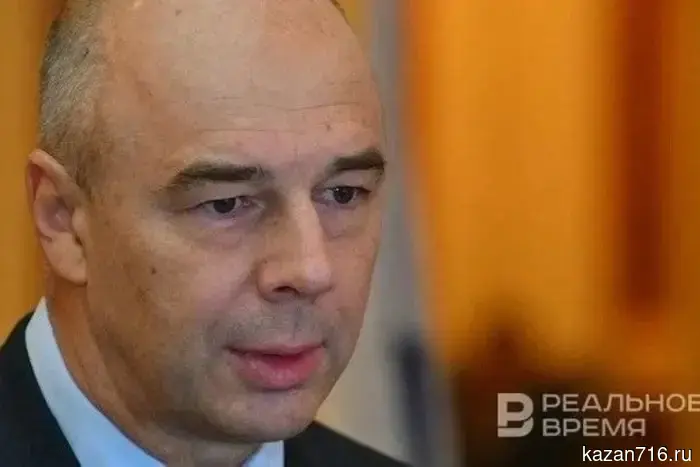 The revenue threshold for small businesses for VAT payment can be fixed for three years.
Earlier, Russian President Vladimir Putin proposed to postpone the reduction of the revenue threshold.
Photo: Maxim Platonov
The head of the Ministry of Finance of Russia, Anton Siluanov, believes, 06.05.2026. Real time. Republic of Tatarstan. Kazan.
The revenue threshold for small businesses for VAT payment can be fixed for three years.
Earlier, Russian President Vladimir Putin proposed to postpone the reduction of the revenue threshold.
Photo: Maxim Platonov
The head of the Ministry of Finance of Russia, Anton Siluanov, believes, 06.05.2026. Real time. Republic of Tatarstan. Kazan.
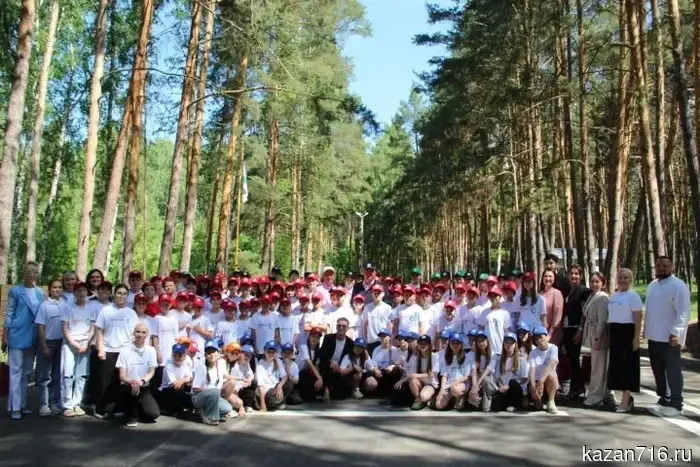 In Zainsk, the summer health campaign has been launched: the ceremonial opening of the first shift took place at the children's health camp "Constellation".
The district leadership and 118 young vacationers participated in it.
On June 5, here, surrounded by centuries-old birches and pines, there was a special atmosphere. 06.05.2026. News of Zainsk. Republic of Tatarstan. Zainsk.
In Bugulma, an investigation is underway following a dog attack on a teenager.
In Bugulma, an investigation is underway following a dog attack on a teenager.
According to eyewitnesses on social media, the animals were with their owners, but they did not even try to pull them away. 05.06.2026. IA Tatar-inform. Republic of Tatarstan. Kazan.
In Kazan, the volume of construction materials trade in the first quarter amounted to nearly 3 billion rubles.
In Tatarstan, at an expanded meeting of the board of the Union of Builders of the Republic of Tatarstan, issues related to price formation in the construction industry were discussed. 05.06.2026. GTRK Tatarstan. Republic of Tatarstan. Kazan.
In Zainsk, the summer health campaign has been launched: the ceremonial opening of the first shift took place at the children's health camp "Constellation".
The district leadership and 118 young vacationers participated in it.
On June 5, here, surrounded by centuries-old birches and pines, there was a special atmosphere. 06.05.2026. News of Zainsk. Republic of Tatarstan. Zainsk.
In Bugulma, an investigation is underway following a dog attack on a teenager.
In Bugulma, an investigation is underway following a dog attack on a teenager.
According to eyewitnesses on social media, the animals were with their owners, but they did not even try to pull them away. 05.06.2026. IA Tatar-inform. Republic of Tatarstan. Kazan.
In Kazan, the volume of construction materials trade in the first quarter amounted to nearly 3 billion rubles.
In Tatarstan, at an expanded meeting of the board of the Union of Builders of the Republic of Tatarstan, issues related to price formation in the construction industry were discussed. 05.06.2026. GTRK Tatarstan. Republic of Tatarstan. Kazan.
June 5 - World Environment Day
World Environment Day, established by the UN and celebrated annually on June 5, 06.05.2026. Kaibitsky Zori. Republic of Tatarstan. Bolshie Kaibitsy.