

New rules for the use of the Russian language in business in Tatarstan: what has changed since March 1, 2026
In Russia, updated requirements of Federal Law No. 168-FZ of June 24, 2025, have come into effect. The amendments concern the use of the state language in public information that companies address to consumers.
As of March 1, 2026, updated requirements of Federal Law No. 168-FZ of June 24, 2025, have come into effect in Russia. The amendments concern the use of the state language in public information that companies address to consumers. The law applies to signs, websites, mobile applications, menus, and other formats of interaction with clients. Tatarstan, as one of the largest regions of the country, is no exception. Local businesses will have to consider not only federal norms but also the republican features of bilingualism.
What has changed on signs: requirements and examples
The main rule now states that the main text on the sign must be in Russian as the state language of the Russian Federation. Foreign words and phrases, if used, may only be duplicating. At the same time, the Russian text must have visual priority – it cannot be smaller, less noticeable, or hidden in the background. The translation of a foreign word must be clear and understandable to the average consumer without additional explanations. For example, if a café facade displays the inscription "Fresh Bar," starting March 1, 2026, a Russian-language "Свежий бар" or simply "Бар" must appear next to it, and not in small print in the corner. Similarly, the words "Open," "Close," "Coffee," "Rooms" now require translation – "Открыто," "Закрыто," "Кофе," "Номера." The legislation of the subjects of the Russian Federation may allow duplicating information in the state languages of the republics. In Tatarstan, this means that a translation into Tatar can be added to the Russian text. This practice is already familiar to many establishments, but it is now important to ensure that the Russian version is not less prominent than either the foreign or Tatar text.
Important relaxation: exceptions have been made for brand names and registered trademarks. If a brand name is a protected trademark, it can be left in its original spelling, whether in Latin script or hieroglyphs. For example, Tatarstan branches of the networks "Pyaterochka," "Bähetle," or "Essens" can keep their registered logos unchanged.
How to adapt websites and applications: guidelines for businesses
The requirements for digital communication channels are equally strict. All elements of a website or mobile application that help the consumer understand what the company does and under what conditions must be presented in Russian. This applies to section titles, buttons, feedback forms, service descriptions, product cards, promotional messages, and interface pop-ups. For example, instead of the button "Cart," "Корзина" should be used; instead of "Checkout," "Оформить заказ"; instead of "Sign up," "Зарегистрироваться" or "Войти." If the information is already duplicated in Russian, the English version becomes merely additional and optional. The law and explanations from Rospotrebnadzor do not yet provide a definitive answer to the question: is it necessary to translate all digital content or is it sufficient to update only key navigation elements? Many details will become clear after the first court disputes and administrative cases arise. Nevertheless, businesses in Tatarstan are better off acting with a margin of safety and translating interfaces as fully as possible, especially if the website is aimed at the mass consumer.
Menus and price lists: how to format dishes and services
In public catering and service points, menus are also subject to the law. The entire list of dishes, drinks, their composition, and prices must be written in Russian. English markers like "Special offer," "New arrival," "Hot sale" should be replaced or translated as "Специальное предложение," "Новинка," "Горячая распродажа." If desired, the original English phrases can be left additionally – but only on the condition that the Russian translation is already present and is not less prominent than the foreign text in font size and placement.
Special attention – to little-known borrowings. If a word is not recorded in normative dictionaries of the Russian language (for example, in the Dictionary of Foreign Words approved by the Government of the Russian Federation), it should be accompanied by a clear explanation. In Tatarstan restaurants, this may apply to items such as "frappé," "ciabatta," or "campari" – it is preferable to provide a brief description in Russian.
Control, responsibility, and practical advice
Oversight of compliance with the law is entrusted to Rospotrebnadzor. The agency has the right to hold violators accountable under part 1 of Article 14.8 of the Administrative Offenses Code of the Russian Federation – for infringing on the consumer's right to receive necessary and reliable information. Fines for individual entrepreneurs and legal entities remain at the previous level for now, but attention to this area will be heightened. It is important to understand that the law does not apply to commercial advertising – it is regulated by a separate Federal Law "On Advertising." Also, the new norms do not apply to internal company documentation, correspondence between legal entities, and information in the B2B segment. That is, contracts, invoices, and technical documentation can remain in any convenient language. For Tatarstan businesses, there is an additional nuance: if you use the Tatar language as the second state language of the republic, it is welcomed, but it does not negate the priority of Russian. A sign in Tatar without a Russian version is a violation. A sign in Russian and Tatar, but with a larger Tatar font, is also a violation, as the Russian text must be at least as noticeable.
Linguistic protection: in disputed situations, when the meaning of a foreign word raises questions, companies can involve professional linguists. A linguistic conclusion prepared and preserved for inspection will help avoid fines. It is also recommended to review all points of contact with the client in advance – from entrance groups to corporate chatbots. Businesses in Tatarstan should act in advance: not only change signs and translate menus but also strengthen legal brand protection through the registration of trademarks in Cyrillic. As recent months have shown, there has been a significant increase in applications for Russian-language designations – and this is the right strategy for operating in the new legal field.

Другие Новости Казани (Казань716)
 The Russian Federal Service for Supervision in Education and Science has called for a change in the format of homework due to the development of AI.
A format of assignments is needed that will engage students and motivate them to take action.
Photo: Dinar Fatykhov
The head of Rosobrnadzor, Anzor Muzaev, stated, 07.06.2026. Real time. Republic of Tatarstan. Kazan.
The Russian Federal Service for Supervision in Education and Science has called for a change in the format of homework due to the development of AI.
A format of assignments is needed that will engage students and motivate them to take action.
Photo: Dinar Fatykhov
The head of Rosobrnadzor, Anzor Muzaev, stated, 07.06.2026. Real time. Republic of Tatarstan. Kazan.
 June 7, 2026: Ivanov Day, folk signs and unusual holidays
On June 7th, Orthodox Christians commemorate John the Baptist, and in the folk tradition, the day is called Ivan-Medvyanye Rosy. 07.06.2026. Volzhskaya Nov' (Volga News). Republic of Tatarstan. Verkhny Uslon.
June 7, 2026: Ivanov Day, folk signs and unusual holidays
On June 7th, Orthodox Christians commemorate John the Baptist, and in the folk tradition, the day is called Ivan-Medvyanye Rosy. 07.06.2026. Volzhskaya Nov' (Volga News). Republic of Tatarstan. Verkhny Uslon.
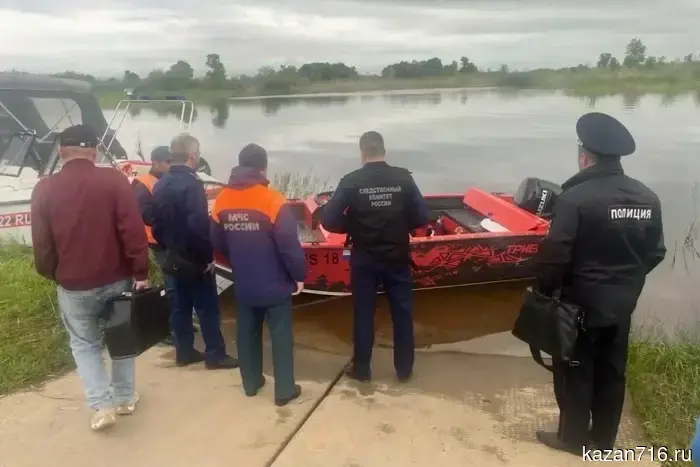 On the Kama, the boat driver died after colliding with a barge.
An emergency occurred on the night of June 7 on the Kama River in Udmurtia, near the village of Nyrgynda in the Karakulinsky district. 07.06.2026. IA Tatar-inform. Republic of Tatarstan. Kazan.
On the Kama, the boat driver died after colliding with a barge.
An emergency occurred on the night of June 7 on the Kama River in Udmurtia, near the village of Nyrgynda in the Karakulinsky district. 07.06.2026. IA Tatar-inform. Republic of Tatarstan. Kazan.
 How children are recruited into saboteurs: a guide for club visitors
In gaming chats and messengers, teenagers are promised "easy money" for arson, filming objects, or posting materials. 07.06.2026. News of Zainsk. Republic of Tatarstan. Zainsk.
How children are recruited into saboteurs: a guide for club visitors
In gaming chats and messengers, teenagers are promised "easy money" for arson, filming objects, or posting materials. 07.06.2026. News of Zainsk. Republic of Tatarstan. Zainsk.
 June 7, 2026: Ivanov Day, folk signs and unusual holidays
On June 7th, Orthodox Christians remember John the Baptist, and in the folk tradition, the day is called Ivan-Medvyanye Rosy. 07.06.2026. Volzhskaya Nov' (Volga News). Republic of Tatarstan. Verkhny Uslon.
June 7, 2026: Ivanov Day, folk signs and unusual holidays
On June 7th, Orthodox Christians remember John the Baptist, and in the folk tradition, the day is called Ivan-Medvyanye Rosy. 07.06.2026. Volzhskaya Nov' (Volga News). Republic of Tatarstan. Verkhny Uslon.
 The Prosecutor's Office of Tatarstan organized an inspection after a dog attacked a boy in Bugulma.
A teenager was injured in an animal attack on the street.
The Prosecutor's Office of Tatarstan has launched an investigation following a dog attack on a 13-year-old boy in Bugulma. 07.06.2026. Almetyevsk RTV. Republic of Tatarstan. Almetyevsk.
The Prosecutor's Office of Tatarstan organized an inspection after a dog attacked a boy in Bugulma.
A teenager was injured in an animal attack on the street.
The Prosecutor's Office of Tatarstan has launched an investigation following a dog attack on a 13-year-old boy in Bugulma. 07.06.2026. Almetyevsk RTV. Republic of Tatarstan. Almetyevsk.
New rules for the use of the Russian language in business in Tatarstan: what has changed since March 1, 2026
Updated requirements of Federal Law No. 168-FZ dated June 24, 2025, have come into effect in Russia. 07.06.2026. News of Zainsk. Republic of Tatarstan. Zainsk.