
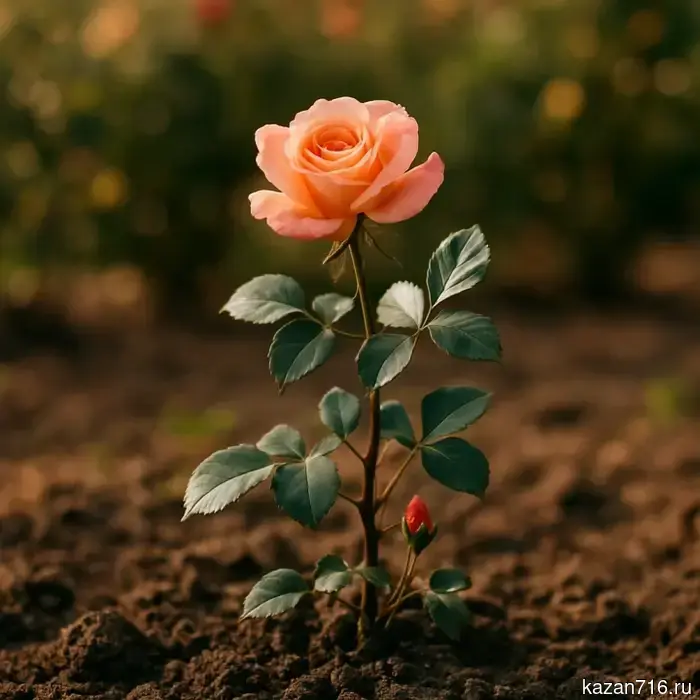
6 fatal mistakes in rose care that ruin the bush
Analyzing 6 habits to give up for lush blooming
1. Grafting in the sun: why you shouldn't spare the soil
Beginning gardeners are afraid to bury the root collar (graft), leaving it at soil level. This is a fatal caution. An above-ground graft position makes the rose vulnerable to winter anomalies: with little snow and alternating thaws and frosts, the graft cracks and rots.
The correct solution: when planting, bury the grafting site by 5–7 cm (for ground cover roses — by 8–10 cm). In this position, the bush independently transitions to its own roots, increasing frost resistance.
2. Radical autumn pruning: a trap for beginners
Severe shortening of all shoots to a stump before covering is a stress for the plant. The wounded wood does not have time to mature before frost, and infection penetrates through the open cuts in the tissue. Moreover, a short stump is poorly ventilated under cover, which provokes mold.
How to do it right: in autumn, only remove sick, broken, and unripe (herbaceous) shoots. Leave the main crown formation for spring, when it is clear which buds have awakened.
3. Fragmented watering: an illusion of care
Daily moistening of the top layer of soil seems beneficial, but it is the main reason for surface roots. The rose becomes lazy in extracting moisture from depth, and the root system spreads horizontally in the freezing layer. In winter, these roots freeze out, and in summer, they suffer from overheating.
Watering algorithm: once every 5–7 days (in heat — once every 3–4 days), pour 15–20 liters of water slowly under the adult bush, so that the liquid seeps to a depth of 40–50 cm.
4. Nitrogen doping in August: a destructive care
The desire to feed the rose "for strength" before winter turns into a disaster. Nitrogen stimulates cell division and the growth of young juicy shoots. These "fattening" shoots do not have time to mature before the cold and are guaranteed to freeze out, while the weakened bush spends its sugar reserves on them.
Wise tactic: after July 15, exclude any organic and mineral nitrogen fertilizers. From August, switch to phosphorus-potassium compositions (superphosphate, mono-potassium phosphate) — they strengthen cell walls and help shoots mature.
5. Forced defoliation: when it's better not to touch
A common misconception: "I'll remove all the leaves so that fungal spores don't winter." Mechanical plucking of leaf blades wounds the attachment points (bud axils). Even a light tug creates micro-damage, where gray rot penetrates instantly. Moreover, leaves perform photosynthesis before frost, pumping nutrients into the wood.
Recommendation: leave the bush alone. Only treat the plant with urea (5% solution) on green leaves if there are clear signs of fungus — this will burn the spores but not damage the tissues.
6. Peat film: a hidden swamp under cover
Peat seems like an ideal insulator: light and airy. But it has high moisture retention. During winter thaws (which are normal in the middle band), peat absorbs meltwater, freezes into an icy crust, and acts like a refrigerator. The wet mass blocks air access, the bark rots, and bacterial cancer develops.
What to replace it with: use dry soil from between rows, sand, or a mixture of garden soil with ash. The main rule of winter hilling is that the material must be water-permeable and air-dry. Always cover with fir branches or spunbond with ventilation openings on top.
Roses are not indoor ficuses; they are created by evolution to survive. The less unnecessary movements you make (timid pruning, hourly checking of moisture, stripping leaves), the healthier the bush. Calm, systematic care with a priority on deep watering, autumn phosphorus feeding, and proper dry covering without peat is the foundation on which a crown of flowers grows, not "bumps" of diseases. Stop torturing roses with hyper-care, and they will reward you with buds the size of a fist.
Photo by the author
Yulia Kazamarova
More news about the event:
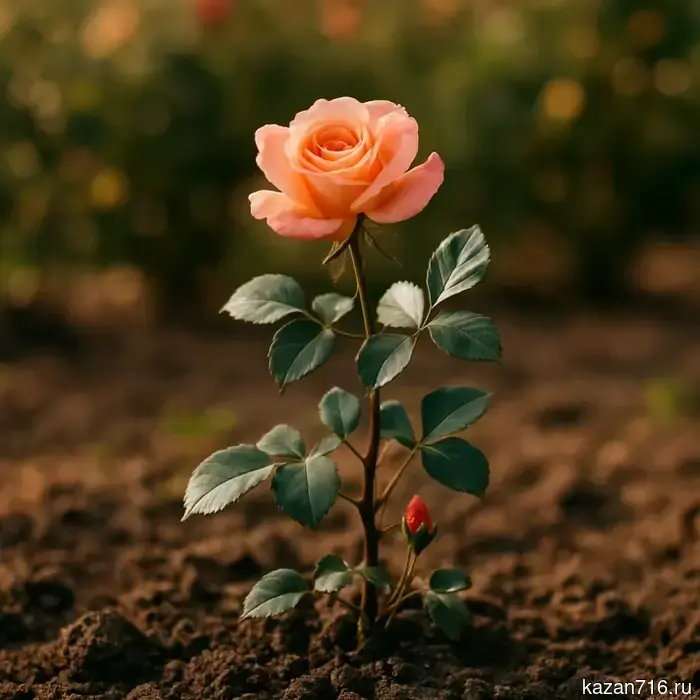
6 fatal mistakes in caring for roses that ruin the bush
Analyzing 6 habits to give up for lush blooming
1. Grafting in the sun: why you shouldn't spare the soil
Beginning gardeners are afraid to bury the root collar (graft), leaving it at soil level. 19:45 09.06.2026 Zainsk-Inform - Zainsk
6 fatal mistakes in caring for roses that ruin the bush
Analyzing 6 habits to give up for lush blooming
1. Grafting in the sun: why you shouldn't spare the soil
Beginning gardeners are afraid to bury the root collar (graft), leaving it at soil level. 19:42 09.06.2026 News of Zainsk - Zainsk
Другие Новости Казани (Казань716)
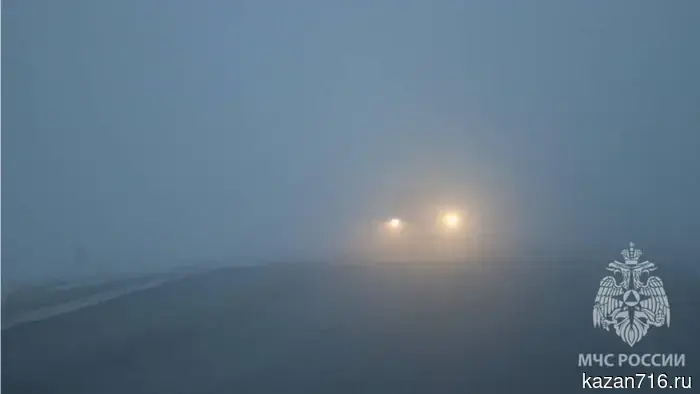 Emergency warning
Dear citizens! From the Federal State Budgetary Institution "Administration for Hydrometeorology and Environmental Monitoring of the Republic of Tatarstan" has received:
Consultation - warning about the intensity of meteorological phenomena
from 00 hours on 09.06.2026. Vysokaya Uslon District. Republic of Tatarstan. Vysoky Uslon.
Emergency warning
Dear citizens! From the Federal State Budgetary Institution "Administration for Hydrometeorology and Environmental Monitoring of the Republic of Tatarstan" has received:
Consultation - warning about the intensity of meteorological phenomena
from 00 hours on 09.06.2026. Vysokaya Uslon District. Republic of Tatarstan. Vysoky Uslon.
 The valley filed a lawsuit against the fraudsters who deceived it for the reimbursement of 176.1 million rubles.
He filed a lawsuit in the Lefortovo District Court of the capital.
Photo: screenshot from a video on the First Channel website.
Singer Larisa Dolina has filed a lawsuit against four fraudsters who deceived her. 09.06.2026. Real time. Republic of Tatarstan. Kazan.
The valley filed a lawsuit against the fraudsters who deceived it for the reimbursement of 176.1 million rubles.
He filed a lawsuit in the Lefortovo District Court of the capital.
Photo: screenshot from a video on the First Channel website.
Singer Larisa Dolina has filed a lawsuit against four fraudsters who deceived her. 09.06.2026. Real time. Republic of Tatarstan. Kazan.
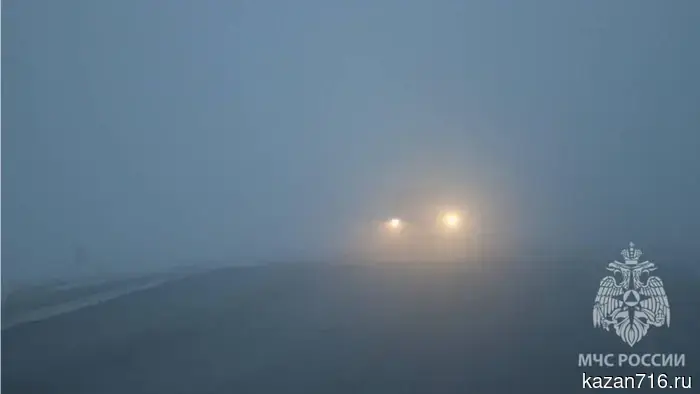 Emergency warning
Dear citizens! From the Federal State Budgetary Institution "Administration for Hydrometeorology and Environmental Monitoring of the Republic of Tatarstan" received:
Consultation - warning about the intensity of meteorological phenomena
from 00 hours on 09.06.2026. Verkhneuslonsky District. Republic of Tatarstan. Verkhny Uslon.
Emergency warning
Dear citizens! From the Federal State Budgetary Institution "Administration for Hydrometeorology and Environmental Monitoring of the Republic of Tatarstan" received:
Consultation - warning about the intensity of meteorological phenomena
from 00 hours on 09.06.2026. Verkhneuslonsky District. Republic of Tatarstan. Verkhny Uslon.
 Zhivov: The BMP-3 is increasingly being referred to as a morally outdated platform.
Photo: Official website of the Ministry of Defense of Russia mil.ru
June 9 – IA SM.News. The realities of modern local conflicts and the Special Military Operation compel military experts to rethink the concept of the Soviet BMP-3, 09.06.2026. Kazan.Sm.News. Republic of Tatarstan. Kazan.
Zhivov: The BMP-3 is increasingly being referred to as a morally outdated platform.
Photo: Official website of the Ministry of Defense of Russia mil.ru
June 9 – IA SM.News. The realities of modern local conflicts and the Special Military Operation compel military experts to rethink the concept of the Soviet BMP-3, 09.06.2026. Kazan.Sm.News. Republic of Tatarstan. Kazan.
 "Chizh & Co", "Melnitsa" and Neuromonk Feofan: what the new ethno-rock festival in Bulgaria will be like
The participants of the "Guardians" festival will be 20 thousand guests
Tuvan throat singing and classic rock will be performed on one stage
On June 27, the Volga Ethno-Rock Festival "Guardians" will take place in Bolgar for the first time. 09.06.2026. IA Tatar-inform. Republic of Tatarstan. Kazan.
"Chizh & Co", "Melnitsa" and Neuromonk Feofan: what the new ethno-rock festival in Bulgaria will be like
The participants of the "Guardians" festival will be 20 thousand guests
Tuvan throat singing and classic rock will be performed on one stage
On June 27, the Volga Ethno-Rock Festival "Guardians" will take place in Bolgar for the first time. 09.06.2026. IA Tatar-inform. Republic of Tatarstan. Kazan.
6 fatal mistakes in rose care that ruin the bush
Analyzing 6 habits to give up for lush blooming 1. Grafting in the sun: why you shouldn't spare the soil Beginner gardeners are afraid to bury the root collar (graft), leaving it at soil level. 09.06.2026. News of Zainsk. Republic of Tatarstan. Zainsk.