
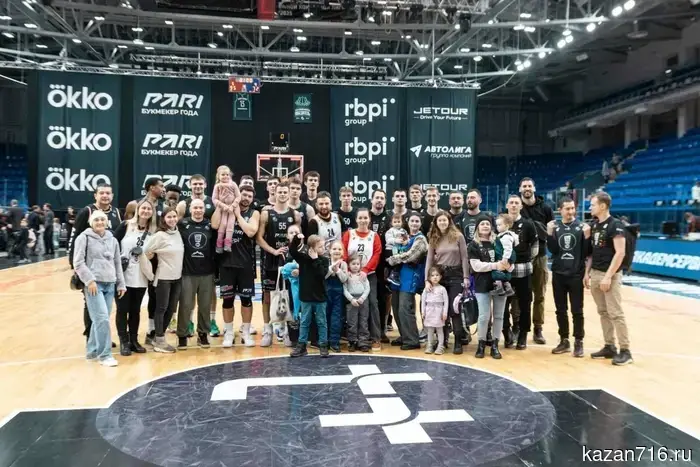
Minus "Pari NN": how the Unified VTB League is shrinking to 10 clubs and is there light at the end of the tunnel
Zero Expansion: How the Loss of "Pari NN" Exposed the Systemic Crisis of the Unified League
"Pari NN" is next. Following foreign teams, Russian teams are also starting to leave the Unified League.
The basketball landscape in Russia continues to shrink rapidly. Recently, another piece of news hit the basketball world, which had been discussed in the corridors for several weeks: Nizhny Novgorod's "Pari NN" officially announced the suspension of its main team's activities. Starting from the 2026/27 season, the team from the banks of the Volga, which had recently troubled the giants and won the Russian Cup in 2023, is leaving the VTB United League. Now, only 10 participants remain in the country's main basketball tournament.
The trend is, to put it mildly, alarming. If we recall the recent past, the exodus from the League began back in the spring of 2022. At that time, after the start of the special military operation, the Polish "Zielona Góra" and the Estonian "Kalev" predictably left the tournament. Later, for purely internal reasons, the Minsk "Tsmoki-Minsk" and the Kazakh "Astana" also dropped out. The League was inexorably losing its international status, focusing on the domestic market, but now the crack has appeared in the Russian foundation as well.
The official wording of "Pari NN's" departure sounds diplomatic: "a forced but manageable measure." The club's management emphasizes that the government of the Nizhny Novgorod region has fulfilled all its financial obligations in full.
The team's financing was carried out from the regional budget and through sponsorship funds. The statement emphasizes that all obligations taken on by the region have been fully met. However, the current situation dictates new conditions: "But, unfortunately, the current financial situation, which objectively affects the club's partners, including potential ones, dictates new conditions that make maintaining the main team at a professional level temporarily impossible. The suspension of activities is a forced but manageable measure," the statement from "Pari NN" reads.
The current economic situation has hit the club's partners and private sponsors hard. The tax burden is tightening for bookmakers as well – the main sources of funding for domestic sports in recent years. And considering that Nizhny Novgorod worked closely with one of the firms whose name was carried by the football and basketball teams, the decline in bookmakers' interest in continuing to finance clubs at the highest level is understandable.
Without a strong pool of commercial investors, surviving at the VTB League level is physically impossible. Maintaining a team, constant flights, quality legionnaires – all of this requires colossal budgets, which simply could not be gathered in Nizhny Novgorod at this time. Rumors about salary delays for players circulated in the press as early as the beginning of June, although the club itself tried to smooth them over carefully.
It is symbolic that the last season at the highest level ended for the Nizhny Novgorod team in ninth place, disappointingly missing the playoffs. However, it is still premature to talk about the death of basketball in the region. The club retains its infrastructure and shifts its focus to nurturing its own talents: the reserve team will continue to compete in Russian championships, and the youth team will remain in the Unified Youth League of the VTB. Essentially, "Pari NN" is taking a pause to regroup and bet on local guys.
The League is shrinking instead of developing. What should the Unified League do with 10 teams and predetermined semifinalists?
For the Unified VTB League itself, the loss of such a distinctive club is a serious blow to the intrigue and depth of the championship.
With only ten participants left, the tournament risks turning into an elite club with pronounced class inequality. At the top of this basketball food chain stands the "Big Four": CSKA, Kazan's UNICS, Lokomotiv-Kuban, and St. Petersburg's Zenit. These giants have different levels of budgets, good rotations, and quality legionnaires. They live in their own paradigm, where championship rings are always at stake, and matches against teams from the lower half of the table increasingly turn into routine training sessions with heightened responsibility – just to avoid losing "their" points in the fight for a high seed in the playoffs.
The tragedy of the situation is that the gap between the giants and the rest is widening. Previously, this vacuum was more or less filled by such biting mid-tier teams as "Pari NN" – a team that had long been a real "thorn in the side" for the favorites and consistently generated sensations on the court. With the suspension of their activities, the strong middle class in the league is gradually evaporating. Now, essentially, the only such team left is Yekaterinburg's Uralmash, and that's it. The "Parma" project, which is expected to shoot up like Ural-Great, has not yet fully taken off.
Most of the remaining clubs outside the top 4 are forced to survive, assembling teams on a residual basis and lacking real resources for a long-term struggle against the leaders. The lack of competitive teams directly hits the intrigue in the Unified League.
Moreover, the reduction to ten clubs means an inevitable reshaping of the calendar: playing a classic regular championship in two rounds becomes meaningless, as 18 matches per season is laughably few for professionals. The likely transition to a four-round system will inevitably lead to the effect of a scratched record. Viewers will quickly tire of watching the same opponents face off against each other four times a year, especially since the outcome of the overwhelming majority of matches between the top teams and the outsiders will be predictable even before the starting whistle.
The conclusion is harsh: the Unified VTB League is losing its former sporting appeal. Instead of the expected expansion and growth, we are witnessing a process of forced cocooning. If the trend does not change, the once-powerful international tournament will transform into a local squabble among four wealthy giants, where the other clubs will play the role of extras, necessary only for legitimizing the very status of the championship.
There is light at the end of the tunnel. The league is waiting for old good friends from friendly countries.
However, it is still too early to throw ashes on our heads. Even in this seemingly hopeless situation with a reduction in the number of participants, a certain light is beginning to shine at the end of the tunnel. In a recent interview, the general director of the Unified VTB League, Ilona Korstin, voiced a very encouraging insight: the tournament's management is actively working, and the league may recover part of its losses by bringing back old acquaintances. This concerns the potential comeback of Kazakhstan's "Astana" and Belarus's "Minsk."
The case of "Astana" is particularly indicative here. The Kazakh club was forced to leave the main championship not due to total lack of funds or absence of sporting ambitions, but for purely legal reasons. A law came into effect in the neighboring country that severely restricted clubs' ability to pay foreign specialists. Since it is objectively impossible to compete consistently at the level of the Unified VTB League without quality legionnaires and foreign coaches, the team logically went into the shadows, limiting itself to participation in the youth championship. However, there was also nothing to speak of in terms of sporting achievements. But now, as Korstin directly notes, the club has managed to successfully adapt to the new legislative realities. In the capital of Kazakhstan, they found powerful independent commercial sponsors, formed a stable budget, and have already submitted a serious application for a return to the elite.
With the Minsk team, the situation is somewhat different, but still workable. The Belarusian club is currently represented exclusively in the Unified Youth League, but the tournament's management is keeping its finger on the pulse. According to the general director of the League, the interest in the return of the main team of "Minsk" has not disappeared, substantive consultations are underway, and this comeback is quite realistic within one season when the club resolves its internal organizational issues. For the Unified VTB League, such news is, at first glance, a lifesaving breath of fresh air. First, the return of clubs from friendly countries allows the tournament to at least partially revive its status as a full-fledged international championship, which has rapidly faded in recent seasons, depriving the league of important image points. Secondly, and this is much more important from a purely sporting perspective, expanding the pool of participants to twelve teams saves the championship from a catastrophic shortage of game days. This is a real chance to build an adequate regular season calendar without the need to pit the same opponents against each other four times a year. But it must be acknowledged that neither "Astana" nor "Minsk," in their current transitional state, will be able to immediately impose equal competition on Kazan's UNICS, CSKA, or Zenit. However, the League currently urgently needs not so much a battle for the title at all levels of the tournament table, but a solid foundation of stable teams. The tournament needs that very working middle class that will ensure roster depth, stir up viewer interest in ordinary matches, and allow the championship to breathe freely, rather than survive in a mode of strict resource conservation.
Photo: nn-basket.ru
Другие Новости Казани (Казань716)
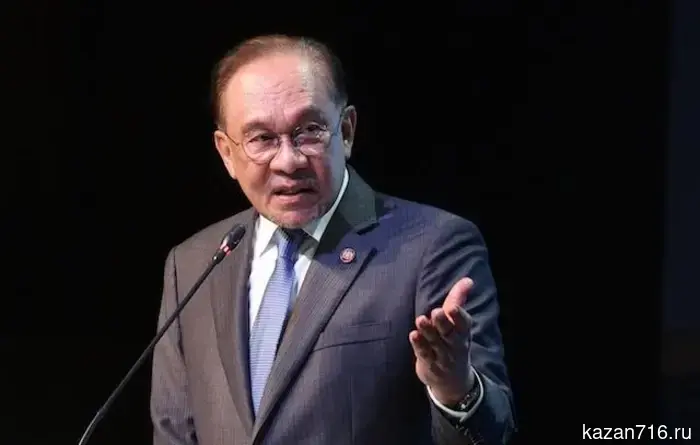 The Prime Minister of Malaysia quoted Tukai at the Russia – ASEAN forum in Kazan.
The Prime Minister of Malaysia, Anwar Ibrahim, quoted Gabdulla Tukay at the opening of the business forum Russia - ASEAN in Kazan. 17.06.2026. Tatarstan-New Century TV. Republic of Tatarstan. Kazan.
The Prime Minister of Malaysia quoted Tukai at the Russia – ASEAN forum in Kazan.
The Prime Minister of Malaysia, Anwar Ibrahim, quoted Gabdulla Tukay at the opening of the business forum Russia - ASEAN in Kazan. 17.06.2026. Tatarstan-New Century TV. Republic of Tatarstan. Kazan.
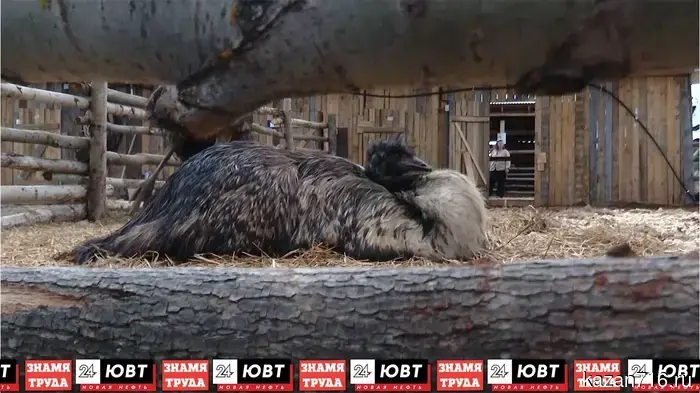 An eco-farm with exotic animals is being developed in the Almetyevsk district.
Photo zones are set up for guests.
Nearby Almetyevsk, the first eco-farm in the area is being developed. 06/17/2026. Almetyevsk RTV. Republic of Tatarstan. Almetyevsk.
High energy costs in Germany and Chinese competition are forcing automotive giants to relocate production from Germany.
Photo: IA SM-News
June 17 – IA SM.News. An anonymous survey of the top management of Volkswagen showed that the situation in the concern is much more acute than previously thought. 06.17.2026. Kazan.Sm.News. Republic of Tatarstan. Kazan.
An eco-farm with exotic animals is being developed in the Almetyevsk district.
Photo zones are set up for guests.
Nearby Almetyevsk, the first eco-farm in the area is being developed. 06/17/2026. Almetyevsk RTV. Republic of Tatarstan. Almetyevsk.
High energy costs in Germany and Chinese competition are forcing automotive giants to relocate production from Germany.
Photo: IA SM-News
June 17 – IA SM.News. An anonymous survey of the top management of Volkswagen showed that the situation in the concern is much more acute than previously thought. 06.17.2026. Kazan.Sm.News. Republic of Tatarstan. Kazan.
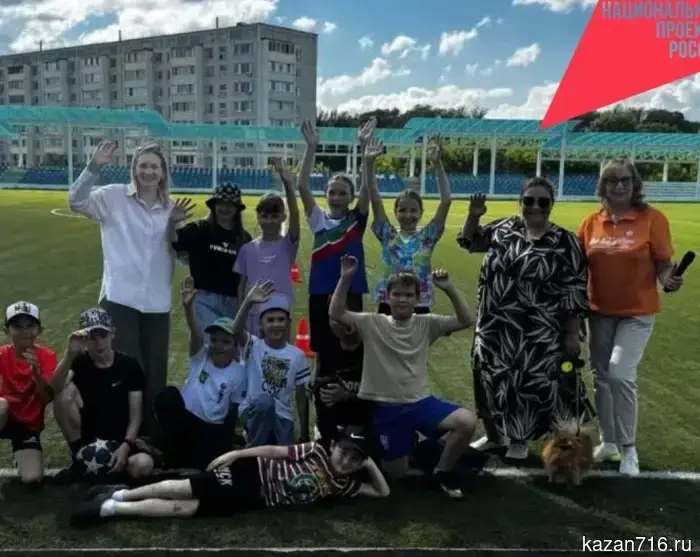 A sports event "Relay of Smiles" took place in Zainsk.
June 16 at the "Energia" stadium. 17.06.2026. News of Zainsk. Republic of Tatarstan. Zainsk.
A sports event "Relay of Smiles" took place in Zainsk.
June 16 at the "Energia" stadium. 17.06.2026. News of Zainsk. Republic of Tatarstan. Zainsk.
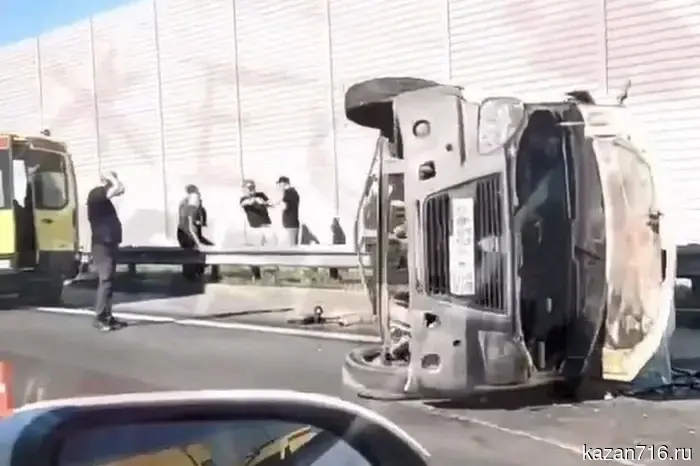 The passenger "Gazelle" collided with a cargo vehicle and overturned on the highway in Tatarstan.
A serious traffic accident occurred today on the M-7 highway. This was reported by eyewitnesses on social media, who published a recording from the scene of the incident. 06/17/2026. IA Tatar-inform. Republic of Tatarstan. Kazan.
The passenger "Gazelle" collided with a cargo vehicle and overturned on the highway in Tatarstan.
A serious traffic accident occurred today on the M-7 highway. This was reported by eyewitnesses on social media, who published a recording from the scene of the incident. 06/17/2026. IA Tatar-inform. Republic of Tatarstan. Kazan.
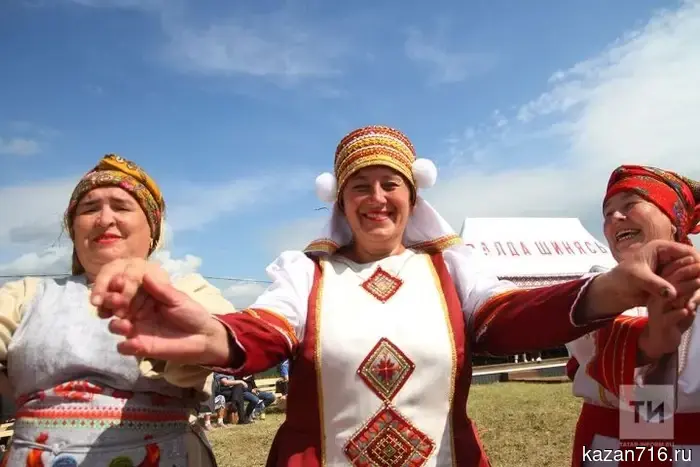 On June 21, the Mordovian holiday "Valda Shinyas" will take place in Tatarstan.
On June 21, a Republican holiday of Mordovian culture "Valda Shinyas" will take place in the village of Kildyushevo in the Tetyushsky district, timed to coincide with the day of the summer solstice. 06/17/2026. Bavly-inform. Republic of Tatarstan. Bavly.
On June 21, the Mordovian holiday "Valda Shinyas" will take place in Tatarstan.
On June 21, a Republican holiday of Mordovian culture "Valda Shinyas" will take place in the village of Kildyushevo in the Tetyushsky district, timed to coincide with the day of the summer solstice. 06/17/2026. Bavly-inform. Republic of Tatarstan. Bavly.
Minus "Pari NN": how the Unified VTB League is shrinking to 10 clubs and is there light at the end of the tunnel
Zero Expansion: How the Loss of "Pari NN" Exposed the Systemic Crisis of the Unified League "Pari NN" next. 06.17.2026. IA Tatar-inform. Republic of Tatarstan. Kazan.