

Russian automotive industry — 2026: production is growing, but the market is moving to competitors
The decline of Lada's market share and the expansion of Chinese brands are key barriers for domestic automakers
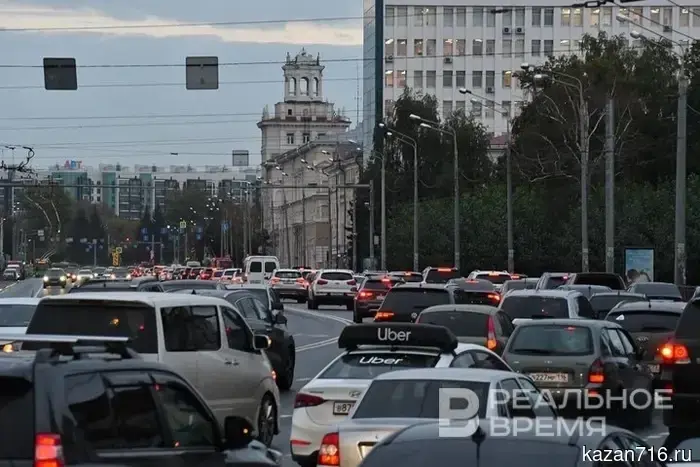
Photo: Real Time
Car production in Russia increased by 16% in the first half of 2026, with the largest growth recorded in June — 73.2% more than a year earlier, according to Rosstat data. Over the six months, according to the Ministry of Industry and Trade of the Russian Federation, more than 608,000 new passenger cars were sold (+16%). In the truck and bus segment, on the contrary, the trend of previous years persisted — a reduction in production and sales volumes. How production and the automotive market are changing in the country, why experts believe that "AvtoVAZ" is losing the competitive battle to the Chinese, and what measures could change the trend of the "shrinking" market for domestic vehicles — in the material from "Real Time."
Production is growing, Lada's sales share is falling
In the first half of 2026, 388,000 new passenger cars, 60,400 trucks, and 9,400 buses were produced in Russia, Rosstat reported. Passenger car production exceeded the figures of the first half of 2025 by 62,000, while production of other types of vehicles continued to decline. Real Time / realnoevremya.ru
Statistics from the previous four years showed a trend of growth in passenger car production starting from 2024; however, the figures indicate that the "collapse" recorded in 2022 was covered in 2024, but in 2025, the domestic automotive industry lost ground again. Real Time / realnoevremya.ru
Truck production fell below the level of 2022 in 2025, and in the first half of 2026, it continued to decline. Bus production has not yet returned to the level of five years ago. Real Time / realnoevremya.ru
Real Time / realnoevremya.ru
Sales of new passenger cars in Russia in the first half of 2026, according to the Ministry of Industry and Trade of the Russian Federation, exceeded the level of the same period in 2025 by almost 80,000 units, but were more than 100,000 units lower than the level of 2024. Real Time / realnoevremya.ru
And AvtoVAZ's share of total sales in the first half of 2026 was a record low for the last four years — 25.3% (in 2023, Lada cars accounted for more than a third of sales (35.8%). Real Time / realnoevremya.ru
Theoretically, the situation in the passenger car market could change with the credit policy of banks. In Tatarstan, according to eCredit data, the average interest rate on loans for new cars fell to 11.1% in the second quarter of 2026, and the approval rate for loan applications by banks rose to 79%, averaging 77% across Russia. The approval rate for auto loan applications in Tatarstan increased by 1 percentage point, while the average cost of a new car in the region rose slightly to 2.69 million rubles. However, the volume of loans in monetary terms, as reported by Auto.ru, remained stable, and the average loan amount and car price did not change — 1.84 million rubles and 2.76 million, respectively.
The buyer chooses "the Chinese"
— Our most popular car is "Lada," — says economist and head of the company "R-Invest" Rustem Shaiakhmetov. — And if we talk about the sales results of passenger cars over the last six months, a quarter of the sold cars are new "Ladas." The passenger car market as a whole has improved — there was a decline in 2025, but in the first half of 2026, sales increased by 14.8%, while Lada sales fell by 2.2%. In June 2026, a total of 116,000 cars were sold, of which 28,000 were "Ladas." The overall sales growth was 29%, while Lada's sales growth was only 16.2%. The expert sees the reason for the stagnation in domestic car sales in the successful competition from "the Chinese." He believes that the increase in recycling fees, which were highly anticipated, did not have a positive effect, and "the dependency mentality of manufacturers worsens the situation and the competitiveness of Russian cars, which lag behind "foreigners" primarily due to outdated production technologies and poor service:
— The top seven best-selling car brands today are Chinese, followed by Toyota and Mazda, which are also returning to the market. For example, in the first half of 2026, 84,000 HAVAL cars and 11,000 Mazdas were sold. So, in fact, the main market is being formed by Chinese manufacturers, who are pushing out our cars. "Our most popular car is 'Lada,' but in the first half of 2026, sales increased by 14.8%, while Lada sales fell by 2.2%." Aydar Ramankulov / realnoevremya.ru
At the same time, Rustem Shaiakhmetov noted that labor productivity in the Russian automotive industry is low, therefore, the costs of producing one car are higher than in China, while workers' wages are lower.
— The management of "AvtoVAZ" should respond to today's challenges, rather than going with an outstretched hand for more funding, — he believes. — Especially since in the late 80s and 90s, billions of dollars were already invested in it, but no results were achieved that would allow competing with foreign manufacturers. Today we have high customs duties and recycling fees — this is artificial support for the manufacturer at the expense of the buyer. And it does not take into account the fact that the costs of servicing cars over their lifecycle are higher than their purchase price, meaning that the main expenses are incurred within the country, and by limiting the import of foreign cars, we primarily limit the development of Russian auto service.
Shaiakhmetov reminded that in 2025, for the first time in recent history, the number of registered cars in Russia decreased, which is a worrying factor. It means that the purchasing power of the population has decreased, the availability of cars has declined, and the "aged out" cars cannot be replaced by new ones for everyone who would like to. What was done to support the domestic automotive industry has turned into a shrinking automotive market.
The decline in demand for them may also be partially related to the successful competition from Chinese and Kazakhstani carriers. Real Time / realnoevremya.ru
As for trucks, the decline in demand for them may also be partially related to the successful competition from Chinese and Kazakhstani carriers, the expert believes. They pay taxes in their countries, their costs are lower than those of Russian carriers, and considering that in China, unmanned transportation is developing rapidly, to win the battle for the freight transportation and truck market, Russia needs to create conditions for domestic transport to be cheaper.
"Freight transportation is being destroyed at its roots"
Expert from "Real Time," former director of the "Black Auto" fleet Ayrat Gatin believes that the growth in passenger car production in the first half of 2026 is a result of government stimulation of the automotive industry:
— There is no real demand for them today, but the adoption of the localization law for taxis has borne fruit; Russian cars are starting to be bought specifically for commercial purposes — for taxi fleets, for rental. However, demand is negatively affected primarily by the import of cars from abroad, especially from China. Since the "Chinese" have better quality and more comfort, the buyer chooses what to spend 2-3 million rubles on. In my opinion, Russian cars are "stuck" at the level of the 90s, many are still produced without power steering, automatic transmissions, or air conditioning, and their prices reach up to 2 million rubles.
"The adoption of the localization law for taxis has borne fruit; Russian cars are starting to be bought specifically for commercial purposes." Dinar Fatykhov / realnoevremya.ru
The ongoing decline in truck production Gatin attributes to problems in the freight transportation market, particularly that today, due to economic circumstances, freight carriers need to pay many "bills" upfront, while they receive payment for their services after some time:
— Freight transportation is, for some reason, being legislatively destroyed at its roots. Gasoline and diesel must be paid for immediately, "Platon," toll road fees, fines must be paid immediately, while payment for services comes with delays of 10-20 days. The customer today effectively has no money in their accounts — they sell first, then pay suppliers and carriers. At the same time, transportation services have become cheaper. This is because all orders are distributed through one portal — ATI.SU, and the price per kilometer has dropped significantly — if previously it cost, for example, 150 thousand to transport somewhere, now it is done for 70. Additionally, the market is being captured by Chinese carriers, whose transportation costs are lower. The decline in truck production may essentially be a response to the fact that there is no demand for them due to the contraction of the Russian transportation market. In my opinion, the domestic market is collapsing; it would take just a few months to destroy it, but restoring it would take years.
The decline in bus production, the expert simply
Другие Новости Казани (Казань716)
 The third terminal of Kazan airport: the future is already here
The first images of the third terminal of Kazan International Airport named after Gabdulla Tukay have appeared online. 03.08.2026. Kamskaya Novь. Republic of Tatarstan. Laishevo.
The third terminal of Kazan airport: the future is already here
The first images of the third terminal of Kazan International Airport named after Gabdulla Tukay have appeared online. 03.08.2026. Kamskaya Novь. Republic of Tatarstan. Laishevo.
 A truck caught fire on the Kazan — Ulyanovsk highway.
Firefighters extinguished the blaze, no injuries reported
Photo: Maxim Platonov
A cargo truck caught fire on the R-241 Kazan — Ulyanovsk highway in the Verkhneuslonsky district of Tatarstan, reported the Ministry of Emergency Situations of the republic. 03.08.2026. Real time. Republic of Tatarstan. Kazan.
In Kazan, part of Peter Viter Street will be closed until the end of October.
In Kazan, traffic will be partially restricted on Peter Viter Street for almost three months. 03.08.2026. IA Tatar-inform. Republic of Tatarstan. Kazan.
A truck caught fire on the Kazan — Ulyanovsk highway.
Firefighters extinguished the blaze, no injuries reported
Photo: Maxim Platonov
A cargo truck caught fire on the R-241 Kazan — Ulyanovsk highway in the Verkhneuslonsky district of Tatarstan, reported the Ministry of Emergency Situations of the republic. 03.08.2026. Real time. Republic of Tatarstan. Kazan.
In Kazan, part of Peter Viter Street will be closed until the end of October.
In Kazan, traffic will be partially restricted on Peter Viter Street for almost three months. 03.08.2026. IA Tatar-inform. Republic of Tatarstan. Kazan.
Russian automotive industry — 2026: production is growing, but the market is moving to competitors
The decline of Lada's market share and the expansion of Chinese brands are key barriers for domestic automakers. Photo: Real Time Passenger car production in Russia increased by 16% in the first half of 2026, 04.08.2026. Real Time. Republic of Tatarstan. Kazan.