
Weather forecast for December 26, 2025.
Emergency warning for December 26, 2025
Dear citizens! The Federal State Budgetary Institution "Administration for Hydrometeorology and Environmental Monitoring of the Republic of Tatarstan" has issued:
Consultation — warning about the intensity of meteorological phenomena from 18:00 on December 25 until 18:00 on December 26, 2025.
On December 26, in places across the Republic of Tatarstan and in the city of Kazan, the following are expected:
- glaze ice;
- blizzard with reduced visibility to 1–2 km;
- strong southwest to south winds with gusts up to 15 m/s;
- severe icy conditions on the roads.
The Main Directorate of the Ministry of Emergency Situations of Russia for the Republic of Tatarstan recommends:
When the wind intensifies:
1. We recommend limiting leaving buildings and staying indoors. It is important not to leave children unattended.
2. If a strong wind catches you outdoors, seek shelter in underground passages or building entrances. Do not shelter from a strong wind near building walls, since slate and other roofing materials may fall from roofs. The same applies to public transport stops and unfinished buildings.
3. On the street, stay away from advertising billboards, signs, utility poles and power lines.
4. Do not stay near large trees, and do not park vehicles next to them — wind-driven broken branches can be very dangerous.
5. It is extremely dangerous during strong winds to stand under power lines or approach severed electrical wires.
6. Broken window glass falling from upper floors, as well as roofing elements and plaster decorations torn off by the wind, can be hazardous. This threat increases near buildings under construction or repair.
7. All windows of homes must be tightly closed; remove from balconies and loggias items that could fall outside.
8. Stay as far away from windows as possible in living or working spaces.
How to act during a severe blizzard:
Only in exceptional cases go outside. Do not go out alone. Inform family members or neighbors where you are going and when you will return. In a car, drive only on major roads and highways. When leaving the vehicle, do not go out of sight of it. If stopped on the road, give a distress signal with intermittent horn blasts, raise the hood or hang a bright cloth on the antenna, and wait for help in the vehicle. You may leave the engine running, slightly open a window for ventilation and to prevent carbon monoxide poisoning. If you lose your bearings while walking outside a settlement, enter the first house you find, clarify your location and, if possible, wait out the blizzard. If you become exhausted, seek shelter and stay in it. Be cautious when interacting with strangers, as thefts from cars, apartments and workplaces increase sharply during natural disasters.
If you are blocked by heavy snowdrifts inside a building, carefully and without panic determine whether you can get out from under the drifts on your own (using available tools and improvised means). Report the nature of the drifts and the possibility of clearing them independently to the civil defense and emergency management or to the local administration. If you cannot clear the snowdrift yourself, try to establish contact with rescue units. Turn on your radio/TV receiver and follow the instructions of local authorities. Take measures to retain heat and ration food supplies.
For drivers:
Drivers, especially those planning long trips, should pay particular attention to the technical condition of their vehicle. Check the weather forecast for the next day or two, depending on travel time. Before long trips in cold weather, take steps to insulate the vehicle. Before departure, check the engine and battery, take extra fuel, and use good-quality antifreeze. It is important not to refuel at unverified gas stations, as poor-quality fuel can cause serious problems. Be sure to pack warm clothing and food, and don’t forget a mobile phone charger.
Check for a pump, tow rope, wheel brace and jack:
Before departure, check for a pump, tow rope, wheel brace and jack. It is worth throwing a set of jumper cables into the trunk. If possible, it is good to have a compact lithium-based jump starter/charger.
Emergency kit:
An emergency kit should contain: a mobile phone charger and spare battery, warm clothes and blankets, a brush for removing snow and ice from the windshield, a small shovel to free wheels from snow if necessary; a handheld flashlight and spare batteries, a first-aid kit, food and drink, an axe and folding saw, a pack of solid fuel, a lighter, a mini-stove and a pot.
Report your finalized route and estimated time of arrival:
Before traveling, inform family members, neighbors or friends of your finalized route and approximate return time. If trouble occurs on the road, using modern means of communication will significantly speed up rescue response. When contacting rescuers, provide your location, distinguishing features of the area, number of people in the vehicle, ages, whether anyone is ill or there are children, and be sure to give your and your relatives’ contact phone numbers. Take measures to conserve battery power.
If you break down on the road:
Place warning signals in front of and behind the vehicle, such as a felled tree or any conspicuous items. If the engine is running, slightly open a window to provide ventilation and prevent carbon monoxide poisoning. For long stops or overnight stays, position the vehicle facing away from the wind so that exhaust gases do not enter through slightly opened windows of the cab and passenger compartment. For your safety, periodically check wind direction. It is also important to ensure the exhaust pipe is not blocked by ice and is not buried in snow. If your car breaks down, do not panic; call the emergency services number "101", report your problem and provide your coordinates. Take measures to retain heat and ration available food supplies. Try to stock up on firewood; if not available, burn combustible materials — there are usually plenty of them.
On icy surfaces:
Prepare slip-resistant footwear. Move carefully and slowly, stepping on the whole sole and taking surface irregularities into account. Elderly people are advised to use a cane with a rubber tip or a special pole with pointed spikes. If you slip, sit down to reduce the height of the fall.
Icy conditions pose a serious danger to all road users. Drivers should avoid sudden braking: if stopping is necessary, reduce speed smoothly. When braking, press the brake pedal several times to signal and warn drivers behind you. Pay attention to the technical condition of the vehicle, especially the braking system and tires. All lighting must be in working order. Use a high-visibility vest at stops.
Avoid long-distance trips if possible.
Pedestrians are advised to cross the street only at marked pedestrian crossings. Do not run across the road in front of moving traffic, as braking distance increases significantly on slippery road surfaces. Walk facing the flow of traffic. Use a high-visibility vest or attach reflective elements to your clothing.
For drivers:
1. In these conditions, avoid unnecessary lane changes, overtaking and passing;
2. Pay attention to the vehicle’s technical condition, especially the braking system and tires;
3. Avoid sudden braking; if stopping is necessary, reduce speed smoothly;
4. Press the brake pedal several times to signal and warn drivers behind you;
5. Ensure all lighting is in working order;
6. Drive at a speed that ensures safety in areas with heavy traffic, near schools, at intersections and bridges, and on curves and descents.
Pedestrians are advised:
1. Be extremely careful when crossing streets and roads;
2. Cross only at marked pedestrian crossings, remembering that due to poor visibility and slippery roads a driver needs more time to stop;
3. When possible, use overhead or underground pedestrian crossings to cross roadways;
4. Do not run across the road in front of moving traffic;
5. Walk facing the flow of traffic;
6. Use a high-visibility vest or attach reflective elements to your clothing.
In fog:
If you are outdoors and notice fog thickening, take measures to avoid losing your orientation in a forest or on a body of water. Fog is dangerous for all road users. When driving in fog, avoid unnecessary lane changes, overtaking and passing. Most traffic accidents in fog occur with the vehicle moving ahead. Keep in mind that fog conceals distance — it is advisable to increase the usual following distance and reduce speed.
Avoid sudden braking: if stopping is necessary, reduce speed smoothly. Press the brake pedal several times to signal and warn drivers behind you. Driving in fog increases driver fatigue; extra caution will not be excessive.
Avoid long-distance trips if possible.
When driving in poor visibility, avoid unnecessary lane changes, overtaking and passing.
Avoid sudden braking: if stopping is necessary, reduce speed smoothly. Press the brake pedal several times to signal and warn drivers behind you.
If possible, avoid trips and refrain from long walks outdoors.
Photo from the archive.
Другие Новости Казани (Казань716)
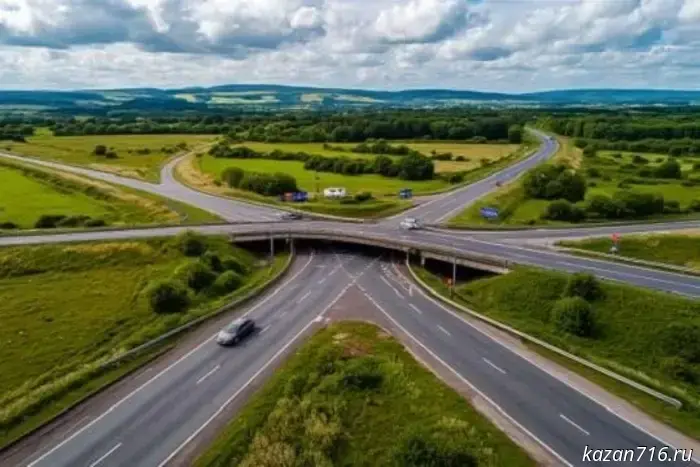 In Tatarstan, they want to build toll bypass roads around district centers.
The authorities of Tatarstan are preparing for a large-scale project to develop the road network through the implementation of several public-private partnership projects.
In Tatarstan, they want to build toll bypass roads around district centers.
The authorities of Tatarstan are preparing for a large-scale project to develop the road network through the implementation of several public-private partnership projects.
 What December 26 Hides: Superstitions, Holidays, and Historical Facts
We share interesting details and folk traditions of a day filled with significant events, past and present. 26.12.2025. Tetyushskie Zori newspaper. Republic of Tatarstan. Tetyushi.
Former Deputy Minister of Defense Yuri Sadovenko died at the age of 57.
Former Deputy Minister of Defense Yuri Sadovenko died at the age of 57.
What December 26 Hides: Superstitions, Holidays, and Historical Facts
We share interesting details and folk traditions of a day filled with significant events, past and present. 26.12.2025. Tetyushskie Zori newspaper. Republic of Tatarstan. Tetyushi.
Former Deputy Minister of Defense Yuri Sadovenko died at the age of 57.
Former Deputy Minister of Defense Yuri Sadovenko died at the age of 57.
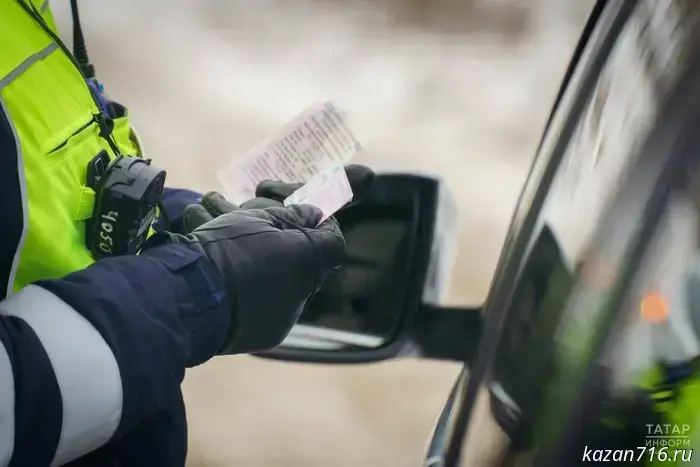 Driver's license replacement: when you don't have to pay the state fee in Tatarstan
When reissuing a driver's license, residents of the Republic of Tatarstan are, in most cases, required to pay the state fee. December 26, 2025. Tatar-Inform News Agency. Republic of Tatarstan. Kazan.
Driver's license replacement: when you don't have to pay the state fee in Tatarstan
When reissuing a driver's license, residents of the Republic of Tatarstan are, in most cases, required to pay the state fee. December 26, 2025. Tatar-Inform News Agency. Republic of Tatarstan. Kazan.
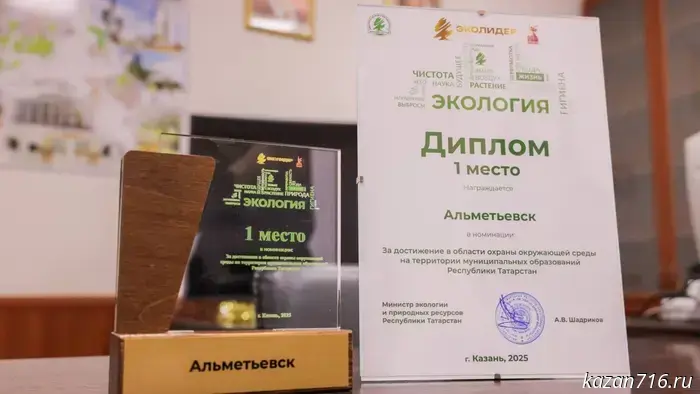 Almetyevsk won the "ECOleader" competition in the field of environmental protection.
The results of the republican "ECOlider" competition were announced in Kazan. The award ceremony for the winners took place at the "Piramida" Cultural and Entertainment Complex. 26 December 2025. Almetyevsky District. Republic of Tatarstan. Almetyevsk.
Almetyevsk won the "ECOleader" competition in the field of environmental protection.
The results of the republican "ECOlider" competition were announced in Kazan. The award ceremony for the winners took place at the "Piramida" Cultural and Entertainment Complex. 26 December 2025. Almetyevsky District. Republic of Tatarstan. Almetyevsk.
-in-the-Department-of-Folk-Art-of-the-Branch-“G-Ibragimov-Institute-of-Language-Literature-and-Arts”-of-the-Academy-of-Sciences-of-th.jpg) Vacancy to fill the position of Junior Research Fellow (0.5 FTE) in the Department of Folk Art of the Branch “G. Ibragimov Institute of Language, Literature and Arts” of the Academy of Sciences of the Republic of Tatarstan
1. Place and date of the competition.
The competition will be held on February 3, 2026, at: 26.12.2025 Street, Academy of Sciences of the Republic of Tatarstan, Kazan, Republic of Tatarstan.
Vacancy to fill the position of Junior Research Fellow (0.5 FTE) in the Department of Folk Art of the Branch “G. Ibragimov Institute of Language, Literature and Arts” of the Academy of Sciences of the Republic of Tatarstan
1. Place and date of the competition.
The competition will be held on February 3, 2026, at: 26.12.2025 Street, Academy of Sciences of the Republic of Tatarstan, Kazan, Republic of Tatarstan.
Weather forecast for December 26, 2025.
Urgent warning for 26 December 2025. Dear citizens! A message has been received from the Federal State Budgetary Institution "Department for Hydrometeorology and Environmental Monitoring of the Republic of Tatarstan": 25.12.2025. Apastovsky District. Republic of Tatarstan. Apastovo.