
Ammonites survived the mass extinction caused by the asteroid.
Dilyara Aminova
Weekend Editor
photo: Freepik
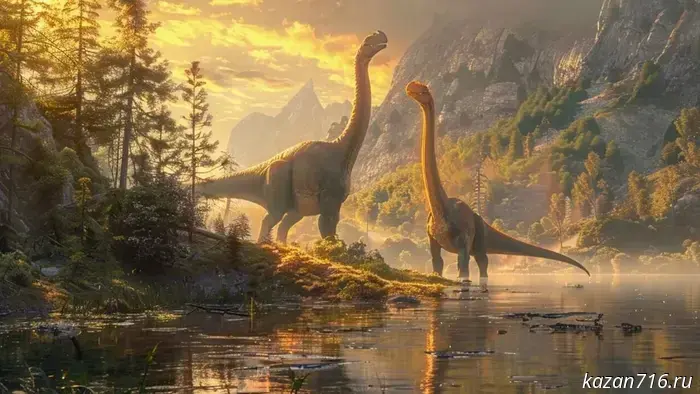
Approximately 66 million years ago on the Yucatán Peninsula in Mexico, a large asteroid collided with Earth, triggering global cataclysms and leading to radical changes in the planet’s biosphere. As a result of this impact, giant tsunamis with wave heights of up to 4.5 kilometers were generated, and significant volumes of dust and debris were thrown into the atmosphere. The dust clouds substantially reduced the intensity of solar radiation, causing considerable cooling. The extreme climatic conditions that arose as a result of this event caused the extinction of 75% of species, including the dinosaurs that dominated at the time, having evolved on Earth for more than 160 million years.
Modern scientific research shows that some marine organisms previously thought to be extinct may have withstood the consequences of this catastrophe. In particular, ammonites — highly developed marine mollusks with ornate spiral shells, morphologically similar to modern cephalopods such as octopuses and squids — were presumed to have disappeared along with the dinosaurs. However, the latest data indicate that ammonites not only survived the asteroid impact but continued to exist for tens of thousands of years afterward.
Ammonites inhabited seas and oceans for more than 350 million years, and their disappearance after the asteroid catastrophe has been the subject of numerous scientific studies. Scientists have suggested that this could be linked to the destruction of marine ecosystems and increased volcanic activity in the Deccan Traps region of India, which in turn led to higher acidity and pollution of the waters. These factors could have had a significant impact on marine fauna.
Ammonite fossils dated to the period after the asteroid impact have been found not only in geological layers formed directly as a result of the catastrophe but also in later deposits. However, many specialists doubted the authenticity of these finds, believing that ancient fossils could have been moved into younger geological layers by tectonic processes or water flows. The question of ammonite survival was actively discussed in the scientific community for two decades.
In 2023, a group of Polish researchers conducted a new, more detailed study of the sedimentary rocks surrounding ammonites found in Copenhagen, Denmark. Using modern electron microscopy techniques, the scientists analyzed ten fossil specimens belonging to three different ammonite species. The results of this study confirmed that the majority of the ammonites examined existed after the impact, indicating their ability to adapt to post-catastrophic environmental conditions.
The scientists determined that ammonites continued to exist for at least 68,000 years after the asteroid’s fall. Nevertheless, changes in global sea level and reductions in species diversity made these organisms more vulnerable to external pressures. It is possible that these last ammonite representatives were the final members of their kind on Earth, underscoring their significance for understanding the evolution of marine ecosystems in the Mesozoic era, writes progorodsamara.ru.
More news about the event:
Ammonites survived the mass extinction caused by the asteroid
Dilyara Aminova Weekend Editor
photo: Freepik
Approximately 66 million years ago on the Yucatán Peninsula in Mexico, a large asteroid collided with Earth, 12:19 08.01.2026 ProKazan.Ru - Kazan
There was a study: ammonites survived the mass extinction caused by the asteroid
News Service Author
About 66 million years ago an asteroid approximately 14 kilometers in diameter struck the Yucatán Peninsula. 11:45 08.01.2026 ProKazan.Ru - Kazan
News from neighboring regions on the topic:
The asteroid killed the dinosaurs, but not the ammonites: they survived the mass extinction
Anastasia Fedoseeva, Editor-in-Chief
Photo: Freepik
About 66 million years ago an asteroid approximately 14 kilometers in diameter struck the Yucatán Peninsula, leading to catastrophic changes in the biosphere. 08:23 08.01.2026 ProGorodSamara.Ru - Samara
Другие Новости Казани (Казань716)
 Two choreographic ensembles from Zainsk gave triumphant performances at the "Christmas Stars-2026" festival.
The veterans' labor ensemble "Zainochki" won gold, while the children's ensemble "Ulybka" won two silver medals and a bronze at the largest creative project of the year
The New Year holidays became a time of bright victories for Zainsk talents. January 8, 2026. Zainsk-Inform. Republic of Tatarstan. Zainsk.
Two choreographic ensembles from Zainsk gave triumphant performances at the "Christmas Stars-2026" festival.
The veterans' labor ensemble "Zainochki" won gold, while the children's ensemble "Ulybka" won two silver medals and a bronze at the largest creative project of the year
The New Year holidays became a time of bright victories for Zainsk talents. January 8, 2026. Zainsk-Inform. Republic of Tatarstan. Zainsk.
 Workshops and ice shows will be held in Kazan's parks.
On January 8, residents and visitors of Kazan are invited to festive events in the city's parks and public spaces. 08.01.2026. GTRK Tatarstan. Republic of Tatarstan. Kazan.
International diplomacy no longer yields results — the United States has countered it with the rule of force.
Photo: Official website of the President of Russia kremlin.ru
January 8 – SM.News news agency. 08.01.2026. Kazan.Sm.News. Republic of Tatarstan. Kazan.
Workshops and ice shows will be held in Kazan's parks.
On January 8, residents and visitors of Kazan are invited to festive events in the city's parks and public spaces. 08.01.2026. GTRK Tatarstan. Republic of Tatarstan. Kazan.
International diplomacy no longer yields results — the United States has countered it with the rule of force.
Photo: Official website of the President of Russia kremlin.ru
January 8 – SM.News news agency. 08.01.2026. Kazan.Sm.News. Republic of Tatarstan. Kazan.
 The Bolshebisyarinskaya Settlement Library informs
A "New Year's Mood" photo zone has been set up at the Bolshebisyarinskaya settlement library! 07.01.2026. Tetyushsky District. Republic of Tatarstan. Tetyushi.
The Bolshebisyarinskaya Settlement Library informs
A "New Year's Mood" photo zone has been set up at the Bolshebisyarinskaya settlement library! 07.01.2026. Tetyushsky District. Republic of Tatarstan. Tetyushi.
 In the Starochelninskoye rural settlement, young and old alike had fun at the celebration.
Events took place in the Staro-Chelninskoye rural settlement in honor of the Nativity of Christ. 08.01.2026. Nurlat-Inform. Republic of Tatarstan. Nurlat.
In the Starochelninskoye rural settlement, young and old alike had fun at the celebration.
Events took place in the Staro-Chelninskoye rural settlement in honor of the Nativity of Christ. 08.01.2026. Nurlat-Inform. Republic of Tatarstan. Nurlat.
 In Kazan, a warehouse on Tetsevskaya Street caught fire at night.
At night in Kazan a fire broke out at a warehouse on Tetsevskaya Street. This was reported by "Tatar-inform" citing the Main Directorate of the Russian Ministry of Emergency Situations for Tatarstan. 08.01.2026. TRC Tatarstan-New Century. Republic of Tatarstan. Kazan.
In Kazan, a warehouse on Tetsevskaya Street caught fire at night.
At night in Kazan a fire broke out at a warehouse on Tetsevskaya Street. This was reported by "Tatar-inform" citing the Main Directorate of the Russian Ministry of Emergency Situations for Tatarstan. 08.01.2026. TRC Tatarstan-New Century. Republic of Tatarstan. Kazan.
Ammonites survived the mass extinction caused by the asteroid.
Dilyara Aminova Weekend Editor Photo: Freepik Approximately 66 million years ago, a large asteroid collided with Earth on the Yucatán Peninsula in Mexico. January 8, 2026. ProKazan.Ru. Republic of Tatarstan. Kazan.