

Scientific discoveries and new technologies: how will our lives change in the next decade?
This article examines the key trends that will shape the 2030s.
Introduction: the world on the brink of a technological singularity
Science and technology develop nonlinearly, and the coming decade will be a time when many concepts that have existed only in laboratories and futuristic forecasts will enter our everyday life. The synergy of artificial intelligence, biotechnology, quantum computing and new materials will radically transform all spheres — from medicine and transportation to communications and our understanding of ourselves.
1. Artificial intelligence: from tool to partner
Personalized reality: AI will cease to be merely a recommendation algorithm. It will become a personal assistant managing our digital and partly physical environment. Based on analysis of health data, habits and goals, it will shape individualized educational trajectories, optimal work schedules, dietary regimens and even cultural programs.
Creative symbiosis: AI will enter creative professions as a co-author. The generation of scripts, musical compositions, design solutions and architectural projects will occur in a “human–neural network” dialogue. Value will shift from technical execution to conceptualization and posing unique challenges for AI.
Autonomous systems: Driverless transport (from taxis to freight), autonomous farms and factories will become commonplace. This will change urban planning (fewer parking spaces, different logistics), the labor market and urban ecology.
2. Biotechnology and medicine: the era of preventive and personalized health
Gene therapy and editing: Technologies like CRISPR/Cas9 will move beyond treating rare diseases. It will become possible to correct predispositions to common illnesses (cardiovascular, oncological, neurodegenerative) at the DNA level.
Digital twins and predictive analytics: Creating a virtual copy of a patient’s organism will allow doctors to test treatments and predict disease risks before their clinical manifestation. Medicine will become proactive rather than reactive.
Bioprinting and regeneration: 3D printing of tissues and simple organs for transplantation will enter clinical practice, solving the shortage of donor material and issues of implant rejection.
3. Quantum leap: computing, encryption and materials
Quantum computers will solve problems beyond the reach of classical supercomputers: accurate molecular modeling for developing new drugs and materials, optimization of global logistics systems, breaking modern cryptographic protocols and creating absolutely secure communication channels (quantum cryptography).
New materials with tailored properties, created through quantum modeling, will transform industry: ultralight and ultra-strong ceramics, room-temperature superconductors, self-healing polymers.
4. Energy and ecology: sustainable development as a foundation
Cost reductions and increased efficiency of renewable energy: Solar and wind power, energy storage (hydrogen, new batteries) will become economically more attractive than fossil fuels. Technologies for direct air capture of CO2 will appear.
Green urbanism: “Smart” cities will be built on circular economy principles with minimal carbon footprints, automated resource management (water, lighting, heating) and vertical farms supplying residents with fresh produce.
5. Social and ethical challenges
Technological progress will give rise to complex questions:
Inequality: The risk of deepening the digital and biological divide between those who have access to enhancements of cognitive and physical abilities and those who do not.
Privacy: Full data transparency for AI vs. the right to privacy.
Transformation of labor: The disappearance of many professions and the need to create a new education system focused on developing distinctly human qualities — creativity, empathy, critical thinking.
Legal status of AI: Defining liability for decisions made by autonomous systems.
Conclusion: adaptation as the key skill
The next ten years will be a period not of evolutionary changes but of a series of managed revolutions. The main resource will not be information (there will be an abundance of it), but the ability to adapt, to engage in continuous learning, and to interact with technologies in a meaningful, ethical way. The future is already being shaped today in scientific laboratories and startups. Our task is to be ready to engage in dialogue with this new world while preserving our humanity in an era of unprecedented technological possibilities.
Alexander Isakov
More news about the event:
Scientific discoveries and new technologies: how our lives will change in the next decade
This article examines the key trends that will shape the 2030s. 15:06 09.01.2026 News of Zainsk - Zainsk
Scientific discoveries and new technologies: how our lives will change in the next decade
This article examines the key trends that will shape the 2030s. 14:57 09.01.2026 Zainsk-Inform - Zainsk
News from neighboring regions on the topic:
Artificial intelligence is not yet rushing to storm Sevastopol
Sevastopol turned out to be among the regions with minimal spending on the implementation and use of artificial intelligence technologies. 14:47 08.01.2026 RuInformer.Com - Sevastopol

Другие Новости Казани (Казань716)
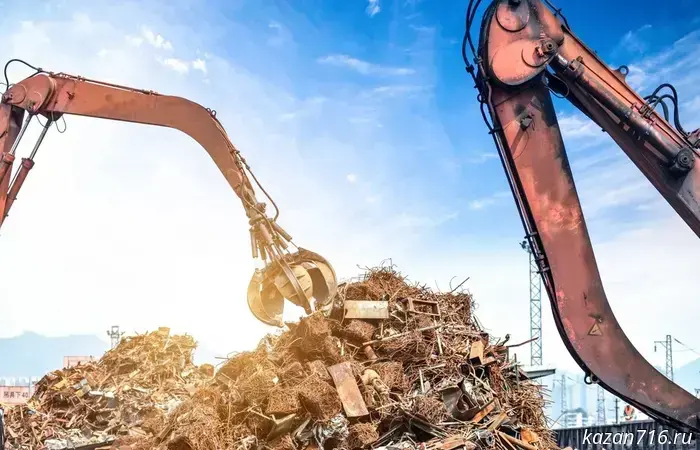 Dump sites causing damage of over 765,000 rubles were discovered in Almetyevsk.
Environmental inspectors discovered several unauthorized dumps in Almetyevsk that caused environmental damage exceeding 765,000 rubles. January 9, 2026. GTRK Tatarstan. Republic of Tatarstan. Kazan.
Dump sites causing damage of over 765,000 rubles were discovered in Almetyevsk.
Environmental inspectors discovered several unauthorized dumps in Almetyevsk that caused environmental damage exceeding 765,000 rubles. January 9, 2026. GTRK Tatarstan. Republic of Tatarstan. Kazan.
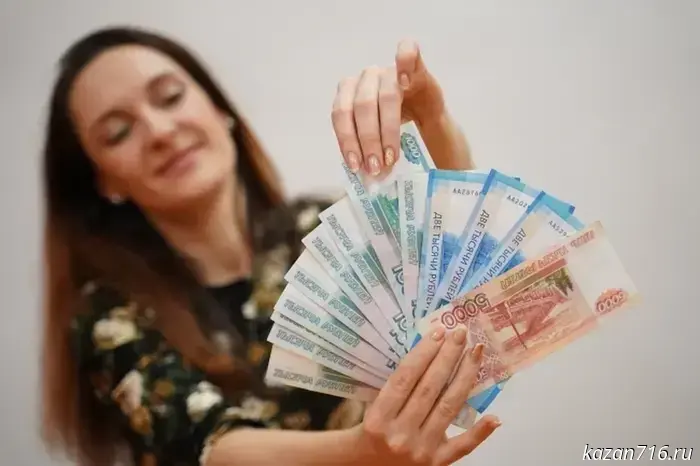 In 2026, residents of Tatarstan can expect indexation of key social payments.
From January 1, insurance pensions will increase by 7.6%
From February 1, benefits to families with children will increase. January 9, 2026. Komsomolskaya Pravda Kazan. Republic of Tatarstan. Kazan.
In 2026, residents of Tatarstan can expect indexation of key social payments.
From January 1, insurance pensions will increase by 7.6%
From February 1, benefits to families with children will increase. January 9, 2026. Komsomolskaya Pravda Kazan. Republic of Tatarstan. Kazan.
 In Chistopol, an unextinguished cigarette caused a fire in a two-story house.
In Chistopol, firefighters rescued a 72-year-old man. The fire broke out in building No. 17 on Studencheskaya Street, in an apartment on the first floor of a two-story apartment building. 09.01.2026. Tatar-inform news agency. Republic of Tatarstan. Kazan.
In Chistopol, an unextinguished cigarette caused a fire in a two-story house.
In Chistopol, firefighters rescued a 72-year-old man. The fire broke out in building No. 17 on Studencheskaya Street, in an apartment on the first floor of a two-story apartment building. 09.01.2026. Tatar-inform news agency. Republic of Tatarstan. Kazan.
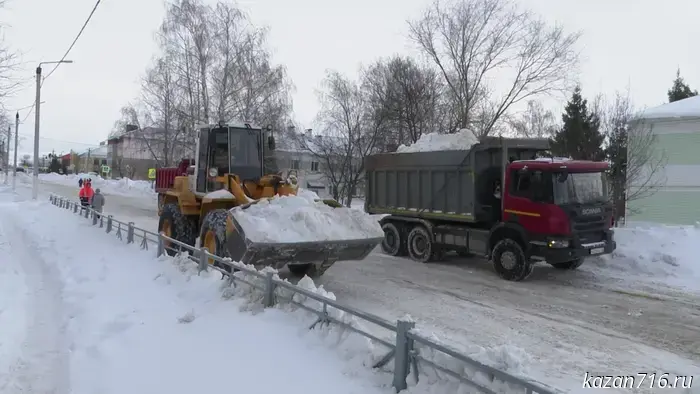 In Nurlat, a road on one of the central streets will be closed tomorrow.
Tomorrow, January 10, a road on one of the central streets in Nurlat will be closed. 09.01.2026. Nurlatsky District. Republic of Tatarstan. Nurlat.
In Nurlat, a road on one of the central streets will be closed tomorrow.
Tomorrow, January 10, a road on one of the central streets in Nurlat will be closed. 09.01.2026. Nurlatsky District. Republic of Tatarstan. Nurlat.
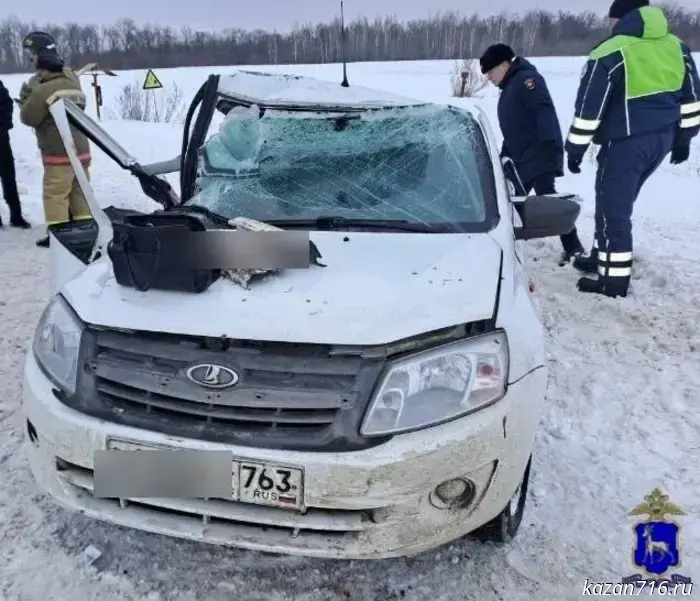 A crash on the Kazan–Buinsk–Ulyanovsk highway claimed the lives of two occupants of a passenger car.
Two people were killed as a result of a collision between a passenger car and a truck on the Kazan–Buinsk–Ulyanovsk highway in the Samara Region. 09.01.2026. Tatar-Inform News Agency. Republic of Tatarstan. Kazan.
Kudermetova will not play at the Australian Open.
Tatarstan tennis player Veronika Kudermetova will not compete at the Australian Open. 09.01.2026. Business Online. Republic of Tatarstan. Kazan.
A crash on the Kazan–Buinsk–Ulyanovsk highway claimed the lives of two occupants of a passenger car.
Two people were killed as a result of a collision between a passenger car and a truck on the Kazan–Buinsk–Ulyanovsk highway in the Samara Region. 09.01.2026. Tatar-Inform News Agency. Republic of Tatarstan. Kazan.
Kudermetova will not play at the Australian Open.
Tatarstan tennis player Veronika Kudermetova will not compete at the Australian Open. 09.01.2026. Business Online. Republic of Tatarstan. Kazan.
Scientific discoveries and new technologies: how will our lives change in the next decade?
This article examines the key trends that will shape the 2030s. January 9, 2026. Zainsk-Inform. Republic of Tatarstan. Zainsk.