
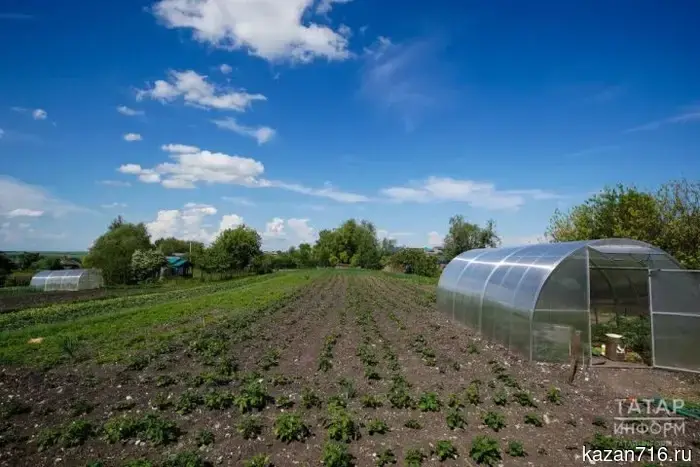
In Tatarstan, experts from the Agricultural Production Center discussed the "Horoscope" of dacha compatibility of cultures.
Experts from the branch of the Federal State Budgetary Institution "Center for Assessment of Safety and Quality of Agricultural Products" (FGBU "TsOK APK") in the Republic of Tatarstan shared tips on how to combine vegetables in garden beds to achieve a good harvest.
DIARY OF A GARDENER When you have stocked up on seeds and are ready to start the summer season, the equally important stage of planning future plantings begins. Experienced gardeners keep a special diary in which they annually record the planting scheme considering crop rotation. Agronomist experts from the testing laboratory of the branch of the Federal Center for Assessment of Safety and Quality of Agricultural Products (FGBU "TsOK APK") in the Republic of Tatarstan believe that the crop rotation system is often underestimated, considered complicated and unjustified. Meanwhile, applying simple rules of crop alternation leads to a noticeable increase in yield. – To account for plantings, it is sufficient to create a list of vegetables planned for sowing, distribute them across the beds, and in the following season start alternating them considering different botanical families. In place of nightshades (tomatoes, peppers, eggplants) and gourds (cucumbers, pumpkins, zucchinis) on the same bed, you can plant leafy greens (dill, onions, lettuce, spinach) and any types of cabbage family plants, which, in turn, will be good predecessors for all root vegetables (beets, carrots) and bulbous plants, such as garlic, after which you can confidently sow legumes – peas and beans, – noted the head of the testing laboratory of the branch of FGBU "TsOK APK" in the Republic of Tatarstan, Ildar Yakupov. Experts are confident that crop rotation will yield tangible results even on a small garden plot. Annual crop changes at the planting site will help avoid soil "fatigue," prevent the spread of pests and diseases. HOW AND WHY TO "FRIEND" VEGETABLES IN BEDS An interesting method of growing vegetables was once proposed by American scientist Mel Bartholomew. In his book "Square Foot Gardening," he described a method of growing in "squares," dividing the bed into square feet – 30 by 30 cm – and alternating different vegetable crops. The effectiveness of such plantings is justified by space-saving, high yields, and ease of care. Currently, many gardeners have adapted this method to the conditions of their plots and plant crops considering their compatibility. The concept of allelopathy (the proximity of different crops) applies to all living organisms and represents the process of mutual influence between different species. The main acting factor is the chemical substances released by plants through their root systems, leaves, and stems. According to experts, combining plants in a single bed is an excellent tool for increasing yield and flavor quality of vegetables due to their mutual influence on each other. – A significant advantage is the reduction of weeds, as well as biological protection against pests and diseases. It is enough to recall the folk method of pest control using marigolds: by planting these flowers around the perimeter, gardeners get rid of aphids, whiteflies, Colorado beetles, onion flies, and other insects that harm the harvest. All thanks to thiophenes – substances found in the roots and leaves, and essential oils that repel "flying and crawling," – said Natalia Morsakova, quality manager of the branch of FGBU "TsOK APK" in the Republic of Tatarstan. As practice shows, this influence can have both positive and negative consequences, as there are companion plants and antagonist plants in nature. DILL IS NOT A FRIEND TO CARROTS When planning a bed, experts from the TsOK APK branch advise considering several important factors. First, determine which crop will be the main one, i.e., the one for which companions will be selected. At the same time, it is necessary to calculate the ripening times and growth rates of these crops so that the plants have enough sunlight and moisture, and there is enough space for the root system, so that "neighbors" with shallow root systems and deep roots can "live" next to each other. The selection of companions and undesirable neighbors will begin with the most popular vegetables. Potatoes are demanding in terms of nitrogen content in the soil. Good neighbors for them will be leguminous crops – peas, beans, chickpeas, as the nodule bacteria on the roots of these plants release the nitrogen necessary for the vegetable. The tubers will receive enough nutrition, and gardeners will be pleased with the harvest. If onions or garlic are grown nearby, they can protect potatoes from late blight – a common fungal disease. Tomatoes, when planted with basil, parsley, mint, and thyme, will become tastier due to the action of essential oils and phytoncides. Agronomists advise not to plant dill, fennel, and also their close relatives – eggplants, potatoes, and peppers – near this vegetable. Like potatoes, cucumbers will be happy to have legumes as neighbors – a source of nitrogen in the soil, and will also get along with lettuce, celery, dill, and beets. However, it is not recommended to combine plantings with tomatoes and potatoes. The taste properties of cucumbers are positively influenced by radishes planted nearby. Beets are one of the most undemanding crops in terms of companionship. They easily get along with most vegetables – carrots, radishes, cabbage, onions. However, the yield will be worse if legumes are nearby. The growth of carrots will be positively influenced by lettuce, onions, radishes, radishes, dill, peas, garlic, and spinach. Lettuce and spinach between carrot rows will hinder weed growth and retain sufficient moisture for the vegetables in the soil, while onions and garlic will repel the enemy – the carrot fly. By the way, carrots will also protect onions from the onion fly in return. Among the neighbors of white cabbage can be mint, celery, dill, spinach, and beets. These crops can be placed between the rows so that they do not compete for moisture and sunlight. Garlic and onions will stand guard over the cabbage against pests, such as whiteflies and slugs. Experts note: tomatoes should not be planted near cabbage – they slow its growth – and parsley, which may adversely affect the formation of heads.
BIOLOGICAL PROTECTORS The principles of allelopathy also allow avoiding excessive use of chemical preparations for protecting plants from pests and pathogens. – Perennial and annual herbs – sage, rosemary, basil, coriander, peppermint, and lemon balm – are usually planted between rows of vegetable crops. For example, near potatoes – to protect against Colorado beetles, near cabbage – to repel whiteflies and cutworms. The phytoncides contained in such plants have a positive effect on the soil, as they suppress the development of pathogenic microorganisms and "feed" the soil with organic acids, – said Ildar Yakupov, head of the testing laboratory of the branch of FGBU "TsOK APK" in the Republic of Tatarstan. Experienced gardeners have long noticed the positive influence of marigolds when planted together with tomatoes and eggplants – the aroma of the flowers repels aphids and protects against fungal diseases, while a small flowerbed of lavender among strawberries or cabbage will repel slugs and snails.
Author
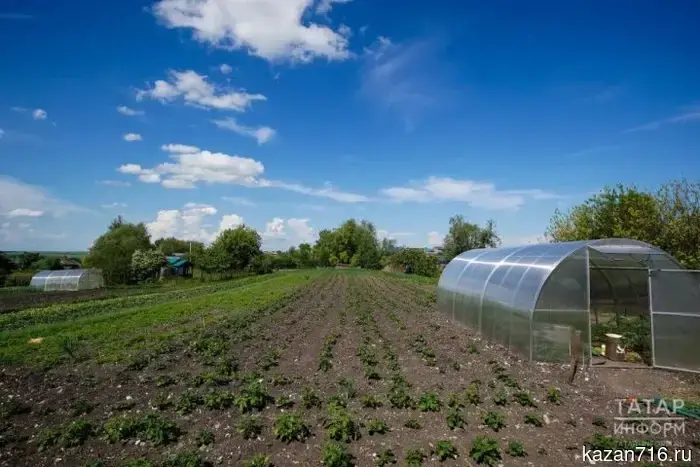
Другие Новости Казани (Казань716)
 The Minister of Youth of Tatarstan, Azat Kadyrov, urged to turn off the internet for children at night.
The Minister of Youth Affairs of Tatarstan, Azat Kadyrov, proposed to legally restrict minors' access to the internet at night. He made this statement at the "United Russia" forum "There is a Result," reports "Business Online." "We consider it necessary to introduce legislative time restrictions...
The Minister of Youth of Tatarstan, Azat Kadyrov, urged to turn off the internet for children at night.
The Minister of Youth Affairs of Tatarstan, Azat Kadyrov, proposed to legally restrict minors' access to the internet at night. He made this statement at the "United Russia" forum "There is a Result," reports "Business Online." "We consider it necessary to introduce legislative time restrictions...
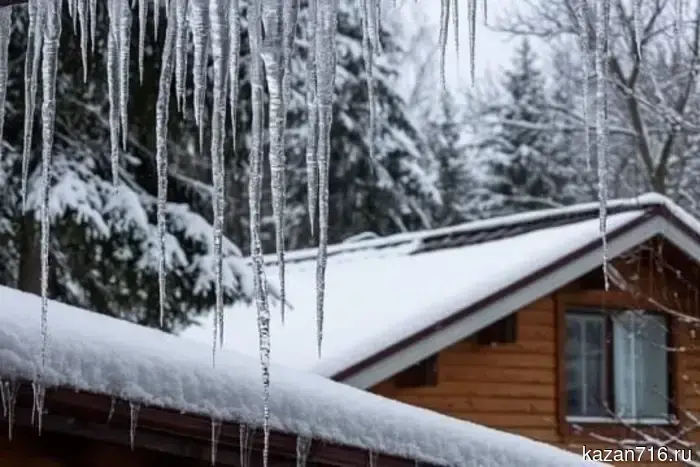 Consequences of snowfalls - In Tatarstan, preparations for flooding are actively underway, with 5,700 houses at risk.
The consequence of an abnormally snowy winter in the Republic of Tatarstan may be a large-scale spring flood. To date, reports from residents about flooding have already started to come in regularly.
Consequences of snowfalls - In Tatarstan, preparations for flooding are actively underway, with 5,700 houses at risk.
The consequence of an abnormally snowy winter in the Republic of Tatarstan may be a large-scale spring flood. To date, reports from residents about flooding have already started to come in regularly.
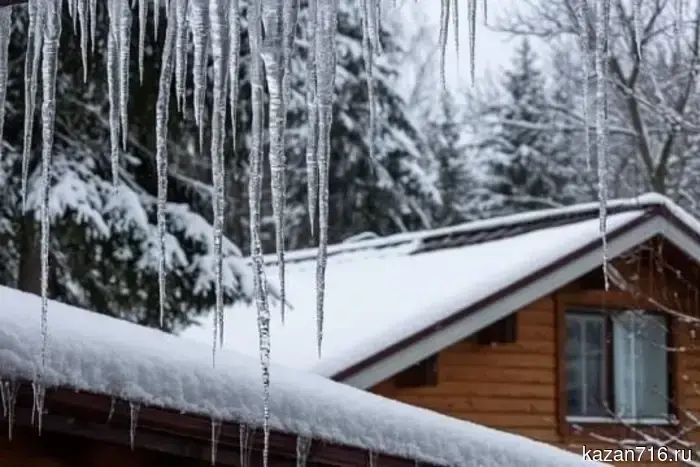 Consequences of snowfalls - In Tatarstan, preparations for flooding are actively underway, with 5,700 houses at risk.
The consequence of an abnormally snowy winter in the Republic of Tatarstan may be a large-scale spring flood. To date, reports from residents about flooding have already begun to come in regularly.
Consequences of snowfalls - In Tatarstan, preparations for flooding are actively underway, with 5,700 houses at risk.
The consequence of an abnormally snowy winter in the Republic of Tatarstan may be a large-scale spring flood. To date, reports from residents about flooding have already begun to come in regularly.
 Drobnitsky: The Kirk case remains in the realm of conspiratorial manipulations.
Photo: LLC "SDK"
March 25 - IA SM.News. According to one of the conspiracy theories, there is an "Israeli trace" in the case, 03.25.2026. Kazan.Sm.News. Republic of Tatarstan. Kazan.
Drobnitsky: The Kirk case remains in the realm of conspiratorial manipulations.
Photo: LLC "SDK"
March 25 - IA SM.News. According to one of the conspiracy theories, there is an "Israeli trace" in the case, 03.25.2026. Kazan.Sm.News. Republic of Tatarstan. Kazan.
 Leila Fazleeva thanked cultural workers for their contribution to the development of Russia and Tatarstan.
The Deputy Prime Minister of Tatarstan, Leila Fazleeva, congratulated cultural workers on their professional holiday and expressed her gratitude for their contribution to the development of society. 25.03.2026. IA Tatar-inform. Republic of Tatarstan. Kazan.
Leila Fazleeva thanked cultural workers for their contribution to the development of Russia and Tatarstan.
The Deputy Prime Minister of Tatarstan, Leila Fazleeva, congratulated cultural workers on their professional holiday and expressed her gratitude for their contribution to the development of society. 25.03.2026. IA Tatar-inform. Republic of Tatarstan. Kazan.
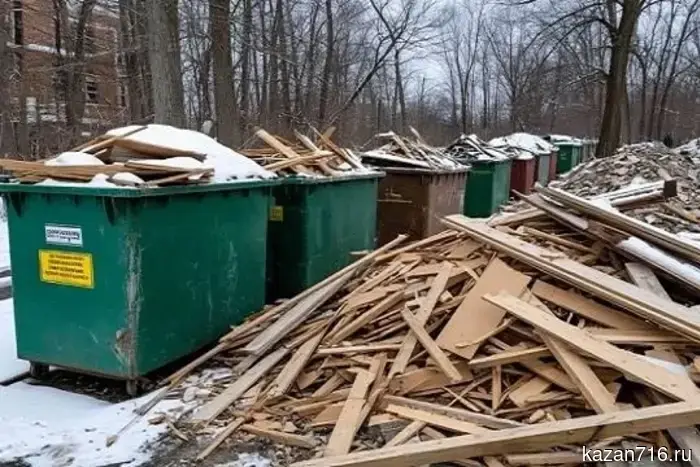 In Kazan, "gray carriers" were caught dumping construction waste into regular containers.
Offenders who were dumping construction waste into regular containers were caught at the bunker sites on Udrainaya and Veresaev streets in the Aviastroitelny district.
In Kazan, "gray carriers" were caught dumping construction waste into regular containers.
Offenders who were dumping construction waste into regular containers were caught at the bunker sites on Udrainaya and Veresaev streets in the Aviastroitelny district.
In Tatarstan, experts from the Agricultural Production Center discussed the "Horoscope" of dacha compatibility of cultures.
Experts from the branch of the Federal State Budgetary Institution "Center for Competence in Agro-Industrial Complex" in the Republic of Tatarstan shared tips on how to combine vegetables in garden beds to achieve a good harvest. 25.03.2026. Bavly-Inform. Republic of Tatarstan. Bavly.