
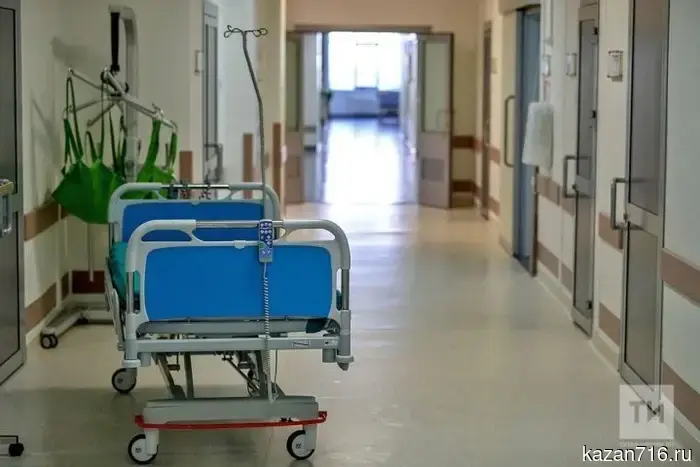
The Ministry of Health of Tatarstan has expanded the screening program with new tests.
In Tatarstan, large-scale work continues to preserve the health of residents. At a briefing in the Government House of the republic, representatives of the Ministry of Health summarized the results of the health screenings from the previous year and discussed the innovations that await the people of Tatarstan in 2026. The program includes new blood tests, additional examinations for women, and a special order of medical assistance for participants in the special military operation.
Health screenings confidently prove their effectiveness as one of the main tools for preserving the health of the population. Regular preventive examinations allow for the early detection of diseases when treatment yields the best results, and in some cases, can even prevent the development of serious ailments. This work is given special attention in Tatarstan, and in 2026, the program will become even more comprehensive and technological. At the briefing held in the Government House of the republic, the Minister of Health of Tatarstan, Almir Abashev, announced the planned indicators for the current year. As part of the health screenings for the adult population, medical professionals intend to conduct more than 1 million 483 thousand examinations. Additionally, over 5 thousand residents of the republic will undergo in-depth health screenings, which are indicated for those who have recovered from coronavirus infection, and about 195 thousand people are awaiting preventive examinations.
A separate direction being implemented this year as part of the national project "Family" is the screening for reproductive health. More than 557 thousand people will participate in this in Tatarstan. This is an important measure aimed at preserving the health of future mothers and fathers, and in the long term, improving the demographic situation in the region. The examination includes consultations with specialist doctors, laboratory and instrumental studies that allow for the assessment of reproductive function and timely identification of potential problems.
New tests for early diagnosis
The main innovations of 2026 are related to the expansion of the list of laboratory studies. Now, residents of the republic aged 18 to 39 will be able to check their lipid profile once every six years. This test allows for the assessment of various fractions of fats in the blood—total cholesterol, low-density and high-density lipoproteins, triglycerides—and identifies the risks of developing atherosclerosis. This dangerous disease involves the formation of plaques on the walls of blood vessels, narrowing the lumen and hindering blood flow, which can ultimately lead to a heart attack or stroke. Previously, the lipid profile was only checked for citizens over 40 years old. Lowering the age threshold to 18 will allow for the identification of predispositions to cardiovascular diseases at earlier stages. Doctors emphasize that high cholesterol levels can be observed even in young people, especially in the presence of hereditary predisposition, poor nutrition, or a sedentary lifestyle. Timely identification of these disorders allows for lifestyle adjustments and helps avoid serious consequences in the future.
Another important innovation is the test for lipoprotein levels. This indicator helps doctors assess the risk of heart attacks even when cholesterol levels in the blood remain within normal limits. Lipoprotein is a special particle that contributes to the formation of blood clots and atherosclerotic plaques. Its elevated levels can be inherited and are an independent risk factor for cardiovascular catastrophes. For many patients, this study will serve as additional insurance against heart attacks and strokes, which remain one of the leading causes of mortality in the country.
For women aged 21 to 49, the screening program includes a test for the presence of the human papillomavirus (HPV). This study is conducted once every five years and is significant because certain types of this virus are directly linked to the risk of developing cervical cancer. HPV is one of the most common sexually transmitted infections, and most sexually active individuals encounter it during their lives. However, in most cases, the body manages to cope with the virus on its own. The danger lies only in persistent infections caused by oncogenic types of the virus. Early detection of the virus allows for timely measures to be taken, enhancing monitoring and preventing the development of oncological diseases.
Special attention to defenders of the Fatherland
A separate block of work announced by the minister concerns the medical support for participants in the special military operation. For this category of citizens, special deadlines for health screenings have been established. After returning to Tatarstan, soldiers undergo a complete medical examination within one month.
For those who require additional examinations or consultations with specialists based on the results of the first stage of health screenings, shortened waiting times apply. For urban residents, such consultations are organized no later than three days, and for rural residents—no later than ten days. This approach allows for the prompt assessment of the health status of those returning from the front lines and, if necessary, to begin treatment or rehabilitation without delays. Doctors note that participants in the special military operation may face specific health issues, including post-traumatic stress disorders, consequences of injuries, and concussions. Timely diagnosis and a comprehensive approach to rehabilitation help them return to a full life more quickly. In the republic, a medical support system has been created for this category of citizens, which includes not only health screenings but also access to high-tech medical care, sanatorium-resort treatment, and psychological support.
Results of the previous year and plans for the future
During the briefing, the results of the previous period were also summarized. Health screenings in Tatarstan are reaching more residents, and the results of this work are already noticeable: the detection of diseases at early stages is increasing, and the number of advanced cases is decreasing, especially for socially significant ailments such as oncological and cardiovascular diseases.
In 2026, the focus is not only on expanding the list of studies but also on increasing the accessibility of preventive measures. Medical prevention offices operate in clinics, where consultations on healthy lifestyles can be obtained, risk factors can be adjusted, and necessary examinations can be conducted. For residents of remote settlements, outreach forms of work are organized, where medical teams come to villages and towns to conduct examinations on-site.
How to undergo health screenings
Medical professionals remind that all citizens of Russia can undergo health screenings for free with their compulsory health insurance policy. To do this, one must contact the clinic at their place of residence. The schedule for prevention offices and the days allocated for health screenings can be clarified at the registration desk or on the websites of medical institutions. It is necessary to bring a passport and the compulsory health insurance policy.
The first stage of health screenings includes a questionnaire, measurement of height, weight, blood pressure, determination of cholesterol and glucose levels in the blood, electrocardiography, fluorography, and a therapist's examination. Based on indications, the patient may be referred to the second, more in-depth stage, which may include consultations with specialists and additional instrumental studies.
New tests that will appear in the program this year make health screenings even more informative and allow for the identification of risk factors that may have previously gone unnoticed. Timely diagnosis is an opportunity to adjust lifestyle in time, begin preventive treatment, and avoid serious health problems in the future. The Republican Ministry of Health urges the residents of Tatarstan to take responsibility for their health and undergo preventive examinations regularly.
Let us remind you that health screenings in Russia are conducted as part of the national project "Long and Active Life."
Diana Salikhzanova
Другие Новости Казани (Казань716)
 In Tatarstan, the acceptance of applications for first grades will begin on April 1.
The enrollment campaign for children entering the first grade starts on April 1. The campaign will last until June 30 for those living in the area assigned to a specific school, as well as for those with preferential rights. 24.03.2026. Ministry of Education. Republic of Tatarstan. Kazan.
The subcommittee on the preservation of historical memory under the State Council of the Russian Federation held its first meeting.
The subcommittee for the preservation of historical memory, organized within the framework of the Commission of the State Council of the Russian Federation on the direction of "Culture and traditional spiritual and moral values," held its first meeting. 25.03.2026. IA Tatar-inform. Republic of Tatarstan. Kazan.
In Tatarstan, the acceptance of applications for first grades will begin on April 1.
The enrollment campaign for children entering the first grade starts on April 1. The campaign will last until June 30 for those living in the area assigned to a specific school, as well as for those with preferential rights. 24.03.2026. Ministry of Education. Republic of Tatarstan. Kazan.
The subcommittee on the preservation of historical memory under the State Council of the Russian Federation held its first meeting.
The subcommittee for the preservation of historical memory, organized within the framework of the Commission of the State Council of the Russian Federation on the direction of "Culture and traditional spiritual and moral values," held its first meeting. 25.03.2026. IA Tatar-inform. Republic of Tatarstan. Kazan.
 Folk signs for March 25, 2026: what can and cannot be done
Find out why March 25 is called Theophan's Day and how to "appease" spring in Yelabuga. 03/25/2026. Novaya Kama Newspaper. Republic of Tatarstan. Yelabuga.
Folk signs for March 25, 2026: what can and cannot be done
Find out why March 25 is called Theophan's Day and how to "appease" spring in Yelabuga. 03/25/2026. Novaya Kama Newspaper. Republic of Tatarstan. Yelabuga.
The Ministry of Health of Tatarstan has expanded the screening program with new tests.
In Tatarstan, large-scale work continues to preserve the health of residents. 24.03.2026. Volzhskaya Nov' (Volga News). Republic of Tatarstan. Verkhny Uslon.