
The Ministry of Digital Development of the Russian Federation demanded that platforms restrict access when VPN is enabled.
The Ministry of Digital Development of the Russian Federation held a meeting with the heads of companies owning the largest Russian internet resources by the MAU (Monthly Active Users) metric. As reported by several sources familiar with the meeting's proceedings to "RBK," the head of the agency, Maksut Shadaev, stated that by April 15, companies need to restrict access to their platforms for users with VPN enabled. One of the interlocutors clarified that this date is considered more of a guideline than a strict deadline. According to sources, representatives from over 20 companies participated in the meeting, including Sberbank, Yandex, VK, Wildberries & Russ, Ozon, Gazprom-Media, Avito, X5, 2GIS, ivi, Wink, HeadHunter, LitRes, CIAN, Lamoda, Magnit Market, Vseinstrumenty.ru, Gismeteo, Rambler, Lemana Pro, Tutu, Vkusvill, and Lenta. As RBK's sources claim, companies are expected to be provided with a list of IP addresses of VPN services previously identified by Roskomnadzor and recognized as violating Russian legislation. In addition, participants have already been given methodological recommendations describing ways to independently identify and block VPNs, including those services that have not previously come to the regulator's attention. The authorities' intention is that this should allow for the restriction of new VPN services as well. Information about them will need to be reported to Roskomnadzor for further inclusion in the blocking lists, covering both large and less popular resources. One source characterized the approach as effectively involving businesses in the fight against VPNs using the technical capabilities of the platforms themselves. Another interlocutor explained that the need for companies' participation is related to the rapid spread of VPN services. He also noted that failure to comply with the requirements could lead to enforcement measures, including exclusion from "white lists" and loss of IT benefits. According to a source from RBK in the media market, a government decree may be adopted by April 15 that will formalize the monitoring of the availability of Russian services through VPNs. If a resource remains accessible, it may lose its IT accreditation, be excluded from "white lists," and from the list of software mandatory for pre-installation on devices in Russia. According to interlocutors, the restrictions will not apply to corporate VPNs if they are not used to access prohibited resources. However, they emphasize that reliably distinguishing corporate traffic from other types of VPN is technically difficult, which creates the risk of erroneous blocks and may affect legitimate connections. As a targeted outcome, the authorities expect that by mid-April, the functionality of Russian services will not work when using VPNs or other circumvention tools. The Ministry of Digital Development, according to sources, plans to provide companies with both "white" and "black" lists of VPNs. Meeting participants note that most companies are technically ready to comply with the requirements, but this will require system adjustments.
Some companies raised the issue of the potential impact of the new rules on user experience and competitive conditions between platforms. According to interlocutors, VPN services are already using methods to bypass filtering, including substituting IP addresses from "white lists," which allows them to circumvent restrictions. This could lead to a situation where large platforms find themselves at a disadvantage compared to smaller services or foreign resources, such as Google, which Russian regulators can only influence to a limited extent. At the same time, as sources note, the authorities seek to avoid a scenario of introducing administrative or criminal liability for using VPNs. Some participants also pointed out possible problems with Roskomnadzor's methodology, which relies on probabilistic models to determine VPN traffic. They stated that the system could mistakenly classify ordinary connections from other countries as VPN usage, creating risks of false positives. Media market representatives note that such errors could be critical for entertainment services, including online cinemas. Earlier, Forbes reported that the Ministry of Digital Development recommended that the largest digital platforms, including VK, Ozon, Avito, Wildberries, and Yandex, restrict access for users with VPN enabled.
More news about the event:
RBK: The Ministry of Digital Development asked platforms to help block services that circumvent restrictions.
The Ministry of Digital Development of the Russian Federation requested the largest Russian platforms by audience to help block services that circumvent restrictions. 19:34 02.04.2026 Business Online - Kazan
The Ministry of Digital Development of the Russian Federation demanded that platforms restrict access when VPN is enabled.
The Ministry of Digital Development of the Russian Federation held a meeting with the heads of companies owning the largest Russian internet resources by the MAU (Monthly Active Users) metric. 18:19 02.04.2026 IA Tatar-inform - Kazan
News from neighboring regions on the topic:
Tula students were explained why VPN can be dangerous.
Tula students were informed about the hidden threats of VPN.
An open lesson was held at the Tula College of Construction and Industry Technologies as part of the "Digital Literacy" project. 21:58 02.04.2026 IA Tula Press.Ru - Tula
From April 15, access to websites via VPN may be restricted: what will change for users.
The Ministry of Digital Development of Russia discussed with the largest internet companies measures to restrict access to their services for users using VPN services included in Roskomnadzor's "black list." 23:49 02.04.2026 OTV - Yekaterinburg
The police did not check and will not check Russians' phones for the presence of VPN services.
Photo: IA "Novomoskovsk Today."
This was reported by the department for organizing the fight against illegal use of information and communication technologies of the Ministry of Internal Affairs of the Russian Federation. 21:24 02.04.2026 IA Novomoskovsk Today - Novomoskovsk
In Russia, a fight against VPN will begin on April 15.
It has become clear what the authorities have devised against those who circumvent restrictions.
The Ministry of Digital Development held a meeting with the heads of more than 20 largest Russian online platforms and demanded to restrict access for users by April 15. 05:46 03.04.2026 KamchatkaMedia.Ru - Petropavlovsk-Kamchatsky
Large resources and stores will block users with VPN.
In case of non-compliance with the requirement, companies may lose IT benefits and their place in the "white lists."
The Ministry of Digital Development held a meeting with the heads of the largest Russian internet resources. 23:06 02.04.2026 IA Amitel - Barnaul
The police commented on the news about mass checks of phones for VPN.
The news turned out to be fake.
The Ministry of Internal Affairs of Russia denied reports of checks on citizens' phones for the presence of VPN and messengers. 23:09 02.04.2026 Om1.Ru - Omsk
Digital barrier: authorities want to shift the fight against VPN to the largest online platforms.
According to sources, starting from mid-April, restrictions may be introduced for users with VPN enabled. 19:04 02.04.2026 Yugopolis - Krasnodar
The Ministry of Internal Affairs denied reports of checking phones due to the use of VPN.
The department also stated that the mere use of VPN services does not violate current Russian legislation. 18:58 02.04.2026 Top68.Ru - Tambov
Popular services and marketplaces may be involved in blocking VPN.
Photo: Pavel Borisenko / MR7.
The head of the Ministry of Digital Development, Maksut Shadaev, at a meeting with business representatives, demanded that popular companies restrict access to their online platforms for users with VPN applications enabled. 18:22 02.04.2026 My District - St. Petersburg
Stores and popular resources will be involved in blocking VPN.
Photo: Dmitry Kandinsky / vtomske.ru.
The Ministry of Digital Development asked the largest internet platforms in Russia to help block VPN. 22:17 02.04.2026 News.VTomske.Ru - Tomsk
RBK: Large Russian platforms called to restrict access for clients with VPN.
Photo: depositphotos/prykhodov.
The head of the Ministry of Digital Development of the Russian Federation, Maksut Shadaev, held a meeting with the heads of the largest Russian resources by the number of active users. 17:58 02.04.2026 M24.Ru - Moscow
The Ministry of Internal Affairs explained whether they check phones for the presence of VPN.
The Ministry of Internal Affairs of Russia denied information that police check citizens' phones for the use of VPN services. 18:52 02.04.2026 Gubdaily.Ru - Petrozavodsk
The Ministry of Digital Development wants large websites and services to start fighting VPN themselves.
The Ministry of Digital Development is discussing with the largest internet companies the involvement of businesses in restricting access to VPN services. 17:49 02.04.2026 In the Know - Voronezh
In Russia, a war with VPN will begin on April 15.
It has become clear what the authorities have devised against those who circumvent restrictions.
The Ministry of Digital Development held a meeting with the heads of more than 20 largest Russian online platforms and demanded to restrict access for users by April 15. 21:38 02.04.2026 KrasnoyarskMedia - Krasnoyarsk
In Russia, a war with VPN will begin on April 15.
It has become clear what the authorities have devised against those who circumvent restrictions.
The Ministry of
Другие Новости Казани (Казань716)
 The registry office reported a twofold increase in the number of large families in Tatarstan over the past 10 years.
The number of large families in Tatarstan has doubled over the past ten years thanks to expanded social support measures. 02.04.2026. IA Tatar-inform. Republic of Tatarstan. Kazan.
Tatarstan is gathering initiatives for the people's program "United Russia" under the project "Strong Family."
The results of the forum "United Russia" "There is a result!" were discussed today at the public council of the federal party project "Strong Family" in Tatarstan. 02.04.2026. IA Tatar-inform. Republic of Tatarstan. Kazan.
The registry office reported a twofold increase in the number of large families in Tatarstan over the past 10 years.
The number of large families in Tatarstan has doubled over the past ten years thanks to expanded social support measures. 02.04.2026. IA Tatar-inform. Republic of Tatarstan. Kazan.
Tatarstan is gathering initiatives for the people's program "United Russia" under the project "Strong Family."
The results of the forum "United Russia" "There is a result!" were discussed today at the public council of the federal party project "Strong Family" in Tatarstan. 02.04.2026. IA Tatar-inform. Republic of Tatarstan. Kazan.
 "Programming for Special Minds": An online course for children with mental disabilities has started in Kazan.
More than 100 applications were received for participation in it.
Photo: Denis Gordiyko
Today, the inclusive center "Simurg" launched a free online course in Kazan for children with mental disabilities titled "Programming for Special Minds." 02.04.2026. Administration of Kazan. Republic of Tatarstan. Kazan.
Tatarstan is gathering initiatives for the people's program "United Russia" under the project "Strong Family."
The results of the forum "United Russia" "There is a result!" were discussed today at the public council of the federal party project "Strong Family" in Tatarstan. 02.04.2026. IA Tatar-inform. Republic of Tatarstan. Kazan.
"Programming for Special Minds": An online course for children with mental disabilities has started in Kazan.
More than 100 applications were received for participation in it.
Photo: Denis Gordiyko
Today, the inclusive center "Simurg" launched a free online course in Kazan for children with mental disabilities titled "Programming for Special Minds." 02.04.2026. Administration of Kazan. Republic of Tatarstan. Kazan.
Tatarstan is gathering initiatives for the people's program "United Russia" under the project "Strong Family."
The results of the forum "United Russia" "There is a result!" were discussed today at the public council of the federal party project "Strong Family" in Tatarstan. 02.04.2026. IA Tatar-inform. Republic of Tatarstan. Kazan.
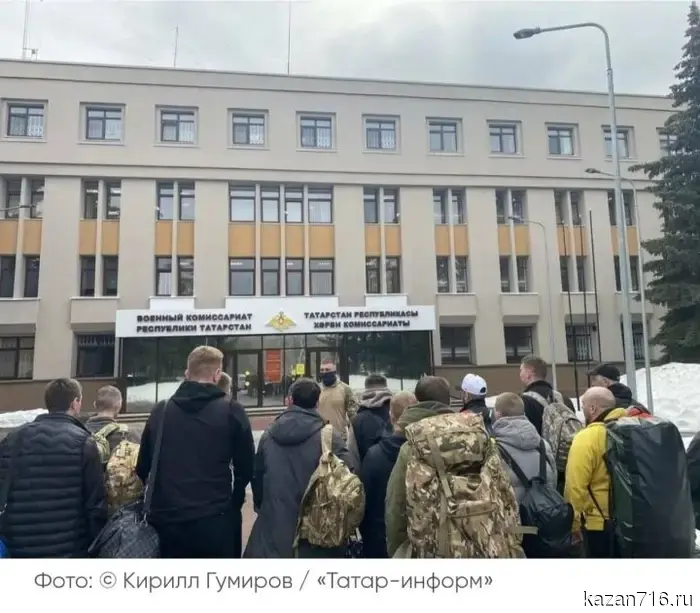 From Kazan, fighters of the African Corps have departed for the training center.
15 volunteers of the African Corps have been sent to the training location, after which they will be assigned to a mission in the "black continent."
New recruitment stage: 04.02.2026. Zainsk-inform. Republic of Tatarstan. Zainsk.
From Kazan, fighters of the African Corps have departed for the training center.
15 volunteers of the African Corps have been sent to the training location, after which they will be assigned to a mission in the "black continent."
New recruitment stage: 04.02.2026. Zainsk-inform. Republic of Tatarstan. Zainsk.
The Ministry of Digital Development of the Russian Federation demanded that platforms restrict access when VPN is enabled.
The Ministry of Digital Development of the Russian Federation held a meeting with the heads of companies that own the largest Russian internet resources by the MAU (Monthly Active Users) metric. 02.04.2026. Tatar-inform News Agency. Republic of Tatarstan. Kazan.