
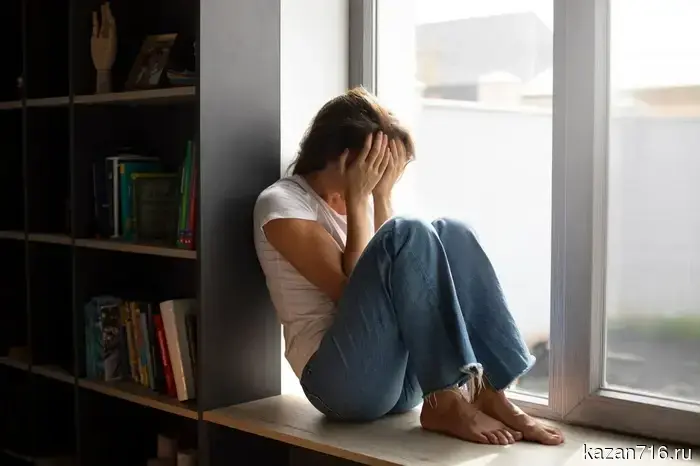
Spring exacerbation: reasons for bad mood and anxiety in spring
Spring is usually associated with renewal and a surge of energy. But in practice, for many people, this period turns out to be quite challenging: instead of energy, anxiety, irritability, sleep problems, or, conversely, a complete lack of strength appear. Such conditions are often referred to as "spring exacerbation." According to the Unified Interagency Information and Statistical System, in 2024, mental disorders were first identified in 453,905 people in Russia. At the same time, in spring, according to doctors' observations, the number of requests for help increases by about 15%. Why this happens and where the line is between a normal bodily reaction and a disorder was explained to the editorial office of GTRK Tatarstan by Oksana Valeryevna Zakharova, a candidate of medical sciences and a psychiatrist-psychotherapist at the Republican Clinical Psychiatric Hospital named after Acad. V. M. Bekhterev.
Content
Why spring becomes stressful
Frequent symptoms of spring exacerbation
Duration and course of spring changes
Signs that should not be ignored
Fatigue or depression
How to support mental health in spring
When to see a doctor
Why spring becomes stressful
The transition from winter to spring is not only about warmth and sunshine but also about the load on the body. The length of the day changes, biological rhythms are rearranged, and the hormonal balance temporarily goes out of its usual state. "The level of melatonin, which regulates sleep, decreases, while serotonin, responsible for good mood and activity, does not 'catch up' immediately," explains Oksana Valeryevna Zakharova. As a result, a state arises in which the body seems to have to function in a more active mode, but there is not enough internal energy for this. External factors also add to this: temperature fluctuations, unstable weather, atmospheric pressure changes. All of this affects the nervous system and intensifies the feeling of internal tension. A separate role is played by the psychological background. In spring, the contrast between a person's internal state and the surrounding environment intensifies. "When there is more joy around, everything blooms, but you don't feel it inside, it is experienced particularly acutely. There is a feeling that something is wrong with you," notes the doctor.
Frequent symptoms of spring exacerbation
Spring changes can manifest in various ways—from mild discomfort to pronounced mental disorders. One of the most common complaints is the so-called "spring anxiety." A person cannot clearly explain what exactly worries them but feels constant internal tension, anxious anticipation, and a racing heartbeat. "Daytime drowsiness may appear, along with a feeling of lack of strength. Changes in appetite are also possible: either a lack of it or, conversely, an increased craving for food," the specialist said. Another common scenario is a reaction to accumulated stress. Throughout winter, a person may manage to cope with the load, but with the arrival of spring, emotional resources are depleted, leading to apathy, tearfulness, and a sense of meaninglessness. Moreover, it is during this period that pre-existing mental disorders often worsen, primarily depression and bipolar affective disorder. "In spring, there is also often a transition from a depressive state to a manic, hypomanic, or mixed state. In a mixed state, both signs of depression and mania are present simultaneously. This is the most dangerous variant: a person has energy, but at the same time, a low mood and negative thoughts persist," explains the psychiatrist-psychotherapist.
Duration and course of spring changes
Spring exacerbation can last from several days to a month, and the body's adaptation to new conditions usually takes several weeks. "As for mental resilience, the process most often occurs on its own: the body gradually adapts to changes in daily routine and temperature fluctuations. However, in some cases, mental or somatic disorders may manifest, requiring a doctor's consultation," notes the expert.
Signs that should not be ignored
Not every deterioration in well-being in spring is a cause for panic. But there are signs that indicate the situation is going beyond the norm. One of the key signals is changes in sleep. This can be either prolonged insomnia or excessive drowsiness, when a person spends most of the day asleep but does not feel refreshed. Early awakenings—such as at 3-4 a.m. with feelings of anxiety or melancholy, after which it is impossible to fall asleep again—are also considered a worrying sign. Attention should also be paid to daily routines. If familiar actions begin to require excessive effort—difficulty getting up, washing, going to work, or maintaining communication—this goes beyond ordinary fatigue. A dangerous signal is also sharp fluctuations in state: from increased activity and self-confidence to a sudden emotional downturn in a short time.
"When suicidal thoughts appear, this is already a 'red flag' and a reason not to delay seeking help," emphasizes the doctor.
Fatigue or depression
In spring, many experience a decline in strength, and this is normal. However, it is important to understand when it is no longer just temporary exhaustion. In the case of ordinary fatigue, the body is capable of recovery: sleep, rest, and a change of scenery help. Strength returns, and there is a desire to engage in familiar activities. In depression, this does not happen. Even after rest, there is a feeling of heaviness, and in the morning, the state may be worse than in the evening.
Другие Новости Казани (Казань716)
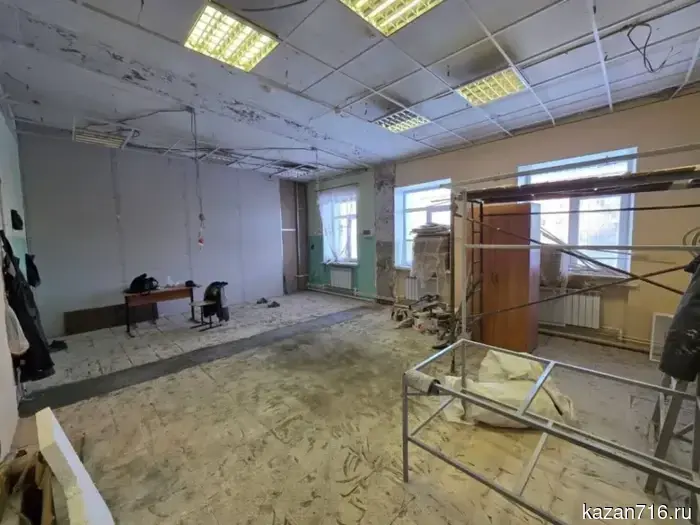 In Tatarstan, more than 3,500 facilities will be built and renovated in 2026.
In Tatarstan, this year, within the framework of national projects and republican programs, the construction and major repairs of more than 3,500 facilities are planned. 15.04.2026. GTRK Tatarstan. Republic of Tatarstan. Kazan.
In Tatarstan, more than 3,500 facilities will be built and renovated in 2026.
In Tatarstan, this year, within the framework of national projects and republican programs, the construction and major repairs of more than 3,500 facilities are planned. 15.04.2026. GTRK Tatarstan. Republic of Tatarstan. Kazan.
 KHL Vice President Kamensky: "3:0 in favor of Ak Bars is a big surprise for me."
The league leader thought that the series between the Kazan team and Minsk's Dynamo would be long.
Photo: Dinar Fatykhov
Vice President of the Continental Hockey League (KHL) for Development Valery Kamensky stated, 04.15.2026. Real Time. Republic of Tatarstan. Kazan.
The issues of implementing the federal party project "Clean Country" were discussed at a meeting of the "United Russia" faction.
Today, a meeting of the "United Russia" faction took place in the State Council, where parliamentarians discussed issues related to changes in the composition of the deputy faction, 15.04.2026. State Council. Republic of Tatarstan. Kazan.
KHL Vice President Kamensky: "3:0 in favor of Ak Bars is a big surprise for me."
The league leader thought that the series between the Kazan team and Minsk's Dynamo would be long.
Photo: Dinar Fatykhov
Vice President of the Continental Hockey League (KHL) for Development Valery Kamensky stated, 04.15.2026. Real Time. Republic of Tatarstan. Kazan.
The issues of implementing the federal party project "Clean Country" were discussed at a meeting of the "United Russia" faction.
Today, a meeting of the "United Russia" faction took place in the State Council, where parliamentarians discussed issues related to changes in the composition of the deputy faction, 15.04.2026. State Council. Republic of Tatarstan. Kazan.
 Kazan has entered the top popular destinations for spontaneous travel among Russians.
Kazan made it to the top spontaneous travel destinations. Every tenth Russian chose the capital of Tatarstan for their last unplanned trip.
Sowing-2026: equipment, fertilizers, and support measures for machinists
Razif Karimov held a working meeting with the mechanics, during which key issues regarding preparations for the spring fieldwork were discussed.
Readiness number one — this was the mood at the meeting of the district head R 15.04.2026. Zainsk-inform. Republic of Tatarstan. Zainsk.
There are 35,500 young entrepreneurs in Tatarstan.
Support for entrepreneurs is provided within the framework of the national project "Effective and Competitive Economy." 04/15/2026. Almetyevsk RTV. Republic of Tatarstan. Almetyevsk.
Kazan has entered the top popular destinations for spontaneous travel among Russians.
Kazan made it to the top spontaneous travel destinations. Every tenth Russian chose the capital of Tatarstan for their last unplanned trip.
Sowing-2026: equipment, fertilizers, and support measures for machinists
Razif Karimov held a working meeting with the mechanics, during which key issues regarding preparations for the spring fieldwork were discussed.
Readiness number one — this was the mood at the meeting of the district head R 15.04.2026. Zainsk-inform. Republic of Tatarstan. Zainsk.
There are 35,500 young entrepreneurs in Tatarstan.
Support for entrepreneurs is provided within the framework of the national project "Effective and Competitive Economy." 04/15/2026. Almetyevsk RTV. Republic of Tatarstan. Almetyevsk.
Spring exacerbation: reasons for bad mood and anxiety in spring
Spring is usually associated with renewal and a surge of energy. But in practice, for many people, this period turns out to be quite difficult: instead of energy, anxiety, irritability, sleep problems, or, on the contrary, 15.04.2026. GTRK Tatarstan. Republic of Tatarstan. Kazan.