
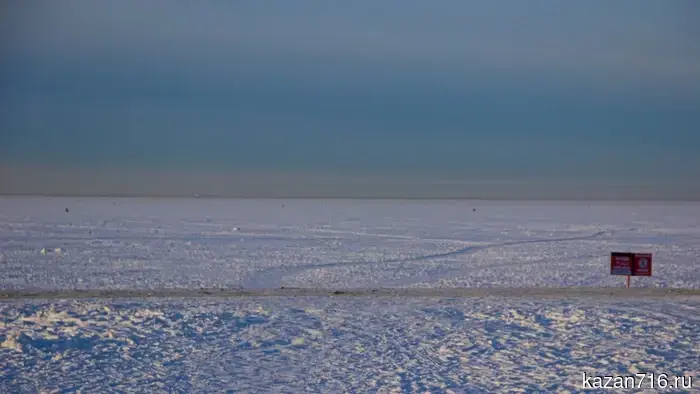
Antarctica is not just ice: scientists on the continent where time stopped 35 million years ago
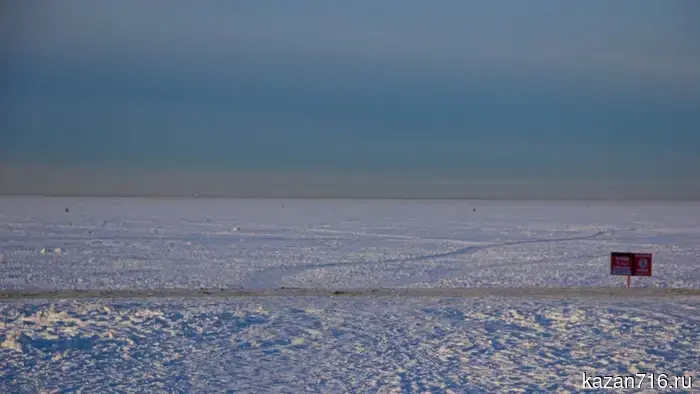
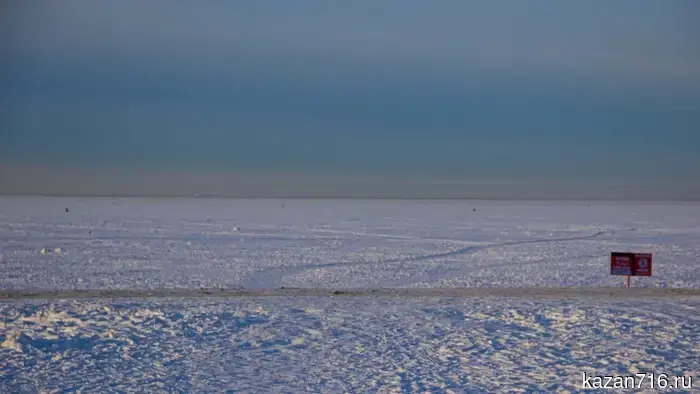
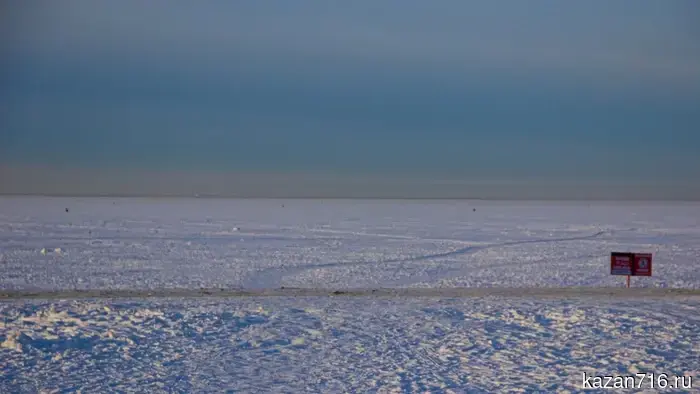
Photo: IA SM-News April 18 – IA SM.News. Imagine a planet that someone has carefully wrapped in a giant layer of foam. On the outside — 14 million square kilometers of white emptiness, sterile and lifeless. But this is just a decoration. Beneath an icy shell as thick as a dozen multi-story buildings lies another reality. There, where sunlight has never penetrated — volcanoes rage, underground rivers flow, and life that is millions of years old boils. Antarctica is not just a chunk of ice. It is a complex mechanism that ticks somewhere beneath our feet and determines the future of the entire Earth.
Numbers that chill the blood Before diving into the depths, let’s assess the scale. Here, numbers speak louder than any words.
Thickness of the ice shell:
Average — 2.2 kilometers; Maximum — up to 5 kilometers.
Volume of frozen water:
26.5 million cubic kilometers; 61% of all fresh water on the planet.
What will happen when it melts:
The sea level will rise by 60 meters. The Earth's crust beneath Antarctica is already pressed down by half a kilometer. The western part of the continent will turn into an archipelago or sink underwater when the ice disappears. “The scale of glaciation is colossal. Rapid melting can change not only the water level but also the dynamics of the planet's rotation due to mass redistribution,” warns physicist Dmitry Lapshin in a conversation with Pravda.Ru.
TOP-5 discoveries under the Antarctic ice sheet Antarctica hides landscapes that would astonish any geographer. Here’s what scientists have discovered beneath the multi-kilometer ice.
1. Denman Trench — the deepest canyon on land It plunges 3.5 kilometers below sea level. For comparison: the deepest point of the Dead Sea is only 430 meters. This rift could hide an entire mountain range.
2. Mountains rivaling the Alps Under the ice lie ridges up to 3000 meters high. They haven’t seen sunlight for tens of millions of years, yet they continue to stand, compressed by a monstrous mass of ice.
3. 766 subglacial lakes And they do not freeze. Why? Two factors: Colossal pressure (each ton of ice above) Geothermal heat from the Earth's core below Sometimes these lakes behave unpredictably: they burst through cracks and release millions of cubic meters of water into the ocean.
4. Thwaites Glacier (Doomsday Glacier) This glacier got its name for a reason. Its destabilization is a warning bell for the entire climate system of our planet. Warm ocean currents are undermining the continent's foundation, provoking accelerated melting. “We are recording serious changes under the ice sheet,” emphasizes climatologist Maxim Orlov in a conversation with Pravda.Ru.
5. About 140 volcanoes Yes, beneath kilometers of ice lie active fire mountains. And they are not sleeping.
Lake Vostok: a time capsule for 35 million years This is not just a lake. It is the fifth largest freshwater body in the world, sealed beneath a four-kilometer layer of ice. And it has been there in complete isolation for 35 million years.
What you need to know about Vostok:
Access to the lake was only achieved in 2012. Russian drillers have been working towards it for decades, overcoming almost 3800 meters of ice. The pressure at the bottom is 400 atmospheres. It’s like having 400 cars standing on you at once. Life is boiling there. Genetic analysis has revealed thousands of unique DNA sequences not found in databases. There are hot springs at the bottom. The discovery of thermophilic bacteria proves that hydrothermal volcanoes are active even there. Why is this important? Lake Vostok is an ideal model for searching for life on Jupiter's moons (Europa) and Saturn's (Enceladus). If life survived here under 400 atmospheres of pressure in complete darkness, it can survive there too. “Each ice sample from deep layers is a chronicle of the state of the Earth's atmosphere over hundreds of thousands of years. An invaluable material for understanding the planet's cycles,” commented geologist Alexey Trofimov in an interview with Pravda.Ru.
3 main questions about Antarctica (and their answers) The icy continent is surrounded by myths. Sensational claims about secret bases and subglacial cities frequently pop up on social media. Let’s clarify the facts.
Why doesn’t the water under the ice freeze?
Answer. Two mechanisms are at work: Huge pressure (ice several kilometers thick literally pushes the freezing point down). Geothermal heating (the Earth's core heats from below, like a stove).
Could life from Lake Vostok be dangerous to humans?
Answer. The chances are close to zero. Microorganisms are adapted to 400 atmospheres of pressure and the absence of light. In normal earthly conditions, they would simply die without harming anyone.
Is it true that there are secret bases or cities under the ice?
Answer. There is zero scientific evidence. All “anomalies” in satellite images turn out to be either terrain features or shadows playing on ice fractures. Antarctica is strictly protected by international treaty, and no country can conduct secret construction there.
In conclusion: ice that speaks to us Antarctica is not a white silence. It is a dynamic, breathing system, where even the giant iceberg A23a (the largest in the world) is just the tip of the iceberg of global changes. The ice here is melting not because “someone wanted it to.” Warm currents undermine the foundation, volcanoes heat from below, and pressure creates conditions impossible anywhere else on the planet. And yes, social media loves to scare with “the secrets of Antarctica.” But the real mystery is not in secret bases. It is in how fragile this white shield is — and how strongly it influences what will happen to each of us when (and if) it truly cracks. Earlier, IA SM-News reported that it is 40 degrees colder at the South Pole than at the North Pole: 5 scientific reasons.
Другие Новости Казани (Казань716)
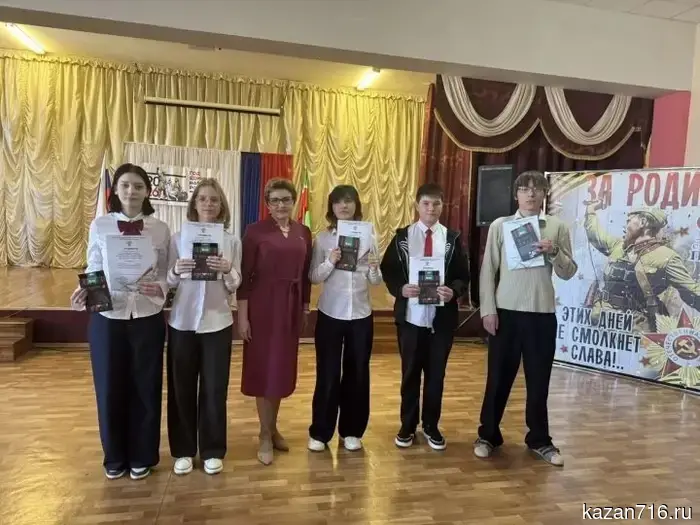 A patriotic evening "Victory Songs of the Country" was held at the Nurlat Gymnasium for Victory Day.
On the eve of the 81st anniversary of the Great Victory at the M.E. Nurlat Gymnasium on April 19, 2026. Nurlat-inform. Republic of Tatarstan. Nurlat.
Kazan University has entered the top three universities in Russia with the largest number of budget places.
KFU has about 21 thousand places funded from the KFU treasury, second only to Ural Federal University and Moscow State University. 19.04.2026. Komsomolskaya Pravda Kazan. Republic of Tatarstan. Kazan.
A patriotic evening "Victory Songs of the Country" was held at the Nurlat Gymnasium for Victory Day.
On the eve of the 81st anniversary of the Great Victory at the M.E. Nurlat Gymnasium on April 19, 2026. Nurlat-inform. Republic of Tatarstan. Nurlat.
Kazan University has entered the top three universities in Russia with the largest number of budget places.
KFU has about 21 thousand places funded from the KFU treasury, second only to Ural Federal University and Moscow State University. 19.04.2026. Komsomolskaya Pravda Kazan. Republic of Tatarstan. Kazan.
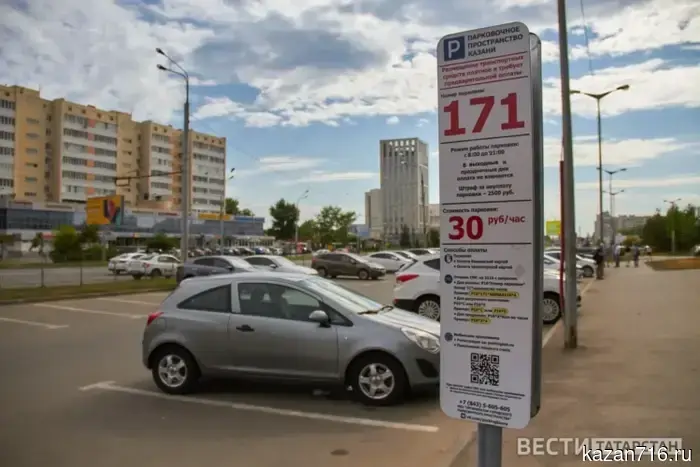 The cost of parking in the center of Kazan has increased.
In Kazan, the cost of municipal parking has been adjusted — changes affected 34 areas. 04/19/2026. GTRK Tatarstan. Republic of Tatarstan. Kazan.
The cost of parking in the center of Kazan has increased.
In Kazan, the cost of municipal parking has been adjusted — changes affected 34 areas. 04/19/2026. GTRK Tatarstan. Republic of Tatarstan. Kazan.
 The Ministry of Forestry of the Republic of Tatarstan announces the start of the spring phase of the campaign "Clean Forests of Tatarstan."
In the republic, from April 20 to June 20, 2026, the spring phase of the environmental campaign "Clean Forests of Tatarstan" will take place, aimed at achieving the goals of the national project "Environmental Well-Being." 19.04.2026. Kama News. Republic of Tatarstan. Laishevo.
Emergency warning for 04/19/2026
Dear citizens! From the Federal State Budgetary Institution "Administration for Hydrometeorology and Environmental Monitoring of the Republic of Tatarstan" received: 18.04.2026. Tyulyachinsky District. Republic of Tatarstan. Tyulyachi.
Kazan University has entered the top three universities in Russia with the highest number of budget places.
KFU has about 21 thousand places funded from the KFU treasury, second only to Ural Federal University and Moscow State University. 19.04.2026. Komsomolskaya Pravda Kazan. Republic of Tatarstan. Kazan.
The Ministry of Forestry of the Republic of Tatarstan announces the start of the spring phase of the campaign "Clean Forests of Tatarstan."
In the republic, from April 20 to June 20, 2026, the spring phase of the environmental campaign "Clean Forests of Tatarstan" will take place, aimed at achieving the goals of the national project "Environmental Well-Being." 19.04.2026. Kama News. Republic of Tatarstan. Laishevo.
Emergency warning for 04/19/2026
Dear citizens! From the Federal State Budgetary Institution "Administration for Hydrometeorology and Environmental Monitoring of the Republic of Tatarstan" received: 18.04.2026. Tyulyachinsky District. Republic of Tatarstan. Tyulyachi.
Kazan University has entered the top three universities in Russia with the highest number of budget places.
KFU has about 21 thousand places funded from the KFU treasury, second only to Ural Federal University and Moscow State University. 19.04.2026. Komsomolskaya Pravda Kazan. Republic of Tatarstan. Kazan.
Antarctica is not just ice: scientists on the continent where time stopped 35 million years ago
Photo: IA SM-News April 18 – IA SM.News. Imagine a planet that someone has carefully wrapped in a giant layer of foam. 04.19.2026. Kazan.Sm.News. Republic of Tatarstan. Kazan.