

Planting fruit trees in spring: 5 main rules for gardeners
Spring is the best time to plant a garden that will yield harvests for decades. But simply buying a seedling and digging a hole is not enough. How to determine the groundwater level, not confuse the root collar with the graft, and why do two-year-old trees take root better than others?
Step 1. Choosing a seedling: what to look for
Buying a seedling is the foundation of future success. The main rules:
- Buy only zoned varieties — allowed for your region. Otherwise, the tree will get sick or freeze.
- The point of sale — only specialized nurseries or trusted garden centers. The second-hand market carries the risk of catching diseases and getting the wrong variety.
- The ideal age of the seedling — 2 years. They take root faster and start bearing fruit earlier.
Step 2. Assessing the site: groundwater and soil
Before buying seedlings, check at what depth the groundwater lies on your site. A mistake here can lead to the death of the tree in 3–5 years when the roots reach the water.
- Strong-growing: over 3 m
- Semi-dwarf: over 2.5 m
- Dwarf (shallow roots): no more than 1.5 m
What soil is needed for different crops:
- Apple tree — sod-podzolic, gray forest, black soil. Light composition, neutral reaction.
- Pear — moist weakly podzolized soils, loams, and clay loams.
- Cherry — medium and light clay loams.
Planting location: south or southwest side of the plot, protected from cold winds.
Step 3. Planting scheme: distance between trees
A common mistake is planting too densely. Trees will not die, but they will start to stretch upwards, branches will intertwine, shade each other, and reduce yield.
- Between strong-growing trees (5 m tall) — 6–9 meters.
If there are trees of different heights in the garden (5 m, 4 m, 3 m) — plant considering the tallest neighbor.
Step 4. Timing of spring planting
Here it is important not to be late:
- Apple trees, pears, stone fruits: As early as possible, immediately after the snow melts
- Fruit bushes: Even when the buds have just opened
- Container seedlings: All season: mid-April – mid-November
Reference: spring planting should be completed 10 days before the buds open.
Step 5. Preparing the planting hole correctly
The size of the holes depends on the type of tree:
- Apple/Pear (strong-growing rootstock): from 1 m 60 cm
- Semi-dwarf: 1 m 40 cm
- Dwarf low-growing: 90 cm 40 cm
- Cherry, plum, sea buckthorn, serviceberry, black-fruited rowan: 80 cm 40 cm
Digging technology:
- Set aside the top fertile layer to one side.
- Remove the lower soil (clay, sand).
- Add organic matter (manure, compost) and mineral fertilizers (azofoska, superphosphate) to the bottom.
- Top with the fertile layer of soil.
Setting the stake and seedling
In the center of the hole, drive in a stake (up to the lower branches).
The stake should be on the north or northeast side of the tree — it will shade the trunk from overheating.
Tie the seedling to the stake in a figure-eight (loosely, so it doesn’t hang after the soil settles).
The most common mistake: planting depth
The root collar must not be buried! Many confuse it with the grafting site. How to find the root collar:
- Wipe the trunk with a damp cloth at the transition to the roots.
- Find the boundary where the bark color changes from greenish to light brown.
- This is the root collar. When planting, it should be 3–6 cm above the soil level.
- After the soil settles, it will be exactly at the surface level.
Final stage: watering and mulching
- Compact the soil around the seedling.
- Make an earthen ridge 10–15 cm high around the edge of the hole.
- Water generously — 2–3 buckets of water under each tree (even if it’s wet).
- Mulch the hole with peat, compost, or old leaves — this will retain moisture and prevent crust formation.
Care in the first two years: calendar
- 7–10 days after planting: Watering with root formation stimulant (Epin, Zircon) + foliar feeding
- In dry summers: Loosening after each watering or rain
- Regularly: Moderate watering, weeding
- In season: Loosening around the trunk circles
Proper planting of fruit trees is an investment for 20–30 years ahead. Mistakes at the stage of the hole or burying the root collar cannot be corrected later. However, attention, regular watering, and care in the first two years will turn a frail seedling into a tree that will delight with its appearance and apples (or pears, cherries, plums) for many decades.
Photo by the author
Yulia Kazamarova





Другие Новости Казани (Казань716)
 The Kazan Marathon will expand its social mission and become a platform for anti-terrorism education.
The organizers of the annual Kazan Marathon announced the expansion of the social mission of the sporting event. 01.05.2026. Tatar-inform News Agency. Republic of Tatarstan. Kazan.
The Kazan Marathon will expand its social mission and become a platform for anti-terrorism education.
The organizers of the annual Kazan Marathon announced the expansion of the social mission of the sporting event. 01.05.2026. Tatar-inform News Agency. Republic of Tatarstan. Kazan.
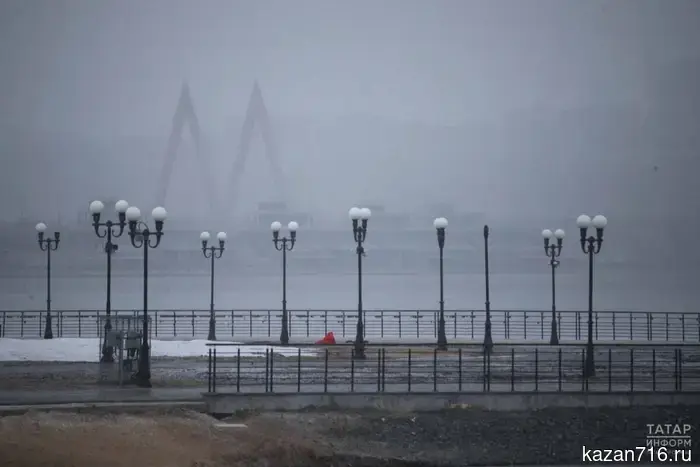 The Ministry of Emergency Situations warned about fog expected tomorrow in Tatarstan.
Tonight and tomorrow morning, fog is expected in Tatarstan.
The Ministry of Emergency Situations recommends not to hide under trees, road signs, and advertising billboards. 01.05.2026. IA Tatar-inform. Republic of Tatarstan. Kazan.
The Ministry of Emergency Situations warned about fog expected tomorrow in Tatarstan.
Tonight and tomorrow morning, fog is expected in Tatarstan.
The Ministry of Emergency Situations recommends not to hide under trees, road signs, and advertising billboards. 01.05.2026. IA Tatar-inform. Republic of Tatarstan. Kazan.
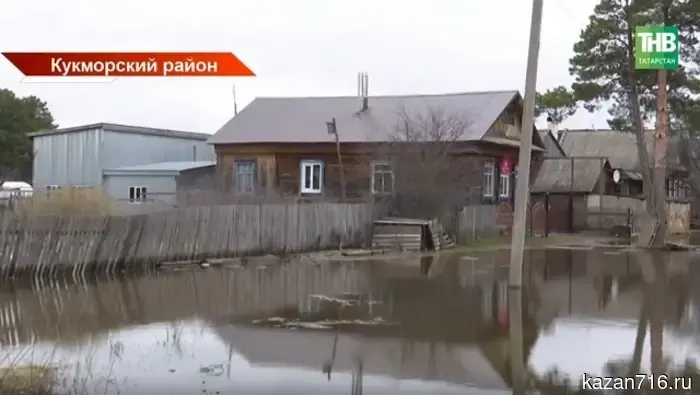 EMERCOM: 14 household plots were flooded in the Kukmor district
In the Kukmor district, floodwaters have inundated 14 household plots. 01.05.2026. TRK Tatarstan-New Century. Republic of Tatarstan. Kazan.
The famous first builder of Nizhnekamsk, Rafail Glyantz, passed away at the age of 92.
In Nizhnekamsk, the famous first builder of the city, Rafail Glyantz, passed away at the age of 91. 01.05.2026. Business Online. Republic of Tatarstan. Kazan.
EMERCOM: 14 household plots were flooded in the Kukmor district
In the Kukmor district, floodwaters have inundated 14 household plots. 01.05.2026. TRK Tatarstan-New Century. Republic of Tatarstan. Kazan.
The famous first builder of Nizhnekamsk, Rafail Glyantz, passed away at the age of 92.
In Nizhnekamsk, the famous first builder of the city, Rafail Glyantz, passed away at the age of 91. 01.05.2026. Business Online. Republic of Tatarstan. Kazan.
 The Kazan Marathon will expand its social mission and become a platform for anti-terrorism education.
The organizers of the annual Kazan Marathon announced the expansion of the social mission of the sporting event. 01.05.2026. IA Tatar-inform. Republic of Tatarstan. Kazan.
The famous first builder of Nizhnekamsk, Rafail Glyantz, passed away at the age of 92.
In Nizhnekamsk, the famous first builder of the city, Rafail Glyantz, passed away at the age of 91. 01.05.2026. Business Online. Republic of Tatarstan. Kazan.
The Kazan Marathon will expand its social mission and become a platform for anti-terrorism education.
The organizers of the annual Kazan Marathon announced the expansion of the social mission of the sporting event. 01.05.2026. IA Tatar-inform. Republic of Tatarstan. Kazan.
The famous first builder of Nizhnekamsk, Rafail Glyantz, passed away at the age of 92.
In Nizhnekamsk, the famous first builder of the city, Rafail Glyantz, passed away at the age of 91. 01.05.2026. Business Online. Republic of Tatarstan. Kazan.
Planting fruit trees in spring: 5 main rules for gardeners
Spring is the best time to plant a garden that will delight with its harvest for decades. 01.05.2026. News of Zainsk. Republic of Tatarstan. Zainsk.