

May 3: Fyodor Vlyasyanichnik, remembrance of ancestors and fishing ban
On Sunday, Orthodox Christians commemorate the Venerable Theodore of Trichina (the Hairshirt Bearer) — a monk who wore rough clothing made of camel hair against his bare skin. In the folk calendar, this day was called the Calling of Ancestors, or Fyodor the Net Maker. We tell about traditions, prohibitions, and unusual holidays around the world.
Orthodox Holiday
On May 3rd, the Orthodox Church honors the memory of the Venerable Theodore of Trichina (the Hairshirt Bearer) — a Constantinople monk who lived between the 4th and 9th centuries. He came from a noble and wealthy family but renounced worldly luxury in his youth and went to a monastery. Theodore wore rough, prickly clothing made of camel hair (a hairshirt) against his bare skin, which earned him his nickname. He became famous for his gift of miracles and healing the sick. After his death, the relics of the saint remained incorrupt, exuding fragrant myrrh. This day also commemorates the martyr infant Gabriel of Bialystok, the Venerable Alexander of Oshevensk, and the saints Gregory and Anastasius I of Sinai. A feature of this Sunday in the church calendar is the Sunday of the Paralytic, the fourth Sunday after Easter. In churches, a passage from the Gospel about the healing of a man who suffered for 38 years at the Sheep Pool is read.
Traditions of the Day
In the folk calendar, May 3rd was called the Calling of Ancestors, Fyodor the Net Maker, and Fyodor's Day. It was believed that on this day the veil between worlds thins, and the souls of the deceased can temporarily return to the homes where they are remembered. Our ancestors said: "On Fyodor's Day, the dead long for the earth." The main ritual of the day is the calling of ancestors. Early in the morning, at dawn, the elder women of the family would go to the cemetery. Standing by the graves, they would loudly lament and call out to their parents, saying special words: "Arise, awaken, look upon your children, peek out at us, orphans, from your little homes, and comfort us with kind words!" It was believed that the earth opens up and souls can fly out into the light of God. If a trip to the cemetery was impossible, the ritual was performed at home: candles were lit before icons, and ancestors were called from the threshold.
After the cemetery, a rich memorial table was set. Important rules for the meal: something hot (cabbage soup, porridge, roast) was served, as it was believed that souls feed not on the food itself but on the steam it emits. Mandatory dishes included kutya and kissel. The meal began with three spoonfuls of kissel — in memory of the departed. An extra plate and utensils were set for the ancestors, and an empty chair was left at the main place for the eldest soul of the family. The table was always covered with a new white tablecloth to not scare away happiness.
After midnight, the family would go out into the yard and listen to the silence. When the first gust of wind blew, it was believed that the souls had returned to the afterlife.
This day is also associated with agricultural signs. On May 3rd, the sowing of pumpkins, cucumbers, and beans began, and peasants prayed to Saint Theodore for a rich harvest. Healing herbs were also gathered on this day: coltsfoot, lungwort, and mint. It was believed that herbs collected on May 3rd possess special power.
What Not to Do
This day is associated with many strict prohibitions. The main prohibition is to fish and eat fish. It was believed that at this time, fish spawn, and catching them is a great sin for which the water spirit may punish. It was forbidden to wash bed linens — this could provoke bad dreams and insomnia. Washing was only allowed in extreme cases and only for children's clothes.
It was forbidden to quarrel, argue, or wish harm — otherwise, the ancestors might take offense, and there would be no peace in the house. It was not allowed to speak ill of the deceased — this would lead to misfortune. It was not recommended to engage in heavy physical work before noon, so that household chores would not distract from communication with the family. It was also advised not to water houseplants, so as not to anger the water spirit.
Marriage and baptism ceremonies (getting married, having a wedding, baptizing children) were prohibited — this would lead to misfortunes in the family. Divorce was not allowed. Wearing clothes inside out was forbidden — this would lead to a spoiled day and headaches. Wearing black or dark clothing was associated with gloom and sadness. It was not recommended to lend or borrow money — this would lead to financial losses. It was forbidden to cover the table with an old tablecloth — this would lead to troubles.
Weather Signs
On May 3rd, our ancestors predicted what the summer and harvest would be like based on the weather. A lot of cones on spruce trees foretold a generous wheat harvest, while on pine trees — a good rye yield. The first thunder on this day was seen as a harbinger of a rich harvest. A double or triple rainbow indicated improving weather but promised heavy rains soon.
A rainy and cold May, on the contrary, indicated that honey should not be expected that year. If rain fell with lightning but without thunder — it foretold clear weather. Blooming yellow flowers promised warm weather soon. The appearance of mosquitoes confirmed the onset of stable warmth.
If there are many full cones on the pine tree, the grain will yield well. Hearing a nightingale in still bare trees foretold a poor harvest. Overly dry soil indicated a meager harvest.
Unusual Holidays Around the World
In addition to Orthodox and folk traditions, several unusual holidays are celebrated around the world on May 3rd.
World Press Freedom Day. Established by the UN in 1993 in memory of the Windhoek Declaration signed on May 3, 1991, in Namibia. The main event of the day is the awarding of the UNESCO World Press Freedom Prize for contributions to the cause of press freedom, as well as honoring journalists who died in the line of duty.
World Sun Day has been celebrated since 1994. It is an occasion to realize that the Sun, as a powerful source of cosmic energy, determines the planet's ecology, providing light and warmth necessary for life. The day draws attention to the use of renewable energy sources.
Turkism Day (Day of Turkic Solidarity). The holiday is associated with the date of May 3, 1944, when the last court session regarding the activists of Pan-Turkism took place in Turkey.
Constitution Day in Poland. Poles take pride in the fact that on May 3, 1791, they adopted the very first written constitution in Europe.
Constitution Day in Japan. On May 3, 1947, a new constitution came into force in the country, establishing parliamentary democracy and enshrining the renunciation of war as a means of resolving international disputes.
Mother's Day in Lithuania. Celebrated on the first Sunday of May. Solemn services are held in churches, and at special ceremonies, awards are given to heroic mothers raising seven or more children.
Confectioner's Day in Russia — a professional holiday for specialists who make life sweeter.
Garden Meditation Day — an unofficial holiday calling for a pause, a deep breath, and some time in silence in nature.
Old Mat Day, Day of Shoes of Different Colors — humorous holidays reminding us that even the most ordinary things can be approached with humor.
Poetry Festival in Toulouse (France) — a poetic competition of the Academy of Floralies, held annually in the city since the 14th century. Winners receive prizes made of flowers.
Diana Salikhzanova

Другие Новости Казани (Казань716)
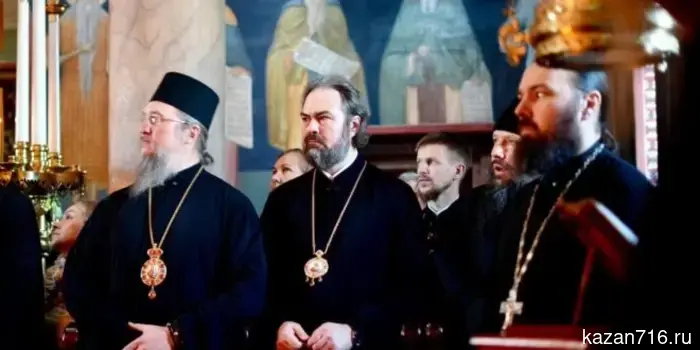 Bishop Methodius prayed during the all-night vigil at the Nikol-Malitsky Monastery in the city of Tver.
On the evening of May 2, 2026, on the eve of the 4th Sunday after Easter, Metropolitan Kirill of Kazan and Tatarstan performed an all-night vigil according to the Athonite rite (agrypnia) at the Protection Church of the Nikol-Malitsky Monastery on 03.05.2026. Almetyevsk Diocese. Republic of Tatarstan. Almetyevsk.
Bishop Methodius prayed during the all-night vigil at the Nikol-Malitsky Monastery in the city of Tver.
On the evening of May 2, 2026, on the eve of the 4th Sunday after Easter, Metropolitan Kirill of Kazan and Tatarstan performed an all-night vigil according to the Athonite rite (agrypnia) at the Protection Church of the Nikol-Malitsky Monastery on 03.05.2026. Almetyevsk Diocese. Republic of Tatarstan. Almetyevsk.
 In Almetyevsk, a woman who lost consciousness in a burning apartment was rescued.
A woman who lost consciousness during a fire was rescued in Almetyevsk.
As reported by the press service of the Main Directorate of the Ministry of Emergency Situations of Russia for Tatarstan to Tatar-inform, the fire occurred in a three-room apartment of a residential building on Stroiteli Street. 03.05.2026. Kaibitskie Zori. Republic of Tatarstan. Bolshie Kaibitsy.
In Almetyevsk, a woman who lost consciousness in a burning apartment was rescued.
A woman who lost consciousness during a fire was rescued in Almetyevsk.
As reported by the press service of the Main Directorate of the Ministry of Emergency Situations of Russia for Tatarstan to Tatar-inform, the fire occurred in a three-room apartment of a residential building on Stroiteli Street. 03.05.2026. Kaibitskie Zori. Republic of Tatarstan. Bolshie Kaibitsy.
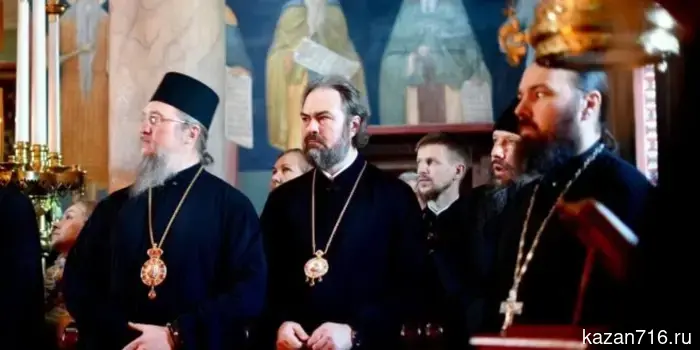 Bishop Methodius prayed during the all-night vigil at the Nikol-Malitsky Monastery in the city of Tver.
On the evening of May 2, 2026, on the eve of the 4th Sunday after Easter, Metropolitan Kirill of Kazan and Tatarstan performed an all-night vigil according to the Athonite rite (agrypnia) at the Protection Church of the Nikol-Malitsky Monastery on 03.05.2026. Almetyevsk Diocese. Republic of Tatarstan. Almetyevsk.
Bishop Methodius prayed during the all-night vigil at the Nikol-Malitsky Monastery in the city of Tver.
On the evening of May 2, 2026, on the eve of the 4th Sunday after Easter, Metropolitan Kirill of Kazan and Tatarstan performed an all-night vigil according to the Athonite rite (agrypnia) at the Protection Church of the Nikol-Malitsky Monastery on 03.05.2026. Almetyevsk Diocese. Republic of Tatarstan. Almetyevsk.
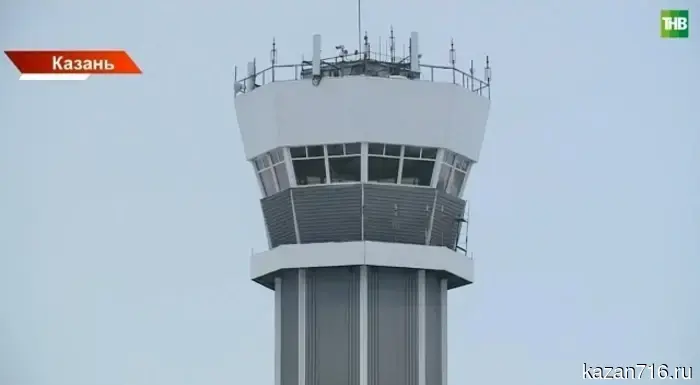 The drone danger has been declared in Tatarstan.
Today at 14:21 Moscow time, a "Drone Danger" regime was declared in the territory of Tatarstan. 02.05.2026. Tatarstan-New Century TV Channel. Republic of Tatarstan. Kazan.
The drone danger has been declared in Tatarstan.
Today at 14:21 Moscow time, a "Drone Danger" regime was declared in the territory of Tatarstan. 02.05.2026. Tatarstan-New Century TV Channel. Republic of Tatarstan. Kazan.
 May 3: Fyodor Vlyasynichnik, remembrance of ancestors and fishing ban
On Sunday, Orthodox Christians commemorate the venerable Theodore the Trichinas (the Hairy) — a monk who wore coarse clothing made of camel hair against his bare skin. 03.05.2026. Volzhskaya Nov' (Volga News). Republic of Tatarstan. Verkhny Uslon.
May 3: Fyodor Vlyasynichnik, remembrance of ancestors and fishing ban
On Sunday, Orthodox Christians commemorate the venerable Theodore the Trichinas (the Hairy) — a monk who wore coarse clothing made of camel hair against his bare skin. 03.05.2026. Volzhskaya Nov' (Volga News). Republic of Tatarstan. Verkhny Uslon.
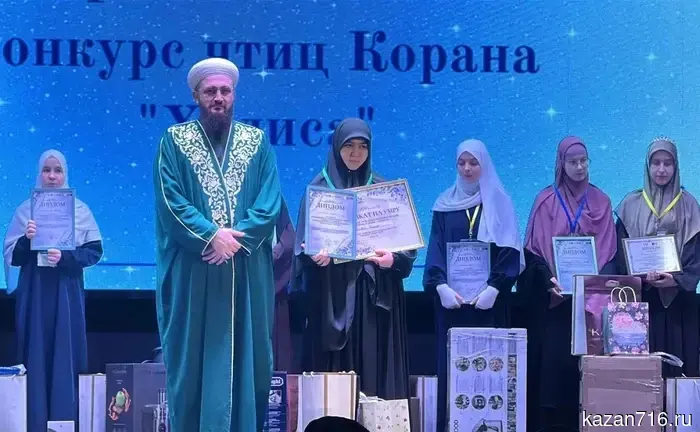 The VII All-Russian Quran Reading Contest "Khalisa" took place in Urussu.
Today, on the 15th day of the month of Zul-Qi'dah (May 2), the final of the VII All-Russian Open Quran Reading Competition "Khalisa" among girls and women took place in the village of Urussu, Yutazinsky District. 02.05.2026. Spiritual Administration of Muslims. Republic of Tatarstan. Kazan.
The VII All-Russian Quran Reading Contest "Khalisa" took place in Urussu.
Today, on the 15th day of the month of Zul-Qi'dah (May 2), the final of the VII All-Russian Open Quran Reading Competition "Khalisa" among girls and women took place in the village of Urussu, Yutazinsky District. 02.05.2026. Spiritual Administration of Muslims. Republic of Tatarstan. Kazan.
May 3: Fyodor Vlyasyanichnik, remembrance of ancestors and fishing ban
On Sunday, Orthodox Christians commemorate St. Theodore the Trichinas (the Hairy) — a monk who wore coarse clothing made of camel hair against his bare skin. 03.05.2026. Volzhskaya Nov' (Volga News). Republic of Tatarstan. Verkhny Uslon.