
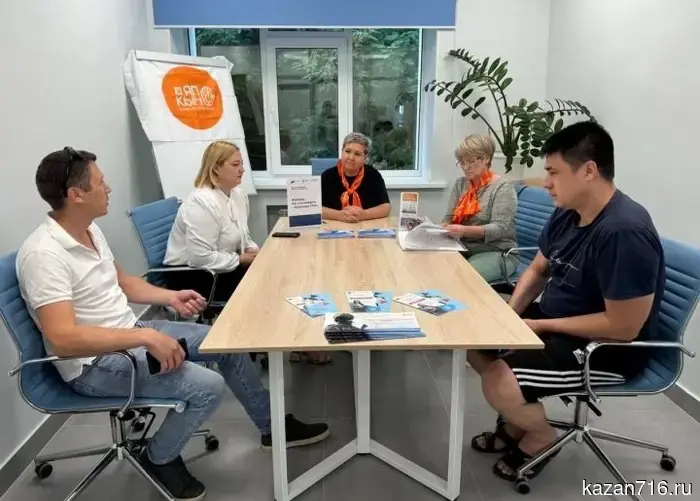
Work for Ours: how yesterday's servicemen in Zainsk are being helped to return to civilian life
The personnel center "Work of Russia" in the Zainsk district assists with employment, retraining, and starting one's own business.
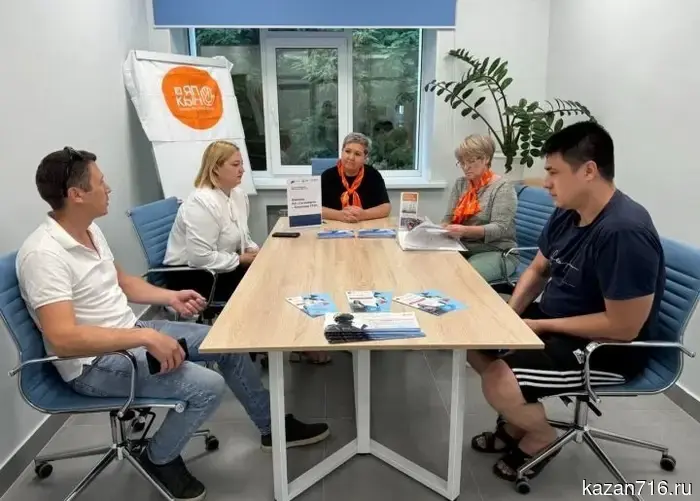
Understanding the importance of the swift integration of participants of the special military operation (SMO) and veterans of combat operations into peaceful life, the Zainsk personnel center has established a clear system: from weekly checks with the military enlistment office to individual job matching and even starting one's own business. Since 2025, a specialized club with the telling name "Work for Our Own" has been operating at the center.
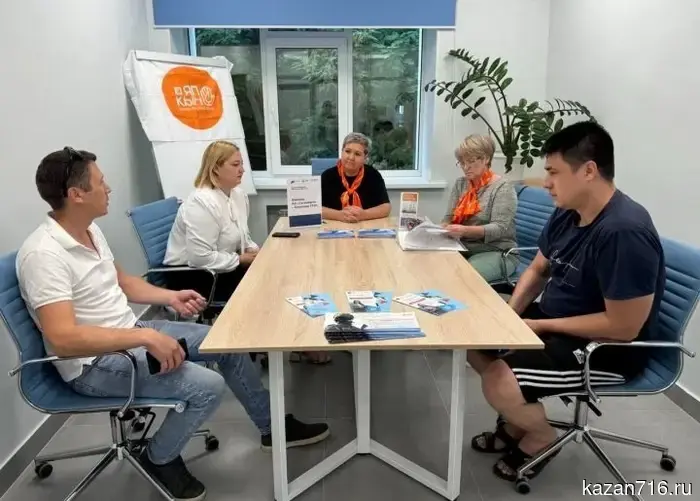
Returning to normal life after participating in a special military operation is a challenging process, both physically and psychologically. One of the main questions that arises for a former soldier is: where and how to work in the new realities? In Zainsk, this task is systematically addressed by the personnel center. Here, every resident of Zainsk who participated in the SMO can receive a full range of services and consultations on any issues related to employment, training, and psychological support. We spoke with the head of the institution, Ekaterina Andreeva, about how assistance to veterans is organized here.
From the military enlistment office to the questionnaire
The personnel center does not wait for the demobilized individuals to reach out themselves. They work proactively.
"Every week we check in with the military enlistment office regarding newly arrived veterans," says Ekaterina Andreeva. "I personally go to the enlistment office and take fresh lists."
Immediately after the return of a serviceman, a complete questionnaire is initiated. Specialists are interested in everything: health status, education, marital status, possible health restrictions, and most importantly — whether the person worked before the SMO.
If the veteran was officially employed, specialists reach out to the previous employer to clarify plans and whether they are ready to reinstate the employee. If there was no employment experience or returning to the old job is impossible, individual job matching is employed.
Time for rehabilitation
There is no place for haste here. As Ekaterina Andreeva emphasizes, returning to work requires time and tact.
"From experience, I can say: it takes about three to four months. A veteran needs time for rehabilitation, treatment, and various activities. And of course, psychological readiness. Therefore, after the first questionnaire, we take a pause, and then we contact the person again to find out if they are ready to start working and develop a plan for further actions."
New professions
Not all veterans can or want to return to their previous jobs. Health conditions or new life circumstances dictate the need for a change in profession. State support in the field of training and retraining helps with this.
"We actively work with veterans on their training, retraining, and professional development," says Ekaterina Andreeva. "To date, three people have taken advantage of this support measure. One has already completed training as a category 'D' driver. Two are currently training: one as a forklift driver, the other as an excavator operator. An application has also been submitted for a drone operator — training will begin in September."
Various forms of employment
For the most successful integration of veterans into peaceful life, the personnel center maintains an up-to-date registry of all arrivals. This work is already yielding concrete results.
"Since the beginning of the year, four veterans of combat operations who participated in the SMO have contacted the personnel center for the Zainsk district," reports Ekaterina Andreeva. "All of them have been employed. All have found work."
The forms of employment vary. One of the veterans chose entrepreneurship: with the center's assistance, he opened a self-employment business, receiving state support of 145,100 rubles. The funds have already been transferred, and the man is currently purchasing equipment for furniture production and assembly.
Three others preferred wage labor. One works at LLC "Complex Engineering Solutions," the second at the State Unitary Enterprise of the Republic of Tatarstan "Electric Networks" as the chief mechanic, and the third at LLC "Regionstroy." Two of them work as installers.
"Last year, out of 12 who applied, nine were employed. By the end of April, 62 veterans had returned. Of these, 45 are engaged in labor activities, nine are undergoing treatment, and six are searching for work. This is a constant daily job: we monitor and invite them to events," says Ekaterina Andreeva.
Small business as support
A separate pride of the center is its cooperation with employers. Large employers are usually well-informed about all measures of state support and existing programs, and they utilize them. However, there is a certain complexity: they are not flexible enough due to very high requirements for applicants. Therefore, the focus is on small and medium-sized businesses.
"Small and medium-sized enterprises are more flexible," explains Ekaterina Andreeva. "They can more easily adapt the workplace to the needs and life circumstances of veterans. This is especially important for those with disabilities or certain restrictions — even including a past criminal record. Small businesses can adjust where large ones find it difficult."
To establish contacts in Zainsk, an unconventional format was devised: small business breakfasts are held once a month. Together with the Business Development Center "Dominant Info" (Elena Gainutdinova), they invite representatives of small and medium-sized businesses.
"We inform entrepreneurs about state and non-state support measures. This creates a true collaboration, a public-private partnership. And I want to emphasize: the main motivation for businesses is not material gain. Many have not even considered the social significance of employing veterans. When we explain that this is very important today, that the guys need employment not just for money but for returning to normal life, they respond," says the head of the personnel center.
Even after employment: monitoring and preventive assistance
The center's work does not end on the day of starting a new job. Specialists regularly check whether the veteran continues to work and has not quit.
"If we see that a person has quit, we proactively reach out to them and offer services — both for retraining and for new employment," summarizes Ekaterina Andreeva.
In conclusion
The "Work for Our Own" club, weekly checks with the military enlistment office, complete questionnaires, respect for rehabilitation timelines, the possibility of free training, and active engagement of flexible small businesses — all this turns the job search into a consistent and successful route. This means that the system in Zainsk truly works for its own.
Photo by the author
Roza Ilaltdinova
Другие Новости Казани (Казань716)
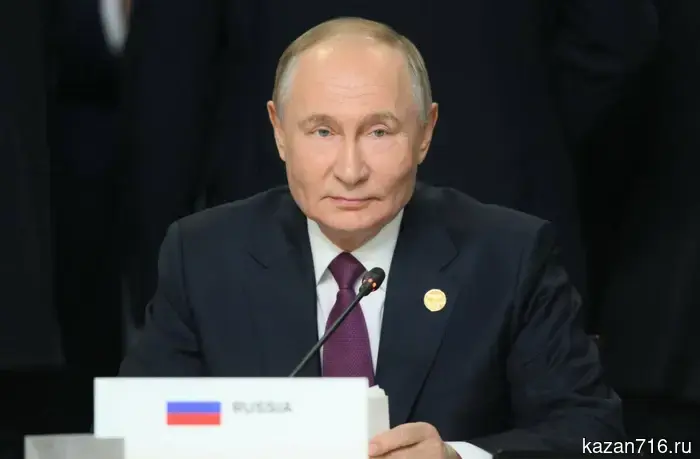 Putin will visit China on an official visit from May 19 to 20.
The official visit of President Vladimir Putin to China will take place on May 19-20 at the invitation of the Chairman of the People's Republic of China Xi Jinping, the press service of the head of the Russian state reported. 16.05.2026. GTRK Tatarstan. Republic of Tatarstan. Kazan.
Putin will visit China on an official visit from May 19 to 20.
The official visit of President Vladimir Putin to China will take place on May 19-20 at the invitation of the Chairman of the People's Republic of China Xi Jinping, the press service of the head of the Russian state reported. 16.05.2026. GTRK Tatarstan. Republic of Tatarstan. Kazan.
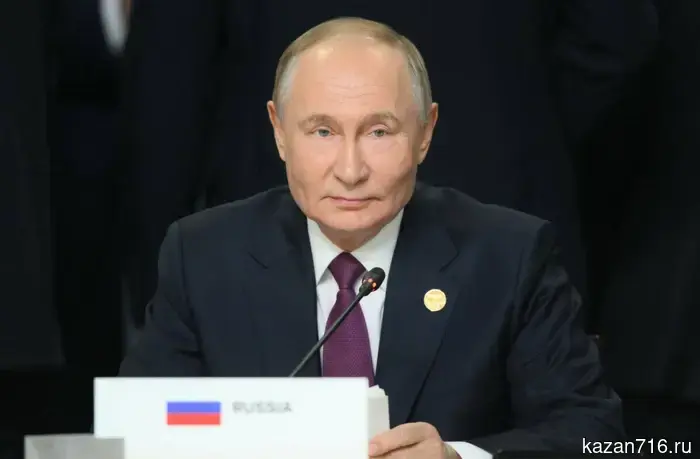 Putin will visit China on an official visit from May 19 to 20.
The official visit of President Vladimir Putin to China will take place on May 19-20 at the invitation of the Chairman of the People's Republic of China Xi Jinping, the press service of the head of the Russian state reported. 16.05.2026. GTRK Tatarstan. Republic of Tatarstan. Kazan.
Putin will visit China on an official visit from May 19 to 20.
The official visit of President Vladimir Putin to China will take place on May 19-20 at the invitation of the Chairman of the People's Republic of China Xi Jinping, the press service of the head of the Russian state reported. 16.05.2026. GTRK Tatarstan. Republic of Tatarstan. Kazan.
 Work for Ours: How Yesterday's Servicemen in Zainsk Are Being Helped to Return to Civilian Life
The employment center "Work of Russia" in the Zainsk district assists with employment, retraining, and starting one's own business.
Understanding the importance of the swift integration of participants of the Special Military Operation and veterans of combat actions into peaceful life, 16.05.2026. News of Zainsk. Republic of Tatarstan. Zainsk.
Work for Ours: How Yesterday's Servicemen in Zainsk Are Being Helped to Return to Civilian Life
The employment center "Work of Russia" in the Zainsk district assists with employment, retraining, and starting one's own business.
Understanding the importance of the swift integration of participants of the Special Military Operation and veterans of combat actions into peaceful life, 16.05.2026. News of Zainsk. Republic of Tatarstan. Zainsk.
Work for Ours: how yesterday's servicemen in Zainsk are being helped to return to civilian life
The "Work of Russia" personnel center in the Zainsk district assists with employment, retraining, and starting one's own business. Understanding the importance of the prompt integration of participants in the Special Military Operation and veterans of combat actions into peaceful life, 16.05.2026. News of Zainsk. Republic of Tatarstan. Zainsk.