
Employees of the Social Fund were told how to support veterans of the Special Military Operation.
The event was organized as part of the party project "Historical Memory." A lecture was held at the Social Fund of Russia's office in Tatarstan, combining geopolitics and everyday care for those who returned from war. The speaker was Anastasia Isaeva, a lecturer, ambassador of the Russian Knowledge Society, and deputy head of the Public Support Headquarters of "United Russia" in Tatarstan. The discussion focused on the topic "The Global Context of the Ukrainian Crisis. How to Help Veterans of the Special Military Operation Adapt to Civilian Life." As Anastasia Isaeva emphasized, one cannot effectively help people without understanding the scale of the events they have gone through, as the broader context is key to the causes of trauma and simultaneously a recipe for recovery.
To understand the connection between geopolitics and the socialization of veterans, the lecturer began with a chronology of Ukrainian reforms that led the country to a policy of "cancelling everything Russian," then moved on to analyze the goals and objectives of the special military operation, as well as the return of new territories. Special emphasis was placed on the mechanisms of "color revolutions." Using the example of Ukraine and the countries of the "Arab Spring," the speaker demonstrated how street protests under the slogans of democracy turn into a tool of geopolitical struggle. This naturally leads to the point that while some help veterans cope with the consequences of war, others continue to stoke conflicts, making it important to understand the whole picture. The heavy experience gained in battle leaves a deep mark on a person's soul. The conversation then shifted to how to cope with the consequences of such trauma.
The second part of the lecture was dedicated to what a soldier faces after returning home. Veterans often withdraw into themselves, have trouble sleeping, lash out in anger, and cannot concentrate. Many hide their problems for fear of judgment. Both psychologists and social fund employees can notice trouble in time.
Then, Anastasia Isaeva outlined three types of assistance. Medical assistance includes psychotherapy and sanatoriums. Innovative assistance includes, for example, VR therapy, where a person relives traumatic events in a safe environment. Social assistance includes payments, housing, education, and employment.
The main takeaway for the employees was that no system can replace a living environment. A veteran needs a family and a community that understands and accepts them. One cannot tell a veteran to "pull themselves together" or forbid them from remembering the war; it is also important for loved ones not to burn out themselves.
"Society should not pity veterans or fear them. They are a valuable resource. The state is already helping through the 'Defenders of the Fatherland' fund, MFCs, social protection centers, and 'Combat Brotherhood.' Veterans themselves should pass on their experience to the youth," emphasized Anastasia Isaeva.
They also discussed culture. The fund "This is My Homeland," together with the company "Family Relic," launched the project "They Fought for the Homeland" — a chronicle of the heroes of the Special Military Operation. Employees were advised to watch the films "At the Edge of the Abyss," "The White Orchestra," and "I Am Going Home." These films help understand those who have gone through war and foster respect for veterans.
In conclusion, the lecturer summarized: the special military operation demonstrated the strength of spirit and the readiness of the people to defend their country, and thousands of people prove that patriotism and mutual assistance remain the main values. The path to recovery is not easy; however, veterans and their families are not alone, as a vast support network operates in Russia, from government structures to non-profit organizations. According to the lecturer, only the right assistance and a comprehensive approach can return veterans to a full life. Employees of the Social Fund's office in Tatarstan received methodological materials with clear action algorithms. The topic of the lecture proved useful for them both in their work and everyday life, as today supporting veterans of the Special Military Operation is a common cause aimed at strengthening the country, preserving historical truth, and caring for the future.
Другие Новости Казани (Казань716)
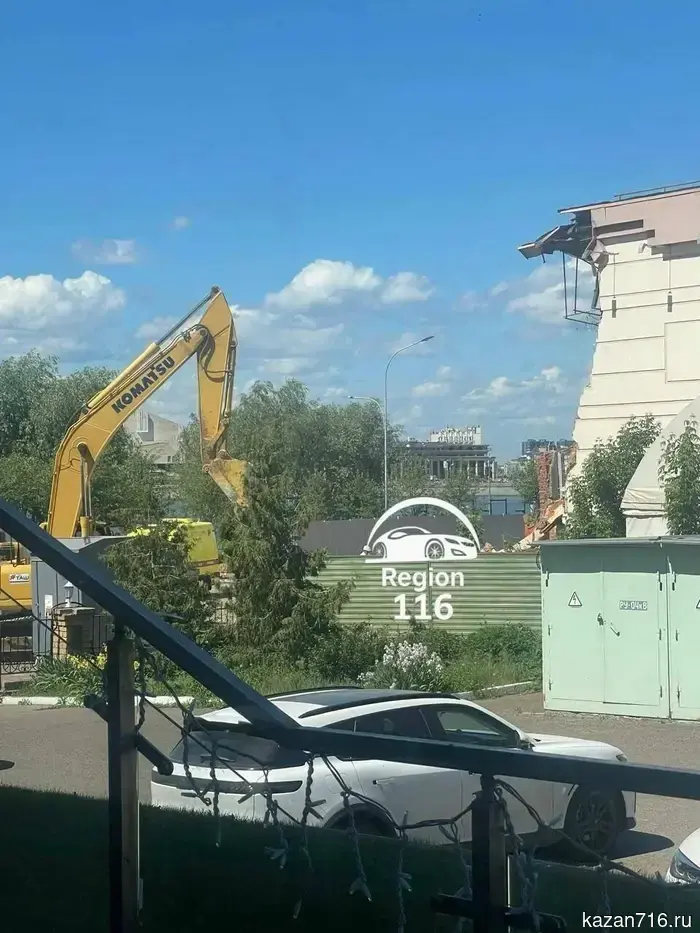 In Kazan, a woman was injured during the demolition of a fitness club building.
In Kazan, a woman was injured during the demolition of a sports club building.
Earlier on social media, it was reported that during the demolition of "Planet Fitness" on Khadi Takhtash, a wall unexpectedly collapsed. 25.05.2026. IA Tatar-inform. Republic of Tatarstan. Kazan.
In Kazan, a woman was injured during the demolition of a fitness club building.
In Kazan, a woman was injured during the demolition of a sports club building.
Earlier on social media, it was reported that during the demolition of "Planet Fitness" on Khadi Takhtash, a wall unexpectedly collapsed. 25.05.2026. IA Tatar-inform. Republic of Tatarstan. Kazan.
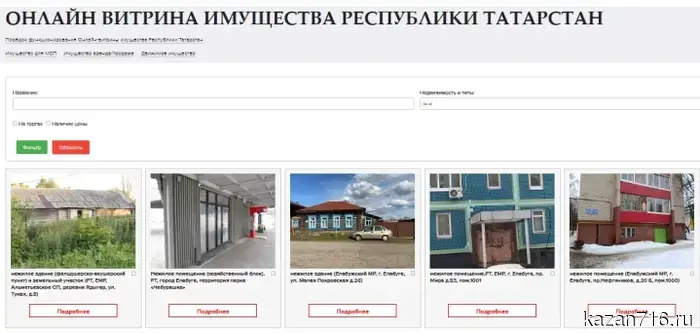 In Tatarstan, the "Property Showcase" has brought 32 properties into circulation over the year.
Starting from June 2025, the Republic of Tatarstan has launched a digital platform "Property Showcase," which has brought together more than 500 unused state and municipal real estate properties for transfer to investors and entrepreneurs. 25.05.2026. Nurlat-inform. Republic of Tatarstan. Nurlat.
In Tatarstan, the "Property Showcase" has brought 32 properties into circulation over the year.
Starting from June 2025, the Republic of Tatarstan has launched a digital platform "Property Showcase," which has brought together more than 500 unused state and municipal real estate properties for transfer to investors and entrepreneurs. 25.05.2026. Nurlat-inform. Republic of Tatarstan. Nurlat.
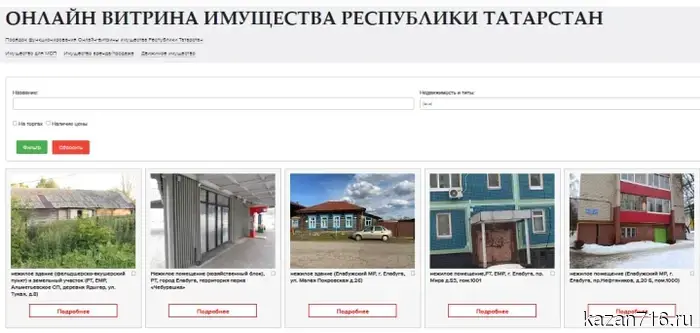 In Tatarstan, the "Property Showcase" has brought 32 assets into circulation over the year.
Starting from June 2025, the Republic of Tatarstan has launched a digital platform "Property Showcase," which has united more than 500 unused state and municipal real estate properties for transfer to investors and entrepreneurs. 25.05.2026. Nurlat-inform. Republic of Tatarstan. Nurlat.
In Tatarstan, the "Property Showcase" has brought 32 assets into circulation over the year.
Starting from June 2025, the Republic of Tatarstan has launched a digital platform "Property Showcase," which has united more than 500 unused state and municipal real estate properties for transfer to investors and entrepreneurs. 25.05.2026. Nurlat-inform. Republic of Tatarstan. Nurlat.
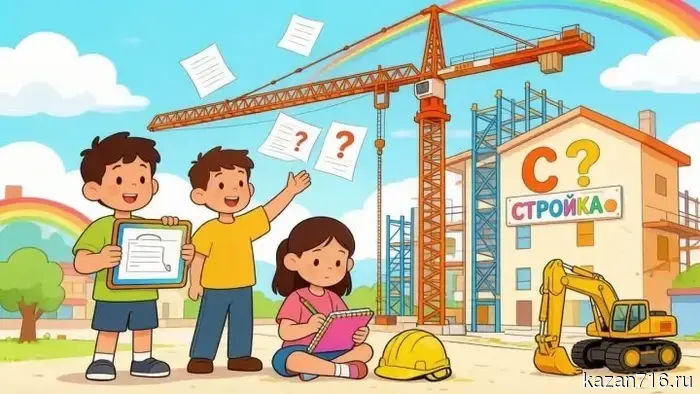 Schoolchildren of Tatarstan can inquire about the construction of Stepashin and Faizullin.
Children and teenagers aged six to seventeen will be able to ask questions to the head of the Ministry of Construction of Russia and the chairman of the Public Council under the ministry. 25.05.2026. Volzhskaya Nov' (Volga News). Republic of Tatarstan. Verkhny Uslon.
Gifted teacher – gifted student
In Zainsk, the best students and their teachers were awarded grants from the head of the district
In the hall of the House of Culture "Energetik," the best of the best. 05/25/2026. Zainsk News. Republic of Tatarstan. Zainsk.
Schoolchildren of Tatarstan can inquire about the construction of Stepashin and Faizullin.
Children and teenagers aged six to seventeen will be able to ask questions to the head of the Ministry of Construction of Russia and the chairman of the Public Council under the ministry. 25.05.2026. Volzhskaya Nov' (Volga News). Republic of Tatarstan. Verkhny Uslon.
Gifted teacher – gifted student
In Zainsk, the best students and their teachers were awarded grants from the head of the district
In the hall of the House of Culture "Energetik," the best of the best. 05/25/2026. Zainsk News. Republic of Tatarstan. Zainsk.
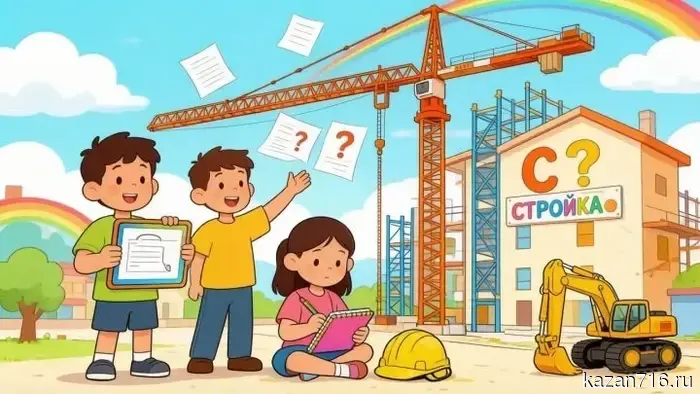 Schoolchildren of Tatarstan can inquire about the construction of Stepashin and Faizullin.
Children and teenagers aged six to seventeen will be able to ask questions to the head of the Ministry of Construction of Russia and the chairman of the Public Council under the ministry. 25.05.2026. Volzhskaya Nov' (Volga News). Republic of Tatarstan. Verkhny Uslon.
Schoolchildren of Tatarstan can inquire about the construction of Stepashin and Faizullin.
Children and teenagers aged six to seventeen will be able to ask questions to the head of the Ministry of Construction of Russia and the chairman of the Public Council under the ministry. 25.05.2026. Volzhskaya Nov' (Volga News). Republic of Tatarstan. Verkhny Uslon.
Employees of the Social Fund were told how to support veterans of the Special Military Operation.
The event was organized as part of the party project "Historical Memory." A lecture was held at the Office of the Social Fund of Russia in Tatarstan, combining geopolitics and everyday care for those who returned from war. 25.05.2026. Portal Vverkh. Republic of Tatarstan. Kazan.