
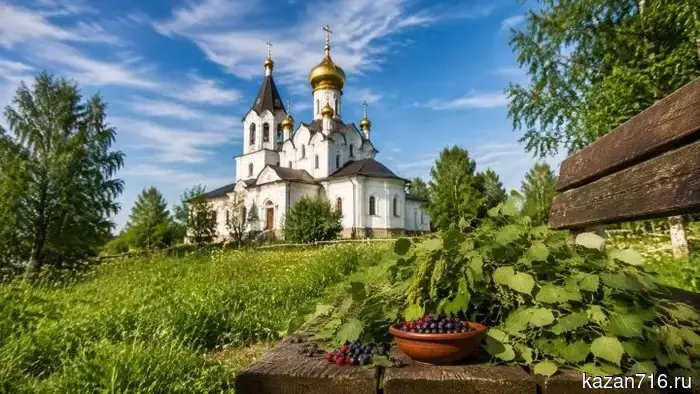
Peter's Fast 2026: what is forbidden and what is allowed from June 8
This is one of the mildest Orthodox fasts: fish is allowed on most days, and strict restrictions apply only on Wednesdays and Fridays. The main focus on these days is not only abstaining from food but also spiritual improvement: prayer, refraining from entertainment, and doing good deeds towards others. From June 8 to Peter's Day, until July 11, Orthodox Christians observe the Peter Fast. It is worth mentioning that this is the only long fast that has a different duration each year. In 2026, it lasts for 34 days. It is the mildest of all fasts: fish is allowed almost every day except for two days a week.
Where the Peter Fast comes from
This fast has two names: Apostolic and Peter. The first reminds us that the apostles Peter and Paul prepared themselves for preaching through abstinence. The second is associated with the feast day of these saints on July 12. The Peter Fast is one of the oldest. The first mentions of it date back to the 3rd century. It turns out that not everyone observed it back then—only those who missed the Great Fast due to illness or travel. Later, it became mandatory for all Orthodox Christians. In colloquial terms, this summer fast is called Peter's or Peter's abstinence.
Why the duration of the fast varies
The reason is that the Peter Fast begins every year seven days after Trinity (in 2026, this day fell on June 8) and always ends on July 11—the eve of Peter's Day. The end date does not change. However, the start date depends on the celebration of Easter. Thus, the earlier Easter is celebrated, the longer the Peter Fast. In 2026, Easter was celebrated on April 12, so the fast lasts for 34 days. Overall, it lasts from 8 to 42 days depending on the year. The fast concludes on the eve of the feast of Peter and Paul—Peter's Day. The feast itself (July 12) is no longer part of the fast—on this day, everything is allowed to eat.
What foods are prohibited and what are allowed
The Peter Fast in Orthodoxy is considered not strict. The main rule: no rich foods—meat, milk, eggs, and products made from them (cheese, cottage cheese, yogurt, butter, baked goods made with milk or eggs).
What can be eaten on different days of the week:
On Monday, Wednesday, and Friday—strict days. Only raw plant foods are eaten: bread, vegetables, fruits, nuts, honey. Cooked food without oil is also allowed. Fish is not allowed on these days.
On Tuesday and Thursday, fish is permitted. It can be boiled, fried, or stewed in vegetable oil. Side dishes can be any grains and vegetables.
On Saturday and Sunday, the restrictions are the same as on Tuesday and Thursday: fish, oil, and a little wine.
Many do not know that even on strict days (Monday, Wednesday, Friday), cooked food without oil is allowed—such as potatoes, pasta, and buckwheat cooked in water. Eating only raw foods is a monastic rule; it is not mandatory for laypeople.
Who can skip fasting:
Pregnant women, nursing mothers, children, the elderly, the sick, travelers, and those engaged in heavy physical labor. It is better to discuss the measure of fasting with a spiritual advisor.
What is important beyond food
Priests constantly remind: fasting is not a diet. The main thing during these days is to work on oneself.
What is prohibited:
Getting married. The sacrament of marriage is not performed during multi-day fasts.
Throwing noisy celebrations, loudly celebrating birthdays, going to concerts and clubs.
Quarreling, arguing, holding grudges.
Swearing.
Watching television for long periods, spending time on social media, playing computer games.
What to do instead:
Go to confession and receive communion. Pray at home in the morning and evening.
If possible, visit the church at least on Sundays.
Help someone in need.
Interesting facts about the Peter Fast
The Peter Fast is one of the oldest in Christianity. The first mentions of it appear as early as the 3rd century in the "Apostolic Tradition" of Saint Hippolytus of Rome.
In ancient times, this fast was established for those who, due to illness or travel, could not observe the Great Fast, to make up for the period of abstinence.
In folk tradition, this summer fast was called "Peter's" or "Peter's abstinence."
Другие Новости Казани (Казань716)
 Seaweed Salad without Imitation Crab Sticks: 3 Recipe Variations
Replace crab sticks with an apple and potato — and get an explosion of tenderness
Classic recipe: version without crab sticks
The secret of the ingredients is simple. 07.06.2026. News of Zainsk. Republic of Tatarstan. Zainsk.
The Ministry of Emergency Situations warns: fog, thunderstorms, hail, and winds up to 20 m/s are expected in Tatarstan.
On the night of June 8 and in the morning, fog is forecasted in Tatarstan and Kazan. During the day, the situation will worsen: thunderstorms will occur in some areas, the wind will strengthen to 15-20 m/s, and hail is possible in certain regions. 07.06.2026. Kazan Vedomosti. Republic of Tatarstan. Kazan.
Seaweed Salad without Imitation Crab Sticks: 3 Recipe Variations
Replace crab sticks with an apple and potato — and get an explosion of tenderness
Classic recipe: version without crab sticks
The secret of the ingredients is simple. 07.06.2026. News of Zainsk. Republic of Tatarstan. Zainsk.
The Ministry of Emergency Situations warns: fog, thunderstorms, hail, and winds up to 20 m/s are expected in Tatarstan.
On the night of June 8 and in the morning, fog is forecasted in Tatarstan and Kazan. During the day, the situation will worsen: thunderstorms will occur in some areas, the wind will strengthen to 15-20 m/s, and hail is possible in certain regions. 07.06.2026. Kazan Vedomosti. Republic of Tatarstan. Kazan.
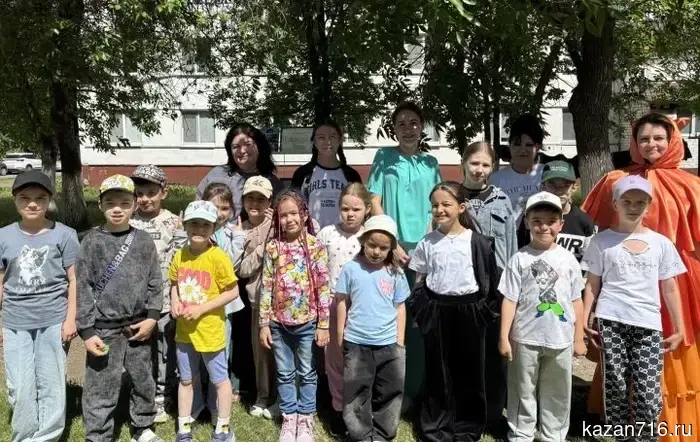 Pushkin Hour "He is our poet, he is our glory!": Pushkin Day in Russia celebrated at the Central Library
Every year on June 6, our country celebrates Pushkin Day in Russia, which is also known as Russian Language Day. 07.06.2026. News of Zainsk. Republic of Tatarstan. Zainsk.
Pushkin Hour "He is our poet, he is our glory!": Pushkin Day in Russia celebrated at the Central Library
Every year on June 6, our country celebrates Pushkin Day in Russia, which is also known as Russian Language Day. 07.06.2026. News of Zainsk. Republic of Tatarstan. Zainsk.
 Seaweed Salad without Imitation Crab Sticks: 3 Recipe Variations
Replace crab sticks with an apple and potato — and get an explosion of tenderness
Classic recipe: version without crab sticks
The secret of the ingredients is simple. 07.06.2026. News of Zainsk. Republic of Tatarstan. Zainsk.
Seaweed Salad without Imitation Crab Sticks: 3 Recipe Variations
Replace crab sticks with an apple and potato — and get an explosion of tenderness
Classic recipe: version without crab sticks
The secret of the ingredients is simple. 07.06.2026. News of Zainsk. Republic of Tatarstan. Zainsk.
 "Our home is a place of strength": how a school love turned into an exemplary family
Vyacheslav and Ekaterina Andreyev from Zainsk have carried their love through the years, raised three children, and become an example for all of Zainsk.
Once, they sat at the same desk in school No. 4.
Back then, they didn't know, 07.06.2026. News of Zainsk. Republic of Tatarstan. Zainsk.
"Our home is a place of strength": how a school love turned into an exemplary family
Vyacheslav and Ekaterina Andreyev from Zainsk have carried their love through the years, raised three children, and become an example for all of Zainsk.
Once, they sat at the same desk in school No. 4.
Back then, they didn't know, 07.06.2026. News of Zainsk. Republic of Tatarstan. Zainsk.
Peter's Fast 2026: what is forbidden and what is allowed from June 8
This is one of the mildest Orthodox fasts: fish is allowed on most days, and strict restrictions apply only on Wednesdays and Fridays. 07.06.2026. Newspaper New Life. Republic of Tatarstan. Bolgar.