Investments, efficiency, ecology. The survival experience of "Kazanorgsintez" at the bottom of the petrochemical cycle.
"Kazanorgsintez" will direct 70% of its net profit to dividends
Prices, spreads, surplus
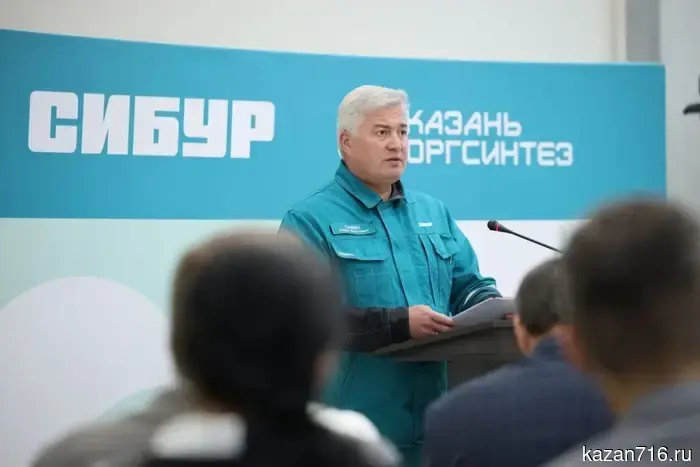
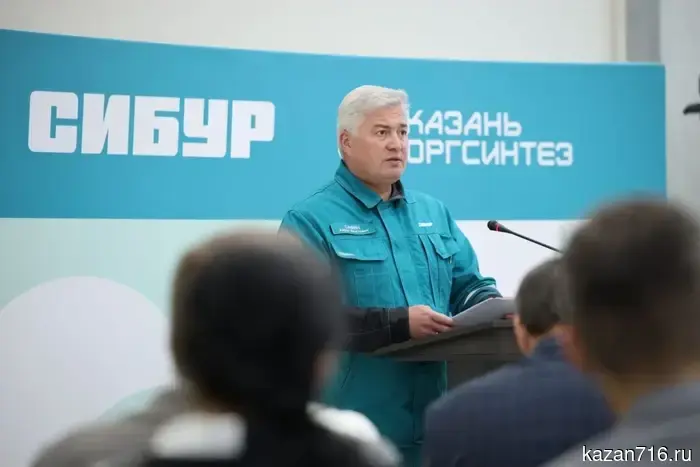
According to data presented at the annual general meeting of shareholders of "Kazanorgsintez", the situation in the global petrochemical industry continued to worsen in 2025. Speaking to shareholders, the company's CEO Ayrat Safin reported that over the year, 11.8 million tons of new polyethylene and polypropylene production capacities were introduced worldwide, with 90% of this increase occurring in China. The growth of production capacities continues to outpace demand: from 2024 to 2025, the surplus increased by another 7 million tons. In Europe and Asia, the trend of closing inefficient production facilities continues, but despite this, the capacity utilization in polyolefins remained at a historical minimum of 76%. This has led to Asian spreads (the price difference between raw materials and finished products) for polyethylene and polypropylene being significantly below the average levels of the last ten years. This negatively affects the financial results of all players in the industry. Spring events in Iran triggered a sharp rise in oil and naphtha prices (key raw materials for petrochemicals). At the same time, the cost of primary polymers did not keep pace with the rise in raw materials. This delay has a temporary negative impact on the financial results of polymer producers. However, due to the escalation of the conflict, prices have risen in all major markets – in Europe and Turkey, in China. In the USA, for example, major producers doubled their prices in April compared to January quotes. In Russia, however, price growth remains moderate, as the industry faces internal macroeconomic challenges. If the conflict in the Middle East drags on, oil prices will continue to rise, which means increased costs for raw materials for the polymer industry. However, these are not the only factors tightening the spiral of negative trends. Against the backdrop of a strong ruble, the barrier for importing finished products from China will continue to decrease. "The pricing environment is complex, and it reflects global negative trends in the petrochemical industry. In these conditions, it is important for us to focus and find a balance between margin and demand stability from domestic processors," noted Safin. External negativity is exacerbated by restrictions within the country. Against the backdrop of slowing GDP growth, demand for polymer products has noticeably weakened in all basic sectors of the economy, from construction and automotive to agriculture. Meanwhile, domestic production costs continue to rise. Wages are increasing faster than inflation, transportation costs are rising, and prices for gas and electricity are going up. This has put plastic processors under double pressure: weak demand in plastic-intensive segments and expensive loans have been compounded by intensified competition with imports amid a strengthening ruble.
Growth under unprecedented pressure
Despite external challenges, the management of "Kazanorgsintez" has managed to achieve record production figures. In 2025, the output of finished products reached 1.1 million tons, which is 8% higher than the level of 2024. Labor productivity increased by 11%, to 248 tons per person. The company's revenue decreased by 5%, to 99.9 billion rubles. At the same time, the EBITDA margin remained at a high level for the industry at 23.5%, significantly higher than the figures of most global competitors. The company received substantial support from SIBUR's investments. "Without the implementation of our investment projects and the modernization of production capacities, EBITDA in 2025 could have been 30% lower," warned Safin. Total capital investments in "Kazanorgsintez" increased by 86%, to 41.1 billion rubles. The funds were used to complete the Hexene-1 project, build the Lushnikovskaya gas turbine unit (GTU-250), which from May 2026 will cover 100% of the company's electricity needs, a flue gas recovery system, and create the largest chromic catalyst factory in Russia. These projects, in addition to their economic effect, allowed for a reduction of greenhouse gas emissions by 43 thousand tons. By investing in production development, the Kazan enterprise of SIBUR is reducing its environmental impact. Production volumes increased by 10% from 2021 to 2025 (from 998 thousand tons to 1,092 thousand tons), while greenhouse gas emissions during the same period decreased by 20% (from 1.673 million tons to 1.333 million tons per year in CO2 equivalent).
Dividends as an indicator of health
The board of directors proposed, and the shareholders' meeting approved, the payment of dividends for the results of 2025 in the amount of 2.85 rubles per ordinary share and 0.25 rubles per preferred share. The total amount of payments amounted to 5.117 billion rubles – 70% of net profit under IFRS. "The very fact that 'Kazanorgsintez' in such a challenging macroeconomic environment not only maintains profitability but also directs a significant portion of it to dividends speaks volumes," comments analyst Leonid Khazanov. "The enterprise generates a stable operating cash flow capable of covering both investments and shareholder payouts. While many companies in the petrochemical sector are cutting or canceling dividends, 'Kazanorgsintez's' decision is a clear signal to the market: production is stable, debt burden is under control, and management is confident in the future. Given that the company has just reached the peak of its investment phase, the dividend payout looks particularly indicative."
In the next three years, more than 40 million tons of new polyolefin capacities are planned to be introduced worldwide, so a quick recovery in margins is not expected. However, "Kazanorgsintez" has several trump cards. One of them is the completion of the investment period and reaching full capacity of the GTU, which has already begun to reduce electricity costs. The second is the launch of its own catalyst production. The third is the construction of a new ethylene pipeline from Nizhnekamsk, which will solve the raw material shortage problem. Additionally, there is hope for the final resolution of the conflict in the Middle East. This should stabilize prices and make them more predictable, which will positively affect the company's operations. For now, the company demonstrates a rare ability in the current cycle to combine modernization, environmental responsibility, and return capital to shareholders.
Другие Новости Казани (Казань716)
 Equipment manufacturers for LNG exporters are expanding import substitution.
Photo: Official website of PJSC "Gazprom" www.gazprom.ru
June 18 – IA SM.News. 19.06.2026. Kazan.Sm.News. Republic of Tatarstan. Kazan.
Putin has allowed the launch of a new plant in Zelenodolsk.
Russian President Vladimir Putin has authorized the launch of a new plant in Zelenodolsk and the commencement of tests for the country's first complex for the production and testing of LNG compression units via video conference. 18.06.2026. Business Online. Republic of Tatarstan. Kazan.
Equipment manufacturers for LNG exporters are expanding import substitution.
Photo: Official website of PJSC "Gazprom" www.gazprom.ru
June 18 – IA SM.News. 19.06.2026. Kazan.Sm.News. Republic of Tatarstan. Kazan.
Putin has allowed the launch of a new plant in Zelenodolsk.
Russian President Vladimir Putin has authorized the launch of a new plant in Zelenodolsk and the commencement of tests for the country's first complex for the production and testing of LNG compression units via video conference. 18.06.2026. Business Online. Republic of Tatarstan. Kazan.
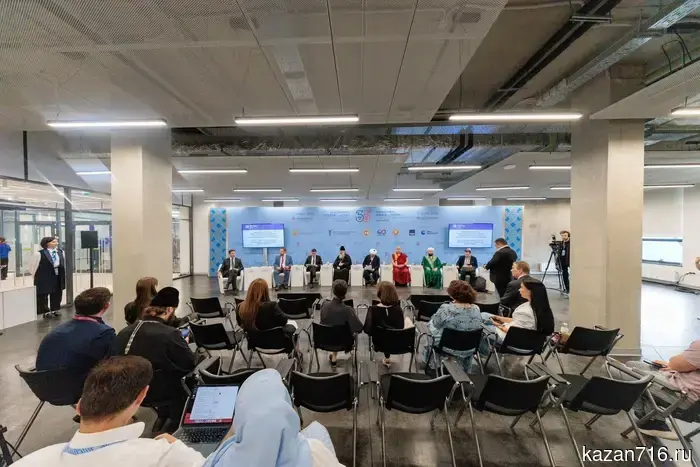 Metropolitan Kirill spoke at the Russia-ASEAN Forum session.
From June 17 to 19, the fifth in-person Russia – ASEAN summit is taking place in Kazan. The international forum is attended by the heads of state and government of 11 Southeast Asian countries and the President of Russia, Vladimir Putin. 06/17/2026. Kazan Diocese. Republic of Tatarstan. Kazan.
Metropolitan Kirill spoke at the Russia-ASEAN Forum session.
From June 17 to 19, the fifth in-person Russia – ASEAN summit is taking place in Kazan. The international forum is attended by the heads of state and government of 11 Southeast Asian countries and the President of Russia, Vladimir Putin. 06/17/2026. Kazan Diocese. Republic of Tatarstan. Kazan.
 Investments, efficiency, ecology. The survival experience of "Kazanorgsintez" at the bottom of the petrochemical cycle.
"Kazanorgsintez" will allocate 70% of its net profit for dividends
Prices, spreads, surplus
According to the data presented at the annual general meeting of shareholders of "Kazanorgsintez" on June 18, 2026. Tatar-inform News Agency. Republic of Tatarstan. Kazan.
Investments, efficiency, ecology. The survival experience of "Kazanorgsintez" at the bottom of the petrochemical cycle.
"Kazanorgsintez" will allocate 70% of its net profit for dividends
Prices, spreads, surplus
According to the data presented at the annual general meeting of shareholders of "Kazanorgsintez" on June 18, 2026. Tatar-inform News Agency. Republic of Tatarstan. Kazan.
Investments, efficiency, ecology. The survival experience of "Kazanorgsintez" at the bottom of the petrochemical cycle.
"Kazanorgsintez" will direct 70% of its net profit to dividends Prices, spreads, surplus According to the data presented at the annual general meeting of shareholders of "Kazanorgsintez" on June 18, 2026. Tatar-inform News Agency. Republic of Tatarstan. Kazan.