

The myth of sugar: complete abstinence is not necessary
Researchers have proven: improvement in well-being is not related to the exclusion of sugar, but to the rejection of ultra-processed food. Moderation turned out to be more important than complete bans.
Why sugar was designated as the main enemy
For many years, sugar has been on the list of the most dangerous products. It was attributed to obesity, diabetes, heart disease, and even a decline in cognitive functions. Against this backdrop, many perceived the rejection of sweets as a panacea. However, recent findings by scientists turn the usual picture upside down. Researchers analyzed data from numerous experiments and came to an unexpected conclusion. Positive changes in the health of people who excluded sugar are often not related to the absence of sweets per se, but to the fact that they simultaneously removed another type of food from their menu — the very one that forms the basis of modern fast food.
What is the real secret to improving health
When a person decides to give up sugar, they usually reassess their entire diet. Sweet sodas, store-bought juices, long-shelf-life pastries, convenience foods, snacks, and fast food are all cut out. These products contain not only sugar but also a huge amount of flavor enhancers, trans fats, emulsifiers, and artificial additives. Scientists emphasize: excluding this entire group does indeed bring benefits. But if ultra-processed products are left in the diet without sugar, the effect will be minimal or even zero. In other words, it’s not about the sweet taste, but about the fact that a person begins to eat more natural and balanced food.
Is it possible to eat sweets without harming health
Researchers claim that moderate sugar consumption does not pose a serious threat if the overall diet is varied and complete. A small amount of honey in tea, a spoonful of jam for breakfast, or a piece of dark chocolate for dessert will not cause health problems for a person who otherwise eats properly. Much more dangerous are not the sweets themselves, but their context. Sugar becomes a problem when it enters the body along with a huge dose of calories, fats, and chemical additives. In pure form, in reasonable amounts, it is not a toxin or poison.
What is more important — balance or bans
A panicked fear of sugar can lead to the opposite effect. Strict restrictions are often broken, and after breakdowns, feelings of guilt arise, which are soothed with even more food. Moreover, a person obsessed with finding sugar-free products often forgets the main thing — the quality of the rest of their diet. The main conclusion of scientists is simple and wise: as in most nutrition issues, moderation plays a key role. Sugar is neither a panacea nor a poison. It is merely a product that, in the right doses, does not destroy health and, with a sensible approach, can remain part of the daily menu.
photo by the author
Yulia Kazamarova
More news about the event:
Myth about sugar: complete rejection is not necessary
Researchers have proven: improvement in well-being is not related to the exclusion of sugar, but to the rejection of ultra-processed food. 12:06 22.06.2026 News of Zainsk - Zainsk
Myth about sugar: complete rejection is not necessary
Researchers have proven: improvement in well-being is not related to the exclusion of sugar, but to the rejection of ultra-processed food. 11:34 22.06.2026 Zainsk-inform - Zainsk
News from neighboring regions on the topic:
Childhood obesity: signs, causes, treatment
Childhood obesity has unfortunately become a fairly common phenomenon. 10:51 22.06.2026 Langepas City Hospital - Langepas

Другие Новости Казани (Казань716)
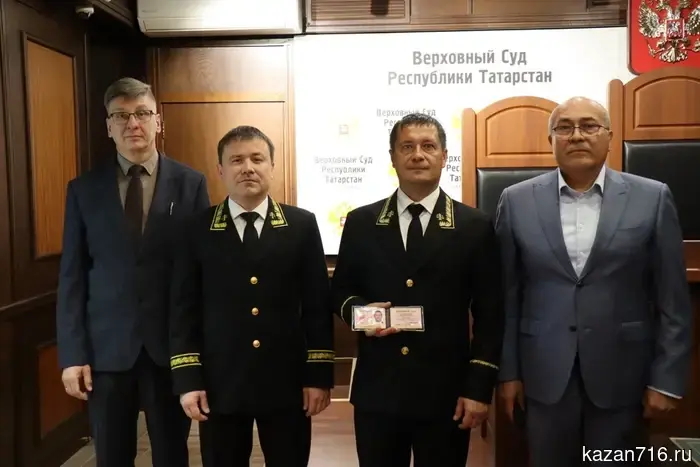 The certificate was presented to the chairman of the district court at the Supreme Court of the Republic of Tatarstan.
Today, the Chairman of the Supreme Court of the Republic of Tatarstan, Azat Gilmutdinov, presented a certificate to the Chairman of the Cheremshansky District Court, Sergey Indireikin. 22.06.2026. Supreme Court of the Republic of Tatarstan. Republic of Tatarstan. Kazan.
Refugees and displaced persons in Tatarstan will receive additional support.
The list of citizens entitled to free legal assistance has been expanded in Tatarstan. 22.06.2026. IA Tatar-inform. Republic of Tatarstan. Kazan.
The certificate was presented to the chairman of the district court at the Supreme Court of the Republic of Tatarstan.
Today, the Chairman of the Supreme Court of the Republic of Tatarstan, Azat Gilmutdinov, presented a certificate to the Chairman of the Cheremshansky District Court, Sergey Indireikin. 22.06.2026. Supreme Court of the Republic of Tatarstan. Republic of Tatarstan. Kazan.
Refugees and displaced persons in Tatarstan will receive additional support.
The list of citizens entitled to free legal assistance has been expanded in Tatarstan. 22.06.2026. IA Tatar-inform. Republic of Tatarstan. Kazan.
 Tatarstan ranked fourth among the regions of the Russian Federation in the number of auto loans issued in May 2026.
In a month, the residents of the republic issued 4,000 such loans.
In May 2026, Tatarstan ranked fourth among Russian regions in the number of auto loans issued. 22.06.2026. TatCenter.ru. Republic of Tatarstan. Kazan.
Tatarstan ranked fourth among the regions of the Russian Federation in the number of auto loans issued in May 2026.
In a month, the residents of the republic issued 4,000 such loans.
In May 2026, Tatarstan ranked fourth among Russian regions in the number of auto loans issued. 22.06.2026. TatCenter.ru. Republic of Tatarstan. Kazan.
 "Success is here, there is grain": how Sabantuy-2026 took place in Kazan
The secret of mom's pancakes Raisa RT, the Syuyumbike tower made of chak-chak and the "gray mouse" against the backdrop of Fazleeva
"Manifestation of the mercy of the Almighty. 06/22/2026. Business Online. Republic of Tatarstan. Kazan.
New deputy head for housing and communal services and head of youth affairs appointed in Nizhnekamsk.
The head of the Nizhnekamsk district, Radmir Belyaev, announced personnel changes in the local administration at the weekly meeting. 22.06.2026. Kazan Vedomosti. Republic of Tatarstan. Kazan.
New deputy head for housing and communal services and head of youth affairs appointed in Nizhnekamsk.
The head of the Nizhnekamsk district, Radmir Belyaev, announced personnel changes in the local administration at the weekly meeting. 22.06.2026. Kazan Vedomosti. Republic of Tatarstan. Kazan.
"Success is here, there is grain": how Sabantuy-2026 took place in Kazan
The secret of mom's pancakes Raisa RT, the Syuyumbike tower made of chak-chak and the "gray mouse" against the backdrop of Fazleeva
"Manifestation of the mercy of the Almighty. 06/22/2026. Business Online. Republic of Tatarstan. Kazan.
New deputy head for housing and communal services and head of youth affairs appointed in Nizhnekamsk.
The head of the Nizhnekamsk district, Radmir Belyaev, announced personnel changes in the local administration at the weekly meeting. 22.06.2026. Kazan Vedomosti. Republic of Tatarstan. Kazan.
New deputy head for housing and communal services and head of youth affairs appointed in Nizhnekamsk.
The head of the Nizhnekamsk district, Radmir Belyaev, announced personnel changes in the local administration at the weekly meeting. 22.06.2026. Kazan Vedomosti. Republic of Tatarstan. Kazan.
The myth of sugar: complete abstinence is not necessary
Researchers have proven: improving well-being is not related to the exclusion of sugar, but to the rejection of ultra-processed foods. 22.06.2026. Zainsk-Inform. Republic of Tatarstan. Zainsk.