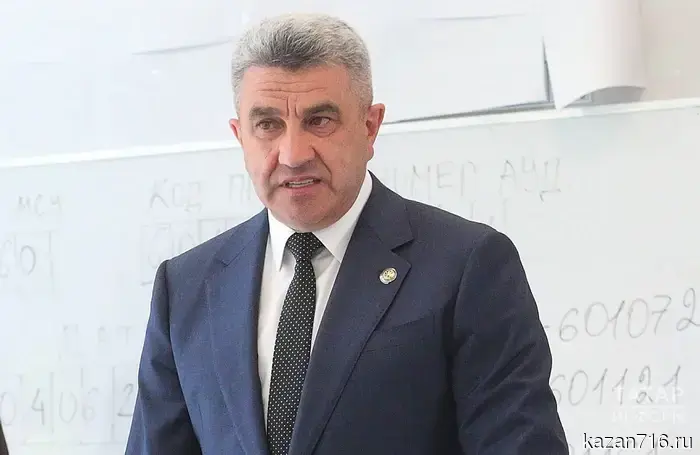
Tatarstan improved its results in the Unified State Exam: more students scored 100 points, higher average scores.
This year, graduates retook exams more often and actively chose natural science subjects. The number of college and technical school graduates taking the Unified State Exam (USE) doubled. In Tatarstan, over 18,000 participants were registered for the USE this year. Among them were students arriving from new and border territories of Russia, said the Minister of Education and Science of Tatarstan, Ilsur Khadiullin, at a briefing in the Government House of Tatarstan. "There is almost a twofold increase in participants from among college and technical school students, which is explained by changes in university admission rules. For example, if a graduate of secondary vocational education received a qualification as an 'economist' but wants to enter a medical university, they will need results in Russian language and two specialized subjects, predominantly chemistry and biology," he reported. According to the national project "Youth and Children," all regions of Russia have been given a target indicator: "The share of those choosing the USE in natural science subjects (chemistry, physics, biology), specialized mathematics, and computer science," the head of the Ministry of Education and Science reminded. According to him, Tatarstan has fulfilled this task. In the republic, 39.7% of graduates took these subjects, while the planned value was 38%. "Thanks to the republican projects 'Physics and Mathematics Breakthrough' and 'Physical and Chemical Breakthrough,' the motivation of students to study natural science disciplines has increased. The number of participants in natural science subjects—chemistry, physics, biology, specialized mathematics, and computer science—has increased. The maximum growth is observed in physics and specialized mathematics, which is also facilitated by changes in university admission rules," the minister noted.
Average USE scores exceeded the national average. The average USE scores for all subjects in Tatarstan exceeded the national average. In literature and chemistry, they are higher by eight points, Khadiullin stated. "The highest average scores, above 70, were demonstrated by students in specialized mathematics, physics, literature, and foreign languages, except for German. The lowest, below 60 points, were in geography and social studies," he said. Compared to last year, there is an increase in the average republican score in natural science subjects, except for chemistry, the Minister of Education and Science noted. Results for individual subjects: The average USE score in Russian language was 66.6, which is 3.6 points higher than the national average; The average republican score in specialized mathematics was 71.2, which is almost 4.8 points higher than the national average; The average score in physics was 71.7, which is more than 5.2 points higher than the national average; The average republican score in chemistry was 66.9, which is eight points higher than the national average; The average USE score in biology was 61.2, which is 4.5 points higher than the national average; The average score in computer science was over 64, which is 5.2 points higher than the national average; The average score in literature was 71.95, exceeding the national average by almost 8.5 points; The average score in English language was 74.2, which is almost 8 points higher than the national average. The average score in social studies was 56.3 points, which is 1.1 points higher than the national average. "The foundations of state policy in the field of historical education were approved by the decree of the President of the Russian Federation, Vladimir Putin. Therefore, we pay special attention to the results of the USE in history. The average score in history has increased to 61.6, which is 3.7 points higher than the national average. Students from the Tukayev district demonstrated success, where not only the average score increased, but also the number of participants compared to 2025," Khadiullin emphasized. The increase in scores relative to the average republican indicators from last year is also important: in specialized mathematics—by 2.78, in physics—by 7.78, in computer science—by 3.5, in biology—by 1.3, he added.
In Tatarstan, the number of graduates retaking an elective subject increased by 25%. For several years now, thanks to the decision of the President of Russia, 11th-grade graduates can retake the exam in one subject during an additional period—on July 8 and 9. In Tatarstan, more than 3,200 eleventh-graders took advantage of this right. Last year, there were over 2,500, the head of the Ministry of Education and Science reported. "This is 25% more than in 2025. The first place in the number of retakes was taken by social studies, followed by computer science, which was the absolute leader last year. The results will be announced no later than July 20, and in case of appeals—taking into account the timeframes for their processing," he reported. The number of graduates who did not meet the minimum threshold in the main period of the USE for mandatory subjects remains stable in Russian language, while in mathematics, there is a decrease, Khadiullin added. Thus, 40 students did not score the minimum number of points in Russian language, 144 in specialized mathematics, and 98 graduates in basic mathematics. Graduates of 2026 will be able to retake these subjects in September.
The number of perfect scores has increased by 250. Tatarstan remains one of the leading regions in Russia in terms of the number of perfect scores. According to preliminary data, 408 graduates received 460 perfect scores, Khadiullin stated. This is the highest figure in the last six years, starting from 2021. Last year, graduates of the republic had 313 perfect scores. This year, two graduates scored 300 points, 48 graduates scored 200 points, and 358 graduates scored 100 points. "The graduates of the IT Lyceum of KFU and the Kazan Suvorov Military School received 300 points. Results in mathematics, physics, and biology improved significantly, more than doubled in Russian and English languages," the minister emphasized. As in previous years, the highest scores were achieved by graduates from Kazan, Naberezhnye Chelny, Nizhnekamsk, Almetyevsk, Bugulma, and Zelenodolsk districts. "But this year, the number of such municipalities has significantly increased to 41 districts," the head of the Ministry of Education and Science noted. According to him, 200-point results were achieved for the first time by graduates from Zainsk, Kaibitsy, Mamadysh, Sarman, and Sabinsky districts. "The absolute leaders remain the Vakhitovsky and Privolzhsky districts of Kazan," Khadiullin noted. Additionally, the number of teachers who successfully prepared students for exams has increased. "This year, the absolute leader was Kirill Sergeev, a mathematics teacher at Lyceum No. 131 in Kazan. He has 15 graduates with a perfect score of 100 points," the minister said. Graduates this year who scored maximum points on the USE will receive monetary rewards from the Ministry of Education and Science of Tatarstan based on their results: 15,000, 25,000, and 35,000 rubles, respectively.
The number of medalists increased by 250. More than 3,500 graduates received a diploma with honors and a medal upon completing their schooling, which is 250 more than last year, Khadiullin reported. "The share of those awarded the gold medal remains stable year after year. This year, more than 1,900 graduates were awarded the medal 'For Special Achievements in Learning' of the first degree," he emphasized. The gold medal is awarded to graduates who received all final grades of 'excellent' and at least 70 points on the USE in Russian language and an elective subject. The silver medal is awarded to graduates who have final grades of 'excellent' and no more than two 'good,' as well as those who scored at least 60 points on the USE in Russian language and an elective subject. This year, more than 1,500 people were awarded the medal 'For Special Achievements in Learning' of the second degree, the minister noted. At the same time, according to him, 119 candidates did not confirm their right to the medal. "This corresponds to the trend of last year," said the head of the Ministry of Education and Science.
"The highest results in the Basic State Exam (BSE) are in English language, native language, and literature." More than 47,600 ninth-grade graduates took the BSE in Tatarstan, and 811 ninth-graders chose the form of the state final exam, Khadiullin reported. "The highest results are in English language, native language, and literature. The lowest average score is in social studies," he said. According to the minister, the average score in chemistry, biology, and computer science increased based on the results of the BSE, while it decreased in mathematics and physics. "For us, this is a kind of challenge, as the subjects 'mathematics' and 'physics' form the basis of the country's engineering future. The republic provides enormous resources for addressing this within the framework of the implementation of the projects 'Physics and Mathematics Breakthrough' and 'Physical and Chemical Breakthrough,'" he stated.
"The quality of exam results for external students is lower." Each year, the share of children on home schooling among participants in the BSE
Другие Новости Казани (Казань716)
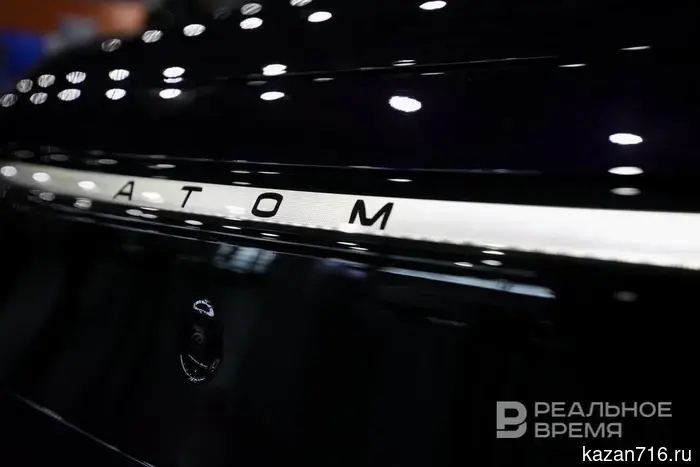 The electric car "Atom" has been allowed to operate in taxis.
The list already includes 30 models from different brands
Photo: Artem Dergunov
The Ministry of Industry and Trade has included the electric car "Atom" in the list of vehicles permitted for use in taxis. 13.07.2026. Real time. Republic of Tatarstan. Kazan.
Students of Tatarstan are invited to participate in the expedition "School of Urban Changes" in Astrakhan.
Registration is open for the student expedition "School of Urban Changes: Urban Toolkit and Pilot Projects for Astrakhan," July 13, 2026. Ministry of Youth Affairs. Republic of Tatarstan. Kazan.
The electric car "Atom" has been allowed to operate in taxis.
The list already includes 30 models from different brands
Photo: Artem Dergunov
The Ministry of Industry and Trade has included the electric car "Atom" in the list of vehicles permitted for use in taxis. 13.07.2026. Real time. Republic of Tatarstan. Kazan.
Students of Tatarstan are invited to participate in the expedition "School of Urban Changes" in Astrakhan.
Registration is open for the student expedition "School of Urban Changes: Urban Toolkit and Pilot Projects for Astrakhan," July 13, 2026. Ministry of Youth Affairs. Republic of Tatarstan. Kazan.
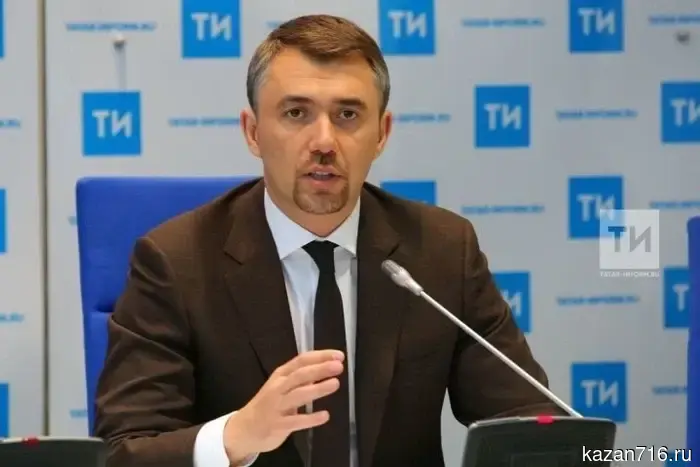 A five-year development program will be developed for Bugulma for its 250th anniversary.
It will include projects for the modernization of industry, tourism, education, healthcare, improvement, and preservation of cultural heritage. 13.07.2026. Bavly-inform. Republic of Tatarstan. Bavly.
In Kazan, there is a traffic jam of 3 kilometers on the exit to the Gorky Highway.
In Kazan, a traffic jam of 3 kilometers has formed on the streets of Krasnokokshayskaya and Frunze. 13.07.2026. Business Online. Republic of Tatarstan. Kazan.
In Chistopol, police detained a 15-year-old teenager for car theft.
The young man faces a punishment of imprisonment for up to five years. The teenager admitted that he decided to take a ride in someone else's car but ended up in an accident. 13.07.2026. Komsomolskaya Pravda Kazan. Republic of Tatarstan. Kazan.
Iran warns of the consequences of U.S. intervention in the region.
Iran threatens consequences in response to US interference in the region
Iran has warned of possible consequences if US interference in regional affairs continues. 07/13/2026. Real time. Republic of Tatarstan. Kazan.
A five-year development program will be developed for Bugulma for its 250th anniversary.
It will include projects for the modernization of industry, tourism, education, healthcare, improvement, and preservation of cultural heritage. 13.07.2026. Bavly-inform. Republic of Tatarstan. Bavly.
In Kazan, there is a traffic jam of 3 kilometers on the exit to the Gorky Highway.
In Kazan, a traffic jam of 3 kilometers has formed on the streets of Krasnokokshayskaya and Frunze. 13.07.2026. Business Online. Republic of Tatarstan. Kazan.
In Chistopol, police detained a 15-year-old teenager for car theft.
The young man faces a punishment of imprisonment for up to five years. The teenager admitted that he decided to take a ride in someone else's car but ended up in an accident. 13.07.2026. Komsomolskaya Pravda Kazan. Republic of Tatarstan. Kazan.
Iran warns of the consequences of U.S. intervention in the region.
Iran threatens consequences in response to US interference in the region
Iran has warned of possible consequences if US interference in regional affairs continues. 07/13/2026. Real time. Republic of Tatarstan. Kazan.
Tatarstan improved its results in the Unified State Exam: more students scored 100 points, higher average scores.
This year, graduates retook exams more often and actively chose natural science subjects. Twice as many college and technical school graduates took the Unified State Exam. In Tatarstan, more than 13,07,2026 were registered this year. IA Tatar-inform. Republic of Tatarstan. Kazan.