
How to help your liver?
From July 27 to August 2, Russia is holding a Liver Disease Prevention Week, timed to coincide with the International Day Against Hepatitis (July 28).
The liver is a kind of biochemical laboratory and filter in one organ. It:
- detoxifies toxins, alcohol, drug residues, and breakdown products;
- participates in the metabolism of fats, proteins, and carbohydrates;
- stores important vitamins (A, D, B12), iron, and glycogen — the "energy reserve";
- produces bile, which helps digest fats;
- synthesizes blood proteins, including clotting factors.
The liver can regenerate, even if it is damaged by 70% — but its resources are not infinite. The sooner you start taking care of it, the longer it will remain your unnoticed but powerful ally in health and life.
Why liver health is vital
What happens to food, medicines, or toxins after they enter your body? In the shadow of other "popular" organs — the heart, brain, stomach — the liver quietly performs hundreds of functions, without complaint and without drawing attention. It works 24/7, even when you sleep, repairing damage and cleansing the blood of everything unnecessary. And it does this with such silent dedication that we often only remember it when it’s too late.
The liver is one of the largest organs in the body. It performs many important metabolic functions. It converts nutrients in our diet into substances that the body can use, stores these substances, and supplies them to cells when needed. It also absorbs toxic substances and converts them into harmless substances or facilitates their elimination from the body.
The liver of an adult weighs about 1.4 kg and is located in the upper right part of the abdomen, under the diaphragm. It occupies most of the space under the ribs and some space in the upper left part of the abdomen.
Main liver diseases
The liver is an organ with a huge reserve of strength. It "remains silent" for a long time, even when it is working hard. And this is its treachery: while you feel relatively normal, a destructive process may be occurring inside.
Liver diseases often develop covertly and are discovered accidentally — during an ultrasound, tests, or already in the later stages when restoring health becomes difficult. What enemies lurk for our main biochemical factory?
Viral hepatitis (A, B, C) - inflammatory diseases caused by viruses. Hepatitis A is transmitted through dirty hands, when in contact with food, water, or objects contaminated with the feces of an infected person; B and C are transmitted through blood and biological fluids when people come into contact with the mucous membranes or body fluids of infected individuals. Hepatitis B and C can progress to chronic forms and lead to cirrhosis or liver cancer.
Fatty liver disease (steatosis) - a common diagnosis in people with excess weight and diabetes. The liver accumulates fat, becomes vulnerable to inflammation and fibrosis, may not show symptoms for a long time, but has serious consequences due to the accumulation of triglycerides in the liver in the absence of accompanying etiologies, such as excessive alcohol consumption, viral hepatitis, medication use, or other etiologies of liver steatosis.
Cirrhosis of the liver - the result of prolonged inflammation: healthy tissue is replaced by scar tissue (fibrosis) and nodules form in the liver due to chronic damage, leading to changes in the normal lobular organization of the liver. Liver functions sharply decline, leading to swelling, ascites, and bleeding.
Often develops as a complication of hepatitis, alcoholism, or steatosis.
Liver cancer - usually arises against the background of cirrhosis or chronic hepatitis. It progresses rapidly, but in the early stages can be successfully treated.
Autoimmune and hereditary diseases - Wilson's disease, hemochromatosis, autoimmune hepatitis — rare but dangerous pathologies that require lifelong monitoring.
All these conditions are not a death sentence if detected in time. But if something is wrong — the liver sends only weak signals. That’s why regular check-ups and attentive care for your body are not an overreaction, but a vital necessity.
Causes and risk factors. What negatively affects the liver the most?
Alcohol
It is rightly considered one of the main destroyers of the liver. Regular consumption, even in moderate amounts, leads to inflammation, fatty degeneration, and cirrhosis. And no, "on holidays" — this is not always safe, especially if there are many holidays.
Excess weight and poor nutrition
Fast food, sweets, trans fats, soda — all of this puts a strain on metabolism and contributes to fatty liver disease. Extra weight = extra work for the liver.
Medications and uncontrolled supplements
Paracetamol, antibiotics, hormones, dietary supplements with "miracle effects" — the liver filters all of this! Overdose or combination of drugs can simply overload it.
Viral infections
Hepatitis B and C are often transmitted through blood — during tattoos, injections, unprotected sex, medical procedures without sterility, and the use of injectable drugs. Their treachery lies in their asymptomatic course and slow but steady destruction of the liver.
Hereditary and autoimmune factors
Some diseases (such as Wilson's disease or autoimmune hepatitis) are genetically transmitted or triggered by the immune system. They are difficult to predict, but it is important to diagnose them in time.
Toxins, harmful production, ecology
Working with chemicals, pesticides, heavy metals — all of this increases the risk of toxic liver damage.
Important: none of these factors act instantly. But their combination and prolonged exposure turn the liver into a "silent organ," which at some point can no longer cope. And then the consequences are already difficult to ignore.
Symptoms and signs of liver diseases
The liver is a master of patience. It can cope with overloads for years without showing a single obvious symptom. But this does not mean that everything is fine inside. Its "language" is not sharp pain, but barely noticeable, subtle signals that we often attribute to fatigue, diet, or stress.
Here are the signs that you should really pay attention to:
Constant fatigue and weakness
Do you feel broken even after sleep? This may be related to impaired cleansing functions of the liver — toxins accumulate in the blood, slowing down the work of all systems.
Yellowing of the skin and eyes (jaundice)
One of the most recognizable symptoms, but it manifests only at a more serious stage. It appears due to increased bilirubin in the blood.
Loss of appetite, nausea, bitterness in the mouth
If food no longer brings joy, and a strange taste appears in the mornings — this may not be "the stomach acting up," but a signal from the liver.
Dark urine and light-colored stool
This is also a result of impaired bilirubin metabolism — an important sign that cannot be ignored.
Itching of the skin
The liver is unable to eliminate bile acids — they begin to irritate skin receptors.
Bleeding, bruises on the body
Impaired blood clotting — one of the functions that the liver is also responsible for.
Abdominal swelling (ascites), edema
A later symptom associated with impaired blood circulation and protein metabolism.
If you notice at least 2-3 symptoms, especially against a background of fatigue or excess weight — it’s better not to guess, but to consult a doctor. Because the earlier the problem is identified, the easier it is to deal with it.
The liver is not just a "filter," as it is often called. It is a whole factory, laboratory, distribution center, and even a storage facility for vital reserves. Therefore, when the liver is overworked or starts to fail, the consequences are felt far beyond the abdominal cavity.
Brain: toxic cloud
When liver function is impaired, toxins that it should neutralize enter the bloodstream and reach the brain. This can cause irritability, confusion, insomnia, and in severe cases — hepatic encephalopathy. This condition is dangerous and requires urgent intervention.
Heart and blood vessels
Fatty liver disease is closely related to metabolic syndrome. The risk of hypertension, atherosclerosis, heart attacks, and strokes increases. The liver and heart work as a connected team: if one organ is under attack — the other cannot cope.
Digestive system
Impaired bile flow and liver function lead to bloating, heaviness, dysbiosis, and poor absorption of fats and vitamins. As a result — decreased appetite, weakness, stool disturbances, and overall exhaustion.
Bones
Chronic liver diseases can cause disturbances in calcium and vitamin D metabolism. This reduces bone density, increasing the risk of fractures and osteoporosis.
Hormonal system
The liver participates in hormone metabolism. When it is diseased, menstrual cycle disorders, decreased libido, gynecomastia in men, and even fertility problems may develop.
Skin
Yellow skin, itching, vascular "stars," peeling — these are not just cosmetic issues. The skin becomes a mirror of internal disturbances, and the liver is one of the first organs responsible for "dermatological" signals.
Conclusion: liver disease is not just about the right side. It is a domino effect, where one falling link pulls the others along. That’s why it is so important to treat the liver as the center of health, not just as an organ that "digests everything."
Diagnosis
The liver is an organ without pain, but not without hints. The main thing is to be able to read them in time. And if you think that liver disease can only be determined by jaundice or heaviness in the side, unfortunately — these

Другие Новости Казани (Казань716)
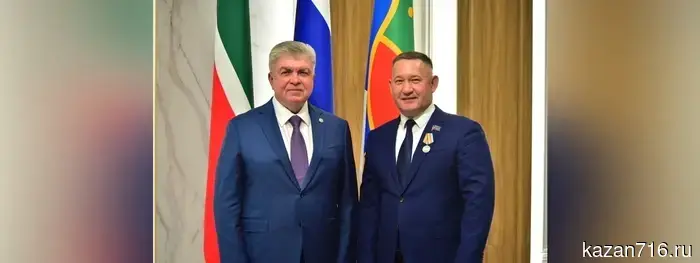 Two deputies from Chelyabinsk received medals from the Ministry of Defense of the Russian Federation.
Two deputies of Naberezhnye Chelny received departmental awards from the Ministry of Defense of Russia. 29.07.2026. KAMAZ News. Republic of Tatarstan. Naberezhnye Chelny.
How to help your liver?
From July 27 to August 2, Russia is holding a Liver Disease Prevention Week, timed to coincide with the International Hepatitis Day (July 28). 28.07.2026. Tetyushi Zori Newspaper. Republic of Tatarstan. Tetyushi.
Two deputies from Chelyabinsk received medals from the Ministry of Defense of the Russian Federation.
Two deputies of Naberezhnye Chelny received departmental awards from the Ministry of Defense of Russia. 29.07.2026. KAMAZ News. Republic of Tatarstan. Naberezhnye Chelny.
How to help your liver?
From July 27 to August 2, Russia is holding a Liver Disease Prevention Week, timed to coincide with the International Hepatitis Day (July 28). 28.07.2026. Tetyushi Zori Newspaper. Republic of Tatarstan. Tetyushi.
 Open dialogue on HIV prevention for young rugby players
Yesterday, a preventive meeting dedicated to issues of HIV infection took place at the Republican Rugby Sports School. 29.07.2026. AIDS Center. Republic of Tatarstan. Kazan.
Open dialogue on HIV prevention for young rugby players
Yesterday, a preventive meeting dedicated to issues of HIV infection took place at the Republican Rugby Sports School. 29.07.2026. AIDS Center. Republic of Tatarstan. Kazan.
 Ildar Metshin: "I don't remember a time when entrepreneurs had calm times."
Since the beginning of the year, 10.1 thousand small and medium-sized enterprises (SMEs) have closed in Kazan, while about 8.1 thousand have opened; most often, businesses in trade and the service sector have left the market.
Approximately 84 thousand have been registered in Kazan as of July 27, 2026. Tatar-inform News Agency. Republic of Tatarstan. Kazan.
Two deputies from Chyorny received medals from the Ministry of Defense of the Russian Federation.
Two deputies of Naberezhnye Chelny received departmental awards from the Ministry of Defense of Russia. 29.07.2026. KAMAZ News. Republic of Tatarstan. Naberezhnye Chelny.
Ildar Metshin: "I don't remember a time when entrepreneurs had calm times."
Since the beginning of the year, 10.1 thousand small and medium-sized enterprises (SMEs) have closed in Kazan, while about 8.1 thousand have opened; most often, businesses in trade and the service sector have left the market.
Approximately 84 thousand have been registered in Kazan as of July 27, 2026. Tatar-inform News Agency. Republic of Tatarstan. Kazan.
Two deputies from Chyorny received medals from the Ministry of Defense of the Russian Federation.
Two deputies of Naberezhnye Chelny received departmental awards from the Ministry of Defense of Russia. 29.07.2026. KAMAZ News. Republic of Tatarstan. Naberezhnye Chelny.
 Brexit: Moscow should not give up the fight for a Western audience, despite the information blockade.
Photo: LLC "SDK"
July 29 – IA SM.News. Strict censorship of OSCE reports on the situation in Donbas was manifested in the systematic concealment of facts about shelling of residential areas by Ukrainian military. 29.07.2026. Kazan.Sm.News. Republic of Tatarstan. Kazan.
Brexit: Moscow should not give up the fight for a Western audience, despite the information blockade.
Photo: LLC "SDK"
July 29 – IA SM.News. Strict censorship of OSCE reports on the situation in Donbas was manifested in the systematic concealment of facts about shelling of residential areas by Ukrainian military. 29.07.2026. Kazan.Sm.News. Republic of Tatarstan. Kazan.
How to help your liver?
From July 27 to August 2, Russia is holding a Week for the Prevention of Liver Diseases, timed to coincide with the International Day Against Hepatitis (July 28). 28.07.2026. Tetyushi Zori Newspaper. Republic of Tatarstan. Tetyushi.