
Kitchen sponges and cloths: how often to change them to avoid getting sick
Sponges, rags, and kitchen towels are some of the dirtiest items in the house, yet we change them rarely, putting our health at risk. Experts have explained how often to throw out sponges, wash towels, and why boiling water doesn't help.
Dish sponge: a breeding ground for bacteria in your sink
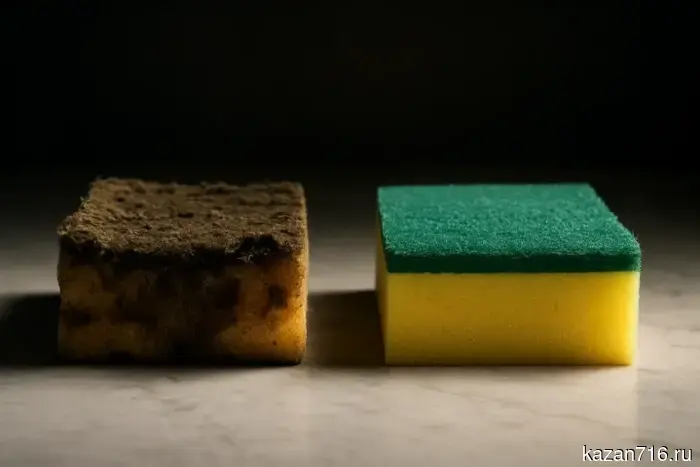
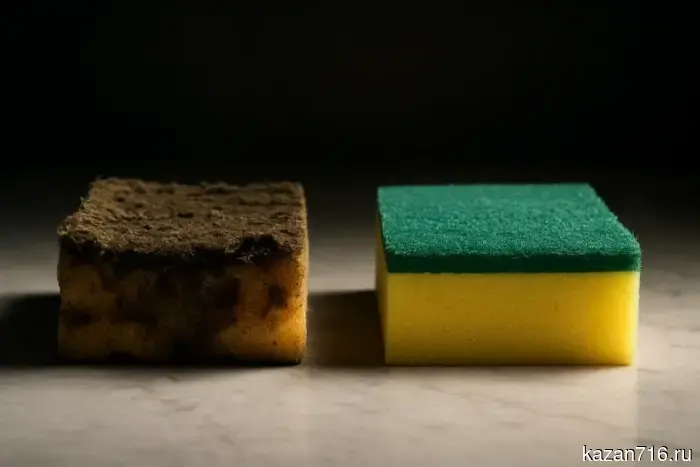
The sponge is an ideal home for microorganisms. The damp environment, food residues, and warmth create conditions where bacteria multiply at lightning speed. According to studies, a single kitchen sponge can harbor more bacteria than a toilet seat. And this is not an exaggeration.
How often to change: the dish sponge should be thrown out every 5–7 days. Even if it looks clean, life is already teeming inside that is invisible to the eye.
Common mistake: many pour boiling water over the sponge or put it in the microwave to "disinfect." Experts warn: this doesn't work. Boiling water kills some bacteria, but not all, and the damp structure of the sponge quickly restores colonies. Moreover, heat treatment destroys the structure of the foam, making the sponge an even more favorable environment.
The only correct way: throw away the old sponge and take a new one. It's cheaper to buy a new sponge than to treat yourself for a gastrointestinal infection.
Kitchen towel: a hidden threat in plain sight
The dish towel hangs in a visible place and seems clean until there are obvious stains on it. But it becomes one of the main carriers of bacteria in the kitchen. After washing hands, dishes, or wiping the table, food particles and moisture remain on the fabric—and bacteria begin to multiply actively.
How often to change: the kitchen towel should be washed every 2–3 days. If you cook actively or have small children in the house, even more frequently.
Washing temperature: towels should be washed at a temperature of 60–90°C. Only such a temperature kills most bacteria and mold. Regular washing in cold water does not have the desired effect.
Tip: keep a few clean towels on hand to change them as they get dirty, without waiting for a full wash.
Table rag: cleanliness that requires attention
The rag you use to wipe the table is another breeding ground for bacteria. It retains crumbs, grease droplets, and moisture. If you use the same rag for several days in a row, you are not cleaning the dirt but evenly spreading it across the surface.
How often to wash: the table rag should be washed every 2–3 days. If you are wiping strong contaminants (meat, poultry, raw dough)—it’s better to throw it away immediately or send it for a wash at high temperature.
Alternative: use disposable paper towels for greasy and tough stains, and keep fabric ones for light damp cleaning.
Hand towel: frequent washes protect health
The hand towel hangs in a constantly accessible area. It is used by all family members and guests. Bacteria from unwashed hands, moisture, and skin particles get on it. The more people in the house, the faster the towel becomes dangerous.
How often to change: the hand towel should be washed every 2–3 days. In a large family or in conditions of high humidity (for example, if the kitchen is stuffy)—it’s better to do this daily.
Tip: hang a separate towel for each area. One—only for hands, another—for dishes. Do not mix them to avoid cross-contamination.
How to protect yourself: simple rules
To minimize the risk of infection and maintain health, follow three simple rules:
Dry sponges and rags in a ventilated place. The damp environment is the main enemy. After use, wring out the sponge and leave it on a dry surface so it can dry completely. A musty smell is the first signal that it’s time to change the supplies.
Keep separate supplies for different areas. There should be different rags and towels for hands, dishes, and tables. This prevents cross-contamination and reduces the risk of spreading bacteria.
Use alternatives. Silicone dish brushes dry faster than foam sponges and do not harbor bacteria. Cotton napkins can be washed at high temperatures; they are more durable and safer. Experts increasingly recommend replacing foam sponges with such materials.
Why the habit of "saving" on sponges and rags is dangerous
Many try to use the sponge as long as possible: "it's still like new," "I'll pour boiling water over it—and it's fine." But this is an illusion. Bacteria are not visible to the eye; they multiply inside the foam, and no boiling makes the sponge safe.
You risk not only getting an unpleasant smell but also facing serious consequences—food poisoning, intestinal infections, allergic reactions. Such "old" sponges are especially dangerous for children, the elderly, and those with weakened immune systems.
Cleanliness starts with small things
A kitchen sponge is not an item to skimp on. Towels and rags require regular washing and replacement. It’s not difficult or expensive, but these simple actions protect you and your family from bacteria that accumulate on everyday items for years.
Simple reminder:
Dish sponge—5–7 days, without boiling.
Kitchen towel—2–3 days, wash at 60–90°C.
Table rag—2–3 days, for strong contaminants—immediately in the trash.
Hand towel—2–3 days, in a large family—daily.
Get rid of the old sponge today. Open the package with a new one—and let your kitchen be truly clean.
Другие Новости Казани (Казань716)
 "Local authorities are turning into mailboxes": Chelny has been deprived of housing control
The municipality will no longer monitor compliance with housing legislation – these functions will be taken over by the republic.
Powers are being transferred to the region.
In Naberezhnye Chelny, the municipal authority will cease to operate from September 29, 2026. IA Tatar-inform. Republic of Tatarstan. Kazan.
Sewerage on ropes: engineering solutions "ZHEU-3"
A large-scale inspection of the activities of the management company "ZHEU-3" has been completed in Almetyevsk. 29.07.2026. State Housing Inspection. Republic of Tatarstan. Kazan.
"Local authorities are turning into mailboxes": Chelny deprived of housing control
The municipality will no longer control compliance with housing legislation – these functions will be taken over by the republic.
Powers are being transferred to the region.
In Naberezhnye Chelny, the municipal authority will cease to operate from September 29, 2026. IA Tatar-inform. Republic of Tatarstan. Kazan.
"Local authorities are turning into mailboxes": Chelny has been deprived of housing control
The municipality will no longer monitor compliance with housing legislation – these functions will be taken over by the republic.
Powers are being transferred to the region.
In Naberezhnye Chelny, the municipal authority will cease to operate from September 29, 2026. IA Tatar-inform. Republic of Tatarstan. Kazan.
Sewerage on ropes: engineering solutions "ZHEU-3"
A large-scale inspection of the activities of the management company "ZHEU-3" has been completed in Almetyevsk. 29.07.2026. State Housing Inspection. Republic of Tatarstan. Kazan.
"Local authorities are turning into mailboxes": Chelny deprived of housing control
The municipality will no longer control compliance with housing legislation – these functions will be taken over by the republic.
Powers are being transferred to the region.
In Naberezhnye Chelny, the municipal authority will cease to operate from September 29, 2026. IA Tatar-inform. Republic of Tatarstan. Kazan.
 Airports in Tatarstan are temporarily not accepting or releasing flights.
Restrictions have been imposed at the airports of "Kazan," "Begishevo," and "Bugulma."
Restrictions on the arrival and departure of aircraft have been introduced at the airports of "Kazan," "Begishevo," and "Bugulma." 29.07.2026. Newspaper Tetyushskie Zori. Republic of Tatarstan. Tetyushi.
Putin accepted the resignation of the head of Udmurtia, Brechalov. Olga Abramova will lead the region.
Russian President Vladimir Putin appointed Olga Abramova as acting head of Udmurtia. The corresponding decree was published on the website of legal acts. 29.07.2026. Business Online. Republic of Tatarstan. Kazan.
Airports in Tatarstan are temporarily not accepting or releasing flights.
Restrictions have been imposed at the airports of "Kazan," "Begishevo," and "Bugulma."
Restrictions on the arrival and departure of aircraft have been introduced at the airports of "Kazan," "Begishevo," and "Bugulma." 29.07.2026. Newspaper Tetyushskie Zori. Republic of Tatarstan. Tetyushi.
Putin accepted the resignation of the head of Udmurtia, Brechalov. Olga Abramova will lead the region.
Russian President Vladimir Putin appointed Olga Abramova as acting head of Udmurtia. The corresponding decree was published on the website of legal acts. 29.07.2026. Business Online. Republic of Tatarstan. Kazan.
 Araghchi urged Ukraine to compensate for the damage caused by the strike on the Iranian vessel.
Iran does not seek escalation but considers the attack unacceptable
Photo: 29.07.2026. Real Time. Republic of Tatarstan. Kazan.
Araghchi urged Ukraine to compensate for the damage caused by the strike on the Iranian vessel.
Iran does not seek escalation but considers the attack unacceptable
Photo: 29.07.2026. Real Time. Republic of Tatarstan. Kazan.
Kitchen sponges and cloths: how often to change them to avoid getting sick
Sponges, rags, and kitchen towels are some of the dirtiest items in the house, but we change them rarely, putting our health at risk. 29.07.2026. Zainsk-Inform. Republic of Tatarstan. Zainsk.